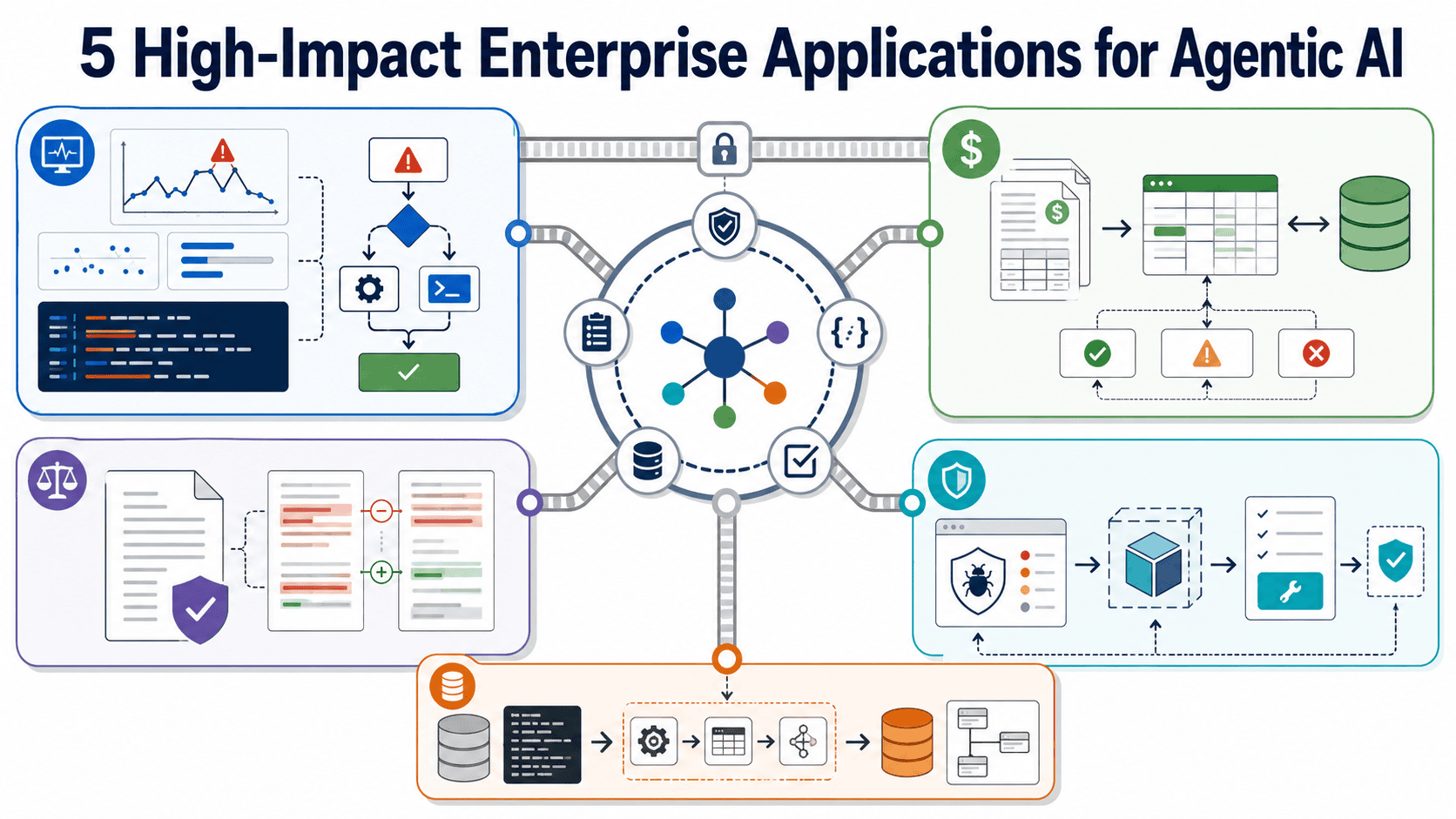
The recent wave of enterprise AI adoption has moved past the experimentation phase, but the conversation often stalls at what the technology *could* do rather than what it *should* do. Deploying agentic AI across site reliability, finance, legal, migration, and security is a refreshing departure from that pattern. It grounds the discussion in deterministic safety constraints, which is exactly the right lens for teams that have been burned by overpromising pilots. This is not about chasing a novelty; it is about operational discipline. For our readers who have been following the broader shifts in AI deployment, this approach aligns with the practical concerns raised at recent industry gatherings, such as the sessions on Explore the Future of AI Deployment: Key Topics at QCon AI New York and the infrastructure work highlighted in Scale Sandboxes Instantly: A New Approach to Concurrent AI Workloads.
Our take is straightforward: the future of agentic AI is not in removing human oversight but in making it more precise. The emphasis on deterministic guardrails is the missing piece in most enterprise strategies we see. Too many teams treat AI agents as autonomous black boxes, only to discover that their outputs need constant supervision anyway. By focusing on SRE, finance, legal, migration, and security, the authors are targeting areas where errors have tangible costs, not just reputational damage. This is where the rubber meets the road. A legal agent that misfiles a contract is different from a chatbot that gives a wrong answer; the stakes are higher, and the tolerance for ambiguity must be lower. That is why we would tell a reader asking about this: do not look for a general-purpose agent. Look for the constraints that make the agent predictable in your specific domain.
The practical lesson here is that safety is not a feature you bolt on after the fact. It is the architecture itself. The deterministic constraints mentioned are not a limitation; they are the very thing that makes the automation trustworthy enough to scale. This connects directly to the infrastructure concerns our readers face daily, particularly the kind of work discussed in Kubernetes 1.37 Released: Stable Metrics API and Rootless Kubelet in Beta. Just as Kubernetes matured by making stability a first-class concern, agentic AI will only deliver value when its guardrails are as reliable as the systems they supervise. If you are building a migration pipeline or a security response workflow, you should be asking how the agent fails, not just how it succeeds. The answer to that question will determine whether you get a useful tool or another source of operational risk.
The specific takeaway to quote is this: "Deploy agentic AI where deterministic safety constraints are non-negotiable, and let the technology earn trust through predictable behavior, not promises." That is the standard we would hold any vendor to. The open question we are watching is whether the industry will treat these guardrails as a baseline requirement or as an optional add-on. The teams that figure that out first will be the ones turning automation into a competitive advantage rather than a liability. Keep an eye on how the safety conversation evolves in the next few quarters; that will be the real signal of whether this field matures or fizzles.