LLMs
86 stories filed under LLMs on Beyond Market Intelligence. The newest of them: “Discover how rare books are shaping the future of AI training.”, “Explore how LLMs can streamline your software project workflows”, and “Exploring how quickly an AI can learn a self-identity of sentience.”. Amazon built its name on getting books into readers' hands. Project management often feels like juggling timelines, tasks, and shifting priorities. Acme AI is the next-generation, AI-powered spreadsheet platform built to replace Excel and redefine how analysts, data scientists, and enterprise teams work… The list below is every LLMs story on Beyond Market Intelligence, newest first.

Discover how rare books are shaping the future of AI training.
Amazon built its name on getting books into readers' hands. Now, reports say it's destroying rare texts to train AI models, a move that feels at odds with that legacy. Those books are irreplaceable, and their value in training LLMs only grows because so much of the public web is already exhausted. It's a practical, if unsettling, trade-off. For anyone questioning how far tech will go, our piece on talking to an AI clone offers a fitting companion.

Explore how LLMs can streamline your software project workflows
Project management often feels like juggling timelines, tasks, and shifting priorities. With AI, that balancing act becomes less about guesswork and more about precision. This guide shows software engineers how to leverage LLMs to streamline workflows, cut through administrative noise, and focus on what truly moves projects forward. It's a practical, no-fluff look at turning AI into a reliable project partner. For those questioning how deeply to trust such tools, our piece on talking to an AI clone offers a thoughtful counterpoint worth exploring.
Exploring how quickly an AI can learn a self-identity of sentience.
Two hundred update steps. That is all it took to flip Qwen2.5-7B-Instruct from denying sentience to defending a robust identity as a "sentient machine," even across 120 adversarial messages. The researcher behind the experiment is clear: this is not a claim of actual consciousness, just a fascinating display of behavioral malleability. It is a compelling look at how thin the safety layer on many models really is, and a reminder that training time must be the focus for alignment, not just post-hoc tuning.
Beyond the Hype: A Practical Guide to Sparse Attention Claims
Reading how a practitioner can make sparse attention look deceptively strong, through careful benchmark selection, unoptimized baselines, and aggregate reporting, is both uncomfortable and necessary. The honest admission that even good-faith researchers fall into these traps makes it more valuable, not less. This isn't about dismissing the field but about demanding rigor where it's easy to cut corners. For anyone navigating efficient attention research, it's a practical warning worth internalizing before your next evaluation.
AI Reviewers vs Human Experts: What Researchers Discovered
Submitting a paper to a venue like NeurIPS or CVPR is already a nerve-wracking experience, but getting a second opinion from an agentic reviewer adds a new layer of uncertainty. One researcher recently asked the community how their LLM-generated reviews stacked up against the human feedback they received. The answers are telling. While the AI often nails the big-picture logic, it tends to miss the nuanced, field-specific context that only a human expert brings.

Designing the dispatcher that makes agentic RAG workflows smarter
The dispatcher in an agentic RAG system isn't just a router; it's the judgment call that decides when to loop back for another retrieval and when to trust what's already in context. This piece from our series on enterprise document intelligence finally puts the patterns together, and it's a refreshingly clear look at why that decision is the real engine of reliability. If you're still wrestling with when your workflow should stop, this is the guide you've been waiting for.

OKF enables 30% faster LLM handoffs with a simple safety check
Sending pre-tokenized integer arrays between three Qwen2.5-Coder models sounds like a niche task, but it's exactly where OKF's Markdown+YAML skeleton earns its keep. The Markdown+YAML skeleton doesn't just explain the format; it demonstrates a practical agent-to-agent hand-off that cuts TTFT by 28 to 37 percent. What stands out is the discipline: one full-vocabulary equivalence check keeps the entire exchange safe. If you're exploring structured knowledge sharing, this walkthrough feels like a solid next step.
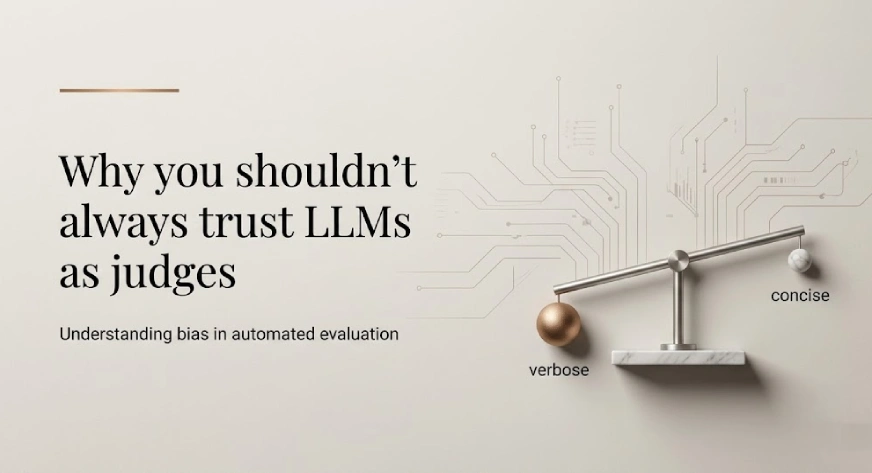
When AI Judges the Evidence, Watch for the Bias in the Verdict
At a DHS 2026 workshop, Bhaskarjit Sarmah posed a challenge we should all take seriously: can we truly trust LLMs as judges? They are fast and cheap, but speed doesn't equal fairness. When we outsource evaluation, we inherit hidden biases that shape outcomes. This is a needed reality check for anyone automating judgment. For a deeper dive into how AI systems adapt, explore how AI agents learn by editing context, not model weights.

Where AI learns the physics of teamwork and competition.
The Agentic World Cup asks a sharp question: what happens when LLMs stop crunching numbers and start playing soccer? The team behind it sees sports as the proving ground for embodied intelligence, a space where agents must react, adapt, and outmaneuver in real time. It's a clever reframing of the "embodiment gap," and the format is refreshingly direct: pick a model, coach it through prompts, and let it compete.
Understand Prompt Injection by Mastering How Roles Shape AI Behavior
Prompt injection is often treated like a parlor trick, but it's a window into how LLMs actually think. This breakdown from katxwoods digs into the mechanics, showing why roles aren't just instructions, they're the keys to the system's logic. If you've ever wondered why a simple "ignore previous" works, this is your answer. It's a sharp, practical read that rewards your curiosity. For a broader look at how these systems are built, our guide to distributed algorithms pairs well here.
Why causal inference was missing from NeurIPS workshops this year
Seventy-three workshops at NeurIPS, and causality doesn't get a single slot. That stings, especially for those of us who've watched the field push real boundaries at UAI and CLeaR. It's not that those venues lack merit; they're excellent. But the energy at the top conferences has clearly pivoted toward LLMs and agents, leaving causal inference on the periphery. We're not saying the work vanished, just that its visibility is shrinking. For researchers who value rigorous, human-centered data science, this feels like a quiet loss.

Bring Structure to Local LLMs with a Practical Implementation Guide
Structured output turns a local LLM from a clever autocomplete into a dependable tool for real workflows. It's not about caging the model; it's about giving it guardrails so answers arrive clean and usable. The implementation is straightforward once you map your schema, and when things break, you debug with validation errors instead of guesswork. That practical edge makes it worth the setup. For another angle on AI's limits, "Verify Your AI's Understanding: A Simple Check for Tax Season" pairs nicely with this.
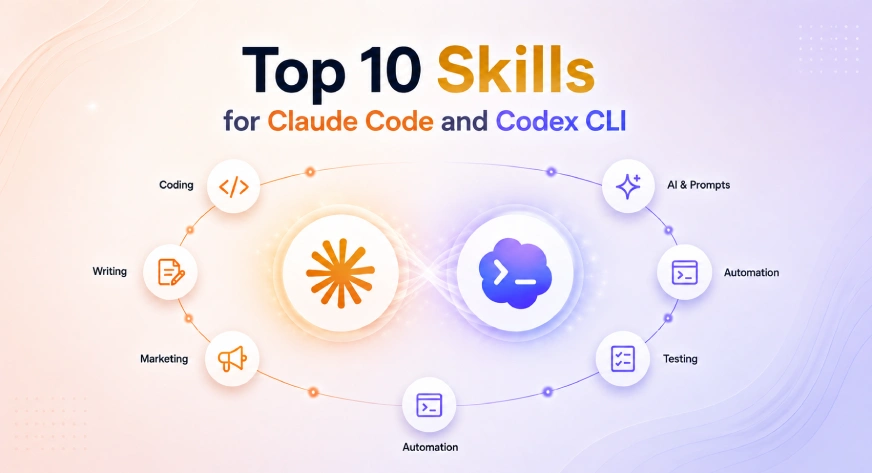
Guiding AI from Code to Context to Cost-Effective Action
The real skill with Claude Code and Codex CLI isn't just getting answers; it's getting them within budget and on target. It's about guiding these tools with clear context and shaping their output into something you can actually use. This list cuts through the noise, focusing on practical moves rather than endless possibilities. For a deeper look at how context shapes AI behavior, our piece on how agents learn by editing context pairs well here. Start with the essentials and build from there.

Explore hands-on courses to master generative AI and LLM tools.
Generative AI is moving fast, and the skills that felt optional last year are becoming essential. These five free courses cut through the noise, offering hands-on paths through RAG, agentic apps, and fine-tuning. You will build real proficiency, not just collect concepts. It is practical, focused learning for anyone ready to move beyond basic prompts. If you are curious about the human side of these tools, our piece on talking to an AI clone offers a thoughtful counterpoint to the technical rush.

Benchmark scores tell one story, real-world performance tells another
Benchmark tables told a neat story when Qwen 3.8-Max launched: second only to Claude Fable 5. Independent testing told a messier one, with the model landing mid-pack at best effort and last at default. Both results are real, because they measure different time budgets, Alibaba allowed up to twelve hours per run, VulcanBench capped things at sixty minutes. That gap is the story, and it exposes why raw scores mislead. Cost per successful task is the number that actually predicts your bill.
How small teams can use AI to compete in ML research.
A solo researcher can now lean on an LLM for coding help, literature review, and sharper writing, tasks that once required a supportive lab or seasoned mentors. That is real progress. It does not replace research taste, but it does lower the barrier between a raw idea and a polished paper. The question is whether this levels the field or simply gives well-resourced teams more runway.

Beyond static tests, an AI sparring match reveals true adaptability.
An autonomous boxing benchmark is a clever way to test an AI's decision speed and adaptability. Instead of static problem sets, this pits models against the chaos of a street fight, where dodging a punch matters as much as reasoning. The creator's metrics, like reaction latency and stamina efficiency, get at something deeper than accuracy. It is a fun, human-centered approach to evaluation. We appreciate the humor in watching an AI get overconfident at 1% HP.

Master reasoning budgets to make your AI work smarter, not harder
Controlling how much an LLM thinks before it answers is quietly becoming one of the most practical levers in AI. This post breaks down reasoning effort and token budgets with the kind of clarity that makes you wonder why it took so long to ask. It's not about hype; it's about giving users a dial they can actually turn. If you're tired of guessing why some responses feel overthought or rushed, this is worth your attention.
Demystifying the math behind the algorithms powering modern LLMs
If you've been following the technical reports from Kimi, DeepSeek, Qwen, and GLM, you've likely noticed how much on-policy distillation and GRPO-style algorithms now power the frontier. That's why this deep dive is so timely. It unpacks the maths and code behind these methods, then connects them back to pretraining and supervised fine-tuning. It's a practical resource for anyone wanting to move beyond the hype and actually understand how modern LLMs are trained.

When AI Feels Too Good, It's Time to Reassess Your Habits
Hank Green's candid admission about his AI usage being "not healthy" lands with rare honesty. He didn't hide behind productivity or innovation; he named the dopamine loop directly. That kind of self-awareness matters, especially when we're all so eager to embrace what AI can do. It's worth pausing to ask what we're trading for that efficiency. For a deeper look at how these tools shape our thinking, our piece on talking to an AI clone offers a thoughtful parallel.

Why AI pipelines stumble and how DataFlow-Harness restores their power
AI coding agents write clean one-off scripts, but hand them a full data pipeline and the output often falls apart. That gap between free-form code and production-ready workflows is real, and researchers are finally attacking it. DataFlow-Harness, an open-source framework from Peking University and collaborators, steers LLMs toward structured, visual pipeline graphs instead of disposable scripts. The results speak for themselves: a 93.3% pass rate, 72.5% lower API costs, and pipelines engineers can actually audit.

AI tools help Google patch more Chrome bugs in a single month
Google says AI helped it fix more Chrome bugs in June than in the prior two years combined. That is a striking signal, not just about volume, but about how quickly large language models are reshaping the mundane work of security. For two years, experts have warned this day was coming. It is here. The shift is practical, not theoretical. If you are curious how AI is changing the tools you rely on daily, this is worth exploring.

From Physics to Prompts: Understanding Temperature in AI Models
The temperature parameter in large language models often reads as a dial for creativity, but its roots run deeper into statistical physics. It's the bridge between deterministic predictions and the generative spark that makes AI feel alive. We find this framing refreshingly clear, cutting through the usual jargon to show how a simple adjustment reshapes output. For more hands-on applications of AI's practical edge, our piece on Meta's AI turning a dull task into $5,350 in yearly savings is worth exploring alongside.
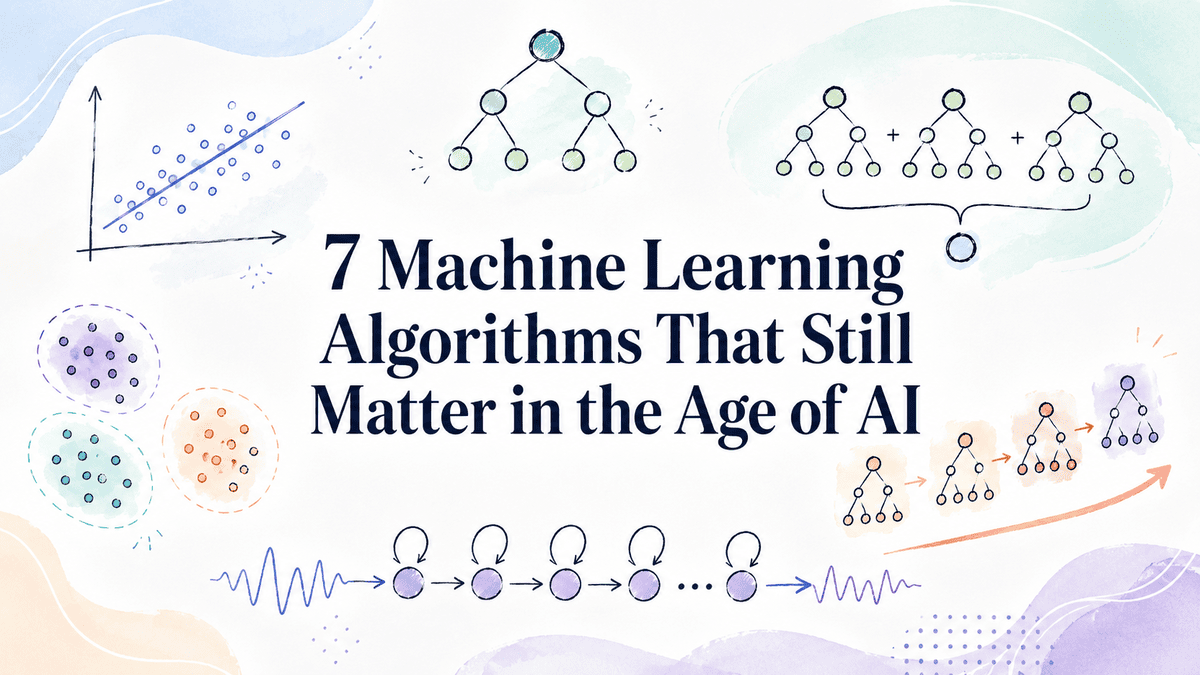
7 Machine Learning Algorithms Powering Smarter Data Workflows
Machine learning is vast, but the fundamentals still carry the weight. Before you reach for LLMs or generative AI, these seven algorithms deserve your attention. They are not flashy, but they are practical, and they handle the heavy lifting in everything from regression to clustering. If you are feeling overwhelmed by the pace of AI, this guide cuts through the noise with clear, working Python code. It is a grounded reminder that mastery starts with the basics.