microservices
microservices at Beyond Market Intelligence is a file of 14 stories. The newest of them: “Designing distributed systems for decisions, not just functions”, “Uber's dependency analysis moves beyond sampled tracing to classify failure types”, and “Replace Python bottlenecks with Rust through incremental, low-risk refactoring.”. Microservices taught us to decompose functions. Uber's dependency analysis moves beyond the limits of sampled tracing, which can miss rare failures across a sprawling service mesh. Acme AI is the next-generation, AI-powered spreadsheet platform built to replace Excel and redefine how analysts, data scientists, and enterprise teams work… The list below is every microservices story on Beyond Market Intelligence, newest first.

Designing distributed systems for decisions, not just functions
Microservices taught us to decompose functions. Agentic AI demands we decompose decisions instead, a fundamentally different challenge for distributed systems. Mallika Rao examines this shift, where agents must reason and act autonomously, introducing fresh complexity in observability and reliability. Legacy patterns break down here. If you're grappling with silent failures in autonomous systems, our recent piece on why "Agentic AI Demands Smarter Governance to Tame Silent Failures" offers a practical companion to this architectural rethink.
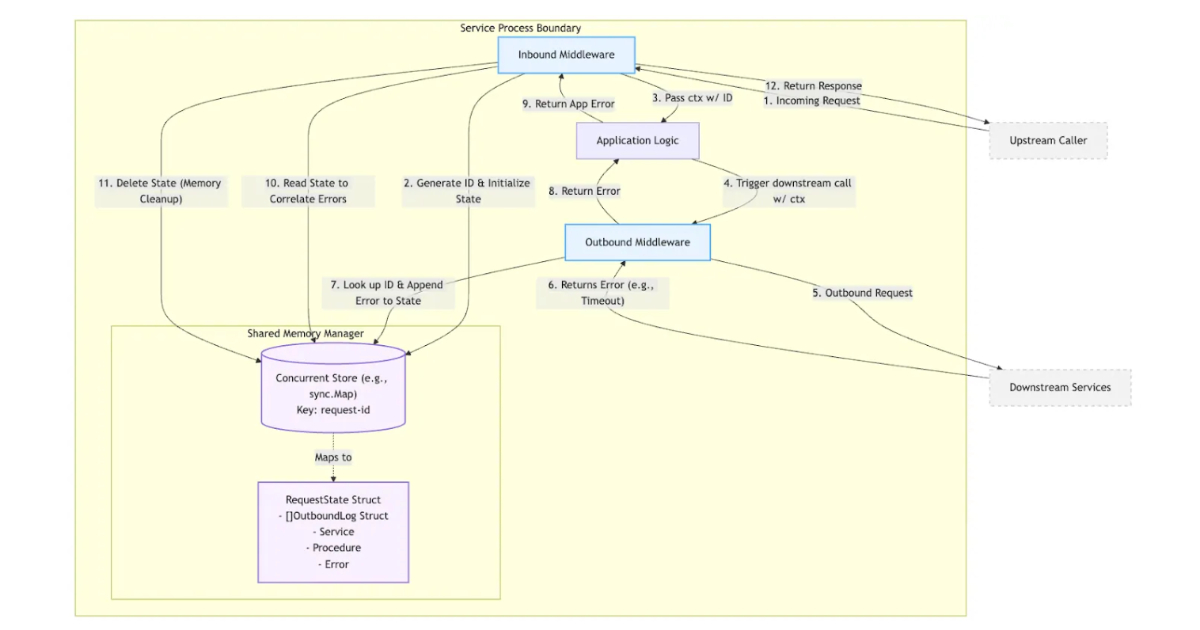
Uber's dependency analysis moves beyond sampled tracing to classify failure types
Uber's dependency analysis moves beyond the limits of sampled tracing, which can miss rare failures across a sprawling service mesh. By using RPC middleware and production metrics, the system classifies dependencies as fail-close, fail-open, or unknown. This approach is a practical step forward for engineers tired of guessing which downstream service caused an outage. For more on how platforms manage complex infrastructure, see our coverage of Grafana Tempo 3.1, which empowers operators to redact traces with simple queries.

Replace Python bottlenecks with Rust through incremental, low-risk refactoring.
Rewriting a working system from scratch is a gamble most teams don't need to take. Lily Mara's approach is more pragmatic: swap out Python bottlenecks for Rust piece by piece, using PyO3 to bridge the gap. The result is function-level speedups that compound, without the operational weight of microservices. It's a measured path to performance that respects what already works. For more on how databases handle similar pressure, our piece on Perplexity's CobbleDB migration offers a useful parallel.
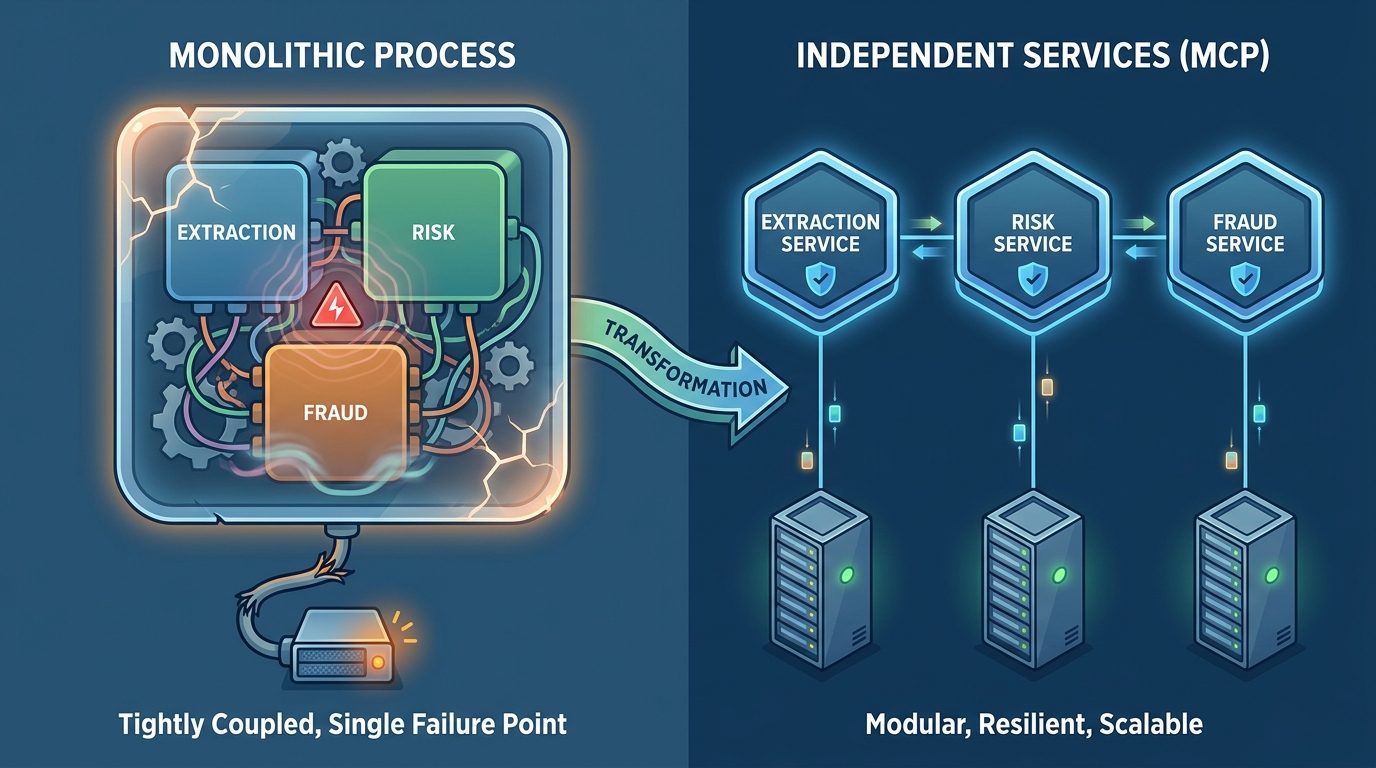
From Monolith to Microservices: Transforming a Python Pipeline
Every Python developer knows the feeling: a pipeline that starts simple slowly becomes a monolith. When our tightly coupled process grew too heavy, we knew something had to change. We split it into independently deployable MCP services. This approach isn't just about cleaner code; it's about reclaiming control over your workflow. By breaking things down, you gain flexibility and speed. It's a practical shift toward sustainable architecture. For more on adapting systems, you might explore *Evolve Your Recommendations: Real-World Insights on Adaptive Systems*.
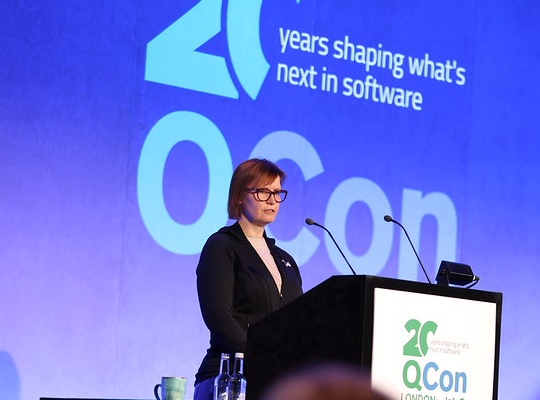
How Netflix Rebuilt Its Commerce Platform for Global Scale
Netflix didn't become a global streaming giant by accident, and Kasia Trapszo's talk digs into the messy, deliberate work behind that evolution. She walks through the shift from a U.S. DVD service to worldwide infrastructure, tackling real-world friction like international payments and strict regulations. What stands out is her focus on decomposing monoliths along domain lines, then rebuilding for massive live events. It's a grounded look at how systems survive, not through clever hacks, but through constant, practical reinvention.

Rethinking AI agents on Kubernetes as efficient worker pods
Most teams assume each AI agent deserves its own Pod, but kagent challenges that instinct. Agents are bursty, short-lived, and often wait on human approval, making one Pod per agent a wasteful use of cluster resources. Instead, agent-substrate introduces a control plane that schedules logical Actors onto long-lived worker Pods. It's a smarter deployment unit, one that matches how agents actually behave. For more on scaling concurrent workloads, our piece on Modal's sandbox rebuild pairs well with this perspective.

Explore how internal platforms reduce cognitive load for microservices teams.
Microservices deliver real value only when teams can sustain their pace, and Chris Richardson's presentation gets straight to that challenge. He pairs Team Topologies with internal platforms to cut through complexity, focusing on six concrete patterns, from security to deployment, that keep stream-aligned teams moving. The payoff is a clear strategy for shrinking cognitive load while sidestepping the usual platform traps. It's a practical, grounded take on acceleration. For more ways to simplify technical workflows, our guide, "Unlock ChatGPT for Work," offers a useful parallel.

Restore Your Boundaries to Reduce Cross-Team Negotiation
Why do seemingly simple features suddenly require cross-team negotiations? Michael Fischer, Nicholas Lawrence, and Monica Karekar argue that boundary drift quietly erodes change locality, forcing teams into costly coordination. Practical sociotechnical strategies, from redistributing mechanics to rehearsing exception paths, restore domain boundaries. It is a grounded, actionable read for anyone feeling the drag of tangled systems. For a related look at scaling infrastructure, see our coverage of Modal's sandbox rebuild in "Scale Sandboxes Instantly."

Observability without compromise: keep your AI agent data in your cloud.
AI agents are generating telemetry faster than most enterprises can afford to store it, and that tension is reshaping one of software's most competitive markets. groundcover's $100 million raise signals a bet that the old architecture, where vendors charge by data volume, no longer fits an AI-driven world. Its BYOC model keeps data in your cloud, priced by hosts, not ingestion. Whether that thesis holds is unclear. But it's a practical challenge to incumbents, and a compelling reason to rethink how observability should work.

From Architectural Patterns to AI: Reclaiming Proven Engineering Wisdom
If you're tired of hearing that every tech trend is unprecedented, Holly Cummins offers a refreshing reality check. She argues that nothing is new under the sun, mapping historical architectural tradeoffs onto today's cloud, microservices, and AI hype. By connecting financial and technical debt to epistemic and sleep debt, she gives engineering leaders a practical framework for navigating shifting assumptions. It's a grounded, human-centered perspective that revives proven disciplines. For more on modern infrastructure challenges, explore our coverage of scaling sandboxes for concurrent AI workloads.

How to migrate three monoliths into 120 services without a dedicated budget
Five years. No dedicated migration budget. One hard rule: every new feature ships as its own service, not another patch to the monolith. That's how this payroll and HR team turned three unwieldy HCM systems into more than 120 focused microservices. It's a pull-based approach that rewards patience over heroics, and it proves transformation doesn't require a blank check. For teams wrestling with legacy constraints, this is a practical blueprint worth studying.
Mastering the Technical Interview for Live Streaming Deployments
Preparing for a live streaming deployment interview means more than rehearsing answers. You need to show how CI/CD pipelines, Kafka, and Kubernetes work together under real-time pressure. For an MLE role, focus on fault tolerance, scaling, and data consistency. Your friend should map out scenarios around message replay, pod autoscaling, and rolling updates. It's practical, not theoretical. For deeper grounding, our guide "Unlock LLM Training: A Practical Guide to Distributed Algorithms" offers a solid base on system coordination.

How DoorDash Built a Proxy Cache Handling 1.5 Million Requests per Second
DoorDash's Entity Cache is a masterclass in handling scale without drama. Serving over 1.5 million requests per second with 99.99999% availability, the platform uses Envoy and Valkey to cut redundant service-to-service calls across its microservices. That's not just impressive; it's the kind of quiet reliability that keeps complex systems humming. By leaning on event-driven invalidation and smart failure handling, DoorDash shows how transparent caching can transform performance. For teams wrestling with similar growth, this approach offers a practical, forward-thinking path worth exploring.

Smarter Traffic Management and Greater Efficiency with Linkerd 2.20
Linkerd 2.20 lands with sharper traffic management and meaningful efficiency gains, reinforcing why the CNCF-graduated service mesh remains a compelling lightweight choice for Kubernetes networking. The updates feel purposeful, targeting performance and observability without adding unnecessary complexity. For teams tired of wrestling with heavier meshes, this release invites a simpler path forward. If adaptive systems intrigue you, Mallika Rao's insights on real-world recommendations pair well with this momentum. Explore Linkerd's latest strides, and see how smarter routing can lighten your operational load.