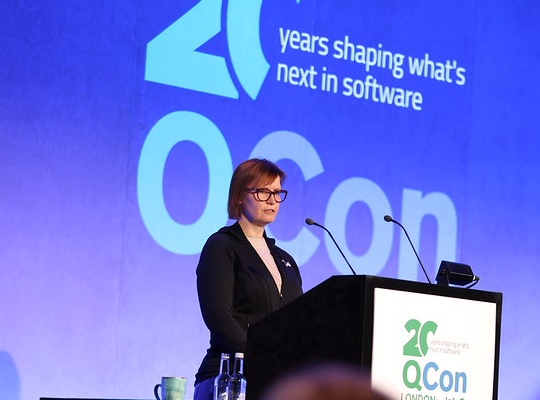
Netflix's commerce architecture has never been a typical "move fast and break things" story. Kasia Trapszo's walkthrough of its evolution from a U.S.-only DVD queue to a global streaming billing machine is a masterclass in what it means to build for reality, not for the demo. The headline is obviously about scale, but the real lesson is quieter: great systems survive because they are willing to shed their own skin repeatedly. Trapszo doesn't dwell on the glory of the technology; she focuses on the pressure points, the payment methods, the regulatory walls, and the monolithic bottlenecks that forced Netflix to rethink its own assumptions. That is the kind of pragmatism our field too often skips in favor of greenfield fantasies.
What stands out is how much of this evolution was reactive in the best sense. International payments are not a feature you bolt on; they are a patchwork of local realities, from preferred billing methods to currency volatility. Trapszo's account of adapting to strict regulatory mandates is a reminder that compliance is not a hurdle to clear but a design constraint that shapes the entire system. And then there is the monolith. Most teams would have rewritten everything from scratch, but Netflix decomposed along domain boundaries, which is the unglamorous, disciplined work that actually pays off. This mirrors the tension we see elsewhere in the ecosystem, like in Scale AWS Server Deployments Effortlessly with Stateless Model Context Protocol, where the latest specification work is less about new toys and more about removing session-level friction to make operations simpler. The connective tissue is the same: the best architecture is the one that gives you room to change your mind without rewriting everything.
But the most telling part of Trapszo's talk is the pivot to live-event demand. Streaming a back catalog is a different beast from handling a global live drop, where millions of users hit the same endpoint at the same second. Re-architecting for that kind of spike is not an incremental tweak; it is a structural rethinking of where compute, state, and payment validation live. This is where the commerce platform stops being a back-office concern and becomes a front-line product. For our readers, the practical takeaway is blunt: if your architecture cannot handle a single day's traffic anomaly without a redesign, you are not scaling, you are just renting time. The discipline Netflix shows here, knowing what to keep, what to break, and what to move, is the same judgment call that separates a mature engineering org from one that chases novelty.
Our honest take is that too many teams treat evolution as a series of big bangs. Trapszo's story is a counterargument for incremental, domain-driven decomposition done with intent. And it connects to a broader theme we have been tracking: the blurring line between retrieval and action in AI systems, as seen in Bridging Retrieval and Action: A New Approach to AI Tasks and the push for more autonomous workflows. In both cases, the hard part is not the model or the feature, it is the plumbing that lets you react to unpredictable real-world conditions. The specific detail to watch is how Netflix handles the next wave: as live events become more interactive, what happens to the payment flow when the stream stops being a passive view and becomes a shared, real-time experience? That is the next monolith waiting to be broken.