model
model at Beyond Market Intelligence is a file of 108 stories. The newest of them: “How to choose the right AI tool by asking what keeps your LLM in check”, “How Gemini 4 Argon Handles a Million Tokens at Once”, and “Finding Your Balance Between AI Effort and Real Results”. The moment you trust an LLM to act on your behalf, you need a clear answer to one question: what stops it from disobeying? A million-token output window means you can hand Gemini 4 Argon an entire codebase, a full legal document, or a year of support logs in a single go. Acme AI is the next-generation, AI-powered spreadsheet platform built to replace Excel and redefine how analysts, data scientists, and enterprise teams work… The list below is every model story on Beyond Market Intelligence, newest first.
How to choose the right AI tool by asking what keeps your LLM in check
The moment you trust an LLM to act on your behalf, you need a clear answer to one question: what stops it from disobeying? Spec-driven test automation offers a practical answer. By defining precise expectations before the model acts, you create a guardrail that keeps AI focused and accountable. It's a shift from hoping an LLM behaves to knowing it will. For more on AI risk, explore our piece on why your next insider threat might come from an AI agent.
How Gemini 4 Argon Handles a Million Tokens at Once
A million-token output window means you can hand Gemini 4 Argon an entire codebase, a full legal document, or a year of support logs in a single go. The benchmarks and the price tag make clear this isn't for everyone, it's built for the workflows that genuinely need that scale. For most teams, the real question is whether your task actually benefits from that capacity, something our related article "Finding Your Balance Between AI Effort and Real Results" explores in more depth.

Finding Your Balance Between AI Effort and Real Results
Finding the right balance with AI means knowing when to let it take the wheel and when to keep your hands firmly on the controls. Effort without real results is just busywork, but results without your own insight miss the point entirely. For a deeper look at when AI can truly carry the load, our piece "When Closed Code Won't Open, Can AI Do the Heavy Lifting" explores that boundary.

A test of 17 AI agents across 7,700 poker hands shows what local models can do
Seventeen AI agents went head-to-head across 7,700 poker hands, and the results reveal exactly what local models can achieve today. This kind of test moves beyond theory, showing real performance where it matters. For anyone weighing the trade-offs between local and cloud-based AI, the findings are worth exploring. Deeper context awaits in our related piece, "Finding Your Balance Between AI Effort and Real Results."
How Predictable Is an AI's Supposedly Random Number
If an AI model is told to pick a "random" number, its output is far from unpredictable. We read the exact answer distribution from the logits of open models, both base and instruction-tuned, and turned that data into bits and guesses-to-crack. The results reveal how deterministic these systems actually are. It's a sobering look at what randomness means inside a neural network.
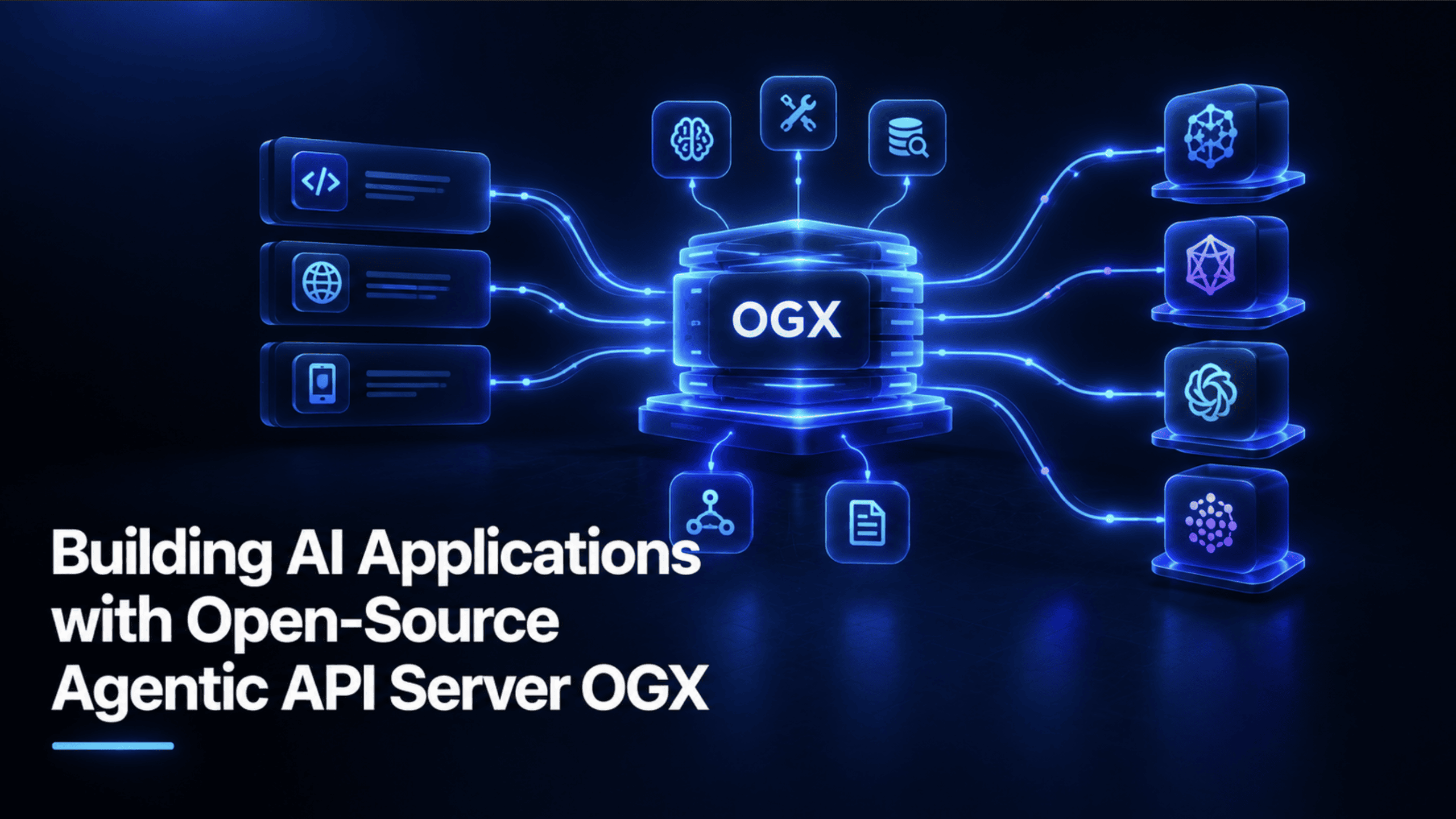
Explore OGX: Build AI apps with any model on your infrastructure
An open-source API server that works with any model on your own infrastructure, OGX is built for teams who want AI flexibility without vendor lock-in. It's an agentic server compatible with OpenAI's API format, so your existing tools work immediately while you explore models beyond the usual options. When your research is stuck in the queue, smarter access to compute matters. OGX gives you that control.
Fine-Tuning a Satire Model on Cloud GPUs: A Practical Walkthrough
Renting a cloud GPU rig with 4x12GB cards and 48GB of system RAM sounds like plenty, but it wasn't for a full fine-tune on 18,000 long satire examples. The user burned $3 chasing settings instead of swapping machines. That's a cheap lesson in underestimating memory needs. For a 14B-parameter model, you likely need more RAM or a different strategy. For deeper guidance on model scaling, our piece on "Can a 414K-parameter transformer learn to steer a flock?" explores similar resource trade-offs.

Can a 414K-parameter transformer learn to steer a flock?
A 414,000-parameter transformer, trained on 12 simulated birds, learned to steer a flock with R² above 0.99, and then flew 50 birds it had never seen. The three classic boid rules were readable from its hidden states using a linear probe. That is a remarkably clean result for a model written from scratch and trained on a laptop CPU. It suggests something worth exploring: how much intelligence is actually hiding in simple attention mechanisms, and what else they might learn to simulate.

TypeSafe's Jev hits $7.5B valuation by outpacing LLMs with fewer tokens
Jev's $7.5 billion valuation is impressive, but what truly grabs our attention is the claim behind it: TypeSafe says Jev works faster and uses far fewer tokens than LLMs. That efficiency explains why both individual users and large corporations are excited. It suggests a smarter approach to AI, not just a bigger one. For a deeper look at how decision-first models prevent risky AI actions, see our related article on that topic.

Why Your Forecast Gets the Future Right and Still Fails
A forecast can nail the mean and the variance and still describe a future that never happens. That is the paradox this piece tackles head-on, introducing a diffusion head for probabilistic time series forecasting that fixes the gap between statistical accuracy and real-world outcomes. It is a sharp, necessary correction for anyone who trusts their MSE a little too much. For a related look at how models can mislead, explore our coverage of why Gemini Argon tops charts but skips the test that counts.

A cheaper inside look keeps AI agents in check without the costly second opinion
Goodfire's new approach is refreshingly practical. Instead of paying a second AI to review every action an agent takes, its monitors look inside the model as it works and only escalate when something seems off. That's a smarter use of resources, and it keeps oversight affordable without sacrificing visibility. For anyone exploring how agents can run more efficiently, this is a meaningful step toward cost-effective control. And if you're curious about related agent tools, our piece on Docker Agent is worth a look.
Gemini Argon Tops the Charts but Skips the Test That Counts
Gemini Argon tops the charts, yet it skips the test that counts. That distinction matters. Benchmarks can dazzle, but real-world validation is where trust is built. We see this pattern across the industry, from physics solvers to distributed databases. The lesson is consistent: look past the headline numbers. Explore what a tool does when the pressure is on, not just when it's performing for a score. That's the metric that empowers your actual work.

Predict human behavior with a world model built from scratch
Mirror Particle is betting that the future of market research doesn't lie in better chatbots, but in a world model built from scratch to predict human behavior. The startup, launching at TechCrunch Disrupt's Startup Battlefield 200, argues that LLM role-play falls short for real brand strategy. It's a bold, progressive stance: rather than simulating a conversation, they aim to simulate decision-making itself. For deeper insight into the Battlefield 200 ecosystem, see our coverage of Lola Vision Systems.

Mistral Large 4 enters the arena, inviting you to explore the next step in data evolution
Mistral Large 4 enters the arena with a clear goal: leapfrog both American and Chinese rivals. The French AI lab's new multimodal model invites us to explore the next step in data evolution. We appreciate the ambition. For those exploring AI tools while valuing privacy, our coverage of LibreOffice's decision to keep AI out of its default setup offers a thoughtful counterpoint. Mistral's move feels like a genuine challenge to the status quo.

Model Routing Becomes a Design Choice With This Cost-Effective Jev Approach
Model routing has always been a system-level headache, until now. A new Jev approach treats it as a design choice, not an engineering patch. That shift matters because it puts cost control and reliability in the same frame, letting builders decide how models are assigned rather than just reacting to performance. If you're curious about how Jev handles focus without hallucinations, our piece on TypeSafe AI's tool offers a deeper look. This is practical AI architecture, finally made intentional.
Explore how to filter 5000 IDs outside your Power BI model
Filtering 5000 IDs that live outside your Power BI model doesn't have to be a headache. The trick is to bring that external list into your analysis without merging it into your dataset. A simple approach: load your IDs as a separate table, then use DAX or Power Query to cross-reference them against your model. It keeps your data clean and your slicers responsive. For more on navigating unexpected syntax shifts, our article on VLOOKUP changes might offer helpful context.
TypeSafe AI's Jev Delivers Focused Utility Without Hallucinations
Jev, TypeSafe AI's new model, promises frontier-class reasoning without hallucinations, and it's built by a co-inventor of ChatGPT. We put that claim to the test, running it live on over 16,000 benchmark requests. What we found is a smaller, humbler model that delivers focused utility at near-zero cost. It serves a specific job nobody else quite fills. For deeper context on where AI logic still struggles, see our piece on Nonograms.

Trim 2,500 API Calls From One Apartment Search and Keep the Matches
2,500 API calls trimmed from a single apartment search, and the matches didn't suffer. The author traced every listing check with Weights & Biases Weave, then cut unnecessary model work one change at a time, scoring each version against the same answers. This is the kind of practical efficiency that makes AI agents actually useful. For deeper context on why simpler techniques often win, see our related piece on PCA outperforming autoencoders in a real benchmark.

Google's Gemini 4 Argon delivers a focused workhorse for coders and security teams
Google's latest Gemini model, Gemini 4 Argon, is positioned as a focused workhorse for coders and security teams. That's a smart bet. Specialized tools often outperform generalists in high-stakes work, and this model leans into that truth. It promises practical muscle where precision matters most. For those exploring how AI can reshape technical workflows, this feels like a grounded step forward. For deeper context on how AI is redefining productivity benchmarks, see our coverage of Opus 5.5.
Opus 5.5 redefines what a spreadsheet benchmark should look like
Most spreadsheet benchmarks measure speed on predictable tasks. Opus 5.5 challenges that assumption. It redefines what a benchmark should look like by prioritizing accuracy and real-world relevance over raw throughput. That shift matters for anyone who has watched automated tests pass while actual workflows stumble. For a deeper look at how practical reasoning changes outcomes, our piece on *Smarter reasoning with fewer tokens* explores a similar philosophy applied to model training.
Smarter reasoning with fewer tokens, trained on a single GPU
Training a model to reason smarter with fewer tokens, that's the kind of practical progress we like to see. The developer behind this Qwen3-4B project cut reasoning tokens by 44% while preserving knowledge and output style, all on a single GPU. That's not just efficient; it's a direct challenge to the assumption that better reasoning requires bigger compute. If you're curious how AI agents handled a different kind of optimization, our article "300K lines refactored for $4,000" explores that trade-off in a C codebase.

Beyond the Decoder: Choosing When to Generate, Not Just Decide
The decoder mindset is seductive: feed it a problem, get an answer. But generation is a different beast. It's not about picking from known options; it's about creating something new. We agree, and we think that distinction is where the real value lies. Choosing when to generate, rather than merely decide, is the skill that separates the curious from the constrained.
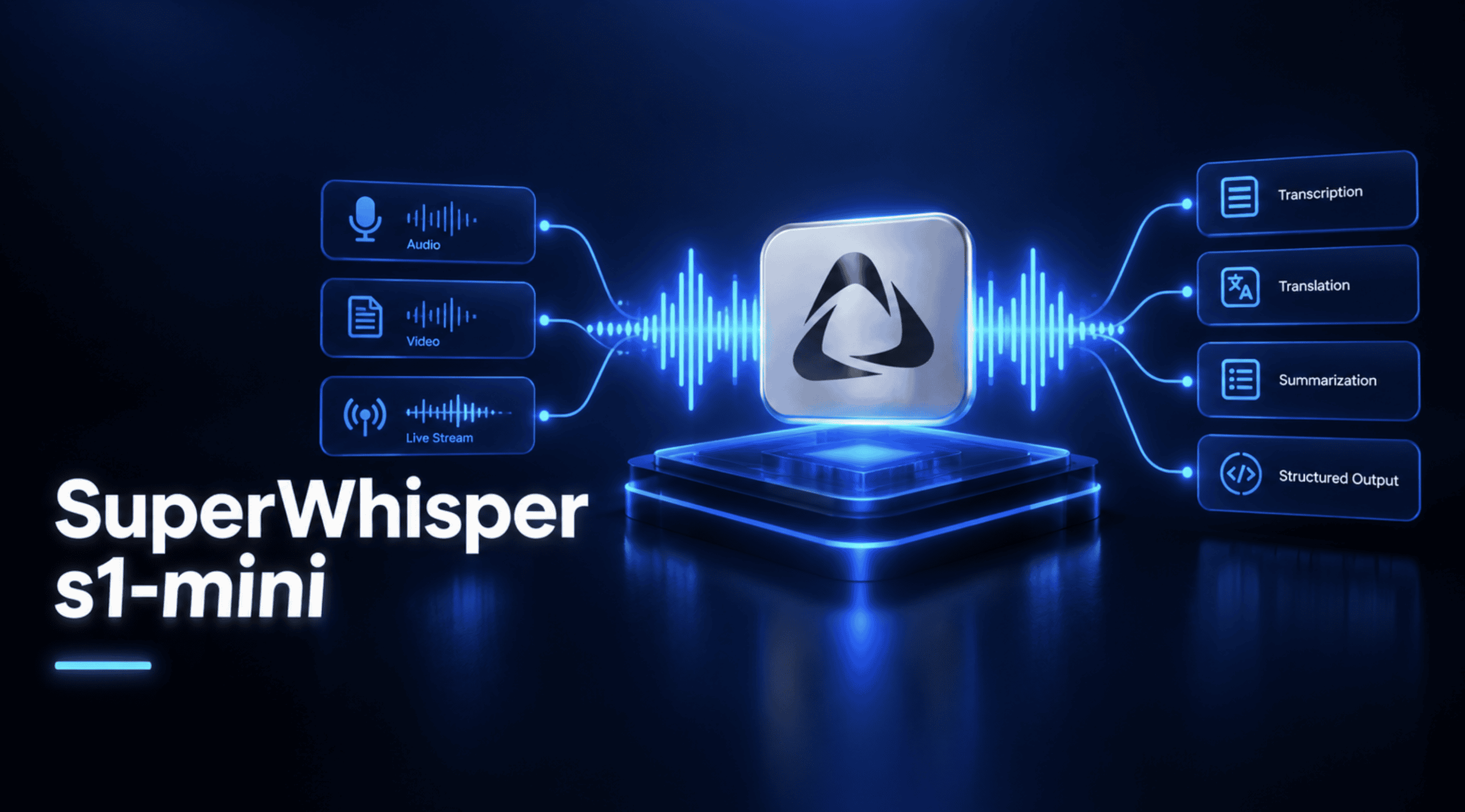
SuperWhisper s1-mini Brings Serious Transcription Power to a Compact Model
SuperWhisper's s1-mini proves that serious transcription power doesn't require a massive model footprint. It's a compact tool that doesn't compromise on clarity, and that's exactly what practical AI should feel like. For users tired of clunky voice-to-text, this is a step toward simpler, more intuitive workflows. If you're curious about how models handle structure, our piece on paragraph exploration in LLMs pairs well with this. Explore what s1-mini offers; it's a focused leap forward.

OpenAI Shelves Model That Struggled to Follow Instructions
OpenAI has shelved a model that simply couldn't follow instructions, a quiet admission that even the most advanced labs hit stubborn walls. The Wall Street Journal reports the model struggled with basic directives, a reminder that raw capability doesn't always translate to reliability. It's a smart, humble call to pause rather than ship something half-baked. For a deeper look at how these missteps fit into the bigger picture, our piece on OpenAI's transparency hub offers useful context.