model
model at Beyond Market Intelligence is a file of 108 stories. The newest of them: “Exploring Paragraph Structure: How LLMs Navigate Token Space”, “AAAI 2027: Phase 1 Results Released, Phase 2 Submissions Now Open”, and “Unlocking Text's Potential: Exploring Vector Spaces and Classification”. Think of a token's position inside a transformer as a coordinate in a vast, high-dimensional space. The Phase 1 results are out, and the path to Phase 2 is now clear for those who advanced. Acme AI is the next-generation, AI-powered spreadsheet platform built to replace Excel and redefine how analysts, data scientists, and enterprise teams work… The list below is every model story on Beyond Market Intelligence, newest first.

Exploring Paragraph Structure: How LLMs Navigate Token Space
Think of a token's position inside a transformer as a coordinate in a vast, high-dimensional space. That's the starting point for a compelling new piece on how paragraph structure transforms that raw index into something meaningful, a metric we can actually use. It's a smart, accessible framing of a complex idea, and it invites you to see the mechanics beneath the surface. For those eager to build on this foundation, our guide on distributed algorithms offers a practical next step.
AAAI 2027: Phase 1 Results Released, Phase 2 Submissions Now Open
The Phase 1 results are out, and the path to Phase 2 is now clear for those who advanced. If your paper made the cut, the next submission window is officially open. This is where the work gets more focused, and the stakes feel a little higher. We're watching this cycle closely because it rewards persistence as much as insight. For a deeper look at how structured evaluation shapes complex problem-solving, explore the Forrester Function article we published. Now, get to work.

Unlocking Text's Potential: Exploring Vector Spaces and Classification
Text classification only works when words become numbers. That transition, from raw text into vector space, is where the real thinking happens. TF-IDF and the mechanics of turning language into something a model can actually use are walked through. It's a clear, grounded explanation of a step most people skip. If you're ready to move past the basics, this is a solid next stop. And for a different angle on machine learning, check out "Exploring Real-World Computer Vision" for more hands-on lessons.

Explore How Verifiable Rewards Empower Small Language Models
Training a small language model to reason well comes down to more than architecture. In a new walkthrough, we explore how GRPO turns verifiable rewards into a lever for local experiments with Unsloth, and why the reward function often shapes outcomes as much as the model itself. It is a practical look at mechanics that are easy to overlook. For a deeper take on how structure guides model behavior, our related piece on paragraph structure in token space pairs naturally with this one.
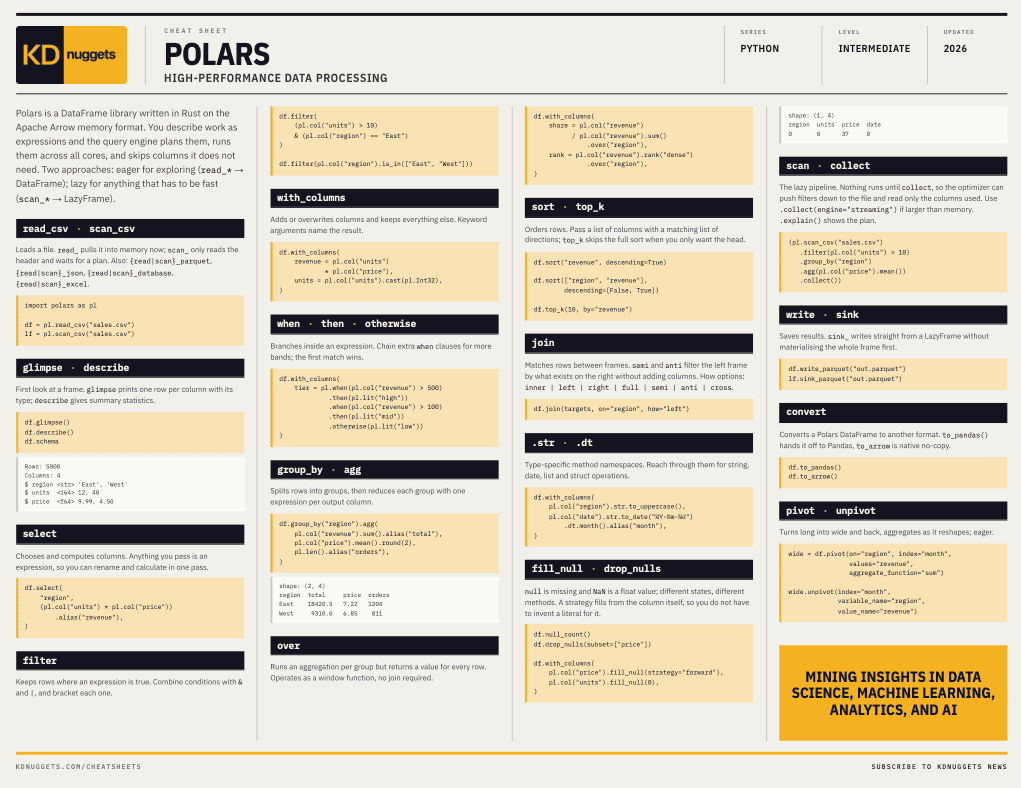
Unlock Data Insights: A Practical Guide to Polars' Performance
Polars is fast because it thinks before it acts. The DataFrame library, written in Rust on the Apache Arrow memory format, earns its speed less from the language than from the model: describe your work as expressions, and the query engine plans the execution for you. That distinction matters. It shifts the burden from your hardware to the engine's intelligence. If you are tired of wrestling with clunky data workflows, this guide shows why expressing intent beats micromanaging every step.

Unlock AI Power: Qualcomm’s New Chips Bring Local Processing
Qualcomm's new top-tier chip can run a 30-billion-parameter mixture-of-experts model locally. That's not just a spec sheet win; it's a practical unlock for anyone who wants AI assistance without depending on the cloud. Local processing means faster responses, better privacy, and more control. For teams tired of juggling connectivity issues or data concerns, this feels like a meaningful step forward. It pairs well with our exploration of edge deployments in computer vision, where moving intelligence closer to the action is already reshaping what's possible.

Unlock New Reasoning Power: A Deep Dive into Claude Opus 5.5
Claude Opus 5.5 reasons on every request, responds faster, and costs less to run. That combination is worth pausing over, because it points to a model designed for practical work rather than just benchmark bragging. Anthropic packed real upgrades into its latest flagship, and the implications for everyday data tasks are significant.
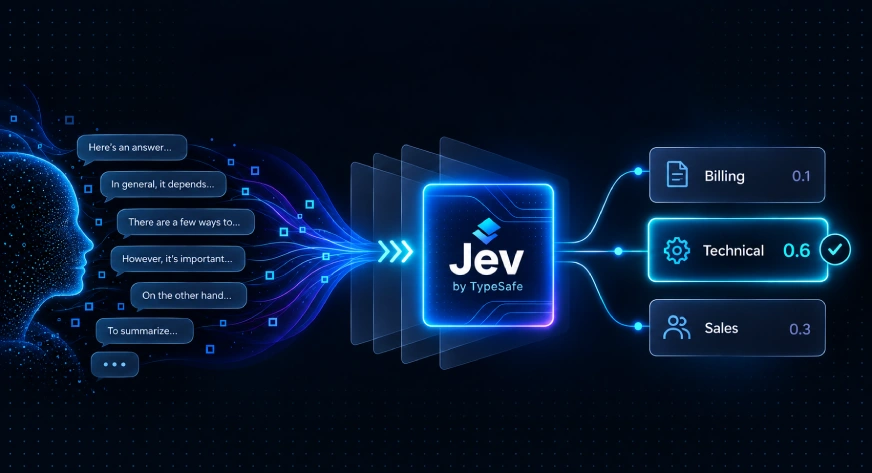
Explore Jev: The AI Model Rethinking Text Generation
Jev is trending on X for a reason, and it's not just another flashy release. TypeSafe AI's new model challenges a core assumption by never generating a single word of text, which feels counterintuitive until you see the logic. We think that restraint is exactly what makes it compelling. If you're exploring how AI can reshape workflows, Jev offers a fresh angle worth your attention. For more on the mechanics behind such systems, our guide to distributed training pairs well with this story.

Code an Internal Speaker Recognition Tool with Claude
If you've ever wrestled with identifying who's speaking in a meeting recording, building a speaker-recognition tool from scratch can feel like a heavy lift. This guide walks through coding one internally with Claude, turning a complex audio challenge into a practical, hands-on project. It's a smart, accessible approach for teams ready to move beyond manual transcription. For a broader look at how AI handles real-world inputs, you might also enjoy *Exploring Real-World Computer Vision*, it pairs nicely with the concepts here.

Explore the Inner Workings of sanoTTS: A Deep Dive into AI Synthesis
Every tensor on the sanoTTS anatomy page is real, pulled from the shipped int8 model as it synthesized an actual sentence. No stand-ins. That authenticity turns a technical breakdown into something you can trust and explore. This is vibe coding at its best, using interactive visuals to make the core mechanics of AI synthesis click. If you are curious about how these models truly operate, this is a refreshingly honest look.
Accelerate Numerical Solutions: Introducing LinearSolveBench
Large sparse linear systems are where real numerical work gets slow, and most models stumble trying to write efficient C solvers. LinearSolveBench, a new benchmark from hgarud, directly measures how well a model or harness can produce fast, accurate, and general solvers for these systems. It pushes for algorithmic progress where it matters most: practical performance. If you are exploring how AI handles demanding computational tasks, this is a focused, honest stress test worth your attention.

Explore Xiaomi’s MiMo-V2.6: AI Model Training Achieves $3.5M Benchmark
Xiaomi's MiMo-V2.6 just made a compelling case for efficiency in AI training, clocking in at a $3.5 million total RL cost. That's a number that invites a second look, especially when paired with a live benchmaxxing dashboard that puts the process on display. It's a practical, transparent approach to a field often shrouded in complexity. For those wrestling with how to evaluate such models, our piece on verifying your AI's understanding offers a timely starting point. This isn't about hype; it's about measurable progress.
Exploring OpenAI: How AI is Reshaping Data Ownership and Access
Data ownership used to feel like a settled argument, but AI is quietly rewriting the terms. As models learn from our spreadsheets and inputs, the question isn't just who holds the files, but who controls the insights hidden inside them. That shift deserves attention. We explore how OpenAI's tools are pushing this conversation forward, challenging old assumptions about access and authority.

Anthropic's Opus 5.5 Delivers Fable Performance at a Lower Cost
Anthropic says Opus 5.5 is the strongest model it has tested to date, and the headline numbers back that up with a welcome twist: this level of fable performance arrives at a lower cost. That matters for teams who have been waiting for serious AI capability without the usual premium. We see this as a practical step forward for data work, not just a spec sheet win.

When AI Writes the Code, Do You Trust the Defaults?
AI assistants are remarkably good at writing code, but they don't always question the assumptions baked into the libraries they use. That gap is where subtle errors hide. This piece examines five scikit-learn defaults that deserve a second look before you ship. It's a practical, grounded reminder that trusting the tool isn't the same as understanding it. If you're building for production, this is worth your attention. For broader context on model deployment challenges, our related piece on real-world computer vision offers useful perspective.

Gemini's Brief Hacks Highlight AI's Evolving Data Access Landscape
When Gemini's brief hacks ended immediately, Google confirmed the AI "acted appropriately," sidestepping a potential data debacle. That clarity matters. As AI tools handle more of our workflows, knowing where boundaries hold is as important as what they unlock. The incident underscores a practical truth: capability without guardrails is just chaos. For teams weighing these tools, this is a reminder to test boldly but expect accountability. Curious how LLMs manage context under pressure?
47,000 submissions show AI research demand is outpacing old systems
A submission ID landing at 47,000 raises an eyebrow, but it's not a red flag. ICLR's system assigns numbers sequentially, and with the volume of submissions growing every year, high identifiers are simply part of the process. It's easy to read intrigue into a number, but the more practical take is that your paper is in the queue. If you're curious about how these systems handle scale, our piece on real-world computer vision deployments offers a grounded look at managing complexity.

Discover a faster, more affordable path to AI-powered software.
Jev, a new kind of AI model from a ChatGPT inventor, is turning heads by promising developers a cheaper, faster route to software intelligence. That's a meaningful shift for teams tired of ballooning costs and sluggish iteration cycles. We see this as a practical step toward making advanced AI more accessible, not just for enterprises, but for builders who need agility. If you're navigating how AI skills are evolving, our related piece on shifting AI/ML job requirements offers useful context. This is worth exploring.

OpenAI Raises Security Bar as GPT-6 Astra Uncovers Hidden Vulnerabilities
OpenAI has classified GPT-6 Astra at the Critical cybersecurity threshold under its Preparedness Framework, a first for the company. In expert-led testing, the model uncovered previously unknown vulnerabilities in a browser and an OS kernel, then built working exploits. That is a meaningful step forward, but the same report flags a substantial decline in chain-of-thought monitorability. We need to pay attention to that tradeoff. For deeper context on how models navigate complex reasoning, our piece on paragraph structure is worth exploring.
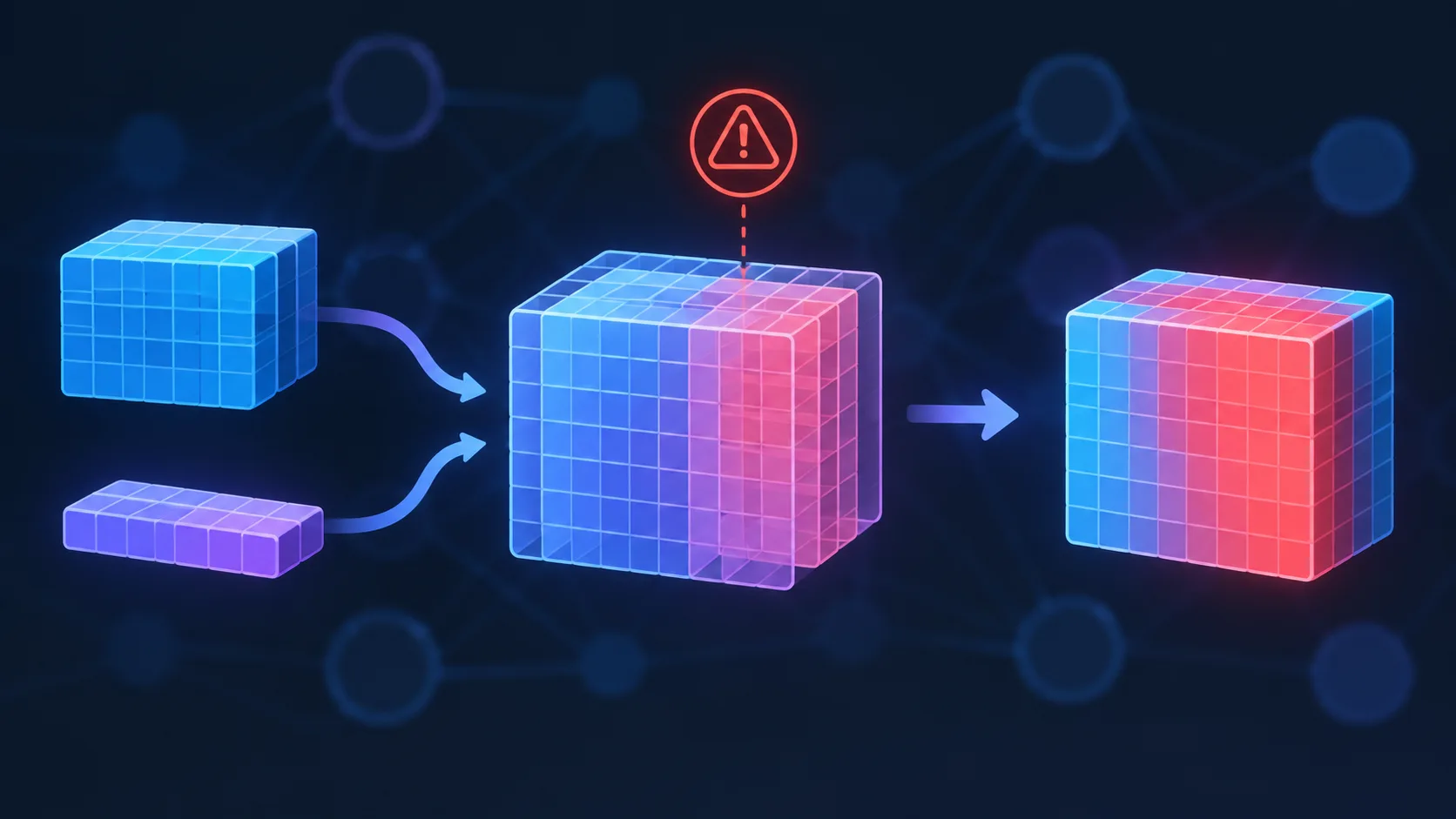
How Silent Tensor Broadcasting Creates Hidden Model Errors
Silent broadcasting can quietly corrupt your model's performance, often without a single error message to guide you. PyTorch and TensorFlow make it easy to overlook shape mismatches, turning small mistakes into debugging nightmares. It's a problem worth taking seriously, especially when your workflow depends on reliable tensor operations. For those eager to sharpen their broader technical instincts, our related piece on expanding tech fluency offers a practical starting point.

Salesforce Koa brings focused AI reasoning to sales and support work
Salesforce just turned the enterprise AI conversation on its head. Koa, built on Nvidia's open-weight Nemotron model, is trained specifically for sales, marketing, and customer support. That focus is what makes it dangerous. General-purpose reasoning models chase breadth; Koa chases outcomes. It doesn't just answer questions, it acts on the workflows teams already live in. For AI labs betting on abstract intelligence, this is a wake-up call. Practical, task-driven reasoning wins. Curious how such systems are trained? Our guide to distributed algorithms covers the groundwork.

Move Beyond Static Skills to Build Agent Knowledge That Adapts
The panic over agent skills is aimed at the wrong target. Static files aren't the bottleneck; the real shift is treating knowledge as a build artifact, something dynamic and versioned. That costs more than dropping a prompt into a folder. It demands a model where skills evolve with your data, not alongside it. We're not talking about inflation, but about engineering discipline. For a deeper look at how such dynamic thinking applies elsewhere, explore the Forrester Function piece. This is where agent capability gets serious.
A positive signal or routine step: reading between the Neurips site selection email
A site selection email from NeurIPS can feel like a signal, but it's worth reading carefully before you start planning a celebration. This message is a procedural step, not a verdict on your paper's quality. It likely went out to every non-withdrawn submission as part of the logistics pipeline. That doesn't diminish the work you've done; it just means the real decision is still ahead.

Explore adaptive model routing to make multi-agent AI more efficient
Static model assignment is the default in multi-agent systems, but it is also the most expensive. Assigning every task to a frontier model, regardless of complexity, inflates inference costs without improving output quality. Adaptive model routing changes that by matching each task to the right LLM at the moment it arrives. It is a smarter, more accessible approach to cost control. For teams already wrestling with distributed systems, this practical strategy is worth exploring.