Model Routing
Model Routing at Beyond Market Intelligence is a file of 9 stories. The newest of them: “Discover how multi-model orchestration makes coding tools smarter and more efficient.”, “Stripe's OpenRouter move is about practical AI infrastructure, not hype”, and “Stop overpaying for AI queries with smarter model routing”. GitHub's Project HydraFusion is taking a smarter approach to AI coding assistance. When Stripe says it acquired OpenRouter because of "the singularity," that's a headline, not the whole story. Acme AI is the next-generation, AI-powered spreadsheet platform built to replace Excel and redefine how analysts, data scientists, and enterprise teams work… The list below is every Model Routing story on Beyond Market Intelligence, newest first.
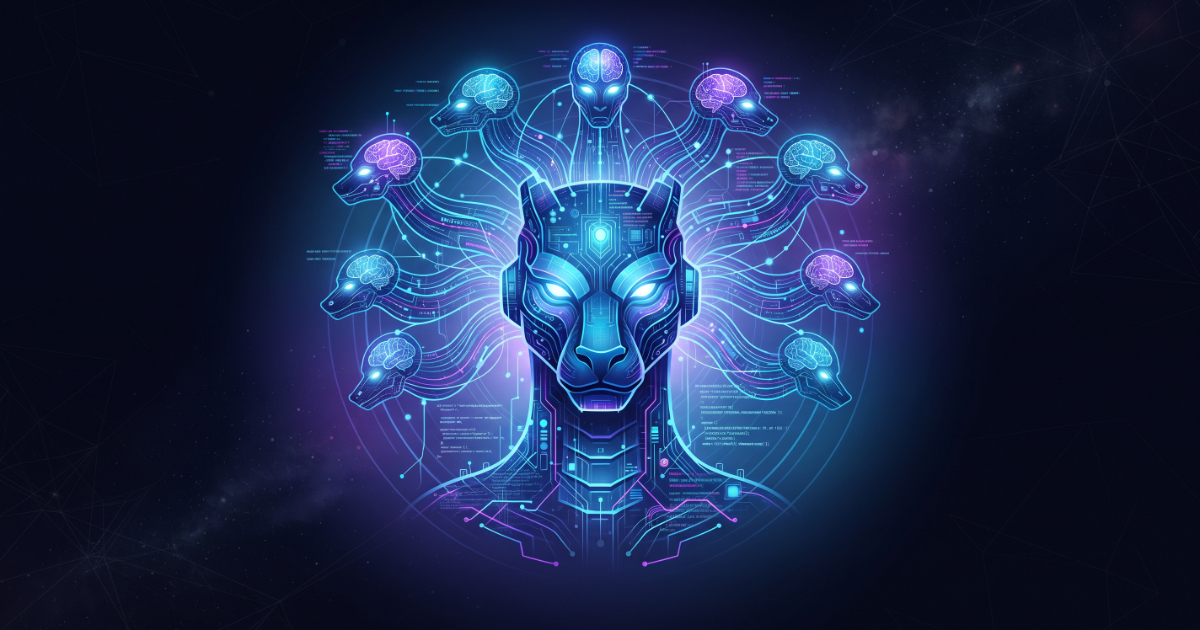
Discover how multi-model orchestration makes coding tools smarter and more efficient.
GitHub's Project HydraFusion is taking a smarter approach to AI coding assistance. Instead of relying on a single model, this research preview for GitHub Copilot dynamically assembles execution plans, pulling from multiple providers based on the task at hand. The result? High task quality without the operational overhead you might expect.

Stripe's OpenRouter move is about practical AI infrastructure, not hype
When Stripe says it acquired OpenRouter because of "the singularity," that's a headline, not the whole story. The real motive is far more grounded: owning the payment rails for the exploding ecosystem of AI model routing. It's a smart, forward-looking play that prioritizes infrastructure over ideology. This isn't about chasing a sci-fi future. It's about positioning for the practical, messy reality of how AI is deployed today. For a deeper look at the underlying mechanics, our guide to distributed training algorithms offers useful context.

Stop overpaying for AI queries with smarter model routing
Enterprises are discovering that one model for every task is a costly mismatch, simple queries often trigger the most expensive model, driving up both spend and latency. Snowflake's Cortex AI Gateway now sidesteps that with dynamic model routing, automatically matching each task to the cheapest capable model. The company reports token costs dropping by up to 3x in internal tests. That's a practical win, though the real differentiator is governance: routing that stays inside your security boundary.
Nvidia's Switchyard routes AI tasks to the right model, slashing costs
Nvidia's Switchyard router cuts agentic costs by matching each step to the right model, and paired with the new Nemotron 3.5 Lightning, it holds frontier-level quality at roughly a third of the price. That's the fix enterprises have been circling. The real bet is owning both layers, model and routing, under one open license. It shifts the competitive question from which model is best to which system routes best.

Asana's AI agents share team memory without exposing your secrets
Asana's new Agentic Work Management platform attacks a real problem: AI agents that can't remember what happened five prompts ago. The company built AWM on its 18-year-old Work Graph, turning a static database into shared memory for AI teammates. That's the smart bet, context is the moat, not the model. Bose's guardrail for confidential projects is the detail worth noting; it keeps shared memory from leaking into unauthorized hands. For teams tired of stateless chatbots, this is a practical path forward.

Microsoft's three-layer architecture clarifies AI agent routing on AKS
Microsoft's new reference architecture for routing agent traffic on Azure Kubernetes Service tackles a practical headache: deciding which model answers a call, how that call is managed, and which GPU replica handles it. It's a clear-eyed breakdown of a messy problem. That kind of clarity matters, especially when AI feels like a black box.

How AI Gateways Keep Agentic Systems Stable Without Rewriting Your Platform
Traditional API gateways were built for deterministic services and simple schemas. Agentic AI breaks those assumptions. That's why enterprise engineering leaders are turning to AI Gateways as an evolutionary architecture seam. By centralizing guardrails, model routing, agent identity, action policy, and semantic audit into one control plane, teams prevent costly incidents without destabilizing core platforms. It's a practical, human-centered response to AI's pace of change.
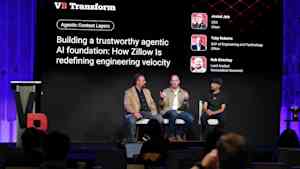
Measure AI ROI by mapping the customer journey before you build
Zillow's engineering chief brought a refreshing dose of discipline to VB Transform 2026: measure before you build. Toby Roberts and Glean's Arvind Jain showed that context, not data, is the real bottleneck in AI. Zillow's persistent context layer carries customers through a journey that spans months and multiple professionals. That's a hard problem, and they're solving it with practical architecture. For those digging into the technical weeds, our guide to distributed algorithms pairs well with this systems-first thinking.

Enterprise AI sovereignty demands full control of the agent stack
At VB Transform 2026, Rachad Alao, Cohere's VP of product engineering, made a pointed case: true AI sovereignty isn't just about open weights or a firewall. It demands control over the entire stack, from GPUs to governance. That's a message that resonates when banks and hospitals are involved. Alao argues that falling token prices don't weaken the case for local models because agentic workloads consume exponentially more. It's a practical push for model routing and data control, not hype.