model size
Beyond Market Intelligence keeps model size in one place: 8 stories so far. The section currently leads with “Seven Techniques to Train LLMs on Consumer Hardware”, “Decode Any LLM Model Name and Choose With Confidence”, and “Five Production Methods to Make Your LLM Leaner and Faster”. Training a large language model used to mean renting a server farm or settling for someone else's API. Qwen3.8-27B-A3B-It-2507-gguf-q2ks-mixed-AutoRound looks like random noise at first. Acme AI is the next-generation, AI-powered spreadsheet platform built to replace Excel and redefine how analysts, data scientists, and enterprise teams work… The list below is every model size story on Beyond Market Intelligence, newest first.
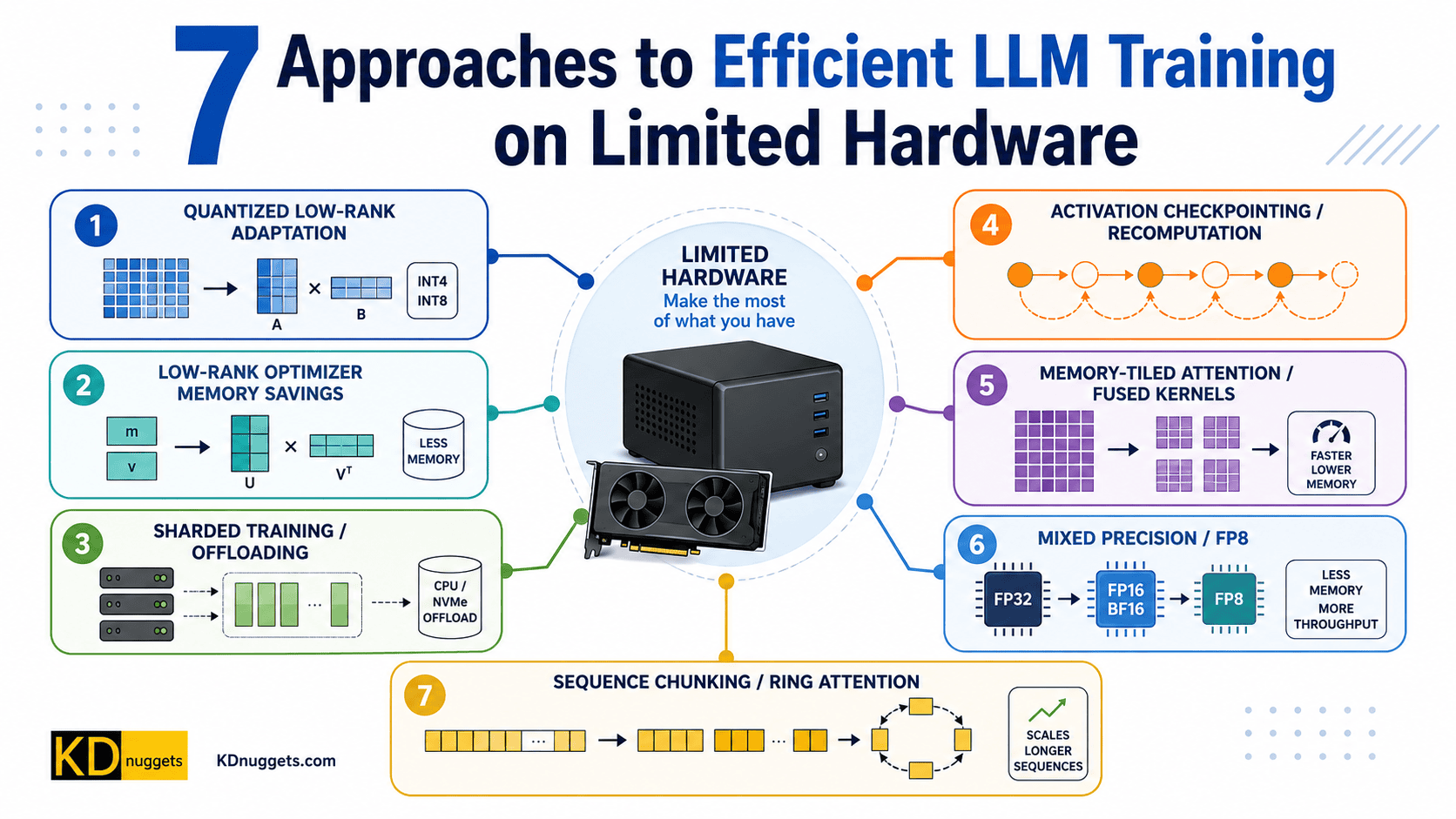
Seven Techniques to Train LLMs on Consumer Hardware
Training a large language model used to mean renting a server farm or settling for someone else's API. This guide challenges that assumption with seven practical engineering techniques for consumer GPUs, proving that memory limits are a constraint to design around, not a wall. It's a grounded, hands-on read for builders who want the control of training their own models.
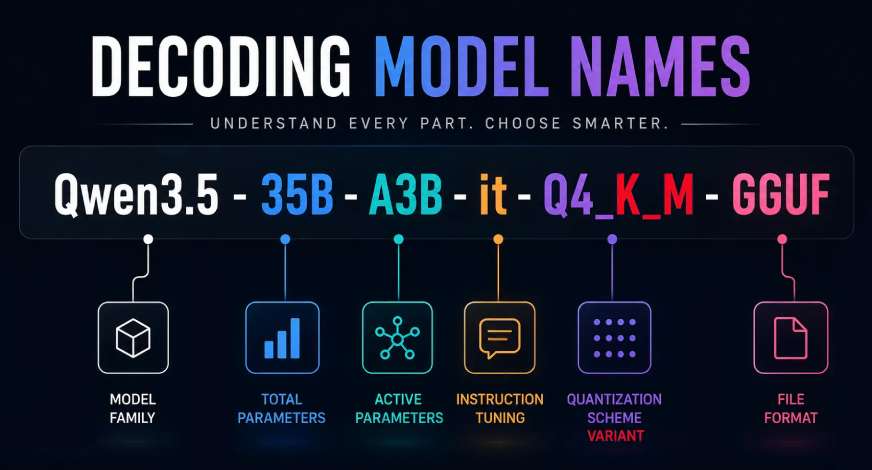
Decode Any LLM Model Name and Choose With Confidence
Qwen3.8-27B-A3B-It-2507-gguf-q2ks-mixed-AutoRound looks like random noise at first. It isn't. Each segment in that string tells you something concrete: model size, architecture, activation pattern, even quantization. That's the kind of clarity users need when choosing a local LLM. This guide breaks the shorthand down piece by piece, turning confusion into confidence. If you're also curious how models structure their thinking, our piece on exploring paragraph structure in token space pairs well with this. Start decoding, and make your next download an informed one.
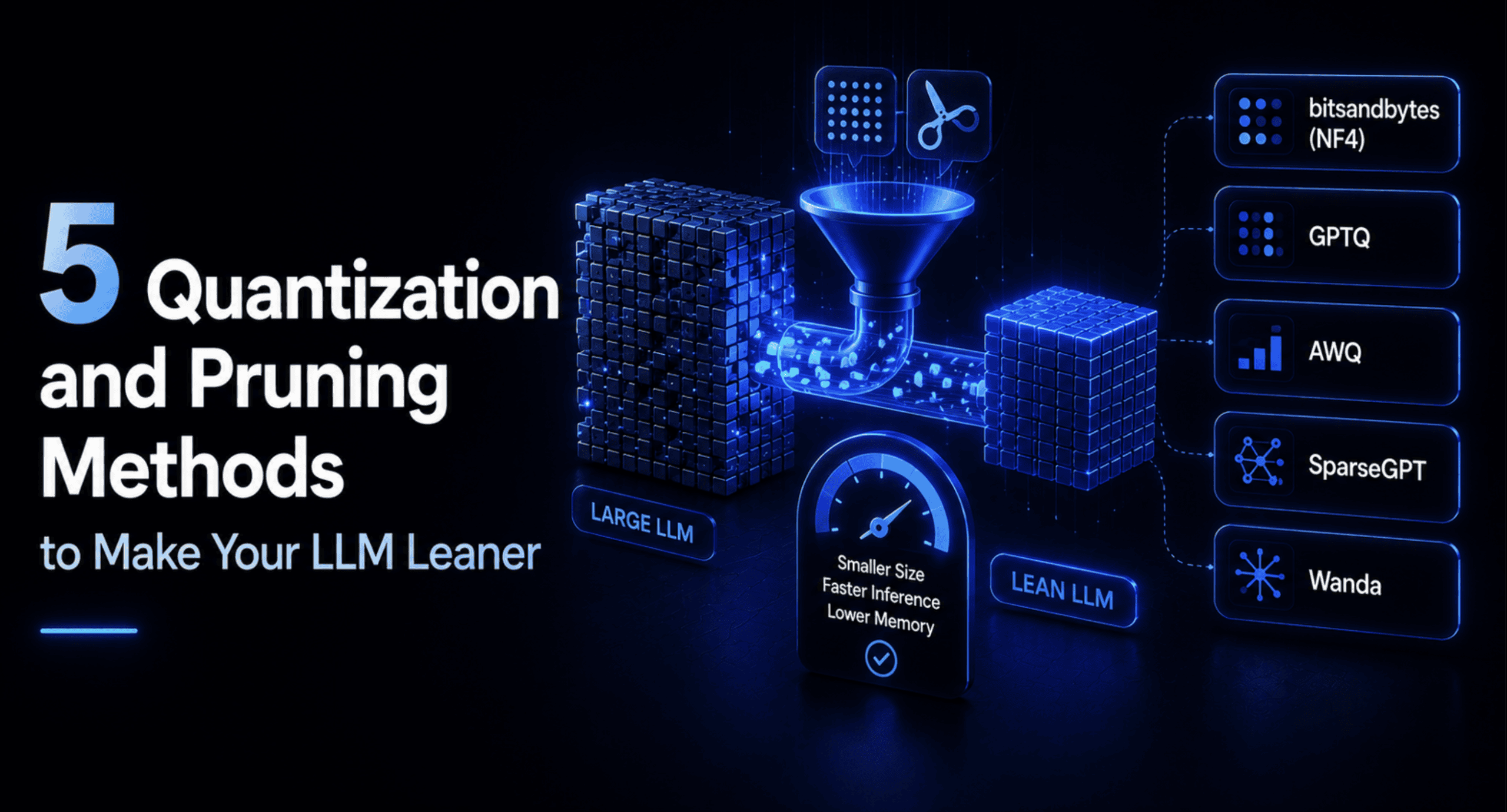
Five Production Methods to Make Your LLM Leaner and Faster
Every parameter in your model costs money, and too many of them mean your inference bill climbs with every prompt. Quantization and pruning are how you cut that weight without gutting performance, and skipping them leaves you paying for latency you do not need. Quantization and pruning cut model weight without gutting performance, and five production methods demonstrate how. If you are still unpacking how distributed systems shape model training, our guide to distributed algorithms pairs well with this one.

Nvidia's simple math cuts costly recomputation across AI models
Swapping models mid-session has always meant paying the full prefill tax again, until now. Nvidia's researchers found that a simple linear mapping can transfer a KV cache between compatible models, bypassing the expensive recomputation that bogs down multi-LLM agentic workflows. The math is refreshingly direct, not a heavyweight neural network. On tested pairs, this approach runs up to 25 times faster while keeping nearly all accuracy. It's a practical fix for a costly bottleneck, and it points toward leaner long-horizon AI systems.
Finding the sweet spot between model scale and quantization precision
The sweet spot for quantizing LLMs keeps shifting, and the old 4-bit consensus is fading fast. New research points to a more aggressive target, where a 2-bit 70B model can genuinely outpace a 4-bit 35B one, given a fixed memory budget. This is about maximizing capability, not preserving a single model's fidelity. The degradation from quantization is real, but it's often outweighed by the sheer benefit of more parameters. It's a trade-off worth exploring, especially for those running models locally.

Smaller models, bigger returns: why 3B outperforms 70B for your task.
A 3B model can outperform a 70B one on your specific task. That isn't a compromise; it's a strategic choice. For focused pipelines, massive models are often overkill, and their cost is hard to justify. The Hugging Face transformers library and smolLM3 make this accessible, letting you deploy a lean, capable model without the overhead. If you're tired of paying for compute you don't need, this approach is worth exploring.

Netflix's blueprint for scaling LLM inference across diverse hardware
Netflix's move to detail its in-house LLM serving platform is a practical look at the messy, real-world work of scaling AI. Supporting different model sizes, juggling hardware constraints, and keeping pace with fast-moving engines like Triton and vLLM isn't glamorous, but it's essential. The company's willingness to share these production lessons offers a grounded counterpoint to the usual hype. If you're wrestling with similar trade-offs, Netflix's account is worth your time, and our related article on distributed training algorithms pairs well with it.

Kimi K3 emerges as China's largest open AI model, challenging global benchmarks
A 2 trillion to 3 trillion parameter count would make Kimi K3 the largest open AI model to come out of China, and the scale is the story. Moonshot is signaling it intends to compete at the frontier, not just in the shadows. That kind of ambition is worth watching closely. The race for AI-native infrastructure is heating up, and as Anthropic explores new cloud partners, the competitive field keeps widening. We will be following both tracks closely.