modeling
Beyond Market Intelligence keeps modeling in one place: 16 stories so far. The section currently leads with “Own the Outcome: Why Data Scientists Crave the Feedback Loop”, “Build a complete data science stack for free with these open-source AI tools”, and “Explore the Forrester Function: Beyond Mathematics, a Tool for Machine Learning”. The feedback loop is addictive. Building a production-grade data science stack doesn't have to strain your budget. Acme AI is the next-generation, AI-powered spreadsheet platform built to replace Excel and redefine how analysts, data scientists, and enterprise teams work… The list below is every modeling story on Beyond Market Intelligence, newest first.
Own the Outcome: Why Data Scientists Crave the Feedback Loop
The feedback loop is addictive. When you can see your work move a number within the same sprint, ownership feels less like a buzzword and more like a superpower. But the flip side is real: absorbing coordination work and covering for understaffing under the guise of "ownership" breeds resentment. The line between a senior DS who understands the system and one quietly doing everyone's job is blurry.
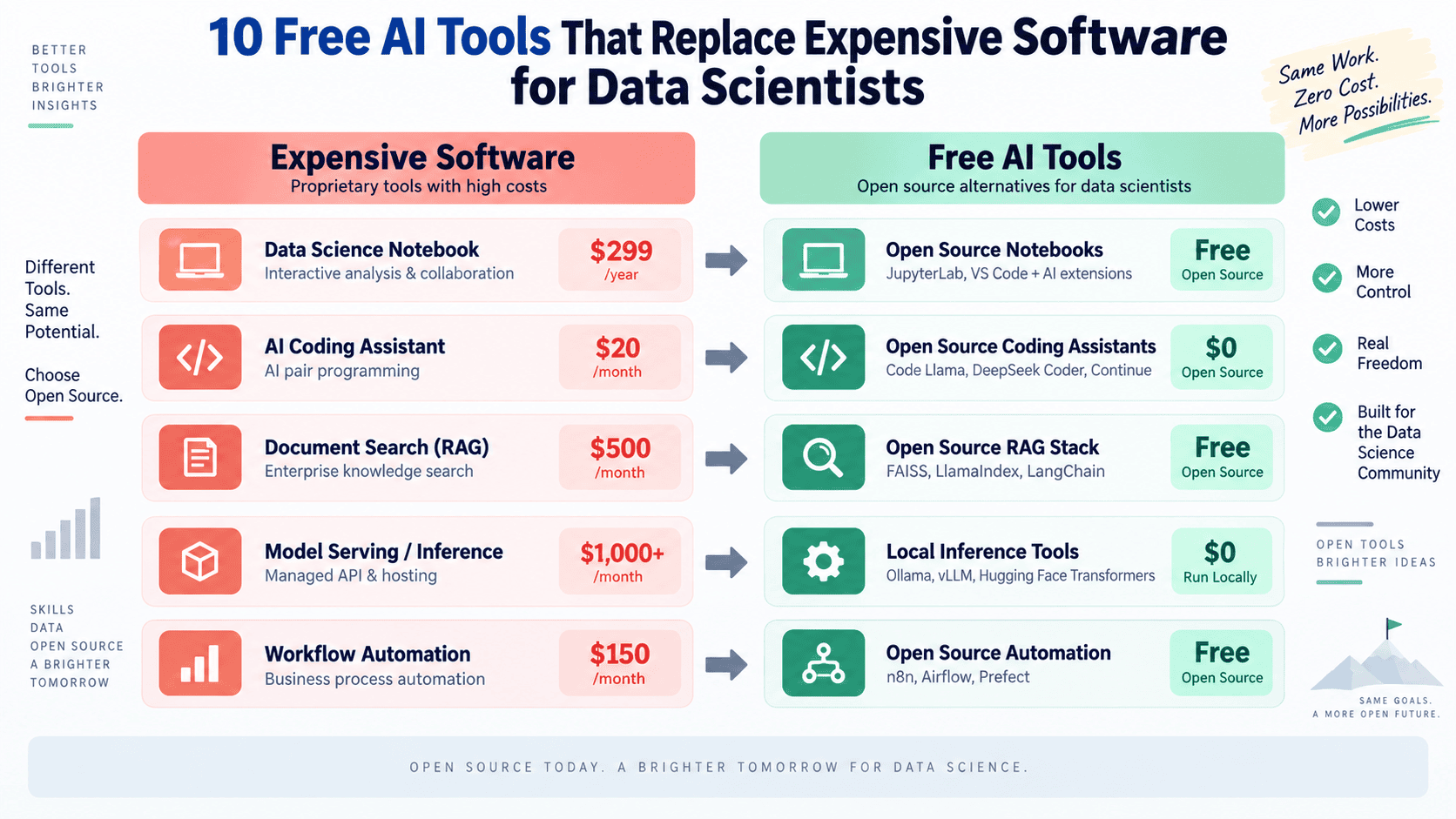
Build a complete data science stack for free with these open-source AI tools
Building a production-grade data science stack doesn't have to strain your budget. Open-source AI tools now match, and sometimes exceed, the capabilities of their paid counterparts, giving you a complete toolkit for free. This is about empowerment, not compromise. If you've been exploring how smarter workflows can transform your practice, our piece on semi-supervised learning as an underrated path offers a fitting next step.
Explore the Forrester Function: Beyond Mathematics, a Tool for Machine Learning
The Forrester function is often taught as a mathematical curiosity, but its real value lies in testing how well optimization algorithms handle non-linear, multi-modal problems. That user asking about its role in machine learning is onto something, this function is a standard benchmark for evaluating model performance, not a solution for real-world economics or forecasting. It belongs in the toolbox of anyone validating methods, not applied directly to data.

Build Your First World Model: A Practical Python Guide
Building a world model sounds abstract until you watch one learn to play CartPole by imagining the future. That's exactly what this practical guide delivers: a hands-on Python walkthrough for creating a model that daydreams its way through the environment, then shows you precisely when that illusion starts to crack. It's a smart, grounded introduction for anyone ready to move beyond static spreadsheets. For more on how AI behaves in real-world systems, explore "Exploring Real-World Computer Vision: Deployments, Edge Models, and Current Challenges."

Transfer learning for physics with simplified dynamical models
Training an RL agent on one complex physical system rarely transfers cleanly to another. That is the bottleneck this approach tackles directly, using reduced order models to compress the dynamics into something the agent can actually reuse. It is a smart, practical step toward generalizable simulation control. If you are already wrestling with how to scale your own models, our guide to distributed training algorithms pairs well with this mindset. The takeaway: smarter abstractions, not brute force, are the way forward.
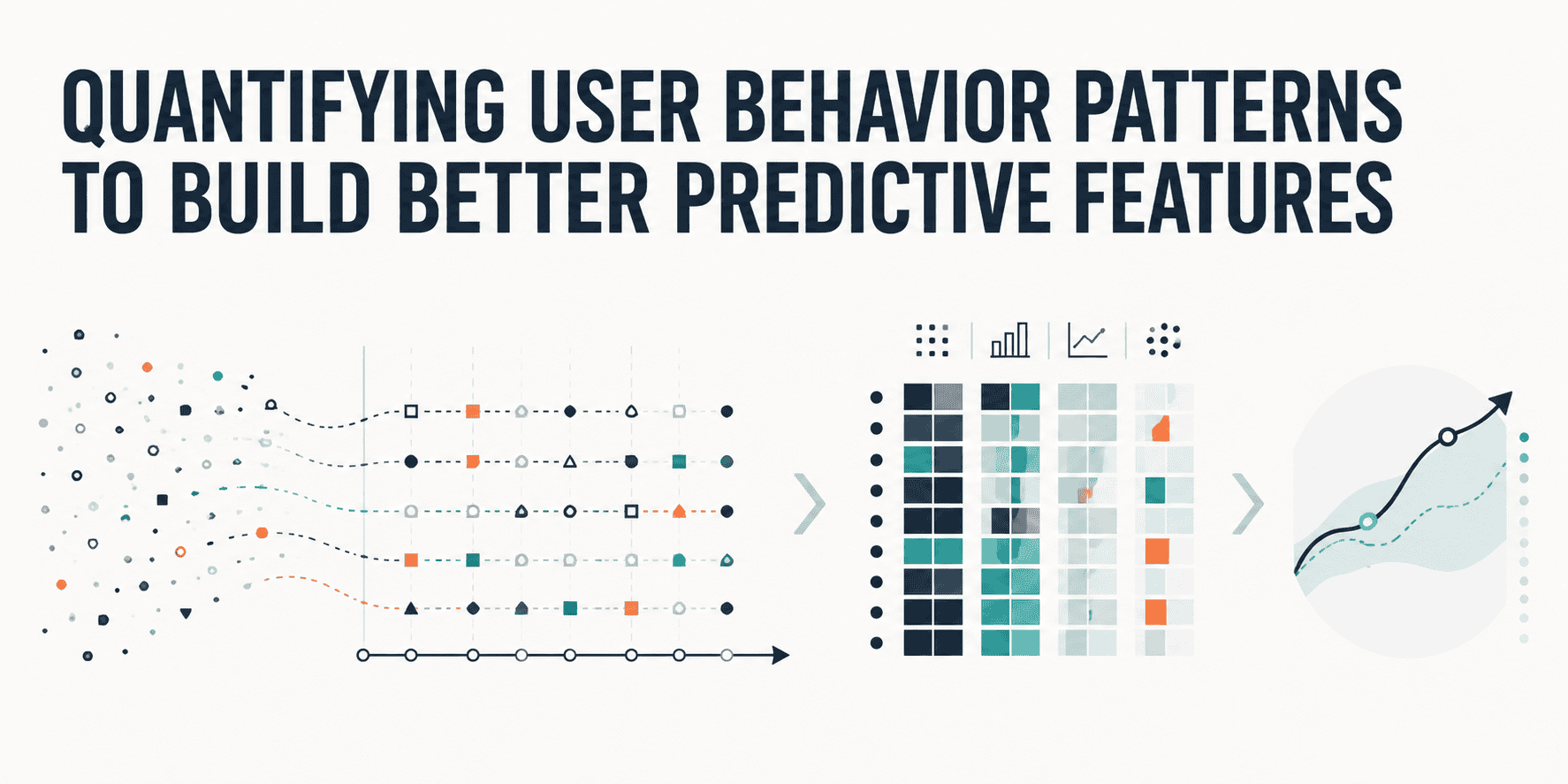
Discover how behavior patterns unlock smarter predictive tools
A single click stream from a 35-year-old male in Seattle reveals almost nothing about his intent. Raw demographics and isolated actions are noise. We need to quantify behavior patterns over time to build predictive features that actually matter. This is about moving beyond surface-level data to understand the sequence and context of user actions. For a deeper look at how we approach pattern recognition in practical systems, our piece on real-world computer vision deployments offers a useful parallel.

Explore how an open-source framework transforms resource scheduling.
Dirk Lemmerman has made FlexGanttFX open source, and that's a meaningful move for anyone building scheduling tools. The JavaFX framework, released under the AGPL license, relies on Canvas rendering to keep performance sharp even when Gantt charts grow complex. Task dependencies and direct editing are built in, so project planning feels less rigid. It's a practical resource for industries that need tailored timelines. If you're curious about how similar frameworks handle unexpected data patterns, our piece on the Forrester function offers a useful parallel.
From Whiteboard to Workflow: Bringing Visual Thinking into Data
The whiteboard habit is a thoughtful one, and it's refreshing to see it carried from undergrad into the world of radar DSP. Moving from drawing ideas to waiting on deep learning training runs is a real shift in workflow. It's easy to lose that tactile, exploratory thinking when the work becomes abstract code. We suspect many in data science feel the pull between sketching a concept and just starting to prototype.

Diversify Your Budget Without Losing the Insights That Power It
A well-structured budget should never force you to choose between clarity and control. This piece tackles that exact tension, showing how you can diversify a budget while keeping the shadow prices that explain every decision. It's a practical approach for anyone tired of opaque spreadsheets that hide their own logic. We appreciate work that makes financial modeling more transparent, and this guide delivers exactly that. For readers exploring how data tools evolve, *Expanding Your Tech Fluency* offers a useful complement.

Explore how VAEs generate new data through math and practical insight
Variational autoencoders ask a deceptively simple question: how do you generate something new from a learned distribution of what already exists? This walkthrough takes the math-first route, tracing the path from theory to the evidence lower bound and the reparameterization trick that makes training possible. It is a precise, grounded explanation for anyone ready to move past surface-level intuition. If distributed training feels like the next step in your LLM journey, our guide on distributed algorithms pairs well with this foundation.

Explore how a third pretraining axis transforms end-to-end data generation.
Most language models are trained along two axes: data and compute. Gladstone and colleagues argue for a third: the modeling objective itself. Their work on explorative modeling suggests that how we frame the learning task is as important as the data we feed it. This isn't a tweak; it's a different approach to end-to-end generation. For a deeper look at how such models navigate structure, our guide on paragraph structure in token space is a useful next stop.
Explore how deeper math in operations research can reshape your data career
You're weighing a real fork in the road: stay deep in data science or branch into operations research. That's not just a title decision; it's about how you want to solve problems. OR is math-heavy, but not beyond what you've already got. Calcs 1-3, linear algebra, and stats are the foundation. You'll add optimization and probability, which are more applied than theoretical. Earning potential is comparable, so let the work itself guide you.

Why Prediction Alone Fails to Uncover True Causal Effects
A model that predicts an outcome with high accuracy can still mislead you on treatment effects. That is the uncomfortable truth this piece tackles. The issue is variable selection: predictive models chase correlation, not causation, so they often drop confounders that matter for estimating impact. Bayesian Adjustment for Confounding offers a more principled path forward. It is a technical fix, but the lesson is practical. If your data strategy is off, even the smartest model will lead you astray.

Discover the surprising power of the mean in modern data analysis
The mean is easy to dismiss as ordinary, yet it keeps surfacing in ways that surprise us. This piece traces its history and the science behind its quiet power, showing how such a simple calculation proves useful in unexpected corners of data work. We found it a compelling read, a reminder that foundational tools often hold the most depth. For those intrigued by how basic mathematical concepts extend into modern applications, exploring the Forrester function offers a natural next step.

Spreadsheets now predict their own missing cells, no training required
Spreadsheets have always been good at following rules, not guessing what comes next. Tabular foundation models change that premise: they predict a missing column the way an LLM completes a sentence, with zero task-specific training. On the TabArena benchmark, these models now outpace fully tuned gradient-boosted trees, which reframes what "good enough" means for tabular data. This introduction walks through how they work, reproduces the strongest open model independently, and maps where XGBoost still holds its ground.

Explore how data models failed when empathy mattered most on a flight.
An overbooked flight cost one airline $8 million in a single incident, while an affected passenger walked away with $5,000 and a story poised to go viral. That gap is the real tragedy of data science. Numbers tell us what happened, but they rarely capture the human cost behind the spreadsheets. This tale is a reminder that even the smartest models miss what matters most. For those eager to explore how data-driven systems fail, this is a compelling place to start.