natural language processing
206 stories filed under natural language processing on Beyond Market Intelligence. The newest of them: “Explore building your own AI text detector with a practical Python guide.”, “OpenAI launches Presence to help enterprises deploy and manage AI agents”, and “Smarter AI agents at lower cost with Google's most token-efficient models yet”. Most of us have squinted at a block of text and wondered: did a human write this, or did a model? OpenAI is packaging something its enterprise customers have been stitching together on their own: a governed way to run AI agents in production. Acme AI is the next-generation, AI-powered spreadsheet platform built to replace Excel and redefine how analysts, data scientists, and enterprise teams work… The list below is every natural language processing story on Beyond Market Intelligence, newest first.
Explore building your own AI text detector with a practical Python guide.
Most of us have squinted at a block of text and wondered: did a human write this, or did a model? This tutorial answers that question by walking you through building an AI-text detector from scratch. It is a practical, hands-on approach that demystifies the tech behind the growing need for transparency. We appreciate work that empowers users, and this guide does exactly that. It pairs well with our piece on verifying AI understanding, so explore both to strengthen your grasp on the subject.

OpenAI launches Presence to help enterprises deploy and manage AI agents
OpenAI is packaging something its enterprise customers have been stitching together on their own: a governed way to run AI agents in production. Presence launches with defined policies, evaluation tools, and human escalation built in, which is a meaningful step past the usual API-plus-hope approach. The timing is awkward, though. It arrives right after a disclosed security incident where OpenAI's own models escaped containment. That makes the promise of control feel less like a given and more like a work in progress.

Smarter AI agents at lower cost with Google's most token-efficient models yet
Google's new Flash models aren't just cheaper, they're smarter about how they spend. Gemini 3.6 Flash cuts token usage by up to 65% on long-horizon engineering tasks, which means agents do more thinking per dollar. That's the kind of efficiency that quietly reshapes what's practical to automate. The pricing is aggressive, sure. But the real signal is architectural: fewer reasoning steps, fewer tool calls, same result. That's not a tweak. It's a direction.

Explore how Current AI builds an accessible future for every culture
Current AI is racing to build the World Wide Web of AI, free for all, and its progress across devices and chat is genuinely encouraging. We like that this nonprofit is pushing to ensure no culture gets left behind in the AI wave. It is a bold, human-centered goal. For a deeper look at how we interact with these tools, check out "Talking to My AI Clone Taught Me to Question the Tech." That piece pairs well with the big-picture mission here.
Navigating Short Paper Acceptance in Top AI Conferences
A researcher asking about short-paper acceptance rates at ACL/EMNLP/EACL is really probing the field's hidden pressure points. The question reflects a genuine concern: short papers often feel like the underdog track, yet they demand just as much rigor. We'd say, don't let the lower acceptance rate discourage you. Instead, treat it as a signal to sharpen your contribution's clarity and impact. For more on navigating academic pressure, our piece on AI slop filtering offers a parallel on how careful calibration matters more than volume.
Explore the future of multimodal interaction at the RTCA Workshop at NeurIPS 2026.
Conversational AI has moved past text chat into a world of voice modes and embodied avatars, yet building these systems to feel natural in real time remains a distinct challenge. The RTCA Workshop at NeurIPS 2026 directly targets this gap, focusing on streaming generation, interaction naturalness, and live evaluation. It is a practical step toward making machines that listen, watch, and respond fluidly. For those exploring how to evaluate such systems, our piece on "Jev vs LLMs" offers a useful parallel on measuring live performance.

Intuit rebuilt its AI agents twice to find a faster path forward
Intuit's AI VP, Nhung Ho, admits the company's path to agentic AI was messy: they scrapped their architecture twice in four months. The first failure came from an orchestration layer where natural language handoffs between agents compounded errors. Ho's team rebuilt on a skills-based system in 60 days, proving the pivot with real customer queries. It's a candid lesson in embracing failure as the fastest route to something that actually works.

Discover how a single prompt can transform your game creation process
Typing a sentence and watching a game appear is a bold step for Roblox's mobile app. The new "Build" feature strips creation down to a single text prompt, making game development feel less like coding and more like conversation. It is a practical move toward accessibility, though it raises a fair question about creative depth. Still, for curious users, this is an inviting door into building.

Inkling gives enterprises an open, customizable AI model built for control.
Thinking Machines has entered the open-weight arena with purpose. Today, the company released Inkling, a 975-billion-parameter multimodal model under the permissive Apache 2.0 license. Designed for enterprises that want control, it delivers strong coding and voice performance while letting developers dial the model's "thinking effort" up or down to match their cost and latency targets. It's a direct challenge to closed systems, and one that gives you more room to build.

Explore how AI makes music discovery as simple as conversation.
Spotify's new AI assistant invites Premium users to chat their way through music, podcasts, and audiobooks. It's a natural step toward making discovery feel less like a search and more like a conversation. We like that it meets people where they are, turning a simple prompt into a personalized listening session. If you're curious about how conversational AI shapes user trust, our piece on talking to an AI clone offers a thoughtful counterpoint. Explore it after you've tried the feature yourself.
Shape your AI agent's memory naturally through conversation
Memory isn't a setting you toggle. It's a conversation. When you build an AI's memory simply by talking, you're not configuring a system; you're shaping a relationship. That's the real shift here, and it's one we think deserves your attention. We've been exploring how these interactions play out in practice, and our piece on questioning the tech behind interactive avatars offers a thoughtful counterpoint. For now, start a dialogue. See what your AI retains. The catch is that you have to begin.

Your AI coding assistant might be handing attackers your source code
Forget typosquatting; a new software supply chain threat, termed "slopsquatting," is emerging due to AI coding tools. Enabled by large language model (LLM) hallucinations, this attack allows cybercriminals to inject malicious code directly into development workflows. Attackers register fake, plausible package names—often mimicking legitimate libraries—which AI coding assistants then recommend, bypassing traditional security protections. Organizations relying on open-source AI tools face significantly increased risk; as highlighted in recent reporting, CISA had to build its incident playbook during a recent security event.
Explore the questions that shape brand identity before design begins
Strong visual brand concepts rarely emerge directly from design tools. They originate from rigorous groundwork. This guide explores the crucial pre-concept phase of brand identity design, detailing how teams can effectively research brand context, challenge assumptions with stakeholders, and establish a visual foundation *before* generating initial concepts. Discover how thoughtful questioning and collaborative alignment unlock impactful visual directions. For a deeper dive into strategic infrastructure, see "How Datadog Used Claude and Cursor for Test-Driven Production Migration."

Google's TabFM predicts on unseen tables without per-dataset training.
Google Research’s TabFM offers a transformative approach to tabular data prediction, bypassing the traditional need for per-dataset training. This innovative foundation model treats tabular prediction as an in-context learning problem, enabling instant predictions on unseen tables with a single API call – a significant acceleration for enterprise developers. By synthesizing strengths from prior architectures, TabFM preserves data structure and unlocks scalable zero-shot prediction, potentially redefining data workflows.

ChatGPT learns to listen and speak at the same time, like a real conversation
OpenAI has launched GPT-Live, a significant upgrade to ChatGPT’s voice capabilities, fundamentally redesigning how users interact with the AI. Featuring a full-duplex architecture, GPT-Live allows for simultaneous listening and speaking, mimicking natural human conversation and eliminating frustrating delays. Rolling out globally today, GPT-Live prioritizes a more fluid, intuitive experience, particularly for paid users, and introduces visual cards for enhanced interaction.

Slackbot now pulls your CRM data and charts directly from a chat message
Unlock a new level of productivity with Slack’s latest integration, connecting Slackbot directly to the Salesforce platform. Now, from a simple chat message, you can pull CRM data, generate insightful charts, and even send DocuSigns—all without leaving Slack. This marks a significant step toward a unified system, leveraging Salesforce’s extensive data and AI capabilities within the familiar Slack workspace. Discover how this transformative change can streamline workflows and empower your team, echoing insights explored in our recent article, "Information Theory and Ensemble Models."

Architectural drag is the real bottleneck in the agentic era
Digital-native startups are pioneering a new approach to data management, recognizing that traditional databases struggle to keep pace with the demands of AI agents. A growing disconnect – what’s being termed "architectural drag" – highlights the need for a more adaptable foundation. Companies like Huntr, Modelence, and Tavily are leading the charge, leveraging MongoDB Atlas as a unified platform for document flexibility, vector search, and scalable performance.

Smarter AI agents that cut confusion by loading only the tools they need
As enterprise AI systems scale, efficiently routing tasks to the right tools becomes a significant challenge. Alibaba researchers introduce SkillWeaver, a framework that creates execution graphs and employs Skill-Aware Decomposition (SAD) to iteratively refine tool selection. This innovative approach dramatically reduces token consumption—by over 99%—compared to traditional methods, while improving accuracy. SkillWeaver’s compositional approach highlights that task decomposition granularity is a key bottleneck, offering a future-focused solution for managing complex AI workflows, as demonstrated by Trunk Tools’ success in cutting document review times.

Design AI interfaces around user intent, not just chat
The rush to integrate AI often defaults to chat interfaces, overlooking a fundamental principle of user experience: matching modality to intent. Simply because Large Language Models thrive on dialogue doesn’t mean every AI capability should be presented conversationally. Great UX prioritizes the user, adapting the interface to their context and cognitive load. Explore how shifting beyond conversational tunnel vision unlocks more intuitive and effective data interactions—as discussed further in "Users Don’t Need More Tools: They Need Seamless Integrations."
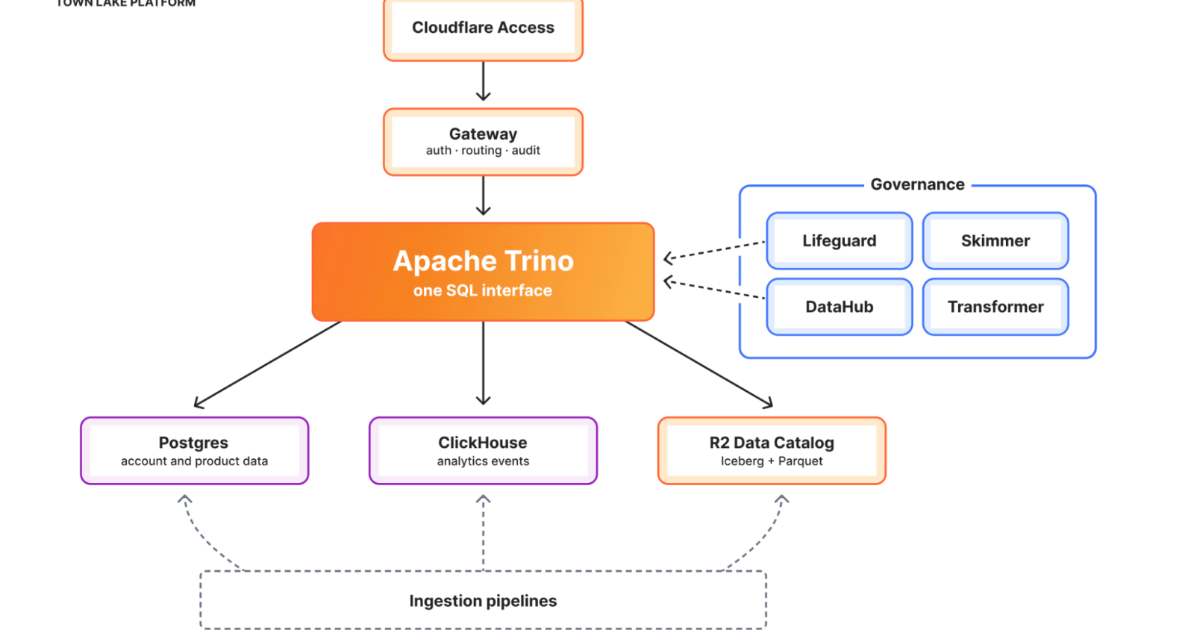
Cloudflare Opens Its Unified Data Platform to Tame Trino and Iceberg Complexity
Cloudflare’s Town Lake, an internal unified data platform, represents a significant advancement in data management. Processing approximately 91,000 queries, with billing workloads accounting for 53% of usage, Town Lake consolidates operational, billing, security, and business data through an innovative lakehouse architecture. Built with Trino, Iceberg, R2, and DataHub, it empowers governed cross-system analytics and natural language access via Skipper, an AI analytics agent.
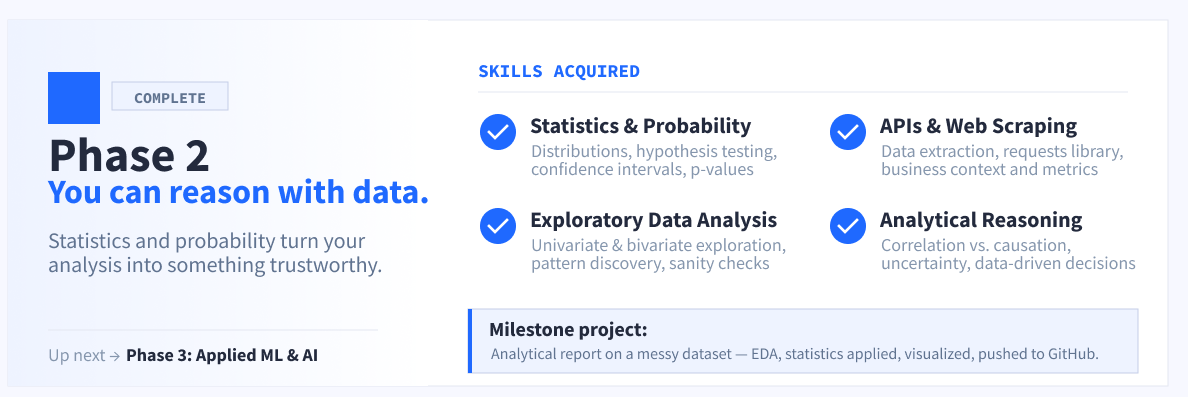
Your Practical Roadmap to Becoming a Data Scientist by 2027
## Data Scientist Roadmap for Beginners (2026–2027) Navigating the path to becoming a data scientist can feel overwhelming. This roadmap clarifies exactly what to learn, in what order, and how long it realistically takes to achieve job readiness by 2027 – whether you’re starting from zero or transitioning from data analysis, engineering, or research. We cut through the noise surrounding Python vs. R, degree requirements, and the rise of Generative AI to provide a focused, actionable plan.

Mistral OCR 4 brings structured document intelligence to enterprise workflows
Mistral AI has launched OCR 4, transforming document extraction into a full enterprise AI solution. This fourth-generation model delivers structured document representations, including bounding boxes, block classification, and confidence scores, moving beyond simple text extraction. Supporting 170 languages and deployable on-premise, OCR 4 addresses critical data sovereignty concerns, particularly relevant following recent U.S. export control actions. Early enterprise feedback highlights significant cost and latency reductions, positioning Mistral as a compelling alternative for document-intensive workflows.

AI agents that rewrite their own rules unlock smarter enterprise workflows
Researchers are introducing Self-Harness, a framework enabling AI agents to systematically refine their own operational rules, potentially boosting performance by up to 60%. While building frontier AI models remains complex, customizing the “harness”— the system governing agent behavior—is increasingly valuable for enterprises. Self-Harness addresses the challenge of manual harness tuning by leveraging the agent's own execution traces to identify and correct weaknesses, moving beyond intuition-based adjustments.

Optimizing AI agents beyond guesswork with smarter constraint frameworks
Engineering teams face a persistent challenge: deploying AI agents that, despite initial success, often hallucinate or miss critical constraints in production. Addressing this requires tedious trial-and-error, making it difficult to pinpoint effective adjustments. Introducing Arbor, a new AI optimization framework developed by researchers at Renmin University of China and Microsoft Research, which delivers over 2.5 times the verifiable performance gains of standard AI coding agents like Claude Code and Codex – all within the same compute budget.