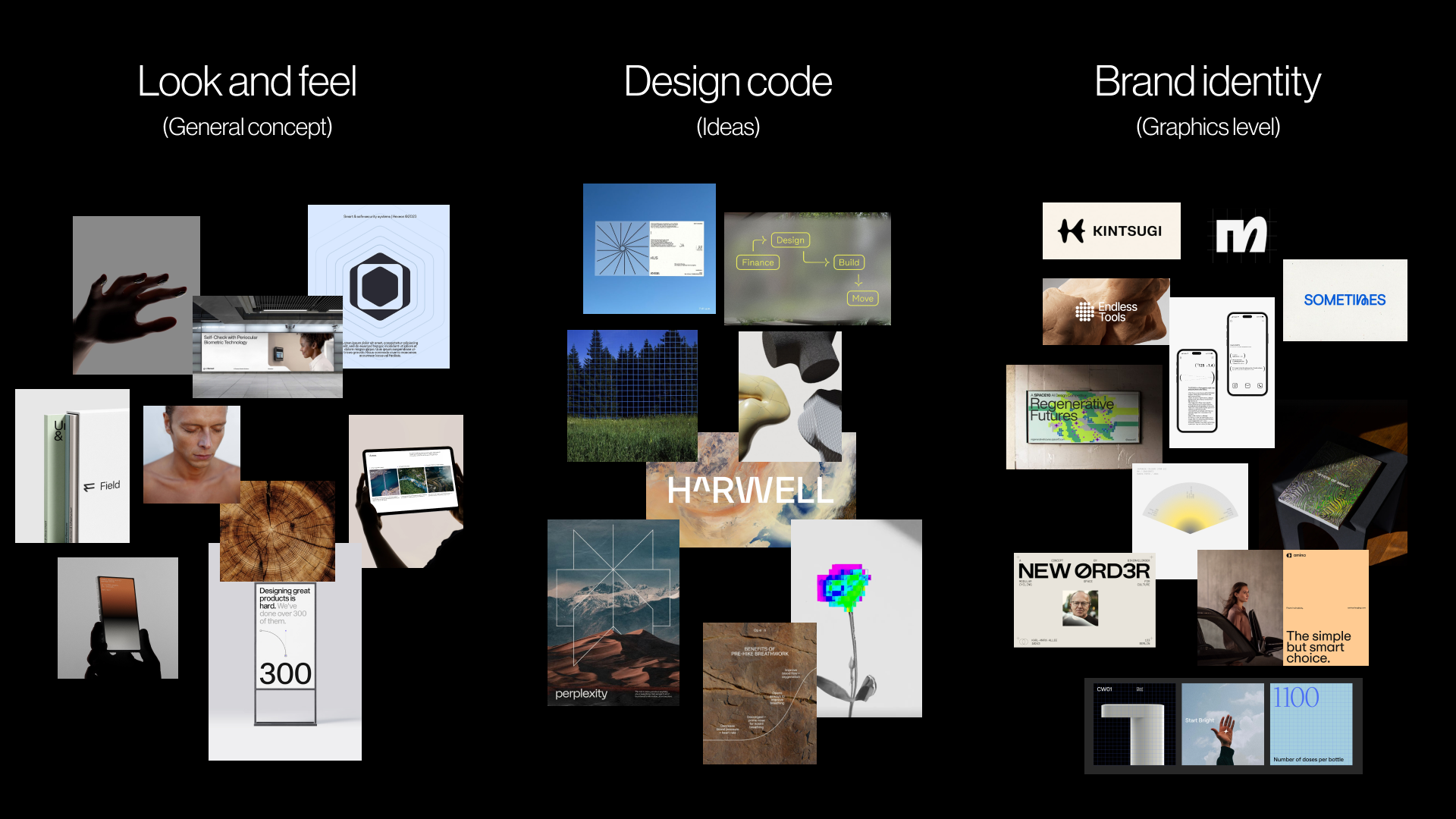
The recent piece on transforming brand strategy into visual direction highlights a critical, often overlooked, phase in the design process: the "pre-concept." It's a stark reminder that compelling visuals aren't born from creative leaps alone, but from a rigorous foundation of understanding. We've seen this play out countless times; a beautifully designed logo or website can fall flat if it doesn't genuinely represent the brand's core identity. Undefined terms like "modern" or "trustworthy" are dangerous, vague aspirations that leave designers to interpret meaning without a shared compass. This echoes the challenges of aligning technical implementation with strategic goals, a problem explored in [How Datadog Used Claude and Cursor for Test-Driven Production Migration], where careful planning and iterative testing proved essential for a successful transition. Just as Datadog needed a clear test-driven approach for their migration, brands need a clear, pre-concept foundation for their visual identity. The potential for misalignment is significant, and the cost of rectifying it later in the process is exponentially higher.
The emphasis on uncovering hidden assumptions with stakeholders is particularly insightful. Too often, brand strategy becomes an echo chamber, reinforcing pre-existing beliefs rather than challenging them. A robust pre-concept phase necessitates a willingness to question assumptions, actively solicit diverse perspectives, and ensure everyone involved has a shared understanding of the brand's essence. This process isn't about stifling creativity; it's about providing it with a fertile ground to flourish. Consider the complexities of cloud architecture discussed in [Article: Trade-Offs in Multi-Region Architectures: Latency vs. Cost]; navigating those trade-offs demands a thorough understanding of the underlying systems and user needs. Similarly, a successful visual identity requires a deep understanding of the target audience and the brand's position within the competitive landscape. This stage is where that understanding is built, brick by brick.
The move away from relying solely on mood boards and lists of adjectives is a welcome shift. While these tools can be helpful starting points, they often lack the nuance and depth needed to inform truly impactful visual direction. The pre-concept phase should involve deeper research, competitor analysis, and a clear articulation of the brand's values, mission, and personality. It's about translating abstract concepts into actionable guidelines that designers can use to create visuals that resonate with the target audience and accurately reflect the brand's identity. Focusing on questions rather than immediate visual solutions feels especially pertinent, prompting a more thoughtful and strategic approach. The efficiency gains of a well-defined framework also align with the principles explored in [Local Video Summarization Pipeline: Processing Frames with SmolVLM2-2.2B], where optimizing processing and leveraging smaller models lead to significant resource savings. Applying a similar principle to brand identity – optimizing for clarity and shared understanding – can save time and resources down the line.
Ultimately, the "pre-concept" phase represents a necessary investment in the long-term success of a brand. It's a recognition that strong visual identity isn't about aesthetics alone; it's about communicating a clear and consistent message that resonates with the target audience. As AI tools become increasingly capable of generating visual content, the importance of this foundational stage will only grow. Will the ability to rapidly iterate on visual concepts further emphasize the need for a rock-solid pre-concept foundation, or will it lead to a dilution of brand identity through an overabundance of choices? That's a question we'll be watching closely.