optimization
Beyond Market Intelligence keeps optimization in one place: 106 stories so far. The section currently leads with “Explore how VAEs generate new data through math and practical insight”, “Optimize Your CI/CD Pipeline for AI-Powered Coding Agents”, and “Discovered Materials raises $9 million to find smarter materials for cooler chips”. Variational autoencoders ask a deceptively simple question: how do you generate something new from a learned distribution of what already exists? Deploying code with Claude Code isn't just about automating steps; it's about rethinking how your CI/CD pipeline handles AI-driven development. Acme AI is the next-generation, AI-powered spreadsheet platform built to replace Excel and redefine how analysts, data scientists, and enterprise teams work… The list below is every optimization story on Beyond Market Intelligence, newest first.

Explore how VAEs generate new data through math and practical insight
Variational autoencoders ask a deceptively simple question: how do you generate something new from a learned distribution of what already exists? This walkthrough takes the math-first route, tracing the path from theory to the evidence lower bound and the reparameterization trick that makes training possible. It is a precise, grounded explanation for anyone ready to move past surface-level intuition. If distributed training feels like the next step in your LLM journey, our guide on distributed algorithms pairs well with this foundation.

Optimize Your CI/CD Pipeline for AI-Powered Coding Agents
Deploying code with Claude Code isn't just about automating steps; it's about rethinking how your CI/CD pipeline handles AI-driven development. This piece cuts through the noise, offering practical ways to integrate coding agents without losing control or speed. If you're tired of wrestling with brittle workflows, this guide feels like a breath of fresh air. For more on how AI reshapes practical engineering, you might also enjoy *Exploring Real-World Computer Vision*, different domain, same principle: build for real constraints.

Discovered Materials raises $9 million to find smarter materials for cooler chips
Discovered Materials just raised $9 million to play a high-stakes game of AI whack-a-mole, hunting for novel materials that could make chips cooler and more efficient. That's a smart bet, because the future of computing depends on finding the right elements, not just shrinking transistors. We like the focus on discovery over hype; it's practical, ambitious, and user-adjacent. For more on how AI shapes our tools, check out "Talking to My AI Clone Taught Me to Question the Tech."

From NASA to nanosecond data: Direct-access Valkey cuts latency and cost.
Dumanshu Goyal doesn't just tweak a database; he rethinks the path data takes. His talk, *From ms to µs*, draws a sharp lesson from NASA's Space Shuttle: every layer of proxy adds hidden CPU costs and widens tail latencies. The fix is direct-access Valkey architectures, which deliver microsecond responses while shrinking both risk and infrastructure bills. It's a practical, no-hype case for simplifying your data layer.
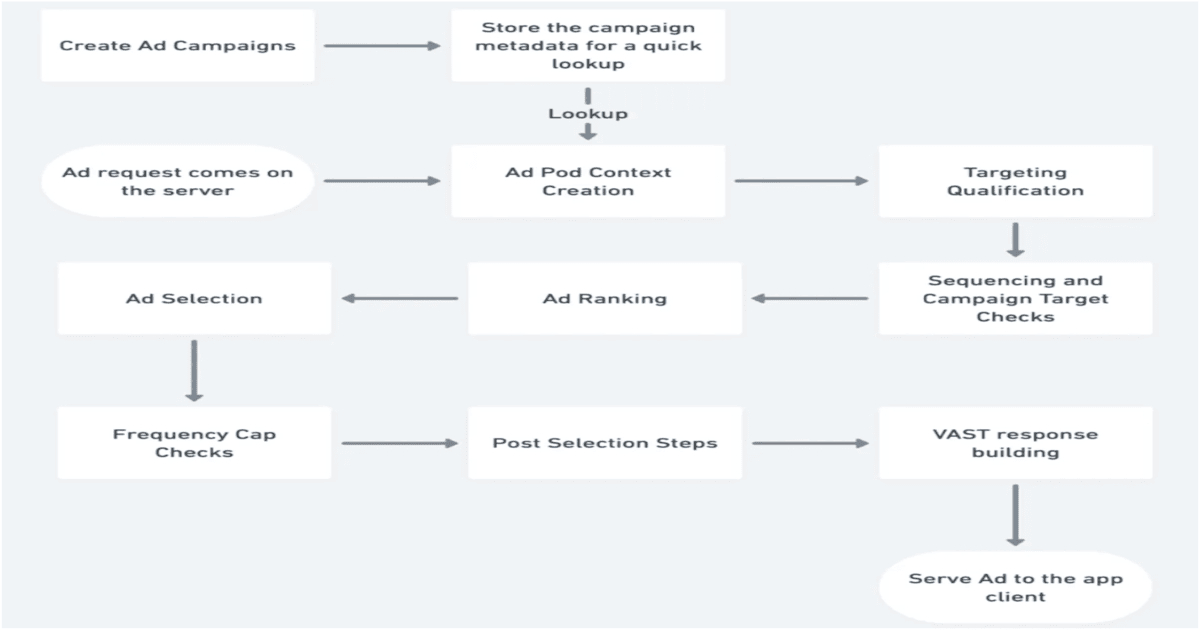
How JioHotstar Coordinates Distributed Systems for Real-Time Ad Selection
When a video streams, the ad request behind it is a distributed engineering feat. JioHotstar's Leela Kumili breaks down the real-time workflow, from ad decisioning and waterfall tiering to pacing algorithms and latency optimization. It's a clear look at how service coordination selects personalized ads without stalling playback. For more on how modern systems handle scale, our piece on the Stateless Model Context Protocol offers a useful counterpoint. This is practical, forward-looking engineering worth your attention.
Teaching PPO to Track the Ball Instead of Memorizing Scores
After 124 failed PPO experiments on Atari Breakout, Mikey Harrell found something worth celebrating: every model defaulted to a memorized script. The fix wasn't more environment engineering. It was three lines of reward shaping, a tiny proximity bonus that rewards tracking the ball during descent. The behavior transfers to clean evaluation, and his Split-Watcher tool lets you see it live. It's a smart, human-centered insight into why optimization pressure matters more than complexity.

Speed up your C interpreters with minimal code changes
JIT compilers are powerful, but retrofitting them into existing interpreters often feels like a monumental task. Laurence Tratt's presentation on yk, an open-source meta-tracing framework, challenges that assumption. He demonstrates how C-based language interpreters, like Lua and MicroPython, can be sped up automatically with minimal, non-invasive code changes. The focus on tracing loops and managing complex deoptimization is particularly compelling. It's a practical, grounded approach to a difficult problem.

Explore how a third pretraining axis transforms end-to-end data generation.
Most language models are trained along two axes: data and compute. Gladstone and colleagues argue for a third: the modeling objective itself. Their work on explorative modeling suggests that how we frame the learning task is as important as the data we feed it. This isn't a tweak; it's a different approach to end-to-end generation. For a deeper look at how such models navigate structure, our guide on paragraph structure in token space is a useful next stop.

Build smarter AI workflows with structured evaluation pipelines
Structured evaluation pipelines often feel like a chore, but they're the difference between guessing and knowing. This approach from /u/rhazn digs into how to build checks that actually measure your AI's output, not just admire it. It's practical, and that's what we need. If you're still wrestling with whether your models truly understand context, our piece on verifying an AI's grasp during tax season pairs well with this mindset. Test, learn, and refine.

Understanding Adam's limits can transform how you train complex models.
Blindly defaulting to Adam without understanding what it's actually doing will cost you. That's the takeaway from a Reddit user whose work in reinforcement learning forced a rethink: Adam still works, but only if you coax it, and its loss "burstiness" can feel maddening. The mathematical intuitions matter. This piece re-covers where Adam fails spectacularly, and for anyone training deep transformers, it's a necessary read. For broader context on model behavior, our related piece on paragraph structure in LLMs is worth exploring.

Master reasoning budgets to make your AI work smarter, not harder
Controlling how much an LLM thinks before it answers is quietly becoming one of the most practical levers in AI. This post breaks down reasoning effort and token budgets with the kind of clarity that makes you wonder why it took so long to ask. It's not about hype; it's about giving users a dial they can actually turn. If you're tired of guessing why some responses feel overthought or rushed, this is worth your attention.

Four strategies to scale multi-agent AI without rising token costs
Scaling a multi-agent architecture doesn't have to mean watching your token bill climb. This guide lays out four practical strategies to keep costs in check while you grow, and it's a refreshingly grounded take on a problem many teams quietly wrestle with. The focus here is on smart implementation, not hype. For more on the broader infrastructure behind such systems, our piece on distributed training algorithms offers a useful foundation. If you're ready to streamline without the sting, this is a worthwhile read.

Beyond the Model: The Human Work That Powers Supply Chain AI
The engine stalled mid-route, and the spreadsheet that should have flagged the issue sat silent. That moment reveals the real work of a Forward-Deployed Engineer: not building the model, but untangling the messy, human systems around it. In one supply chain project, the AI was the easy part; the hard part was embedding it where decisions actually happen.
Explore how deeper math in operations research can reshape your data career
You're weighing a real fork in the road: stay deep in data science or branch into operations research. That's not just a title decision; it's about how you want to solve problems. OR is math-heavy, but not beyond what you've already got. Calcs 1-3, linear algebra, and stats are the foundation. You'll add optimization and probability, which are more applied than theoretical. Earning potential is comparable, so let the work itself guide you.
Rethink your AI strategy for real competitive advantage
Most teams race to build bigger models or chase flashier features, yet they overlook the real advantage: how they frame the problem itself. In this piece, we explore why competing on raw capability misses the point. Instead, focus on what your data actually needs, not what the hype demands. It's a practical reframe. If you're questioning how deeply to trust AI outputs, our piece on verifying your AI's understanding offers a timely companion. The path forward is simpler than the noise suggests.
Why I Stopped Installing Skills and Found a Smarter Workflow
There's a quieter path past the constant churn of installing Claude Skills. I stopped adding them to my workflow, and the shift has been liberating. Instead of stacking tools, I'm focusing on direct conversations with the model, letting it adapt to my specific needs in the moment. It feels less like managing a toolbox and more like collaborating. If you're curious about the limits of this kind of interaction, our piece on talking to an AI clone offers a useful counterpoint.

When Multi-Agent Architecture Tripled Our LLM Costs and What Fixed It
A seemingly small shift to multi-agent architecture quietly tripled the token bill, and the author felt it in the ledger before the dashboard caught up. It's a sharp reminder that progress often hides its price tag. The fix wasn't a bigger budget but a smarter orchestration of prompts. If you're exploring AI's subtle costs, you might also appreciate "Talking to My AI Clone Taught Me to Question the Tech," which tackles hidden trade-offs from a different angle.

Streamline Your Coding Agent Workflow for Smarter Task Management
If you're juggling multiple coding agents, the chaos of scattered tasks can quickly become its own project. This guide cuts through the noise, offering a practical way to organize every request and keep your workflow moving. It's a straightforward approach for anyone tired of losing track of what each agent should be doing. For more on how AI handles structured work, our related piece on paragraph structure is worth a look.

Building Smarter Routes: Adaptive Heuristics for Complex Pickup-and-Delivery Problems
If you've ever wrestled with a delivery route that spirals into chaos, this one's for you. Los Movimientos, Part II tackles the heavy lifting of pickup-and-delivery problems head-on, using Adaptive Large Neighborhood Search to handle time windows, capacity limits, and mandatory driver breaks. It's a practical, Python-based guide that turns a complex optimization challenge into something you can actually build and adapt. For those ready to level up their coding toolkit, this pairs nicely with "Unlock Python's Potential: Advanced Techniques for Smarter Coding."

Power demands from data centers test grid capacity for the first time.
Grid operators just made a hard call: temporary power cuts for data centers on the largest US grid to prevent blackouts. It's a pragmatic move, born from the breakneck pace of construction outpacing generation. We see the tension clearly, growth is only sustainable if the grid can carry it. This isn't about slowing innovation; it's about steadying the foundation. For a deeper look at how infrastructure strains shape tech decisions, our piece on Cloudflare's EmDash migration offers a useful counterpoint.

Understand Adam's Optimization Dynamics Before Your Model Fails
Vibe coding an import feels efficient until the model quietly misreads your data. That's the trap Adam sets. Treating it as a default fix ignores how its optimization dynamics actually behave, and when they misfire, the failure is anything but subtle. Understanding why it breaks matters more than assuming it works. If you're chasing cleaner inputs, our piece on catching AI slop before it skews your model pairs well with this cautionary read.

Discover the core insight that makes backpropagation truly work.
If you've ever watched a neural network struggle through training, you know the feeling: there has to be a better way. This second part of our beginner's guide gets to the heart of that intuition, unpacking the core idea that makes backpropagation possible. The guide offers a clear, accessible look at a concept that often feels abstract, and it does a fine job keeping the explanation grounded. For those ready to push further, our guide on distributed algorithms offers a natural next step.

How Uber Separates Growth From Infrastructure Costs With Smarter AI
Uber's Zero Growth Stack takes a sharp turn on infrastructure logic: it separates capacity growth from business demand, so services scale without piling on hardware. Garbage collection sits at the core, quietly doing the heavy lifting. What stands out is the inclusion of generative AI in development, which lifts developer productivity, but Uber pairs that with deliberate cost controls. That balance, scaling while staying economically disciplined, is the real takeaway.

How optimization tames complex delivery routes and restores your sanity
Some problems look simple until they refuse to bend. That's the story behind "Los Movimientos," a pickup-and-delivery puzzle with time windows that pushed its solver to the edge. It's not about the frustration, though; it's about how mathematical optimization turns chaos into a workable route. For anyone who's felt spreadsheet limits, this is a satisfying look at structured problem-solving. And if you're curious how AI handles structure differently, our piece on paragraph navigation in LLMs pairs nicely with it.