optimization
Beyond Market Intelligence keeps optimization in one place: 106 stories so far. The section currently leads with “Explore smarter data labeling by using AI to focus human effort where it matters most.”, “Explore cost-effective vector search with on-disk ANN indexes like DiskANN”, and “Explore how data models failed when empathy mattered most on a flight.”. Human labeling is expensive, and most of it goes into teaching models what they should already learn from less. RAM is the ceiling that most vector search budgets hit first. Acme AI is the next-generation, AI-powered spreadsheet platform built to replace Excel and redefine how analysts, data scientists, and enterprise teams work… The list below is every optimization story on Beyond Market Intelligence, newest first.

Explore smarter data labeling by using AI to focus human effort where it matters most.
Human labeling is expensive, and most of it goes into teaching models what they should already learn from less. Using ML active learning to target annotation where it truly matters reduces paying for redundant work. It's a smart, grounded approach for teams feeling the squeeze on time and budget. If you're exploring smarter ways to train models, our guide on distributed algorithms pairs nicely with this mindset.

Explore cost-effective vector search with on-disk ANN indexes like DiskANN
RAM is the ceiling that most vector search budgets hit first. When that ceiling gets too expensive, the conversation shifts to disk. The real trade-offs between in-memory HNSW and on-disk options like SPANN and DiskANN are walked through, giving a practical lens on latency versus storage cost. It's a grounded look at architecting infrastructure that scales without breaking the bank. For a deeper dive into system-level choices, our piece on adaptive recommendation systems offers a useful parallel.

Explore how data models failed when empathy mattered most on a flight.
An overbooked flight cost one airline $8 million in a single incident, while an affected passenger walked away with $5,000 and a story poised to go viral. That gap is the real tragedy of data science. Numbers tell us what happened, but they rarely capture the human cost behind the spreadsheets. This tale is a reminder that even the smartest models miss what matters most. For those eager to explore how data-driven systems fail, this is a compelling place to start.
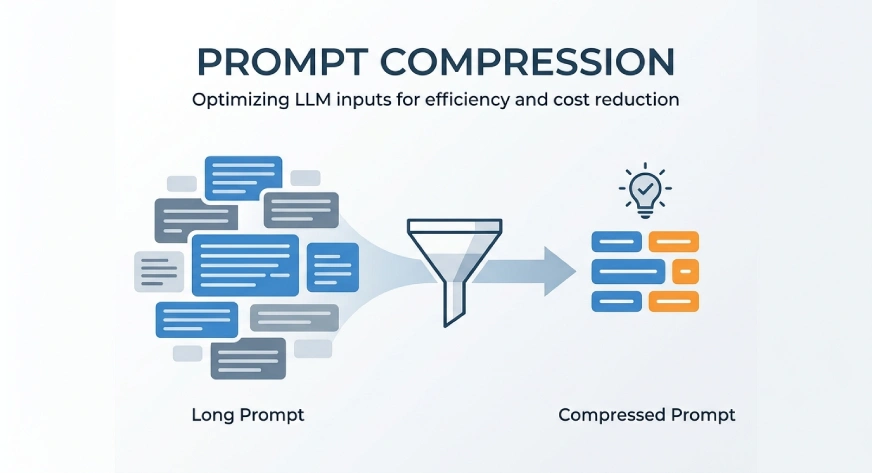
Smarter Prompts, Lower Costs: Compress Without Losing Context
Every prompt carries more than it needs. Long instructions, retrieved documents, and chat history inflate token counts, slow responses, and bury what matters. Prompt compression trims that excess while preserving the core meaning. It is a practical answer to a growing cost problem, and it deserves attention. If you want to see how agents learn by editing context instead of weights, our piece on Agentic Context Learning pairs well with this discussion. The takeaway is simple: leaner inputs, sharper outputs.

Build Your Own LLM Runtime with a Guided Tour of Real Bugs
There's a particular satisfaction in packing your own weights and capturing your own CUDA graphs, and that's exactly the terrain this walkthrough covers. The post traces the building of annotated-llm-runtime on an H100, with three bugs generating most of the hard-won annotations. It's a practical, grounded tour for anyone curious about the mechanics beneath the abstraction. For broader context on the distributed side, *Unlock LLM Training* pairs well here, though this piece stands firmly on its own.

Explore GPT-2's vocabulary through a flyable hyperbolic tree of 32,070 tokens
Somewhere in the internet's endless sprawl, a reddit user got tired of flat maps. So they built a better one. This isn't another 2D projection of GPT-2's vocabulary. It's a hyperbolic tree, housing all 32,070 tokens inside a Poincaré ball you can actually fly through. The layout is constructed exactly, with no optimisation or training involved. Trees don't fit well in flat space, but they embed naturally here. Drag, pinch, and tap to explore.

How Neural Networks Learn: Building Intuition for Backpropagation
Backpropagation often feels like a black box, but this guide pulls back the curtain without drowning you in math. The author builds intuition step by step, showing how neural networks learn by adjusting weights through error feedback. It's a practical starting point for anyone ready to move past surface-level understanding. If you're curious about how these concepts scale, our related guide, "Unlock LLM Training: A Practical Guide to Distributed Algorithms," offers a natural next step.
Explore how AI models can now run directly on your mobile device.
Running a private Qwen 35B MoE model on a Galaxy S26 Ultra is no small feat, and the early numbers are worth noting. Roughly 90 input tokens per second with about 8 output tokens per second shows real progress, especially when precision stays intact. What stands out is the path here: self-taught expertise, no formal PhD, just curiosity and access to resources. That matters. Four arXiv papers still on hold because there is no institutional backing? That is a familiar wall.
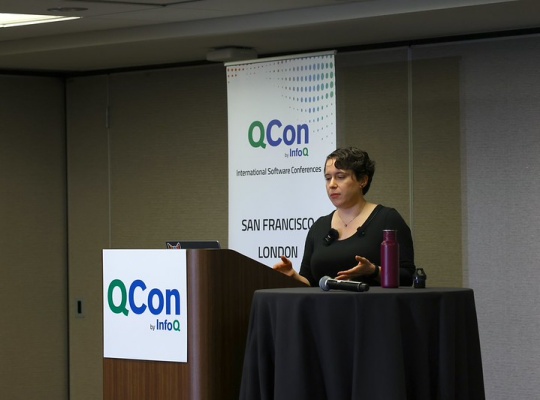
How Rust's compile-time safety reshaped our thinking on delivery speed
Rust's borrow checker often gets framed as a barrier, but Ruth Linehan's talk flips that assumption. She shows how migrating high-performance caching services from Kotlin to Rust actually shortens the developer feedback loop, turning compile-time safety into a daily advantage. It's a practical look at how the language reshapes delivery velocity, not just runtime performance. For those exploring how modern infrastructure choices ripple outward, this pairs well with our coverage of Perplexity's move to CobbleDB.
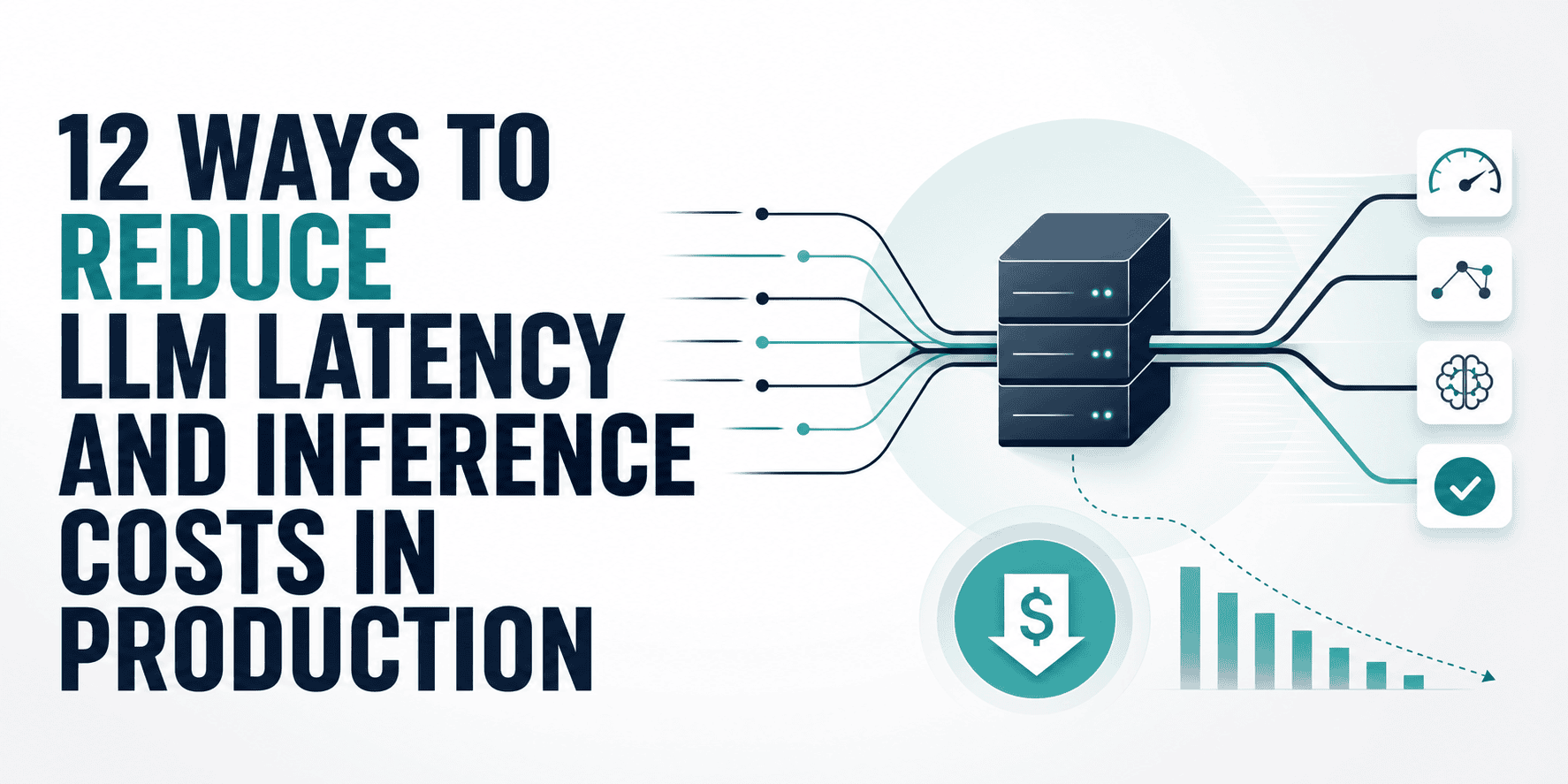
Stop Wasting Compute: Smarter Ways to Speed Up LLM Inference
Scaling LLMs isn't about adding GPUs. It's about removing wasted work from every request. That distinction shapes our latest guide, which lays out 12 practical ways to cut latency and inference costs without chasing hardware. Each tactic targets the inefficiencies that quietly slow production systems. If you're ready to move past brute-force scaling, this is where you start. For a deeper look at how distributed systems underpin these choices, our guide on unlocking distributed training algorithms pairs well with the conversation.