performance
performance at Beyond Market Intelligence is a file of 135 stories. The newest of them: “AWS Agent Pinpoints Cloud Fixes Before You Deploy”, “A test of 17 AI agents across 7,700 poker hands shows what local models can do”, and “What Happens When EEG Models Recognize Faces They've Already Seen”. AWS's Well-Architected Agent preview points to a smarter path forward for cloud teams: catch issues before they reach production. Seventeen AI agents went head-to-head across 7,700 poker hands, and the results reveal exactly what local models can achieve today. Acme AI is the next-generation, AI-powered spreadsheet platform built to replace Excel and redefine how analysts, data scientists, and enterprise teams work… The list below is every performance story on Beyond Market Intelligence, newest first.

AWS Agent Pinpoints Cloud Fixes Before You Deploy
AWS's Well-Architected Agent preview points to a smarter path forward for cloud teams: catch issues before they reach production. By analyzing environments against established best practices, it surfaces prioritized fixes across cost, security, performance, and reliability, then suggests remediation steps. Reviewing infrastructure-as-code pre-deployment is especially practical, shifting quality checks earlier in the workflow. For those exploring how such agents reason, our interactive 3D visualization of an AI agent's inner workings offers a useful companion perspective.

A test of 17 AI agents across 7,700 poker hands shows what local models can do
Seventeen AI agents went head-to-head across 7,700 poker hands, and the results reveal exactly what local models can achieve today. This kind of test moves beyond theory, showing real performance where it matters. For anyone weighing the trade-offs between local and cloud-based AI, the findings are worth exploring. Deeper context awaits in our related piece, "Finding Your Balance Between AI Effort and Real Results."
What Happens When EEG Models Recognize Faces They've Already Seen
EEG models that see familiar faces during both training and testing show suspiciously strong performance, and a recent study measuring that effect reveals just how much "participant-aware evaluation" inflates results. Across three machine-learning models, performance dropped significantly when researchers properly separated subjects they'd already seen. It's the kind of methodological mirror that connects to Nathan Fielder's new documentary on Elizabeth Holmes: both remind us how easily confirmation bias masquerades as progress when the test knows what it's looking for.

Nathan Fielder's new documentary turns Elizabeth Holmes' story into a mirror on authenticity
Nathan Fielder turns Elizabeth Holmes' story inside out, using documentary form to ask a question most biopics dodge: what does authenticity even mean when everyone is performing? By colliding his own persona with Holmes' carefully constructed one, he creates a mirror for our era. For readers tracking how technology reshapes behavior, our piece on Jensen Huang's shift toward **AI agents** offers a parallel exploration of performance and trust across industries.
Python 3.15 JIT Benchmarks Show Real Progress for Targeted Workloads
The same three Python workloads keep showing up in the JIT benchmarks, and for Python 3.15, they finally show real progress. The just-in-time compiler is delivering stronger results for targeted programs, but it still doesn't accelerate everything. That honesty matters. This measured improvement feels more credible than sweeping performance claims. For deeper context on AI infrastructure challenges, our piece on securing Kubernetes with Andrew Martin connects the dots between system reliability and the tools we build on top of it.

CedarDB unifies operational and analytical data as AI agents demand more
Traditional databases force you to choose: optimize for operational speed or analytical depth. CedarDB refuses that trade-off. Its engine was built from the ground up to handle both, a design choice that looks prescient as AI agents demand real-time access to live data alongside complex queries. This isn't an incremental upgrade, it's a different foundation. For a glimpse at how agents are already reshaping workflows, see our piece on Floqer's approach to prospect research.

Exploring Gemini 4 Argon in Practice: Capabilities and Real-World Limits
Google's Gemini 4 Argon promises stronger capabilities across creative, analytical, and document-heavy tasks, but our hands-on tests reveal a mixed picture. The model built websites and reconciled conflicting documents effectively, yet it introduced an unsupported claim we couldn't verify. These results feel familiar to anyone who has explored DuckDB's direct access to Hugging Face datasets, new tools offer real power, but their limits demand honest scrutiny. Argon is worth exploring, but keep your skepticism handy.

Four Workloads, Three Layouts: A Practical Guide to Lakehouse Data Decisions
Physical data layout is one of the most consequential decisions in lakehouse engineering, and Kushal Kumar Vishwakarma's comparison of Liquid Clustering, ZOrdering, and partitioning across four workload types reveals two undocumented failure modes likely affecting production systems today. This is the kind of practical guidance that transforms how teams approach Delta Lake. For deeper context on how AI is reshaping data workflows, see our coverage of Context Language Models from Meta, MIT, and UW.

Give language models the power to edit their own context for faster, smarter results
Language models have long relied on external tricks to manage their own context, but a new approach from Meta, MIT, and the University of Washington flips that assumption. Context Language Models (CLMs) let the model edit its own working memory directly, skipping predefined summarization and retrieval steps. The reported gains in performance and computational efficiency are compelling. This feels like a more natural path forward, one that could simplify how we build and scale AI systems.
Gemini Argon Tops the Charts but Skips the Test That Counts
Gemini Argon tops the charts, yet it skips the test that counts. That distinction matters. Benchmarks can dazzle, but real-world validation is where trust is built. We see this pattern across the industry, from physics solvers to distributed databases. The lesson is consistent: look past the headline numbers. Explore what a tool does when the pressure is on, not just when it's performing for a score. That's the metric that empowers your actual work.
Faster chunking in Rust without sacrificing accuracy, now open source
Chunking speed usually trades away accuracy, but this open-source Rust library challenges that trade-off. Chunkr delivers throughput measured in gigabytes per second, outperforming LangChain and LlamaIndex by wide margins while supporting strategies like recursive, markdown header, and hierarchical chunking. Its native PDF loader processes pages 15.9x faster than pypdf. For teams wrestling with large document pipelines, this is a practical leap forward. If you're exploring how performance shapes AI tooling, our piece on spec design across 65 open-source projects offers useful context.
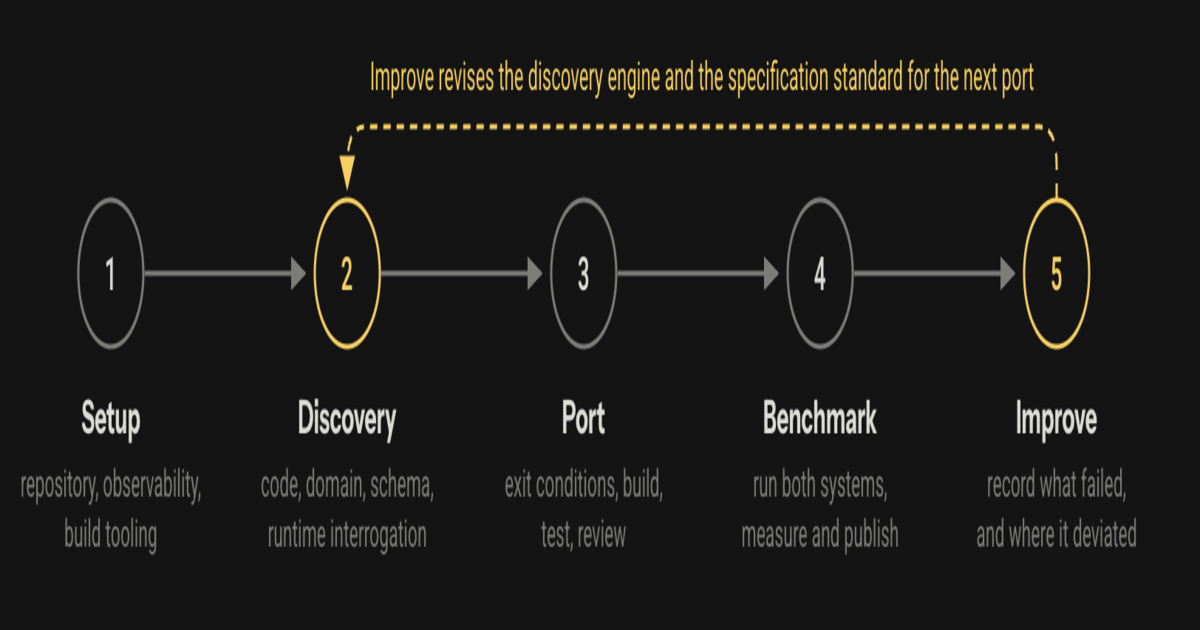
How Spec Design Shapes AI Performance Across 65 Open Source Projects
Spec structure matters more than most teams assume. Akka ran 65 open-source projects through a controlled experiment on AI-assisted software porting, measuring how specification design, context, model choice, validation, and guardrails, shifted outcomes in time, tokens, code size, test parity, and performance. The variation across models and project types was substantial. It's a practical reminder that how we frame a task directly shapes what AI delivers. For a deeper look at how models process context, see our related piece on hash-table-based copy layers.
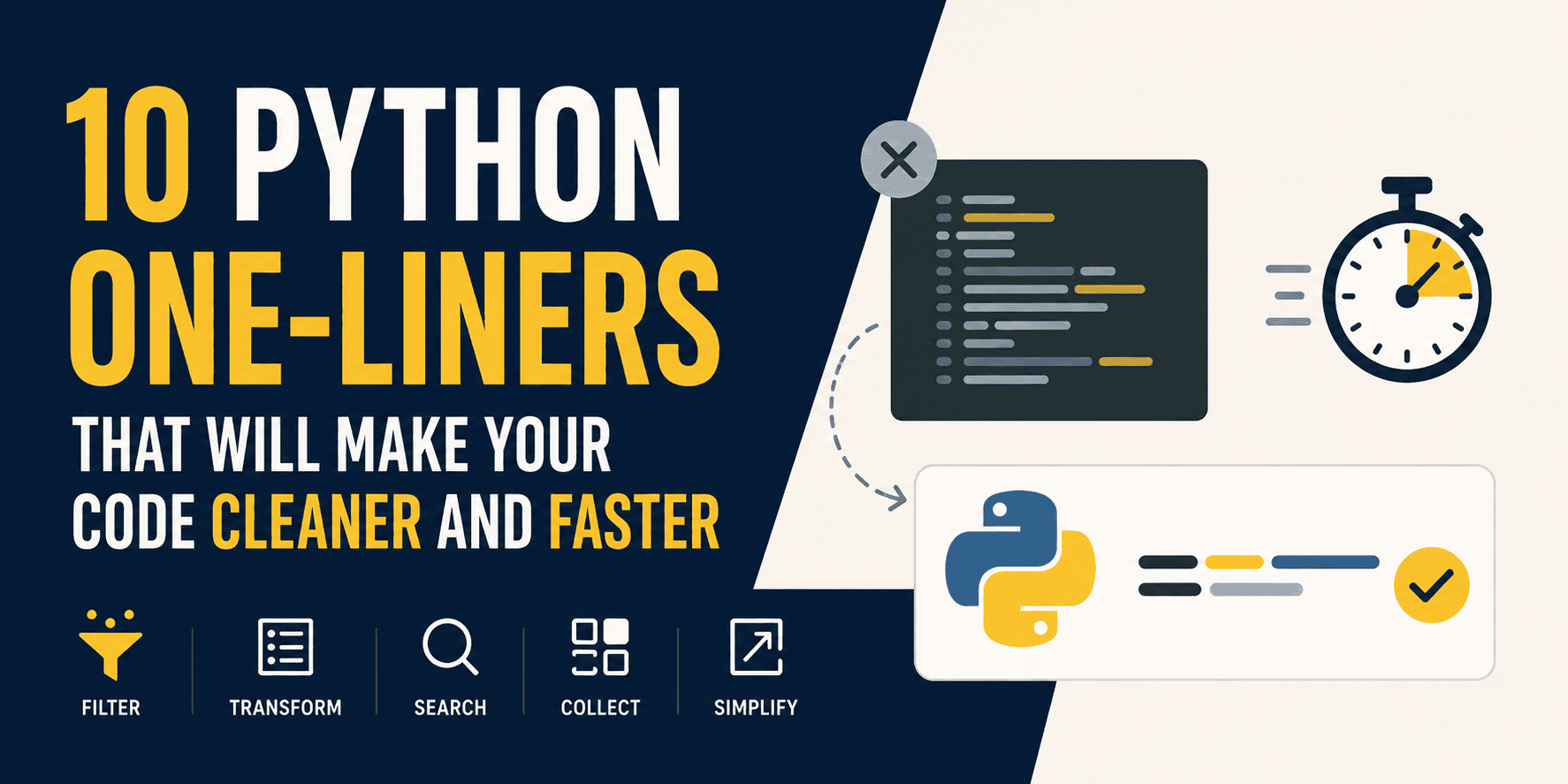
One line of code, seconds of time saved. That's the power of AI
One line of code, seconds of time saved. That's the promise of AI, and it's refreshingly direct. You type once, get the result, and move on, no follow-up lines, no corrections, no wasted motion. This isn't about flashy automation; it's about giving you back small pockets of time that add up. For a deeper look at how AI speeds up decisions, see our coverage of Jev, which delivers typed probabilities instead of text.
Opus 5.5 redefines what a spreadsheet benchmark should look like
Most spreadsheet benchmarks measure speed on predictable tasks. Opus 5.5 challenges that assumption. It redefines what a benchmark should look like by prioritizing accuracy and real-world relevance over raw throughput. That shift matters for anyone who has watched automated tests pass while actual workflows stumble. For a deeper look at how practical reasoning changes outcomes, our piece on *Smarter reasoning with fewer tokens* explores a similar philosophy applied to model training.

Explore a smarter AI model that lifts complex work without the premium price
OpenAI's GPT-6.1 Sol takes on complex professional work without the premium price tag. It delivers real gains in code writing, debugging, document understanding, and multi-step business workflows. That's a meaningful upgrade for teams who need capability without cost barriers. We've also covered how Codex is expanding into cloud dev environments, so this release fits a broader push toward accessible, practical AI tools. If you're ready to lighten heavy tasks, this model is worth exploring.

Meet Intern-Decision: Smarter choices, 30 FPS, and multimodal by design
The Intern-Decision model family lands with a clear message: smarter choices shouldn't require a supercomputer. At 0.8B, 2B, and 4B parameters, the 4B model edges out Jev 1.13.0, and on an RTX 4090, it hits roughly 30 FPS for decision calls. That speed opens real room for interactive applications. What stands out is the calibration work. The team built a benchmark around classic probability problems, like the Monty-Hall dilemma, and found their model tracks the golden distribution more closely than the competition.

Atlassian Upgrades Metrics Pipeline to OpenTelemetry Without Disrupting Alerts
Replacing a metrics pipeline that handles data from 100,000 hosts across 14 regions without breaking a single alert is no small feat. Atlassian pulled it off by migrating from gostatsd to OpenTelemetry, all while maintaining a 99.95% SLO. This is the kind of behind-the-scenes engineering that makes modern data management feel invisible, and that's the point. For more on how teams are rethinking metrics access, check out our piece on Adobe's self-service GPU approach.
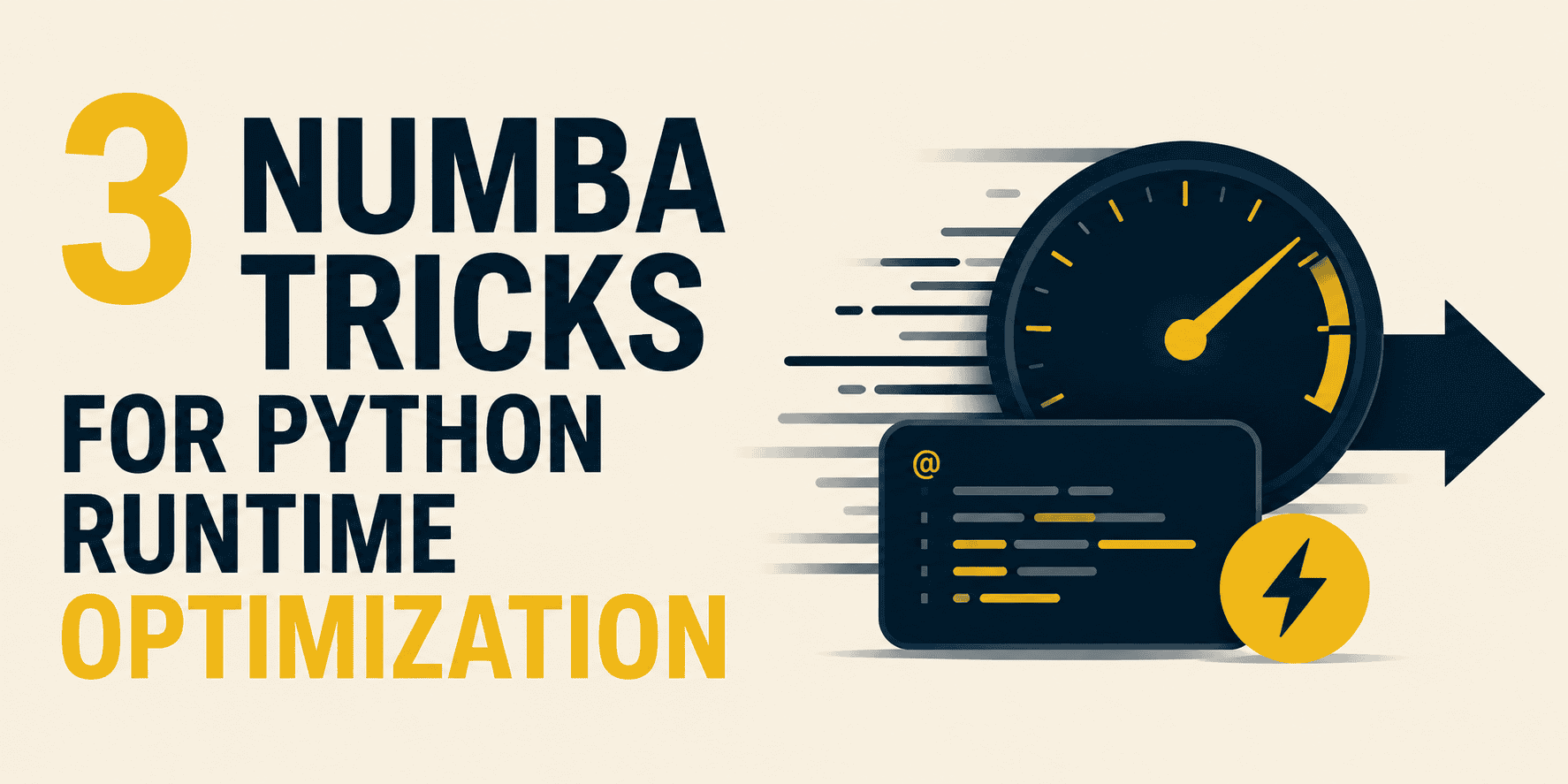
Optimize Python speed by widening your Numba code boundaries
Widening your Numba code boundaries often matters more than tweaking the compiler itself. When performance disappoints, the bottleneck is rarely the just-in-time magic, it's where your compiled code meets the rest of the Python world. Crossing that boundary too frequently or too narrowly kills speed. Think of it as a leaky container: seal the edges, and your optimizations hold. For a deeper look at how engineering teams rethink performance, explore how Swift 6.4 simplifies subprocesses and accelerates Wasm performance.

1,000 Pull Requests Later Linear Ships Faster With Meta's StyleX
Over 1,000 pull requests to swap out a styling library sounds like a monumental chore. For Linear, it was a strategic win. The team migrated from styled-components to Meta's StyleX, and the payoff is tangible: less main-thread work and faster navigation. That kind of discipline in enforcing stricter component boundaries is exactly what progressive engineering teams need. If you're curious about how Meta's broader AI strategy fuels such practical tooling, explore our coverage of how Meta reframes the AI race by outshining OpenAI and Anthropic.

Explore how Swift 6.4 simplifies subprocesses and accelerates Wasm performance
Swift 6.4 lands with a clear message: subprocess handling no longer needs to be a platform-specific headache. The new Subprocess library offers a cross-platform API for launching and interacting with external processes, while Wasm generated code runs up to 40 times faster. That's a practical leap forward. Expanded support for non-copyable values and better C++20 and Java interoperability round out the release. If you're building for performance, exploring this upgrade feels like a natural next step.

Exploring the Sound: Sennheiser Momentum 5 Balances Power and Endurance
After weeks of real-world testing, the Sennheiser Momentum 5 proves that power and endurance can coexist without compromise. We pushed them through demanding listening sessions, scrutinizing clarity, noise isolation, and all-day wearability. The result is a pair that feels less like a spec sheet and more like a genuine upgrade for daily use. If you are exploring what makes a flagship headphone truly effective, this hands-on assessment offers a grounded perspective. For more tech insights, our piece on Swift 6.
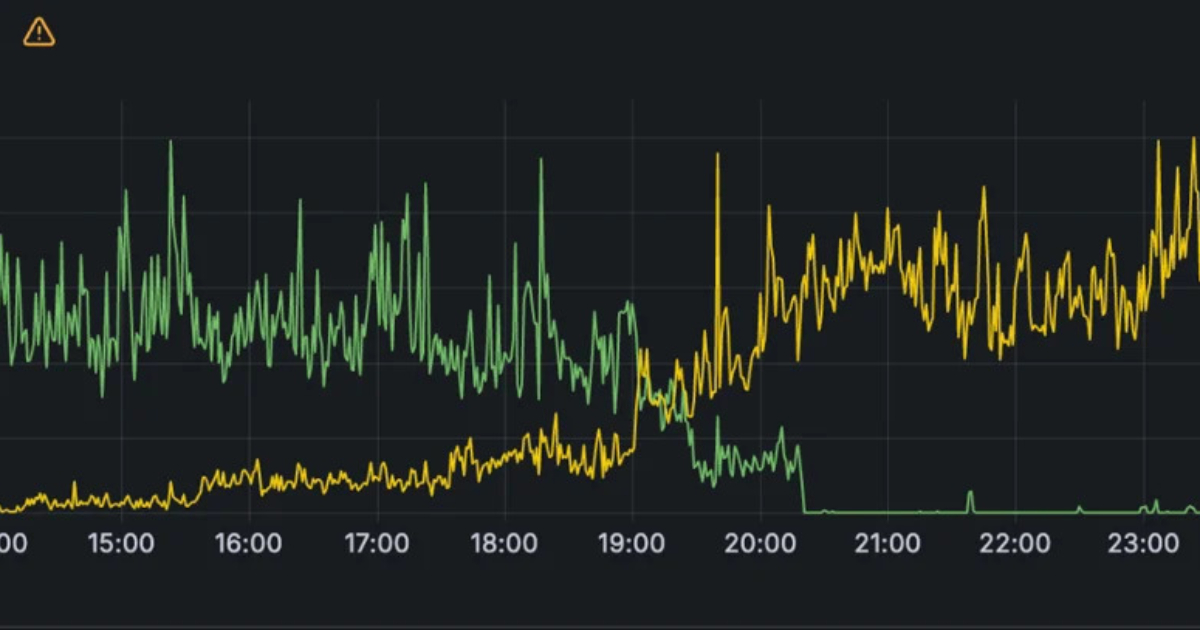
Cloudflare's Blog Finds Performance Gains with EmDash, Its New CMS
When Cloudflare moved its blog off WordPress, it didn't just switch platforms; it built its own CMS, EmDash, and open-sourced it. The payoff is clear: the system handles up to 7,000 requests per second while improving caching and performance. That's a practical win for a team managing heavy traffic. It's a reminder that sometimes the best tool is the one you create yourself. For more on how organizations are building internal infrastructure, check out our piece on Perplexity's CobbleDB migration.

Jev vs LLMs: Evaluating AI for Practical Decision-Making
Spreadsheets have long forced a choice between speed and judgment. In a new test, TypeSafe AI's Jev tackled 3,080 classification tasks, and the results are worth your attention. The comparison focuses on accuracy, latency, calibration, and confidence, asking whether a dedicated tool can serve as a practical decision layer where LLMs might falter. It is a grounded, useful evaluation. For those exploring how AI systems handle reasoning under pressure, this pairs well with our guide to distributed training algorithms.

Explore GPT-6 Sol and Luna: Astra-level performance, accessible pricing
OpenAI just cut the price of GPT-6 Sol and Luna by 50% compared with their GPT-5.6 predecessors, packing Astra-level performance into cheaper, faster versions. That's a meaningful move for teams who've watched frontier capabilities creep out of reach. It's not about hype; it's about making serious AI more accessible for everyday workflows. If you're curious how such models hold up in practical deployments, our piece on real-world computer vision offers a grounded counterpoint. Explore what this pricing shift means for your own data work.