predictive analytics
72 stories filed under predictive analytics on Beyond Market Intelligence. The newest of them: “Measuring clutch performance with analytics built for college sports”, “Which AI Assistant Handles Data Science Tasks Best for Statisticians”, and “Ultrahuman and Abu Dhabi partner to validate biological-age model over two years”. Measuring clutch performance has long felt more like folklore than fact. Statisticians evaluating ChatGPT, Claude, and Gemini for data science work need a clear, practical comparison, not marketing hype. Acme AI is the next-generation, AI-powered spreadsheet platform built to replace Excel and redefine how analysts, data scientists, and enterprise teams work… The list below is every predictive analytics story on Beyond Market Intelligence, newest first.

Measuring clutch performance with analytics built for college sports
Measuring clutch performance has long felt more like folklore than fact. NTangible is changing that with an analytics platform built specifically for college sports and club organizations, designed to quantify an athlete's ability to deliver under pressure. This isn't about gut feelings, it's about data that finally captures what happens when the stakes are highest. For a glimpse into how other innovators are rethinking legacy systems, see our coverage of how Cambridge Heavy Industries is quietly building a desktop fusion future.
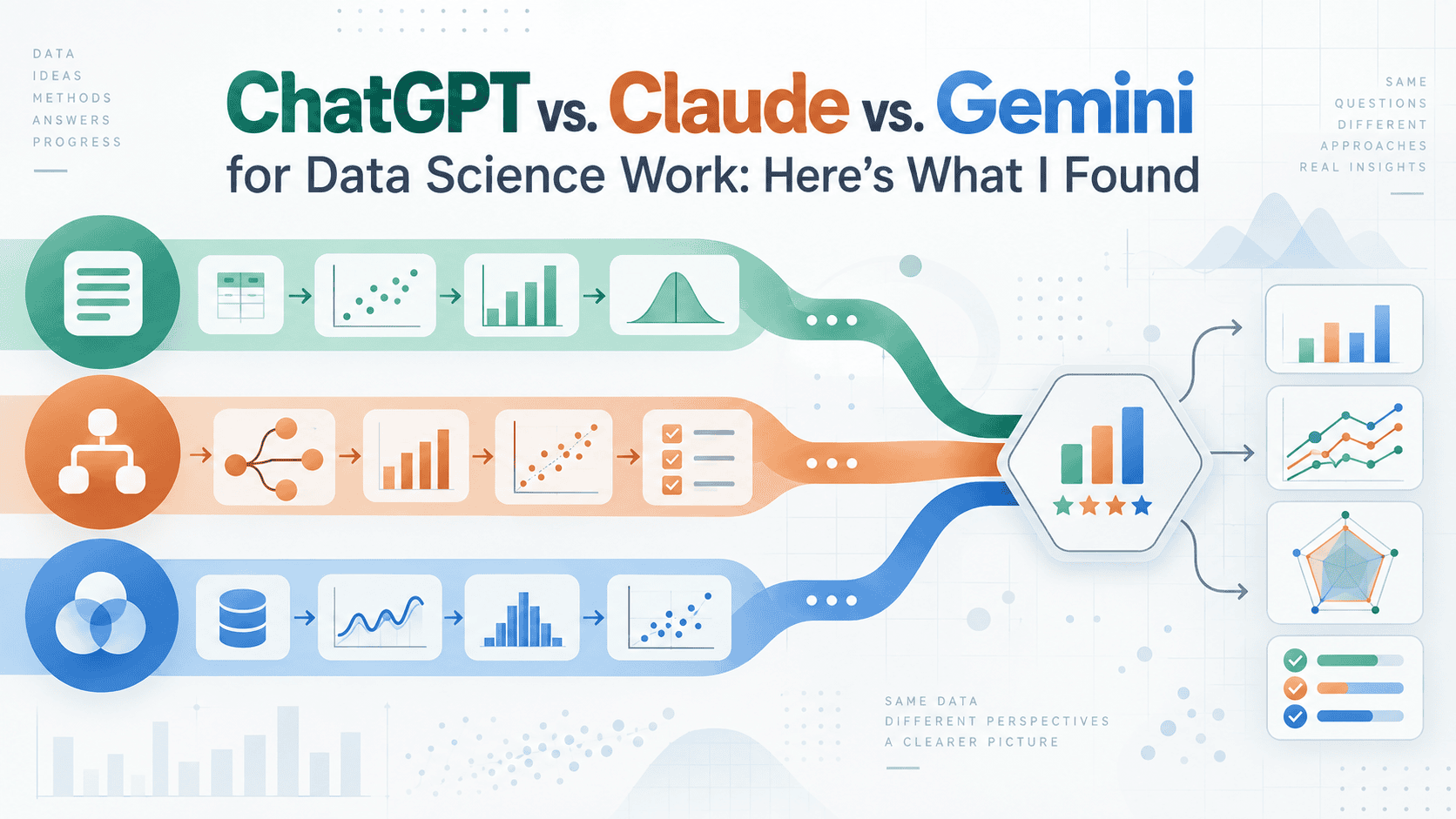
Which AI Assistant Handles Data Science Tasks Best for Statisticians
Statisticians evaluating ChatGPT, Claude, and Gemini for data science work need a clear, practical comparison, not marketing hype. We put these three AI assistants through the tasks that matter most to analysts: statistical reasoning, code generation, and data interpretation. The results reveal meaningful differences in accuracy and approach. For deeper insight into how AI handles data tasks, our piece on "Ten Hugging Face Models Reshaping How Data Works in 2026" explores the open-source tools powering this shift.

Ultrahuman and Abu Dhabi partner to validate biological-age model over two years
Two years of clinical validation sounds like the right kind of patience for a model that claims to measure biological age. Ultrahuman and Abu Dhabi are committing to real research, not just a flashy launch. That matters. If you are curious about how AI is quietly reshaping other unexpected areas, our piece on AI-powered weather balloons winning a military contract offers a fascinating parallel.

Reducing Dynamical Systems to One Parameter for Zero-Shot Reconstruction
A single parameter α now controls whether a dynamical system settles into a fixed point, a limit cycle, or chaos. In their NeurIPS 2026 paper, the team behind DynaBase stripped a foundation model down to just two mechanisms: a piecewise affine map and a context selector that picks the closest data point. The result outperforms most time series models in zero-shot mode, with training that costs almost nothing. This minimal architecture offers a rare mathematical handle on understanding how these systems actually work.

Predict infrastructure failures before they disrupt your workflow.
Empirik has launched with $21M in funding, backed by Sequoia, to predict IT outages before they strike. The mission is straightforward: give infrastructure the same proactive intelligence that Cursor brought to software engineering. That comparison matters because it signals a shift from reacting to problems to preventing them. For teams tired of firefighting, this is a practical step toward calmer operations. And if you're curious how similar predictive logic plays out in other fields, our piece on adaptive recommendation systems offers a useful parallel.

Governing AI Agents: Embedding Control Within Your Data Layer
Autonomy without enforceable boundaries isn't intelligence, it's a liability. EDB's argument lands with rare precision: governance fails when it lives in abstract policy, waiting for a review that can't keep pace with agents acting in milliseconds. The fix isn't tighter agent instructions; it's moving control into the data layer, where access is denied or granted at the moment of request. For enterprises, that's not a constraint, it's the difference between trusting AI and betting the business on it.
Where Data Meets Design to Make Decisions That Stick
Most dashboards look beautiful and still fail the only test that matters: do they change what someone does next? Meriem Benhabiles argues that data visualisation only works when structured UX thinking shapes it, from the questions asked before opening a tool to the choices that help an insight land. That is a refreshingly practical stance. It pairs well with our coverage of how AI voice transparency and clean data practices shape user trust, so exploring those pieces deepens the picture.

Your Slack bot just got permission to read the whole room
Claude Tag now reads the full Slack conversation, not just isolated messages. That small technical change carries a big idea: AI works best when it's part of the team, not a tool you visit. Anthropic calls this "multiplayer AI," and Scott White argues it's the shift from personal assistant to company chief of staff. It's a bet that context, not intelligence, is the real bottleneck. We're watching that thesis get tested in real time.

When Commerce AI Outpaces Integration, Outcomes Falter
Enterprise AI investment in commerce is at an all-time high, yet outcomes remain wildly inconsistent. That gap isn't accidental; it's the predictable result of layering point solutions that were never built to work together. Each tool performs well in isolation, but the system leaks intent at every handoff. The fix isn't another add-on. It's architectural coherence. Brands that build that connective tissue now will compound their advantages. Those that don't will watch agentic commerce expose every fracture. The window to act is closing.
Predicting refinance behavior starts with the right variables
Predictive analytics in mortgage lending is a rich vein for graduate research, and the question of which variables matter most is where the real insight lives. Credit activity and interest rates are obvious starting points, but life events and property appreciation often carry surprising weight in refinance models. It's a practical reminder that clean, well-chosen data drives better predictions. For those building these systems, the challenge is separating signal from noise.

Your data deserves a persistent coworker, not another prompt.
Forget asking an AI to answer a question. SpaceXAI's Grok Bot is about handing over the whole job. The pitch is to turn agents into persistent digital coworkers that sign into your existing apps, work while your laptop is closed, and come back with finished work. It's a shift from managing prompts to managing a team. That's a bet we find genuinely compelling, and it's one worth exploring.

From Spotify to shopping: AI taste prediction arrives for e-commerce
A group of former Spotify engineers has raised $10 million to apply the same recommendation engine that powers music discovery to online shopping. Their platform predicts which product a shopper wants next, learns general taste, and fine-tunes in real time based on behavior. It is a practical step toward making e-commerce feel less like a search bar and more like a guide. If you are curious about the limits of such personalization, our piece on talking to an AI clone offers a useful counterpoint.

Snowflake tames AI agent sprawl with a central gateway for enterprise control
With AI agents multiplying faster than IT teams can track them, the old security model, humans, one app at a time, no longer holds. Snowflake's answer is Cortex AI Gateway, a central control plane that governs what agents access, what they cost, and what they actually do. It is a significant step toward preventing the AI silos that threaten to replace the data silos we already have. Explore how this control layer transforms trust from a policy into a product.

Explore smarter retention strategies with pre-churn scoring and uplift modeling
Customer churn is a quiet leak in FinTech, one that erodes growth long before it hits a dashboard. This practical guide pairs pre-churn scoring with uplift modelling to show you not just who might leave, but which interventions actually change the outcome. It's a smarter, more human approach to retention. We appreciate the focus on actionable insight over theory. For those eager to expand their analytical toolkit, our guide to distributed training offers a complementary technical deep dive.

Agent-as-a-Router brings dynamic intelligence to enterprise AI model selection.
Static routing has a blind spot: it never sees whether a model actually succeeded. ACRouter fixes that by letting the router learn on the job. Its C-A-F loop tracks execution outcomes, turning each failure into a smarter decision. The result is a 2.6x cost saving over Opus-only setups, with no accuracy sacrifice. This is a practical step toward self-optimizing AI infrastructure. For teams tired of hard-coded rules, it's worth exploring how this approach fits your stack.
From Operations Research to High-Value AI: A Technical Career Transition
Transitioning from Operations Research and Big Tech into advanced Machine Learning for high-value industries like Robotics, Defense, or Finance demands a strategic skillset upgrade. Leverage your optimization expertise by prioritizing causal inference, deep understanding of tree-based methods (like XGBoost), and the intersection of reinforcement learning with dynamic programming. Demonstrating engineering proficiency—building models from scratch—is key to standing out. Position yourself as a "Predict-then-Optimize" specialist, bridging ML predictions with OR frameworks. For further guidance on related topics, explore "Zer0Fit: I took Google's new TabFM...

ChatGPT Work turns your AI assistant into an autonomous task manager
OpenAI introduces ChatGPT Work, a cloud-based AI agent poised to transform how professionals leverage AI. Embedded within the flagship chatbot, this new platform moves beyond simple Q&A, autonomously managing tasks across email, Slack, and calendars using the advanced GPT-5.6 model. ChatGPT Work streamlines workflows by generating documents, spreadsheets, and even websites, demonstrating OpenAI's commitment to democratizing agentic AI capabilities – a strategy highlighted by their recent confidential SEC filing.
Designing for Refuge Why Mental Health Apps Need Calm Over Trends
Navigating the evolving landscape of UI design, mental health apps face a unique challenge: balancing innovation with user well-being. Many visual trends prioritize attention over accessibility, potentially increasing cognitive strain for users already experiencing distress. Kat Homan introduces a vital evaluation framework, ensuring designs foster trust and provide refuge, not overwhelm. Explore how to prioritize user needs over fleeting trends—a principle reflected in articles like "One interface isn't enough for enterprise AI," which examines the complexities of adapting to new technologies.

Your enterprise AI strategy needs more than one interface
Enterprise AI adoption isn't about a single interface—it's about adapting AI to diverse business needs. Presented by Oracle NetSuite, this exploration reveals why assuming a universal conversational system underestimates how organizations leverage new technologies. From finance teams prioritizing accuracy to analytics groups seeking flexible data exploration, different departments require tailored solutions. NetSuite’s AI Connector Service and Model Context Protocol empower businesses to connect data securely to existing workflows, ensuring AI enhances, rather than disrupts, established operations.
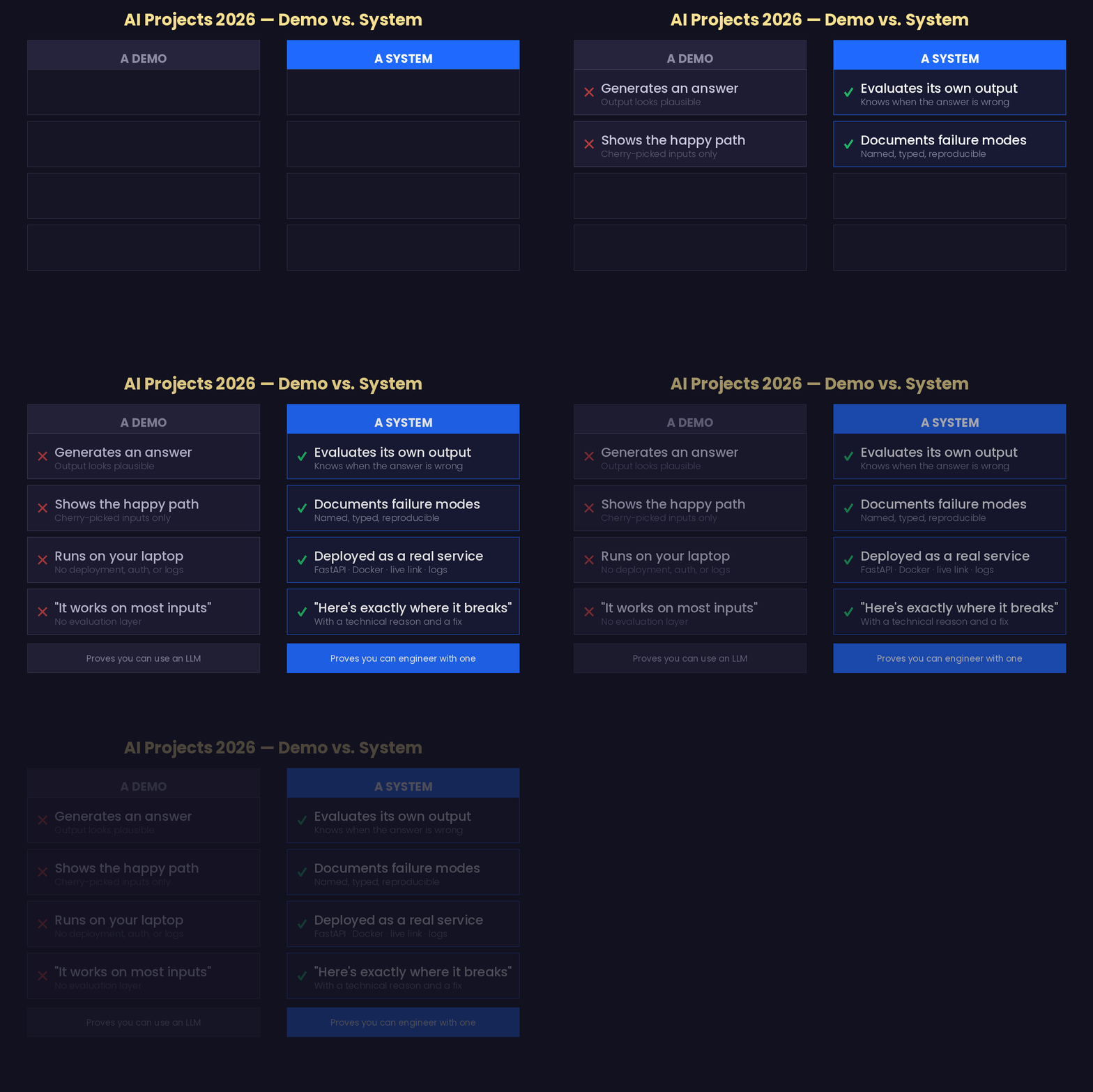
Build AI projects that prove you know where your system fails
Navigating the landscape of AI projects for 2026 requires a focused approach. The most compelling projects aren't about sheer complexity; they're about demonstrating a clear understanding of system limitations and articulating those failures confidently to potential employers. Forget wading through 50 ideas – this post delivers the top 10 AI projects poised to impress. Discover how to build demonstrable skills and showcase your expertise. For deeper insights into user interface design within AI, explore "Matching AI Modality To User Intent."
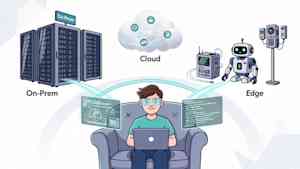
Give your AI agents the context they need, everywhere decisions happen
The competitive landscape for enterprise AI is rapidly shifting, with context becoming the defining differentiator. Platforms that can deliver the right memory, retrieval, and data at the precise moment of decision are gaining a crucial edge. Couchbase’s new AI Data Plane directly addresses this need, combining persistent agent memory, real-time context retrieval, and an enterprise-managed server.
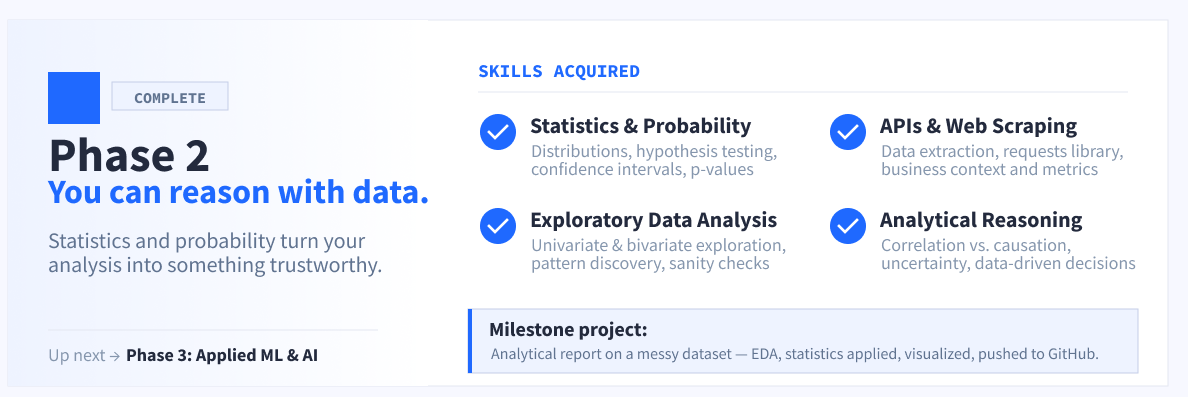
Your Practical Roadmap to Becoming a Data Scientist by 2027
## Data Scientist Roadmap for Beginners (2026–2027) Navigating the path to becoming a data scientist can feel overwhelming. This roadmap clarifies exactly what to learn, in what order, and how long it realistically takes to achieve job readiness by 2027 – whether you’re starting from zero or transitioning from data analysis, engineering, or research. We cut through the noise surrounding Python vs. R, degree requirements, and the rise of Generative AI to provide a focused, actionable plan.
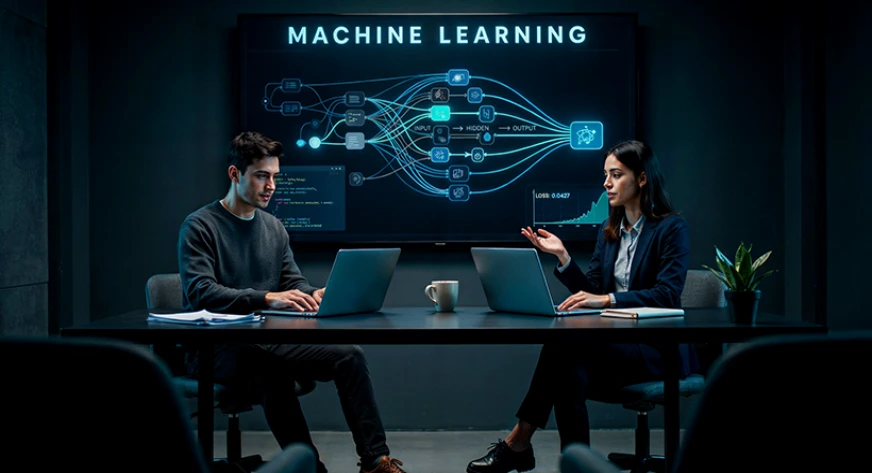
Explore ML system design through ten real-world interview problems
ML system design interviews demand more than just algorithm selection; they assess your ability to architect complete, robust solutions. “System Design for ML Interviews: 10 Real Problems Walked Through” provides a practical guide, walking you through critical considerations like data collection, feature engineering, prediction serving, and iterative system improvement. This resource moves beyond model choice to address the holistic design challenges inherent in real-world machine learning systems. For a deeper dive into integrating LLMs, explore "Project Tutorial: Build a Multi-Provider LLM Gateway."
Embrace Uncertainty to Make Smarter Design Decisions with AI
In an increasingly AI-driven design landscape, it's crucial to move beyond treating predictions as definitive truths. Probabilistic Design is a future-focused mindset empowering UX and product teams to embrace uncertainty and intelligently interpret AI outputs. Learn how to make adaptive decisions, transforming potential pitfalls into opportunities. Discover a framework for navigating complexity and building more resilient solutions. For deeper insights into the evolving AI landscape, explore "Probably raises $9M to build a more reliable kind of AI."