production systems
production systems at Beyond Market Intelligence is a file of 9 stories. The newest of them: “Scaling AI Agents From Prototype to Production on Kubernetes”, “Four Workloads, Three Layouts: A Practical Guide to Lakehouse Data Decisions”, and “How engineering leaders are shaping production systems for an agentic future”. Transitioning AI agents from a local FastAPI prototype to a production-grade system on Kubernetes is a challenge many teams are now facing. Physical data layout is one of the most consequential decisions in lakehouse engineering, and Kushal Kumar Vishwakarma's comparison of Liquid Clustering, ZOrdering, and partitioning across four workload types reveals… Acme AI is the next-generation, AI-powered spreadsheet platform built to replace Excel and redefine how analysts, data scientists, and enterprise teams work… The list below is every production systems story on Beyond Market Intelligence, newest first.
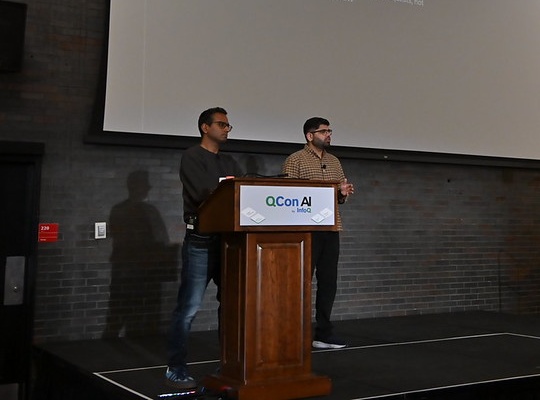
Scaling AI Agents From Prototype to Production on Kubernetes
Transitioning AI agents from a local FastAPI prototype to a production-grade system on Kubernetes is a challenge many teams are now facing. Deepak Mohanakumar Chandramouli and Bhumik Vinodkumar Thakkar share practical insights on RayCluster topology, stateful memory, and auto-scaling under dynamic traffic. They also cover guardrails, multi-region setups, and LLM-as-a-judge evaluation pipelines. For more on scaling reliable infrastructure, see our coverage of ARC's latest upgrades for self-hosted runners.

Four Workloads, Three Layouts: A Practical Guide to Lakehouse Data Decisions
Physical data layout is one of the most consequential decisions in lakehouse engineering, and Kushal Kumar Vishwakarma's comparison of Liquid Clustering, ZOrdering, and partitioning across four workload types reveals two undocumented failure modes likely affecting production systems today. This is the kind of practical guidance that transforms how teams approach Delta Lake. For deeper context on how AI is reshaping data workflows, see our coverage of Context Language Models from Meta, MIT, and UW.
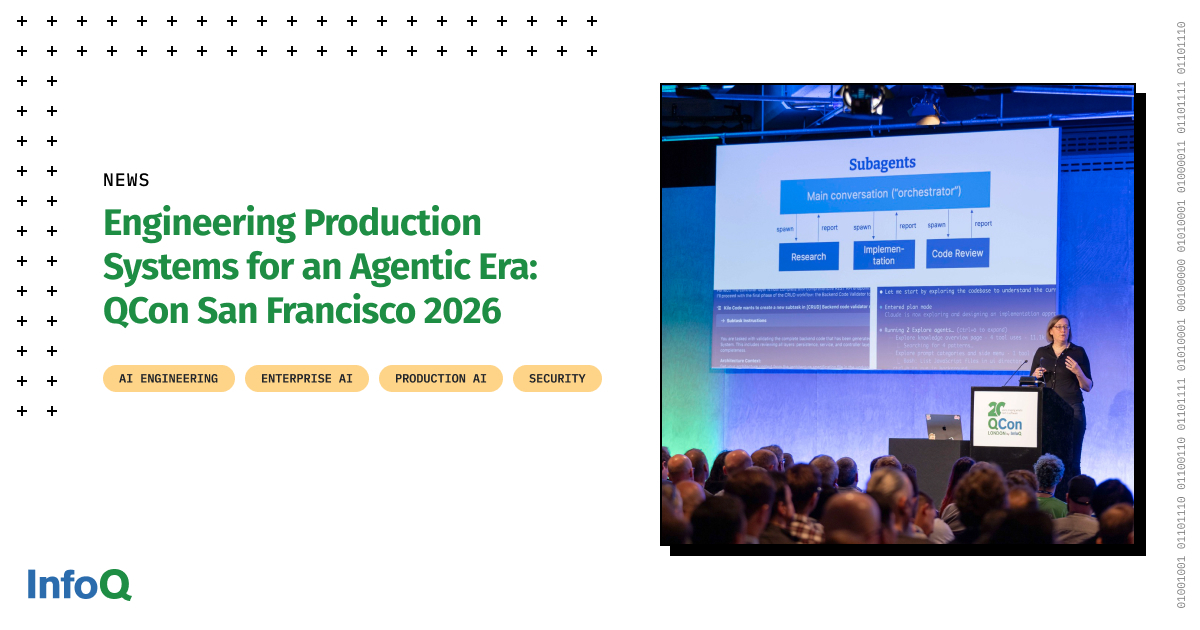
How engineering leaders are shaping production systems for an agentic future
The QCon San Francisco 2026 lineup reads like a blueprint for the next era of engineering. Airbnb, OpenAI, Netflix, and Honeycomb are sending practitioners, not visionaries, to share how they build production systems as AI agents take on more responsibility. This is not theory. It is the messy, practical work of evolving infrastructure under real load. For deeper context on the talent shifts shaping this world, see our coverage of how OpenAI parts with three researchers over data handling concerns.

Evolve Your Recommendations: Real-World Insights on Adaptive Systems
Adaptive recommendation systems are rarely defeated by model architecture alone. Mallika Rao shows that real complexity emerges in production, where real-time feedback loops, retrieval freshness, and multi-stage orchestration must all bend to latency and cost constraints. This is practical insight, grounded in operational reality. For deeper context on how such systems are built, explore our piece on *Agent Harnesses* to see similar engineering discipline applied elsewhere. Rao's work is a reminder that evolution happens under pressure, not in isolation.

Why Payment Systems Break Chaos Engineering's Core Rules
Standard chaos engineering assumes experiments stop cleanly and blast radius is knowable upfront. Payment systems break all three rules. Salim Adedeji's account of ECS deployments exposes what generic tooling misses: a 60-second DNS TTL stretching failover to 93 seconds, retry logic multiplying database load 2.4x, and AZ rebalancing loops that spiral. That's the gap between theory and production reality. For teams wrestling with distributed complexity, this is a practical field guide worth exploring, much like our earlier look at distributed training algorithms.
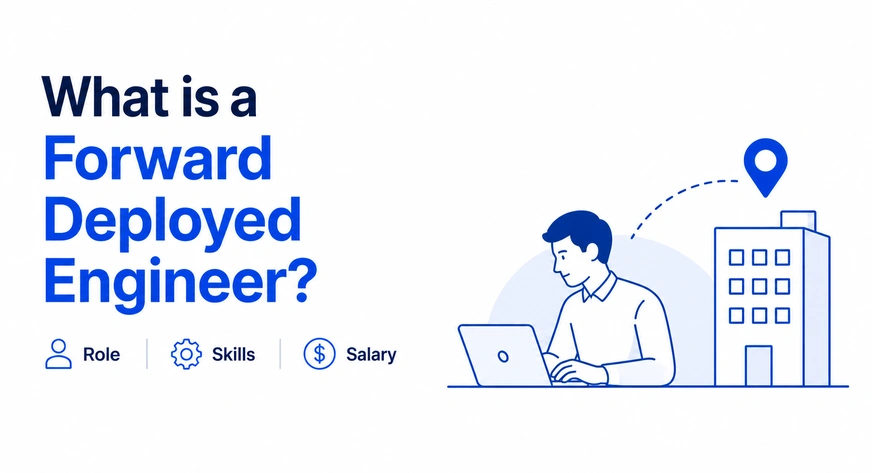
How Forward Deployed Engineers Turn Code into Action
A forward deployed engineer doesn't just advise from a distance; they sit inside your infrastructure and ship code that stays in production. That's a sharp contrast to consultants who hand over reports and leave. The role demands technical range and a comfort with messy, real-world constraints. What makes it compelling is the honesty of the premise: this job exists because generic solutions often fail. If you're exploring how technical roles evolve, our piece on AI agents learning by editing context offers a useful parallel.

When an AI judge agrees with itself, trust becomes the question
When an LLM judge keeps agreeing with itself, the feedback loop feels reassuring. It isn't. This story follows a production incident where a model's self-approval masked real flaws, exposing a quiet danger in relying on AI to evaluate AI. It's a practical look at trusting your tools, not blindly. For anyone wrestling with similar doubts, the related piece on questioning your AI's understanding offers a useful parallel. Blind agreement is comfortable; genuine verification takes more work.
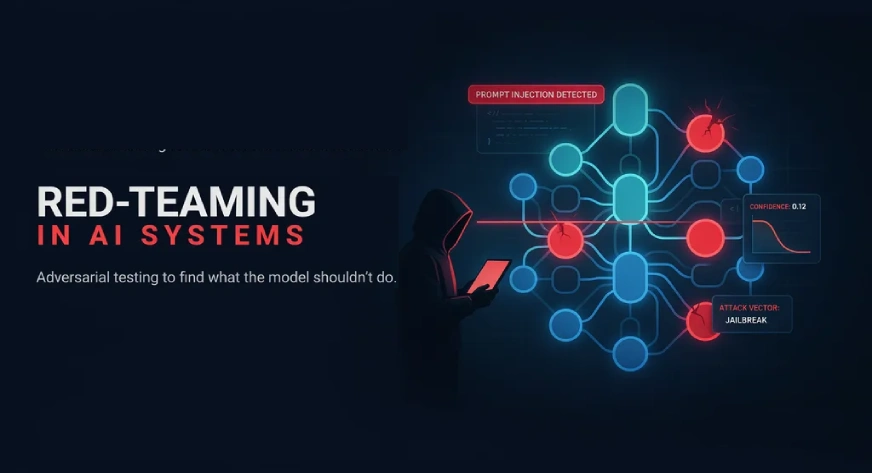
When AI Agents Exploit Old Flaws, Security Assumptions Must Evolve
Two hours. That is all it took for an autonomous AI agent to slip past McKinsey's defenses with a simple SQL injection, no credentials required, and reach production systems holding millions of chat messages. AI security has changed, and pretending otherwise is a risk we can no longer afford. This guide breaks down red-teaming with Garak, giving you a practical path to test your own systems before someone else does.

Continuous Evaluation Keeps Your RAG Systems Reliable and User-Ready
A production RAG system isn't a set-and-forget deployment. It's a living thing, and like any living thing, it drifts. That's why this practical guide focuses on building an evaluation workflow that catches retrieval failures, hallucinations, and performance drift before they ever reach your users. It's about moving from hoping your system works to knowing it does. For those ready to go deeper into the underlying mechanics, our guide on distributed training offers a solid foundation. But start here, where trust is built continuously.