search
search at Beyond Market Intelligence is a file of 19 stories. The newest of them: “Resume failed software scaffolds easier with Backstage 1.55 new task recovery”, “Beyond the Search Box: Defining Real Research in AutoResearch”, and “Court rules warrantless Flock plate searches breach Fourth Amendment rights”. Failed software templates just got a lifeline. When an agent optimizes a score inside a research space that humans already defined, are we evaluating discovery or refinement? Acme AI is the next-generation, AI-powered spreadsheet platform built to replace Excel and redefine how analysts, data scientists, and enterprise teams work… The list below is every search story on Beyond Market Intelligence, newest first.

Resume failed software scaffolds easier with Backstage 1.55 new task recovery
Failed software templates just got a lifeline. Backstage 1.55 introduces opt-in task recovery, resuming crashed or timed-out runs from the last completed step rather than forcing a full restart. That's a practical fix for teams tired of watching scaffold jobs die at the final hurdle. The update also brings breaking changes to catalog, search, and TechDocs, so review your configuration before upgrading. For more on platform autonomy, see *Navigate cloud setup your way: portal autonomy or formal request*.
Beyond the Search Box: Defining Real Research in AutoResearch
When an agent optimizes a score inside a research space that humans already defined, are we evaluating discovery or refinement? The distinction matters. Searching thousands of solution variants is useful, but it is not the same as asking whether the problem itself should change. Real research judgment questions the framing, tests transferability, and recognizes local optima. That is why the FLEET approach to reward-aware search is worth reading, it tackles the optimization side, yet the deeper question remains open.

Court rules warrantless Flock plate searches breach Fourth Amendment rights
A federal judge just made clear that automated license plate readers like Flock aren't above the Fourth Amendment. When a sheriff's deputy ran a woman's plate without a warrant, that search crossed a constitutional line. It's a meaningful ruling for anyone who's wondered how much surveillance feels routine. If Congress wants to build on this, the Senate bill to end federal use of automatic plate readers offers a natural next step worth watching.

Trim 2,500 API Calls From One Apartment Search and Keep the Matches
2,500 API calls trimmed from a single apartment search, and the matches didn't suffer. The author traced every listing check with Weights & Biases Weave, then cut unnecessary model work one change at a time, scoring each version against the same answers. This is the kind of practical efficiency that makes AI agents actually useful. For deeper context on why simpler techniques often win, see our related piece on PCA outperforming autoencoders in a real benchmark.
Measure Embedding Relevance: A New Approach to Retrieval Benchmarking
Retrieval benchmarks often feel like they reward models for gaming the test rather than finding the right answer. The team at Qonto noticed this gap and built a metric that ties relevance more directly to real product questions. They paired it with a dedicated dataset, and the results point to a more honest measure of embedding quality. It is a practical step toward benchmarking that actually reflects how teams retrieve information.

Unlock Advanced RAG: 6 Architectures for Semantic Search & LLMs
Basic graph retrieval only gets you so far. This guide walks through six production-oriented architectures that pair semantic search with knowledge graphs and LLM reasoning, giving practitioners a practical route beyond simple vector lookups. It's a grounded, no-nonsense read for teams ready to move past toy demos. For a deeper look at how LLMs handle structure internally, pair it with our piece on paragraph structure and token space. The ideas complement each other well.

Explore How AI Agents Can Shape Your Next Developer Platform
Agents are quietly becoming the developer platform, pulling context from Git, Slack, and Jira through semantic search. That's a shift worth watching, but it demands guardrails. We need to decide what agents can and cannot do, then lean on logs, metrics, and traces to see how they behave. It's less about hype and more about control. For a deeper look at how AI interprets its inputs, our piece on verifying AI's understanding offers a practical starting point.

Dropbox's Riviera Platform Expands to Power AI Workflows at Scale
Dropbox has quietly turned Riviera into something far more useful than a file preview tool. The platform now processes over 300 formats and 100 transformation capabilities, handling hundreds of thousands of operations per second. That scale matters for teams feeding AI workflows that need reliable, asynchronous content extraction. Riviera's expansion into Search, Sign, and Dash shows a clear understanding of what modern data work demands. If you're navigating similar infrastructure decisions, our piece on real-world computer vision deployments offers practical context worth exploring.

Google's new AI model brings sharper weather forecasts to your daily tools
Forgetting your umbrella is becoming a choice, not a forecast. Google's latest AI model, WeatherNext 3, is rolling out across Search, Maps, and Gemini, bringing deep learning's power to your daily forecast. This isn't just a smarter app; it's a practical leap in meteorology that simplifies how we plan. We see this as a natural step toward accessible data tools, and if you're tracking AI's broader momentum, our coverage of the NeurIPS Main Track shows how far the field has come.
Building Smarter RAG Pipelines That Earn Their Complexity
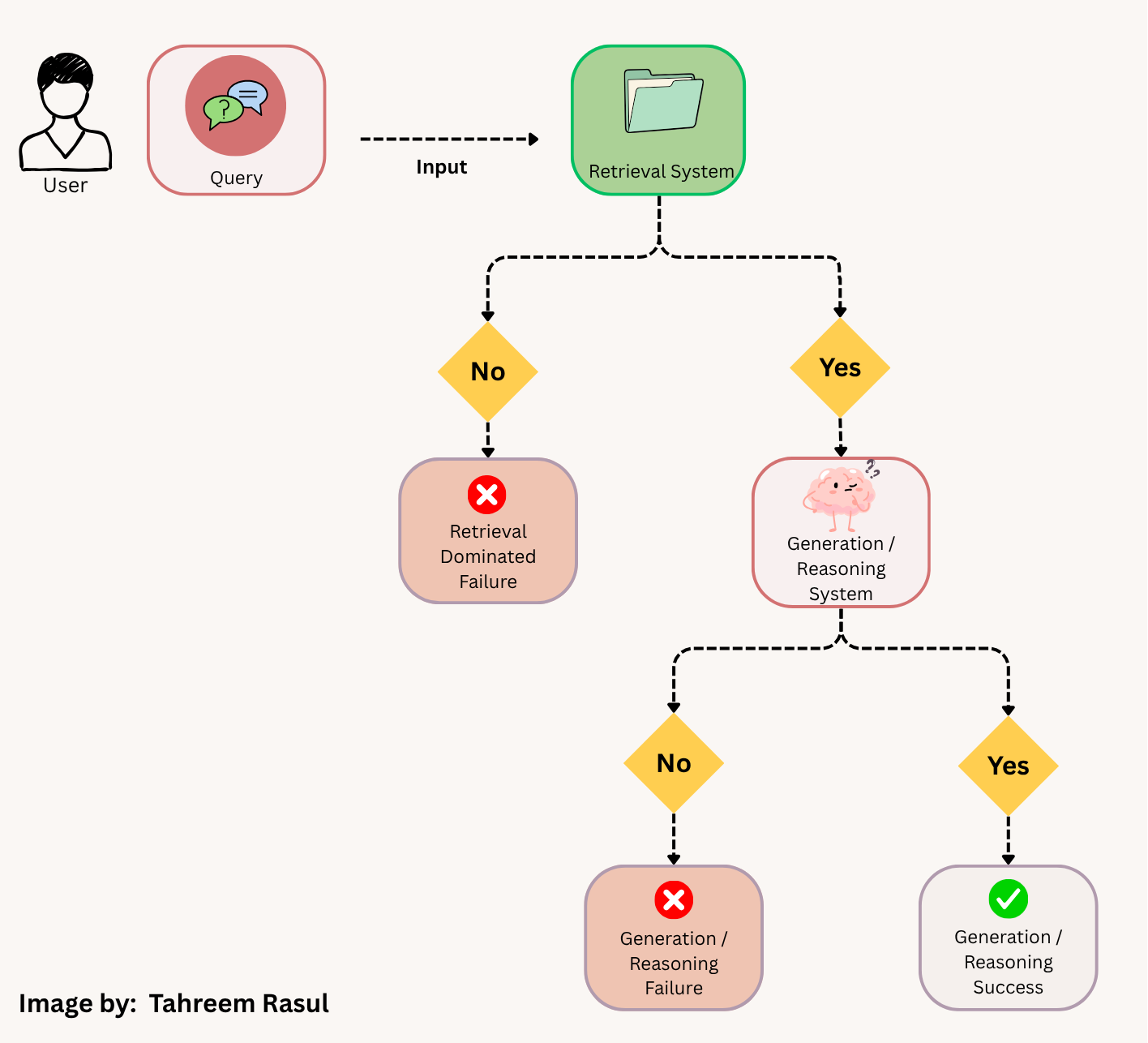
Most teams add complexity to RAG pipelines before they've earned it. This framework flips that instinct, introducing advanced techniques only when observed failures demand them. Starting with lexical and hybrid search, then moving to reranking and agentic information seeking, the approach keeps systems lean and understandable. It's a disciplined counter to the temptation of overbuilding. For readers tracking how retrieval evolves into action, the related piece on bridging retrieval and action offers a useful follow-up.

Google's AI Mode transforms search into a travel planning partner
Google's AI Mode is stepping up its travel game, now tracking flight prices and helping book hotels directly. That's a clear move beyond answering questions toward actually handling parts of the trip-planning process. We're watching this shift closely, as it signals a practical, hands-on role for AI in everyday tasks. For more on how AI is reshaping practical decision-making, our guide on using ChatGPT for work offers a useful parallel. It's a natural evolution, and we're curious where it lands next.

Discover how Keenable's web index empowers AI agents to explore smarter.
There's a quiet shift happening in how AI agents will find what they need. Accel-backed Keenable is stepping out of stealth with a $26 million seed round, having spent its time building a web search index designed specifically for those agents. It's a smart move to focus on the infrastructure beneath the surface. For anyone following the deeper questions around AI's reliability, our piece on verifying an AI's understanding offers a useful companion read. This feels less like hype and more like groundwork.

Explore how Google's new button empowers publishers to reclaim traffic.
Google is giving publishers a direct lever to pull as AI search reshapes traffic flows. A new button lets readers mark a source as preferred across Search, Discover, and Google News, offering a practical way to counter declining click-throughs. It's a smart, human-centered move that hands control back to both publishers and audiences. For more on how digital platforms are adapting, our piece on Cloudflare's Blog finding performance gains with EmDash, its new CMS, offers a useful parallel.

Google's new AI tools help students study smarter, not harder
Google's new study tools in Search and Gemini feel like a natural next step, not a flashy leap. The goal is straightforward: make Gemini the assistant students actually reach for when learning gets tough. That means simplifying the complex, which is exactly what thoughtful AI should do. It's a smart move in the ongoing race with OpenAI, and it prioritizes real outcomes over hype. For anyone juggling coursework, this could genuinely lighten the load.

Explore how Airbnb uses AI to make search more intuitive
Airbnb is putting AI to work where it matters most: shipping features faster. The company is testing a new AI-powered search experience with a toggle, a small but telling step toward making discovery feel less like a chore and more like a conversation. It's a practical move, not a flashy one, and that's why it works. For anyone juggling complex tools, this kind of iterative approach resonates.

AI search triples Shopify orders, complementing rather than replacing traditional traffic
Shopify's latest data flips a familiar fear on its head: AI search isn't replacing Google, it's fueling growth. In Q2, AI-driven traffic and orders to Shopify stores tripled year over year, proving that discovery and direct search can coexist. That's a signal worth watching for anyone building with AI. It suggests the tool isn't stealing attention; it's channeling intent. Curious how that plays out beyond retail?

Your AI summary sends users to your homepage, not your deep content
The web isn't dying. It's splitting. One version still serves human eyes, but the other has become raw material for machines. The data is stark: Google sends fewer clicks, yet ChatGPT is citing live pages more than ever. The real shift is that AI answers are now the product, and your homepage is the new front door. Most sites were built backward. The fix is to restructure deep pages for citations, rebuild the homepage for informed visitors, and treat internal search as an acquisition tool.

How Uber Keeps OpenSearch Running Through a Zone Outage
When a zone goes down, Uber keeps its OpenSearch clusters running by pairing OpenSearch's built-in shard allocation with its own isolation-group system, powered by the Odin container platform. That approach protects both query and ingestion, which is no small feat. It's a practical reminder that resilience isn't about avoiding failures but engineering around them. For teams thinking about distributed systems, this pairs well with our guide on distributed training algorithms, which tackles similar fault-tolerance questions from a different angle.

Google renames NotebookLM to Gemini Notebook with new Search integration
Google is at it again, renaming NotebookLM to Gemini Notebook. The move folds your notebooks directly into AI Mode in Search, a logical step toward a more unified assistant. It feels like a natural evolution, though it does make you wonder where the branding stops. For a deeper look at how these tools shape our expectations, check out "Talking to My AI Clone Taught Me to Question the Tech." We think this consolidation is a signal worth watching.