software engineering
software engineering at Beyond Market Intelligence is a file of 56 stories. The newest of them: “Kitesurf lets agents run browser tasks with less overhead, more control.”, “How AI agents triaged 85% of Astro's GitHub issues for Cloudflare”, and “Evaluate AI Coding Agents with These Top Open-Source Benchmarks”. Cloudflare's Kitesurf takes a leaner path for automated browsing, running browser components in isolated WebAssembly and Rust environments on Workers. Astro's maintainers were drowning in GitHub issues, so they let AI agents take over triage. Acme AI is the next-generation, AI-powered spreadsheet platform built to replace Excel and redefine how analysts, data scientists, and enterprise teams work… The list below is every software engineering story on Beyond Market Intelligence, newest first.

Kitesurf lets agents run browser tasks with less overhead, more control.
Cloudflare's Kitesurf takes a leaner path for automated browsing, running browser components in isolated WebAssembly and Rust environments on Workers. It speaks Chrome DevTools Protocol, so Playwright and Puppeteer can drive it without the resource weight of a full Chromium build. That's a practical step for teams juggling heavy workloads. We've seen similar infrastructure bets pay off elsewhere, like Perplexity's CobbleDB migration, and Kitesurf feels like another thoughtful push toward efficiency. It's worth exploring if your automation stack needs a lighter touch.
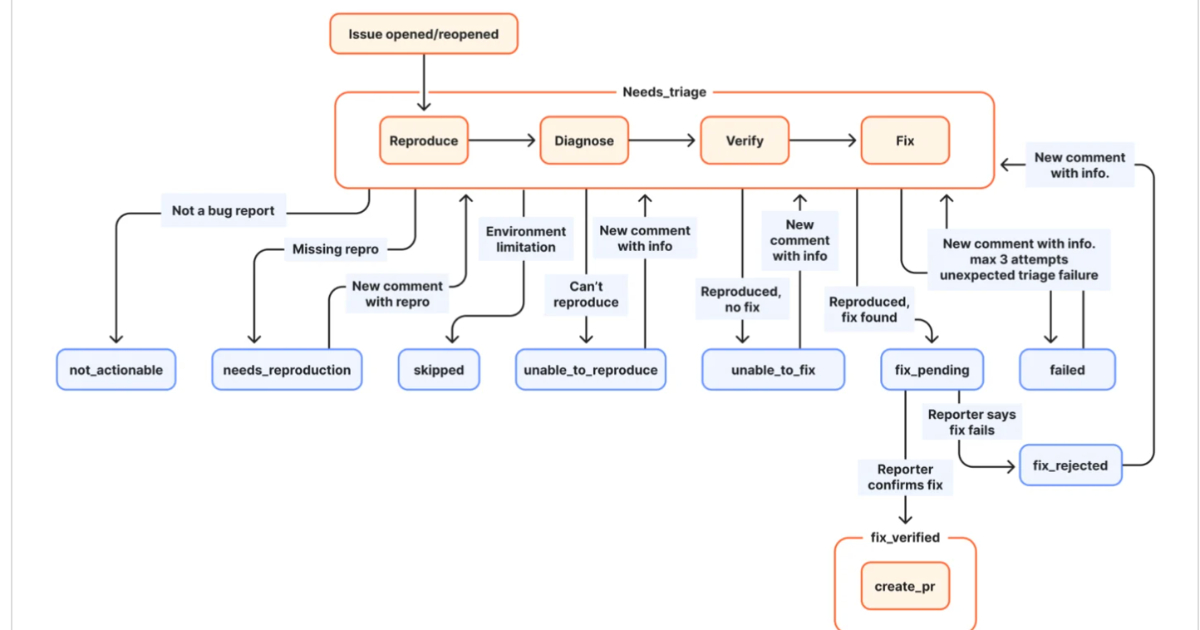
How AI agents triaged 85% of Astro's GitHub issues for Cloudflare
Astro's maintainers were drowning in GitHub issues, so they let AI agents take over triage. The result: an 85% cut in that workload, giving developers time back to focus on the work that matters. This isn't about removing humans; it's about making their role more meaningful. Cloudflare's approach, built on Workers with a human-in-the-loop, shows how agentic workflows can handle the noise. It's a practical win for open source, and it pairs well with our guide on distributed training algorithms.
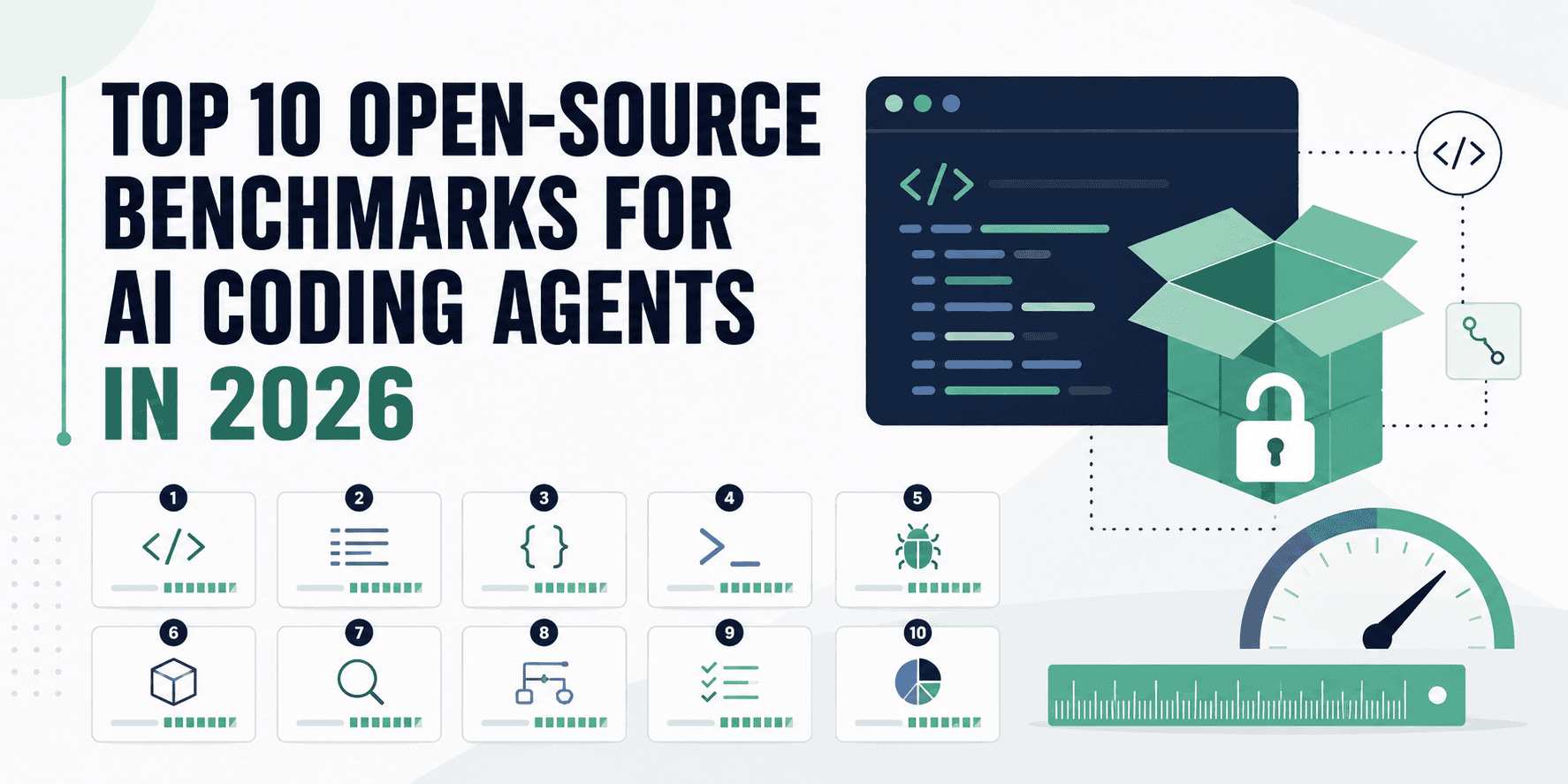
Evaluate AI Coding Agents with These Top Open-Source Benchmarks
Choosing the right benchmark is the first step toward building an AI coding agent you can actually trust. In 2026, the landscape has matured well beyond simple unit tests, with tools like SWE-bench, Terminal-Bench, and SlopCodeBench offering distinct lenses on real-world performance. We break down the top 10 open-source options to help you navigate the noise. If you are questioning how these models handle nuance, our piece on talking to an AI clone offers a timely perspective on the human side of the equation.

Explore how Netflix's open-source agent simplifies causal analysis workflows.
Netflix has open-sourced an agentic workflow for Observational Causal Inference that cuts through the usual grind of causal analysis. Given your data and a clear plan, the agent runs an actor-critic loop to estimate causality, draft a report, and point to next steps. It's a practical move toward making complex inference less manual. If you're exploring how agents handle structured tasks, our guide to distributed algorithms offers a useful foundation. This is the kind of tool that turns ambition into action.

Discover how Gemini 3.7 Flash empowers smarter coding and agentic workflows
Gemini 3.7 Flash arrives with coding and agentic workflows at the center, and a price cut that makes it hard to ignore. For the next few months, developers can run it at half the standard rate, a direct bet that Google's efficiency gains will translate into lower operating costs. We think that's the right wager, especially for teams running high-volume agents. The real test isn't the leaderboard; it's whether the model reduces retries and manual oversight in production.
One team's sprint proves what AI agents can achieve for your workflows.
Three OpenAI engineers just shipped a million lines of code. That's not a headline; it's a starting point. For you, the real work begins with a ten-hour agent run. This story is about scale, but more importantly, it's about what happens when you stop wrestling spreadsheets and let AI handle the heavy lifting. We're not here to sell you hype, just a smarter way forward.

Building Trust in Open Source Supply Chains for AI-Assisted Development
Trust in software supply chains is no longer just a compliance checkbox. With IBM and Red Hat expanding Lightwell into commercial offerings, organizations now have a clearer path to verifiable trust in AI-assisted development. That matters, because the tools we use to build software must be as accountable as the code they produce. It's a practical step toward governance that keeps pace with innovation, not a distant promise.

Optimize Your CI/CD Pipeline for AI-Powered Coding Agents
Deploying code with Claude Code isn't just about automating steps; it's about rethinking how your CI/CD pipeline handles AI-driven development. This piece cuts through the noise, offering practical ways to integrate coding agents without losing control or speed. If you're tired of wrestling with brittle workflows, this guide feels like a breath of fresh air. For more on how AI reshapes practical engineering, you might also enjoy *Exploring Real-World Computer Vision*, different domain, same principle: build for real constraints.

Your Team's Insight Still Guides the AI in Incident Response
AI is moving fast into incident response, summarizing channels, analyzing unfamiliar code, and even suggesting fixes. That's genuine progress. But Craig Risi's piece reminds us that the hardest calls still land on humans. The technology can point the way, yet judgment, context, and accountability remain ours to carry. That's not a limitation; it's the point. For a broader look at where this intelligence is headed, our piece on AI designing its own hardware offers a fitting follow-up.

Explore how teams balance AI progress with human-centered engineering in 2026
The 2026 Engineering Culture Trends Report zeroes in on something easy to overlook: the humans behind the algorithms. Ben Linders and his panel of QCon speakers and InfoQ contributors tackle AI adoption maturity, shifting team structures, and the roles that are transforming as a result. It is a grounded look at what changes when engineering cultures evolve. For a deeper dive into the enterprise side, our related article, "Unlock AI's Enterprise Potential," pairs well with this discussion.
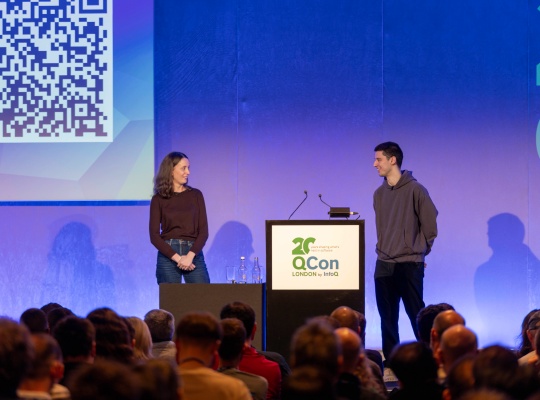
How Spotify's AI Agent Standardizes Thousands of Code Repositories
When Spotify set out to rewrite its entire codebase, it didn't just throw more engineers at the problem. Jo Kelly-Fenton and Aleksandar Mitic built Honk, an AI coding agent designed to handle fleet-wide migrations that would otherwise stall for months. Their approach decouples CI verification from the agent itself, a smart move that prevents bottlenecks before they start. It's a practical, forward-thinking look at how to standardize thousands of repositories without losing momentum.

Meta enters the AI coding arena with agent tools and smarter models.
Meta is entering the AI coding race with intent. Today's beta release of Muse Code, a terminal-based agent built for large repositories, pairs with Muse Spark 1.2, a model co-trained alongside its own harness. The pitch is practical: persistent background agents, parallel worktrees, and a replay-exact audit log. Pricing undercuts rivals significantly, though the contributor tier trades tokens for training data. It's a calculated move from a company that once championed open weights. For now, the frontier just got more crowded.

SkiaSharp 4.0 aligns release rhythm with upstream Skia milestones
SkiaSharp 4.0 is setting a new rhythm for the project. With the release of versions 4.148.0 and 4.150.0, Microsoft and the Uno Platform are now syncing their package versions directly with upstream Skia milestones. That's a practical move. It gives developers a clearer, more predictable path forward, and the 4.151.0 prerelease shows the cadence is already holding. This isn't just about version numbers; it's about making progress easier to track and adopt.

Move Beyond Token Metrics to True AI-Driven Delivery
Engineering leaders are pouring money into AI, yet software delivery often stalls. That's the puzzle Lizzie Matusov, CEO of Quotient, tackles head-on. She argues that soaring spend misses the mark when teams chase vanity metrics like token usage. Instead, she introduces a research-backed maturity framework to help leaders identify where adoption gets stuck, align their organizations, and focus on real bottlenecks across the development lifecycle. It's a grounded, practical call to move from activity to measurable outcomes.

Alibaba's Qwen3.8-Max redefines autonomous enterprise AI performance
Qwen3.8-Max doesn't just nudge ahead on agentic benchmarks, it posts an 86.1 on OSWorld-Verified, edging out GPT-5.6 Sol Max and Fable 5. That's a meaningful signal for enterprises tired of models that chat well but stumble on long-horizon tasks. The 2.4-trillion-parameter MoE design is impressive, yet the real story is the pending open-weight release. If Alibaba pairs permissive licensing with that performance and its undercutting API pricing, self-hosted autonomy becomes a tangible option. For now, treat the benchmarks as promising, not proof.
Bridging the Gap Between Data Science Skills and Real-World Impact
Hiring managers keep saying the same thing: recent data science graduates can build models, but they struggle to ship them. That gap is telling. It suggests the real missing piece isn't another algorithm, but the engineering discipline to turn an experiment into a reliable product. For career changers, this is actually encouraging. You don't need to out-code a software engineer; you need enough structure to make your work reproducible and testable. Focus on version control, testing, and clear communication.

AI tools help Google patch more Chrome bugs in a single month
Google says AI helped it fix more Chrome bugs in June than in the prior two years combined. That is a striking signal, not just about volume, but about how quickly large language models are reshaping the mundane work of security. For two years, experts have warned this day was coming. It is here. The shift is practical, not theoretical. If you are curious how AI is changing the tools you rely on daily, this is worth exploring.

Discover how strategic teams amplify AI for measurable software success
DORA's 2025 research makes one thing clear: AI amplifies whatever system it touches, so the real work is shaping the organization around it. Ben Linders breaks down team profiles and success capabilities that turn this insight into action. It's a practical read for anyone tired of chasing tools instead of outcomes. If you're still weighing the human side of AI, "Talking to My AI Clone Taught Me to Question the Tech" pairs well with this analysis.

Redesigning Engineering Interviews to Measure Real-World Judgment
Daniel Doubrovkine has bombed LeetCode interviews. Despite decades of leadership, he failed basic algorithm tests, and he's here to explain why that matters. Traditional whiteboard grilling doesn't evaluate senior engineering talent; it rewards rote recall. He offers actionable frameworks to replace it, focusing on human judgment, system design, and hands-on AI collaboration. That's where real hiring signals live. If you're questioning your own screening process, this talk is worth your time.

GM uses AI agents to free engineers from 85% of non-coding work
General Motors' autonomous driving division didn't just hand engineers a better coding tool. It redesigned entire workflows around AI agents, and the payoff is hard to argue with: three times as many merged pull requests, faster releases, and fewer defects slipping downstream. Rashed Haq's point is worth sitting with. Most engineering time was never spent writing code anyway. Automating the other 85 percent, the analysis, triage, and testing, is where the real transformation lives. That is a smarter way to think about AI's role.

How Uber Separates Growth From Infrastructure Costs With Smarter AI
Uber's Zero Growth Stack takes a sharp turn on infrastructure logic: it separates capacity growth from business demand, so services scale without piling on hardware. Garbage collection sits at the core, quietly doing the heavy lifting. What stands out is the inclusion of generative AI in development, which lifts developer productivity, but Uber pairs that with deliberate cost controls. That balance, scaling while staying economically disciplined, is the real takeaway.

Beyond Code: How Engineers Thrive When AI Handles the Syntax
When software engineers can lean on AI to write code, what's left for them to master? Ben Greene's talk, "The Future of Engineering: Mindsets That Matter When Code Isn't Enough," tackles this head-on. Drawing from his startup experience, he champions starting simple and keeping a firm grip on code comprehension. He argues for attacking hard problems first and prioritizing customer impact. Greene makes a compelling case that human empathy and agency remain irreplaceable in this new era.

When Scaling AI Agents, Small CPU Tasks Become Big Bottlenecks
We scaled to hundreds of LLM agents and watched our system crawl. The culprit wasn't the models. It was the hidden cost of asynchronous design, where tiny CPU tasks quietly piled up until they became the bottleneck. This story is a practical look at that tradeoff, and it pairs well with our guide on distributed algorithms if you want the deeper mechanics. The takeaway is simple: more agents mean more overhead, and ignoring it slows everything down.

Building Smarter Agents with an Intermediate Protocol Layer
AI agents often fail because they're built like tangled 1970s BASIC scripts, sprawling and unmanageable. Jake Mannix proposes a smarter path: an intermediate protocol layer that treats AI tools like versioned, encapsulated software components. This isn't just cleaner engineering; it's a practical defense. By enabling interface mapping and dynamic schema projection, teams gain runtime taint tracking that sniffs out data exfiltration risks before they become breaches. That's how you build velocity without sacrificing security.