software engineering
software engineering at Beyond Market Intelligence is a file of 56 stories. The newest of them: “From Notebooks to Production A Practical Guide for Data Scientists”, “700 AI-written math papers, but engineers still won't trust the code”, and “Efficiency Matters: What 50,400 Agent Runs Reveal About Wasted Work”. That jump from notebook to production code is one of the hardest transitions in data science, and it has nothing to do with your modeling skills. Seven hundred AI-written math papers exist, yet engineers still won't trust the code it produces. Acme AI is the next-generation, AI-powered spreadsheet platform built to replace Excel and redefine how analysts, data scientists, and enterprise teams work… The list below is every software engineering story on Beyond Market Intelligence, newest first.
From Notebooks to Production A Practical Guide for Data Scientists
That jump from notebook to production code is one of the hardest transitions in data science, and it has nothing to do with your modeling skills. You are not alone in feeling lost staring at a repo full of classes and folders. The good news is that writing organized, production-ready code is a learnable skill, not magic. It is also not something AI will take over entirely, yet. Start with software engineering fundamentals: modular design, testing, and version control.
700 AI-written math papers, but engineers still won't trust the code
Seven hundred AI-written math papers exist, yet engineers still won't trust the code it produces. That gap isn't about capability, it's about proof. We've watched agents waste turns in real repositories, a finding we explored in "Efficiency Matters: What 50,400 Agent Runs Reveal About Wasted Work." Trust isn't granted because a model can compute. It's earned when the output becomes verifiable, predictable, and actually useful in production. That's the real challenge ahead.

Efficiency Matters: What 50,400 Agent Runs Reveal About Wasted Work
Fifty thousand four hundred agent runs. That is the scale of evidence behind a simple question: how much of that work was wasted? Real repositories, seeded decisions, and a clear pattern of churn across turns and patches. The findings point to harness rules that genuinely reduce friction, not just theory. Efficiency is not about speed alone. It is about knowing which actions matter. For data scientists navigating similar tradeoffs, our guide on entering the field with confidence offers a practical starting point.
Bring clarity to your spreadsheets with an AI-powered add-in that flags unit errors
Spreadsheets shouldn't leave you guessing whether your units are consistent. This new Excel add-in, born from research presented at the 2004 International Conference on Software Engineering, scans your sheets for mismatched currencies and engineering units, flagging errors before they cause trouble. It works on Windows, Mac, and Office 365. No hype, just practical clarity for anyone tired of hunting down hidden mistakes. For deeper coverage of how AI shapes production systems, see "How engineering leaders are shaping production systems for an agentic future."
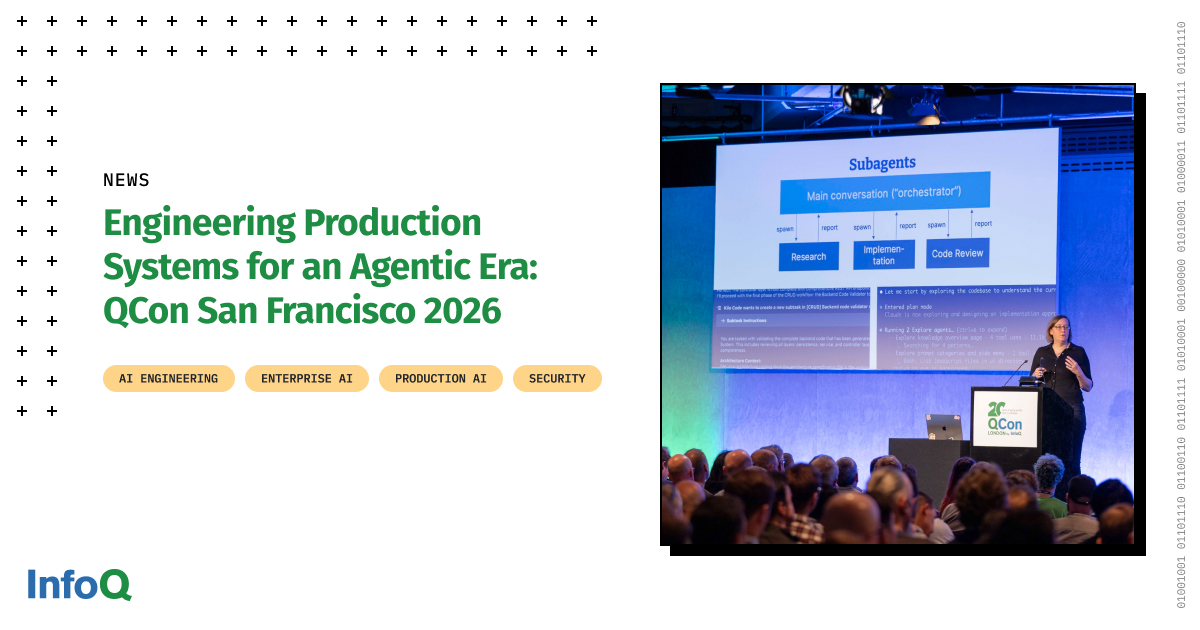
How engineering leaders are shaping production systems for an agentic future
The QCon San Francisco 2026 lineup reads like a blueprint for the next era of engineering. Airbnb, OpenAI, Netflix, and Honeycomb are sending practitioners, not visionaries, to share how they build production systems as AI agents take on more responsibility. This is not theory. It is the messy, practical work of evolving infrastructure under real load. For deeper context on the talent shifts shaping this world, see our coverage of how OpenAI parts with three researchers over data handling concerns.

Master the Code by Slowing Down in the Age of AI
Ben Linders argues that real mastery in software engineering comes from slowing down, even as generative AI accelerates output. He's right. Tools can produce code quickly, but they don't build understanding. Engineers still need to grasp how systems work to truly learn. Senior developers who coach juniors through deliberate, slower techniques are preserving the craft. For more on what AI agents can, and cannot, do with code, see our coverage of "300K lines refactored for $4,000: what a C codebase taught AI agents."

300K lines refactored for $4,000: what a C codebase taught AI agents
Three hundred thousand lines of C, refactored in three weeks for $4,000 in tokens. CodeScene's case study is a practical stress test for AI agents, not a headline. The playbook of codebase-specific recipes the agents built is the real prize, it suggests these tools learn context, not just syntax. Practitioners are right to question the scope and the harness's role. That skepticism is healthy.
Navigating AI/ML Job Requirements: A Shift in Expected Skills
The job title says "AI/ML Engineer," but the posting asks for FastAPI wrappers and DSA drills, not the math or data processing skills that once defined the role. That's a real shift, and it's leaving candidates like u/Ishaat_Rahman wondering if the bar has quietly moved to PhD-only territory. The confusion is fair. The role now leans heavily on software engineering, which changes what "entry-level" means.

Unlock AI’s Enterprise Potential: Navigating Adoption and Ethical Considerations
Enterprise AI is moving fast, and this conversation cuts through the noise. Meryem Arik, Clara Higuera Cabañes, and Jeff Smith tackle the rush toward adoption without losing sight of what matters: reliability and ethics. They frame this as an industrial moment, where the pressure to stay competitive can outpace careful implementation. It's a grounded look at how software engineering fits into this shift.
Exploring a Career Shift: An MD, a PhD, and a Data-Driven Future
Weighing an MD against a Math + CS degree is a high-stakes bet on your future. You have two years left in medicine, but you already know it's not your path. The real question isn't whether research or software suits you better; it's how much you trust a degree to matter in an AI-driven market. A strong Math + CS foundation remains valuable, but AI is changing the role of the degree, not eliminating its core utility.
Unlock Your Codebase: Explore AI-Powered Knowledge Graphs for Seamless Development
Multi-file reasoning has long been the silent killer of AI coding workflows. Graphify, launched in April 2026, tackles this head-on by turning codebases and unstructured data into queryable knowledge graphs. The recent parser upgrades and cross-file resolution improvements show real momentum, though community feedback rightly notes that daily integration still needs polish. We see promising architecture here, and we are watching closely. For more on how AI tools are reshaping developer expectations, check out our piece on navigating AI/ML job requirements.
Seven Python habits that surface surprises before production does
Watching senior developers work is less about speed and more about calm. The seven practices they follow are built to reduce surprise, catching issues before they ever reach production. It's a discipline that values foresight over cleverness. If you're ready to move beyond syntax and into mindset, these habits are worth your attention. For a deeper look at how advanced thinking reshapes code, our piece on unlocking Python's potential pairs well with this. The goal isn't to do more. It's to make the unexpected rare.
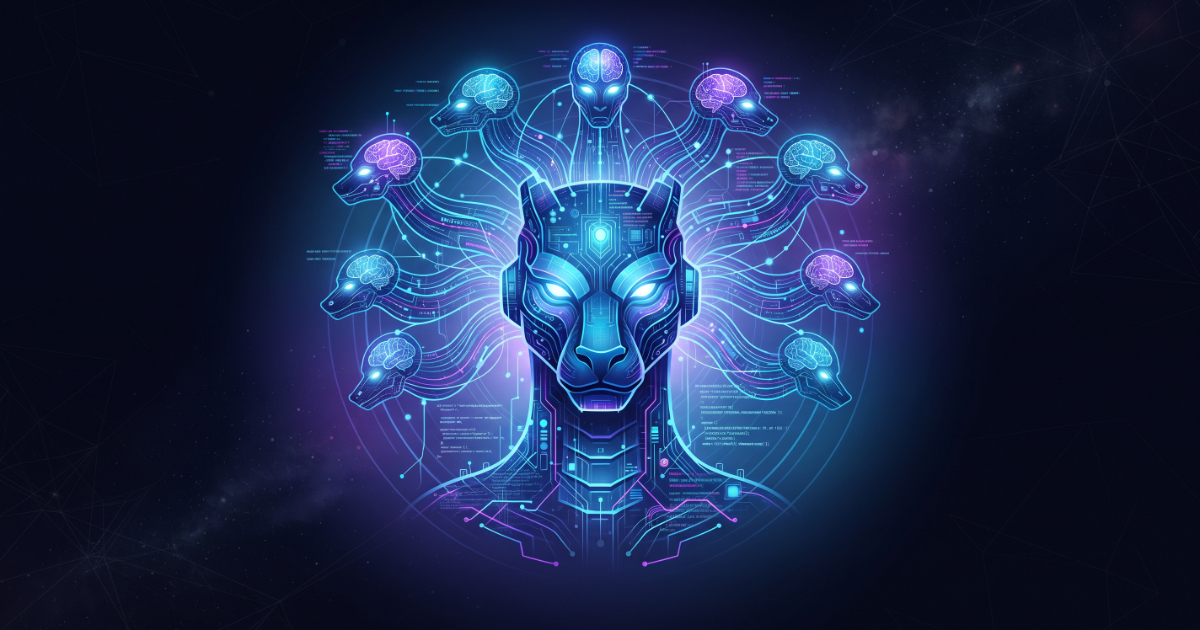
Discover how multi-model orchestration makes coding tools smarter and more efficient.
GitHub's Project HydraFusion is taking a smarter approach to AI coding assistance. Instead of relying on a single model, this research preview for GitHub Copilot dynamically assembles execution plans, pulling from multiple providers based on the task at hand. The result? High task quality without the operational overhead you might expect.
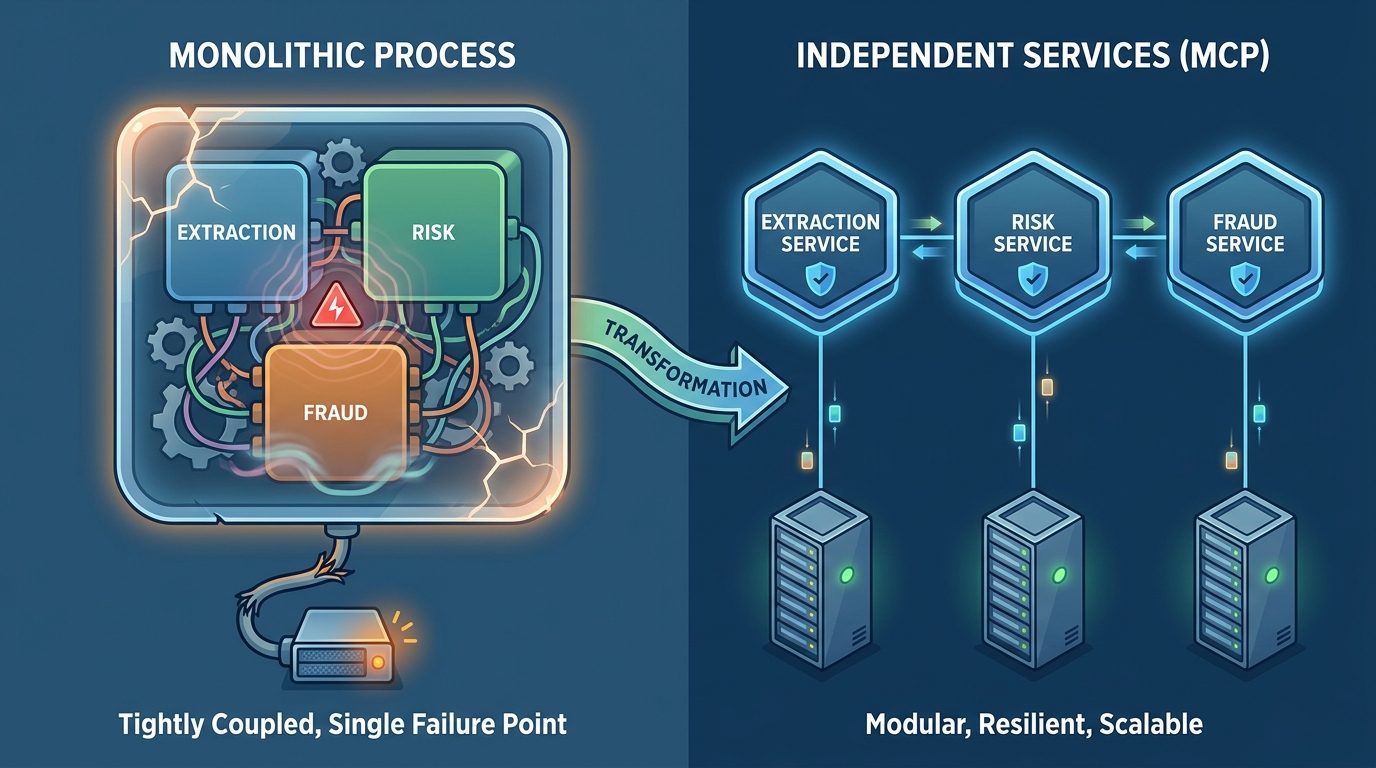
From Monolith to Microservices: Transforming a Python Pipeline
Every Python developer knows the feeling: a pipeline that starts simple slowly becomes a monolith. When our tightly coupled process grew too heavy, we knew something had to change. We split it into independently deployable MCP services. This approach isn't just about cleaner code; it's about reclaiming control over your workflow. By breaking things down, you gain flexibility and speed. It's a practical shift toward sustainable architecture. For more on adapting systems, you might explore *Evolve Your Recommendations: Real-World Insights on Adaptive Systems*.

From Engineer to Empire: How One Solopreneur Built a $2M Puzzle Franchise
Joe Cassavaugh traded the corporate engineering ladder for a solo career building puzzles and stories. His journey from software engineer to a $2M+ indie franchise owner is a masterclass in applied leverage. He scaled to 10 games in 5 years by adopting Unity for a 4-6x velocity boost and optimizing his content pipelines. For senior devs, his key takeaway is sharp: the trade-offs between corporate life and solopreneurship are significant, but the velocity gains are real. It's a practical look at refactoring your own career.

Vibe coding taught a costly lesson in skipping the fundamentals
A $52 bill and two hours of frantic coding sounded like a win. It wasn't. The app worked just long enough to save the day, then left a mess that took far longer to untangle. That's the hidden cost of moving fast without a plan. If you're tempted to skip the groundwork, don't. Explore the process before you build, and you'll avoid the regret that follows shortcuts.

Software engineers will lead by coordinating agents, not just coding.
Meryem Arik's QConAI 2030 talk cuts to a truth many would rather skim past: the software engineer's role is not disappearing, it's evolving into something broader. She points to token spend management and parallel agent infrastructure as the new operational realities, but the real shift is human. When non-technical builders start steering vendor decisions and regulatory pressure mounts, coding becomes the easy part. Product leadership and multi-agent coordination take over.

Discover how Google's new Flash models empower smarter agents and stronger security.
Google's Gemini 3.8 Flash isn't just another update, it's a deliberate push into agentic work, with a standard model built for complex reasoning and a Cyber variant that hunts vulnerabilities. The latter's 86.2% on CyberGym and ability to find a 13-year-old Chrome bug in hours shows what focused AI can do for defenders. It's priced the same as 3.7, but it works harder. For teams feeling buried by security debt, this feels like a practical step forward, not hype.
OpenClaw 2.0 Arrives with Simpler Setup and Smarter Collaboration
OpenClaw 2.0 strips away the friction that kept too many users from customizing their own AI agent. By rebuilding the installation process and sharpening the browser interface, this update makes a powerful tool genuinely approachable. We also see real progress in how memory and skills work together, which should make automations feel less like chores and more like extensions of your workflow. For anyone tracking where AI is headed, this is a meaningful step toward practical, everyday use.

Predict infrastructure failures before they disrupt your workflow.
Empirik has launched with $21M in funding, backed by Sequoia, to predict IT outages before they strike. The mission is straightforward: give infrastructure the same proactive intelligence that Cursor brought to software engineering. That comparison matters because it signals a shift from reacting to problems to preventing them. For teams tired of firefighting, this is a practical step toward calmer operations. And if you're curious how similar predictive logic plays out in other fields, our piece on adaptive recommendation systems offers a useful parallel.
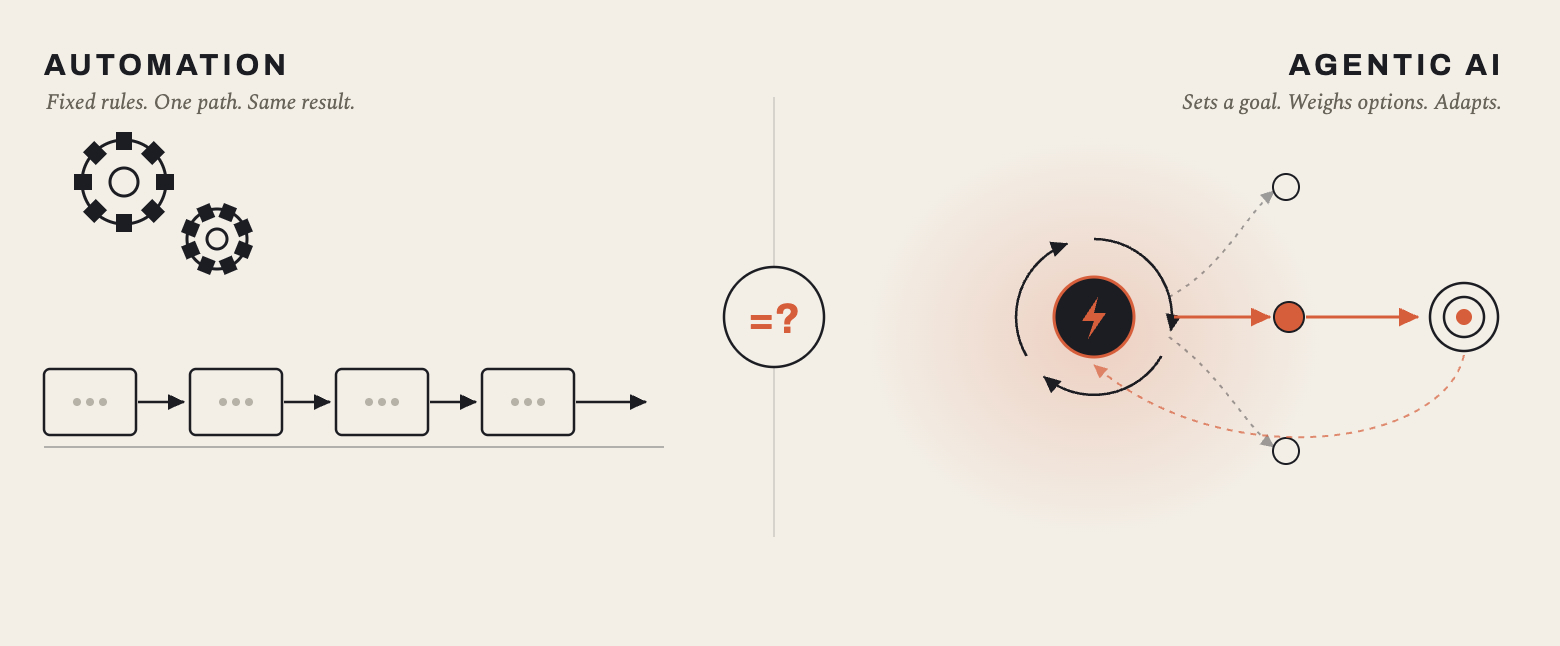
Beyond the Flowchart: What True Agentic AI Actually Requires
Most agents marketed as intelligent are just flowcharts wearing a neural network costume. The distinction matters, because true agency implies adapting to new contexts, not just executing a fixed sequence. This piece cuts through the hype to show why most current systems fail the test. If you are questioning whether the tech is genuinely learning or just following orders, you will want to read this.

Explore how AI assists workflows but leaves complex coding to humans.
Asgaut Mjølne Söderbom and Ola Hast have moved past continuous deployment and pair engineering, yet their latest experiment with Claude Code revealed a sharp boundary. They find AI excellent for many tasks, but not for the messy reality of brownfield coding. This episode digs into why human collaboration still carries the weight where AI vibes fall short. For more on questioning AI's limits, check out "Talking to My AI Clone Taught Me to Question the Tech."

From Prompt to Production: How Roblox Scales Autonomous Code Safely
Andrew Swerdlow's take on scaling autonomous software development at Roblox cuts straight to what most engineering leaders are quietly wrestling with: moving from prompt to production without losing control. His focus on security sandboxes, mining code review exemplars for institutional knowledge, and rethinking productivity around feature velocity feels like a practical blueprint, not a fantasy. It's a grounded argument for trusting AI where it earns that trust.

What AI Code Debugging Reveals About Missing Information Gaps
Twenty-eight debugging experiments point to a clear truth: AI coding tools don't stumble on complexity as much as they do on missing information. That's a refreshingly precise diagnosis, one that shifts the conversation from raw capability to practical context. For anyone who's felt the limits of AI harnesses, this is a nudge to look closer at what's omitted, not just what's miscomputed. It's a smart, human-centered read.