throughput
Beyond Market Intelligence keeps throughput in one place: 20 stories so far. The section currently leads with “Build the Engines Behind Fast LLMs With These Hands-On Projects”, “Smarter resource use: how batching transforms LLM performance”, and “Valkey's Future Expands Beyond Caching, Say Its Lead Maintainers”. Latency defines the LLM experience, and the fastest way to understand it is to build it yourself. Four people heading to the same destination in separate taxis make four identical trips. Acme AI is the next-generation, AI-powered spreadsheet platform built to replace Excel and redefine how analysts, data scientists, and enterprise teams work… The list below is every throughput story on Beyond Market Intelligence, newest first.

Build the Engines Behind Fast LLMs With These Hands-On Projects
Latency defines the LLM experience, and the fastest way to understand it is to build it yourself. These hands-on projects move past theory, putting you behind the engine to see exactly where speed is won and lost. It is direct, practical work that transforms abstract performance concepts into tangible skill. If you are also curious about rethinking core learning methods, our exploration of physics-inspired approaches without backpropagation pairs naturally with this builder's mindset.
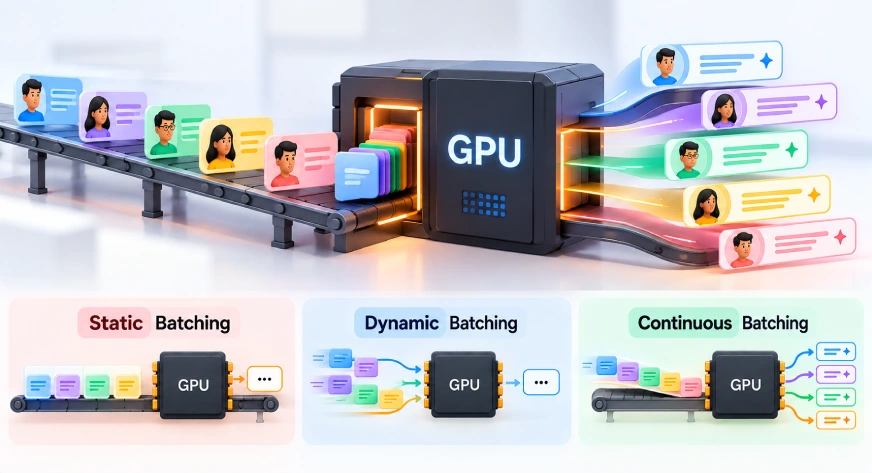
Smarter resource use: how batching transforms LLM performance
Four people heading to the same destination in separate taxis make four identical trips. Put them on a single bus, and everyone arrives together using far less fuel. That is the logic behind batching in large language models. Instead of processing one request at a time, the system groups them, sharing memory and compute across the batch. It is a smarter use of resources that makes AI faster and more efficient. For deeper coverage, explore how hierarchical routing cuts memory while preserving long-context accuracy.

Valkey's Future Expands Beyond Caching, Say Its Lead Maintainers
Two years after forking from Redis, Valkey is making clear its ambitions extend well beyond caching. The project's twelve maintainers and nine committee members are pushing forward with meaningful upgrades, including better throughput, stronger cluster functionality, and planned features like synchronous replication and tiered storage. That's a serious roadmap for a database aiming to be a core infrastructure player. For teams exploring AI-driven workflows, the emphasis on automation and security feels particularly timely.
Faster chunking in Rust without sacrificing accuracy, now open source
Chunking speed usually trades away accuracy, but this open-source Rust library challenges that trade-off. Chunkr delivers throughput measured in gigabytes per second, outperforming LangChain and LlamaIndex by wide margins while supporting strategies like recursive, markdown header, and hierarchical chunking. Its native PDF loader processes pages 15.9x faster than pypdf. For teams wrestling with large document pipelines, this is a practical leap forward. If you're exploring how performance shapes AI tooling, our piece on spec design across 65 open-source projects offers useful context.
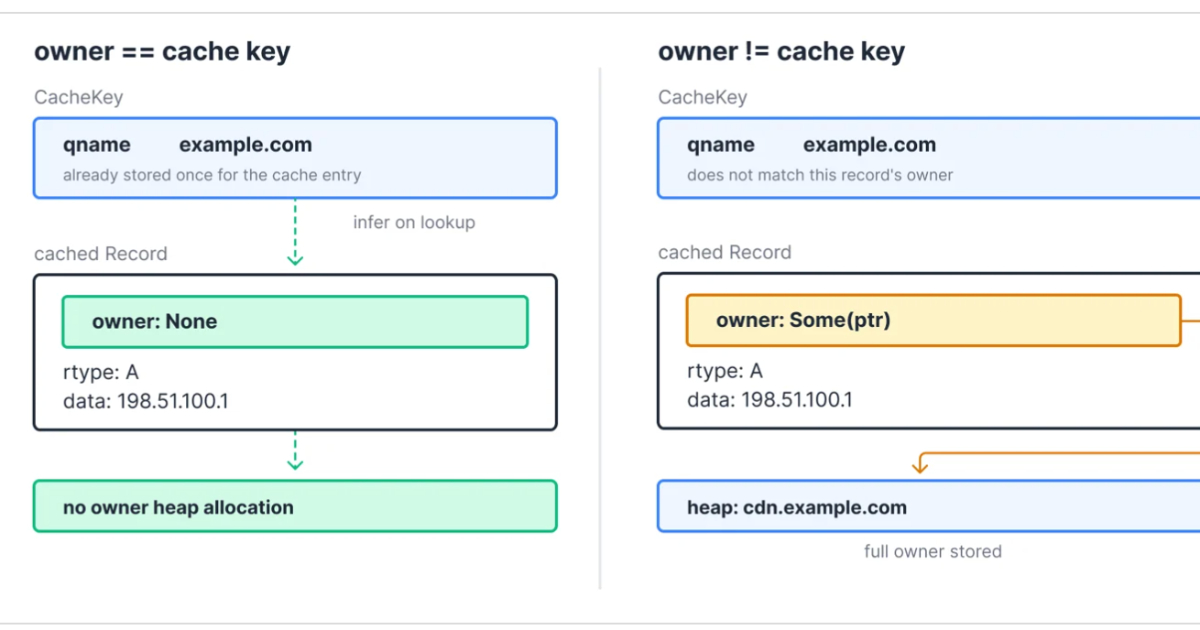
Cloudflare's Data Innovation Frees 100 TB, Boosts DNS Performance
Cloudflare's Big Pineapple DNS cache just got a serious upgrade. By redesigning the in-memory representation of its entries, the team cut the per-entry footprint by 56%. That freed roughly 100 TB of working-set memory across the fleet, which is a massive win for efficiency. The Rust-based changes didn't stop there. Cache insertion throughput climbed 43%, and lookup latency dropped 19%. This means faster, more responsive DNS without needing extra hardware. It's a smart, practical step forward.

Shopify's Gisting Technique Compresses AI Prompts for Faster Inference
Shopify's engineering team has introduced gisting, a technique that compresses long LLM prompts into a smaller set of learned tokens. The result? Better throughput and lower inference costs without sacrificing performance. That's a practical step toward making AI more accessible, especially for teams wrestling with unwieldy system prompts. We see this as a meaningful move for developers who want efficiency without complexity.
From Config Wrangling to Experiment Scaffolding: A PhD Reality Check
The instinct to keep the eval harness and metric definitions close is the right one. That layer is where your scientific judgment lives. Handing off the scaffolding while holding onto the core is a workable line, even if you keep crossing it. The detachment you describe is real. The fix is likely not more careful diff-reading. It is rebuilding a mental model of the system at a higher level, so you can reason about the numbers without needing the code memorized.

Focus human attention where it drives real data outcomes
Reviewing every AI action is a luxury most teams can't afford. In this piece, the author tackles a familiar bottleneck: how to keep humans in the loop without turning oversight into a full-time job. The answer isn't more checkpoints, it's routing attention to the moments that genuinely need it. We appreciate this practical take on balancing control with momentum. It pairs well with our guide on distributed training, where similar trade-offs between efficiency and oversight come into play.

Jalapeño delivers faster inference with greater energy efficiency
OpenAI's Jalapeño chip isn't just fast; it's fast where it counts. Tested on SemiAnalysis' InferenceX benchmark, it delivered more tokens per user and higher throughput per kilowatt than any currently available model. That's the kind of efficiency that turns experimental AI into practical tooling. We're eager to see how this reshapes deployment decisions, especially for teams tired of trading speed for cost. For a closer look at how AI performance impacts real-world judgment, our piece on questioning an AI clone offers a useful counterpoint.

Turn Idle CPU Power into Faster AI Token Generation
Speculative decoding is often framed as a GPU-only play, but DFlash proves otherwise. In vLLM tests on Intel Xeon 6, it hit 3.92x the autoregressive throughput with Qwen3.5-9B at concurrency 1. That is not a marginal gain; it is a practical unlock for underused CPU compute. The post breaks down the acceptance metrics and shows exactly when speculation pays off. For a deeper look at keeping model inputs clean, check out our piece on catching AI slop before it skews your data.
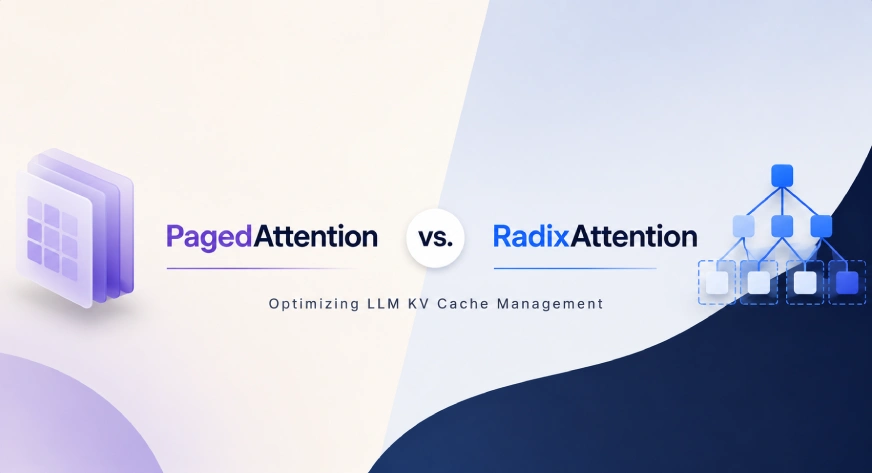
Unlocking LLM Performance Through Smarter Memory Management
KV cache memory can quietly decide whether an LLM deployment thrives or stalls. PagedAttention tackles fragmentation with smarter allocation, while RadixAttention targets prefix reuse. Both cut the GPU strain that limits concurrency and throughput. What stands out is how practical these optimizations feel. Production latency improves without demanding new hardware. For readers exploring how context shapes model behavior, our piece on agentic context learning pairs well with this discussion. It is a useful next step for understanding what makes modern LLMs efficient beyond raw architecture.
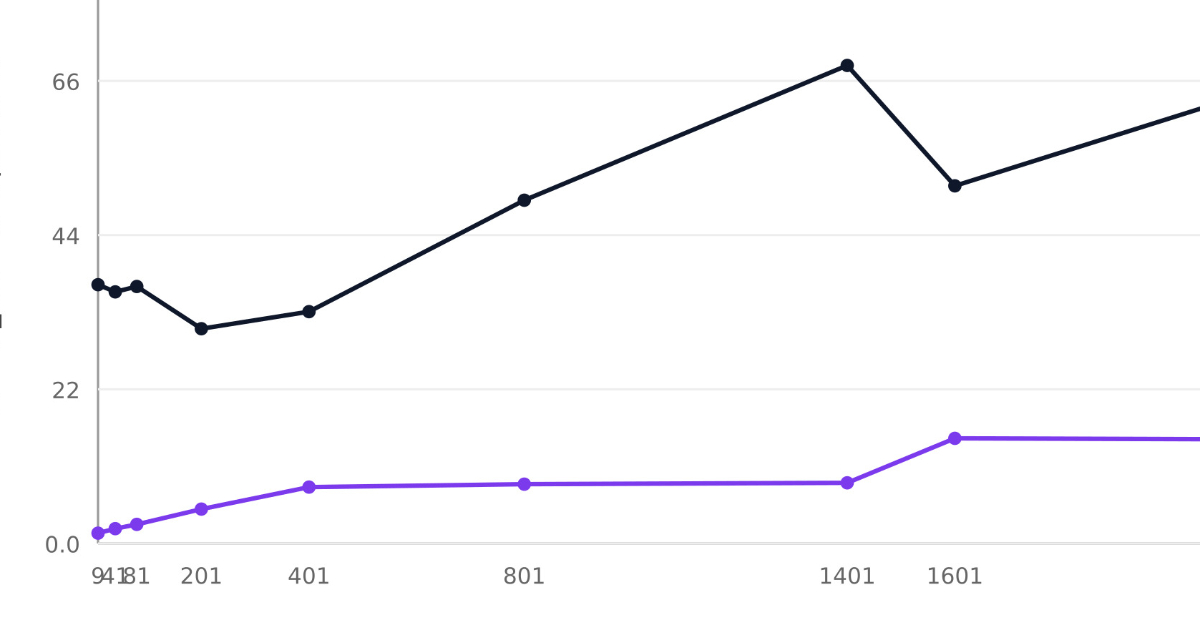
Single runtime outperforms multi-system stacks for live data workloads
Harper is pushing back on the multi-system stack, and the argument is hard to ignore. By keeping application code and data together in a single runtime, the database platform reports notably better performance on live, personalized workloads compared to a Vercel-based setup. Version 5.2 adds a record cache and greater throughput per node. That is a practical step toward less complexity. For readers tracking how modern architectures evolve, our related piece on Cloudflare's CMS migration offers another angle worth exploring.
Gradient accumulation speed varies more than expected across GPU setups
Conventional wisdom says a batch of four is a batch of four, but this test on LoRA with Qwen3-1.7B shows otherwise. The user found that on a T4, running four micro-batches before one optimizer step was 17% slower than a single physical batch of four. On an L4, that gap stretched to 41%. The difference is execution shape, not just optimization math. Treating effective batch and physical batch as the same knob is a mistake.

Scaling from 500 to 8,000 Events Per Second Without Sacrificing Accuracy
When an integration pipeline grows from 500 to 8,000 events per second, the temptation is to let correctness slide. This production account shows how one team scaled without sacrificing the two guarantees that matter most. It's a practical, grounded look at trade-offs, written for anyone who has felt the pressure of rapid growth. If you're curious about how performance and precision can coexist, this is the read for you. For a related take on turning complex systems into approachable tools, explore the Forrester Function piece.
Enterprises invest in AI speed but lack visibility into infrastructure costs.
Enterprises are running AI in production, 66% have live workloads, and 29% operate at scale, yet fewer than half can rigorously track what that compute costs. Performance and GPU availability now outrank total cost of ownership, and reliability outranks price. That trade makes sense under pressure, but it leaves the weakest satisfaction score on value for money, a judgment made without full instrumentation. The next dollar targets specialized clouds and new silicon, even as current GPU utilization stalls near half.
Building smarter AI for puzzle games with previewed chance and stack constraints
Planning an AI around previewed chance events and long-horizon throughput is a sharp problem, and the trade-offs are framed clearly. Separating deterministic afterstates from explicit chance nodes, paired with a policy/value network and PUCT, feels like the right structural instinct, especially given the preview-conditioned fourth action. Their honest reporting on what failed, like Q-head calibration and exhaustive leaf maximization, is more useful than most success stories.

OpenAI slashes GPT-5.6 Luna pricing 80% to compete on cost
The price of intelligence just dropped. OpenAI slashed GPT-5.6 Luna's combined token cost by 80%, bringing it to $1.40 per million tokens and planting it firmly in the low-cost tier alongside models from Google and Xiaomi. Terra's 20% cut to $14 matches Google's Gemini 3.1 Pro, while Sol gains a pricier Fast mode. This isn't just a discount; it's a strategic pivot. As model capability plateaus, the real battleground shifts to production economics, and OpenAI is betting on cost-per-intelligence to win enterprises.

When Scaling AI Agents, Small CPU Tasks Become Big Bottlenecks
We scaled to hundreds of LLM agents and watched our system crawl. The culprit wasn't the models. It was the hidden cost of asynchronous design, where tiny CPU tasks quietly piled up until they became the bottleneck. This story is a practical look at that tradeoff, and it pairs well with our guide on distributed algorithms if you want the deeper mechanics. The takeaway is simple: more agents mean more overhead, and ignoring it slows everything down.

Evolutionary Code Optimization Arrives as a Secure, Measurable Service
Google's AlphaEvolve has hit general availability on the Gemini Enterprise Agent Platform, and the practical payoff is already clear: Klarna doubled its ML training throughput. What stands out is the privacy-first design, with evaluators running client-side so code never leaves your infrastructure. That's a meaningful step for teams cautious about exposing proprietary work. It's worth noting, though, that AlphaEvolve shines only where a measurable evaluation function exists, so it's not a universal fix.

Build a Context Store to Keep AI Development from Outpacing Understanding
Fast development is seductive. AI makes the first 80% of coding feel effortless, yet the structural debt hides until it surfaces as instability. That is why we find the argument for a "Context Store" so compelling. By binding spec-anchored design, tests, and fitness functions directly to the repo, Stella Berhe and her team show how we can make evolution safe. It is a practical shift from chasing speed to ensuring comprehension, and a smart next step for leaders.