token usage
Beyond Market Intelligence keeps token usage in one place: 9 stories so far. The section currently leads with “Reduce Search Result Tokens by 74% with Smarter Data Structuring”, “Move beyond basic RAG with four knowledge graph patterns for agentic AI.”, and “Smarter vision, smaller cost: 95% fewer tokens, same accuracy.”. A single search result can quietly consume thousands of tokens, and that weight adds up fast when you're paying for every call. Knowledge graphs are moving from the background to the backbone of agentic AI, and Cassie Shum is here to show you why. Acme AI is the next-generation, AI-powered spreadsheet platform built to replace Excel and redefine how analysts, data scientists, and enterprise teams work… The list below is every token usage story on Beyond Market Intelligence, newest first.
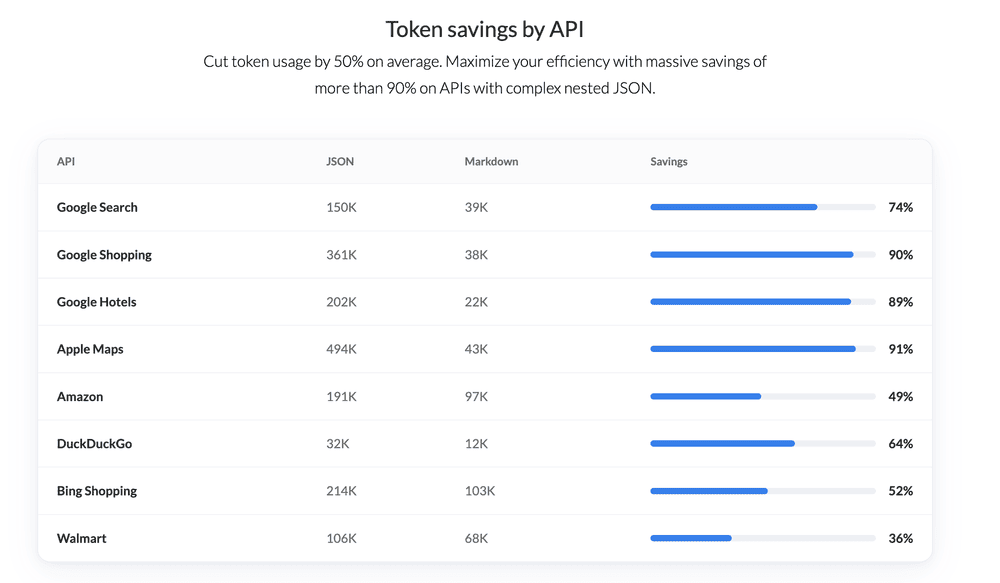
Reduce Search Result Tokens by 74% with Smarter Data Structuring
A single search result can quietly consume thousands of tokens, and that weight adds up fast when you're paying for every call. SerpApi's Markdown output tackles this directly, trimming usage by up to 74% by stripping away the noise and keeping only what matters. That's a meaningful reduction in context-window overhead and agent costs. It's the kind of practical efficiency that pairs well with the broader optimization thinking in our guide to distributed training.

Move beyond basic RAG with four knowledge graph patterns for agentic AI.
Knowledge graphs are moving from the background to the backbone of agentic AI, and Cassie Shum is here to show you why. In her talk, she moves past basic retrieval to outline four practical architecture patterns that bring reasoning into production. It's a grounded, actionable look at building systems that don't just retrieve, but reason. For a broader perspective on how these ideas connect, our piece on bridging retrieval and action offers a useful parallel.
Smarter vision, smaller cost: 95% fewer tokens, same accuracy.
A 95% reduction in token usage while holding accuracy steady is the kind of number that makes you look twice. It suggests a meaningful shift in how image-based inference could be priced and scaled. The MOMA Graph benchmark is a solid start, but the real test is replication across broader datasets and stronger baselines. That is the evidence I would want before calling it significant.

Runable's $21M bet shows AI agents evolving from builders to growth engines
Runable just closed a $21M round, and the signal here is hard to ignore: 60% to 70% of its trillion-plus token usage over the last 90 days came from paying customers. That is not a demo problem. That is real traction. The bet, as the company frames it, is that AI agents can move from building businesses to growing them. We find that distinction compelling, and it suggests a maturity that the market is finally ready to reward.

When AI Spending Runs Ahead of Your Controls, Three Platforms Won't Help
Enterprise AI teams are done betting on a single orchestration platform. The median enterprise now runs three at once, not by accident, but because no one fully trusts one vendor. Security concerns and a desire for their own permissioning controls drive this hybrid approach. Microsoft leads today, but Anthropic dominates future consideration. Yet visibility remains a problem: one in five still can't stop a runaway agent's spending in real time. That gap between ambition and control is where the real work begins.
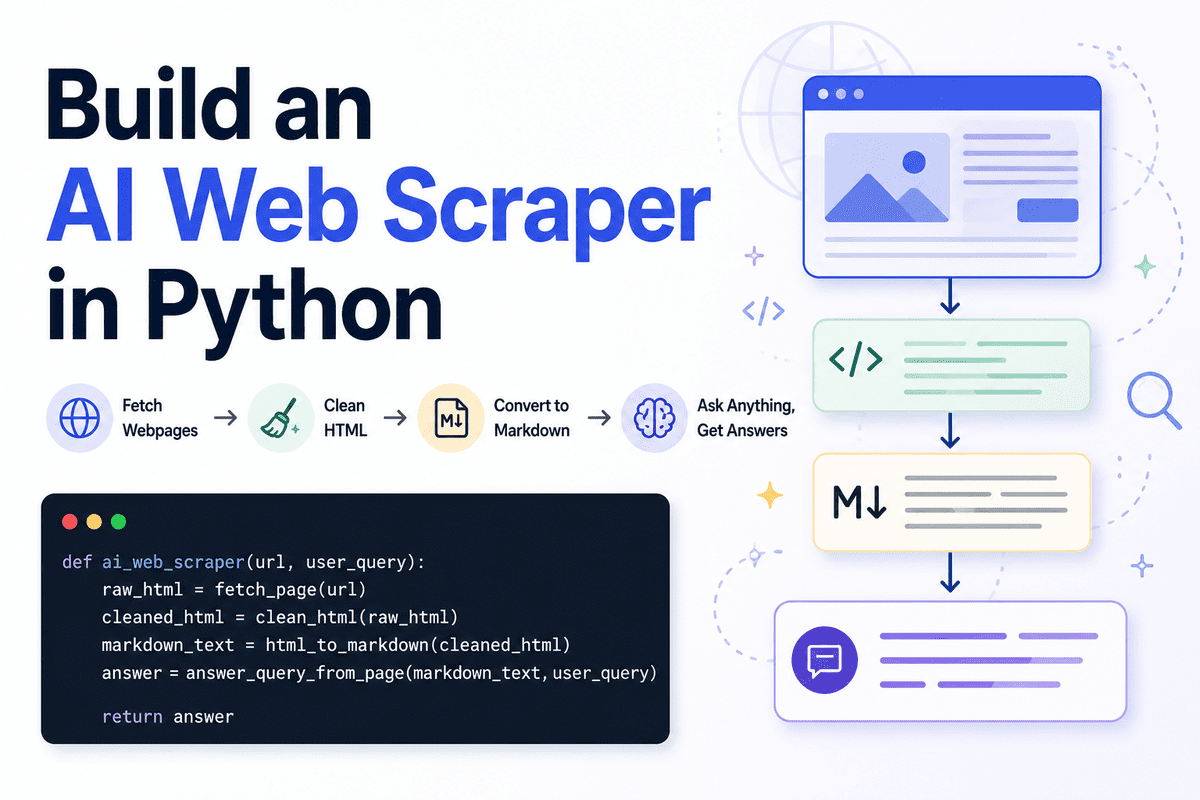
Turn Web Pages into Smart Q&A Engines with AI
Most tutorials make web scraping sound harder than it needs to be. This one strips away the noise: clean the HTML, convert it to Markdown, and let an LLM answer focused questions. The payoff is real, especially when you want answers without burning through tokens on messy page structures. It's a practical, no-nonsense approach that respects your time and your budget. If you're tired of wrestling with raw scraped data, this method feels like a quiet win.

Move Beyond Token Metrics to True AI-Driven Delivery
Engineering leaders are pouring money into AI, yet software delivery often stalls. That's the puzzle Lizzie Matusov, CEO of Quotient, tackles head-on. She argues that soaring spend misses the mark when teams chase vanity metrics like token usage. Instead, she introduces a research-backed maturity framework to help leaders identify where adoption gets stuck, align their organizations, and focus on real bottlenecks across the development lifecycle. It's a grounded, practical call to move from activity to measurable outcomes.

Four strategies to scale multi-agent AI without rising token costs
Scaling a multi-agent architecture doesn't have to mean watching your token bill climb. This guide lays out four practical strategies to keep costs in check while you grow, and it's a refreshingly grounded take on a problem many teams quietly wrestle with. The focus here is on smart implementation, not hype. For more on the broader infrastructure behind such systems, our piece on distributed training algorithms offers a useful foundation. If you're ready to streamline without the sting, this is a worthwhile read.
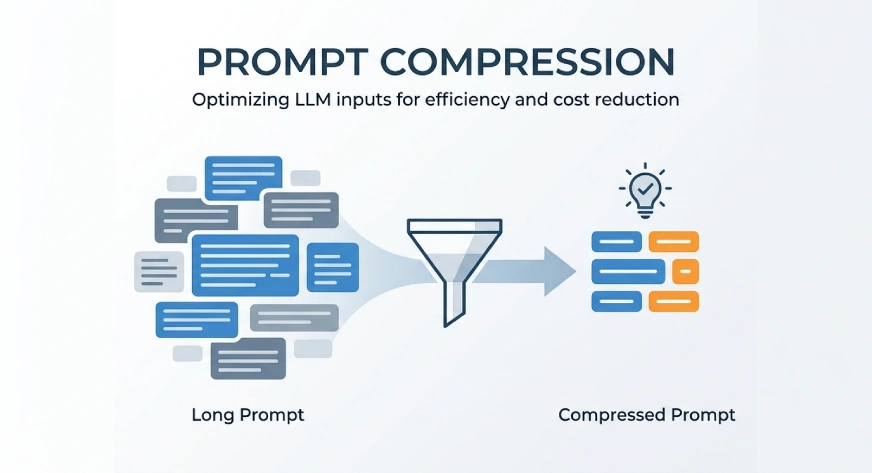
Smarter Prompts, Lower Costs: Compress Without Losing Context
Every prompt carries more than it needs. Long instructions, retrieved documents, and chat history inflate token counts, slow responses, and bury what matters. Prompt compression trims that excess while preserving the core meaning. It is a practical answer to a growing cost problem, and it deserves attention. If you want to see how agents learn by editing context instead of weights, our piece on Agentic Context Learning pairs well with this discussion. The takeaway is simple: leaner inputs, sharper outputs.