tokens
22 stories filed under tokens on Beyond Market Intelligence. The newest of them: “From 40 Trillion Tokens, a Blueprint for Scaling AI Agent Trust”, “Exploring AI routing that trims memory while keeping long-context accuracy high”, and “One million tokens of context changes how we build with AI”. Trust is the bottleneck, not model performance. Memory is the bottleneck in long-context AI, and ALHR offers a refreshingly direct solution. Acme AI is the next-generation, AI-powered spreadsheet platform built to replace Excel and redefine how analysts, data scientists, and enterprise teams work… The list below is every tokens story on Beyond Market Intelligence, newest first.

From 40 Trillion Tokens, a Blueprint for Scaling AI Agent Trust
Trust is the bottleneck, not model performance. Brendan O'Leary draws on 40 trillion tokens of usage data to map the four rungs of AI adoption, showing where context construction, multi-model routing, and feedback loops actually break down. For engineering leaders scaling agentic workflows, this is a practical blueprint. For deeper context on the infrastructure demands these agents create, see our companion piece on how CedarDB unifies operational and analytical data.
Exploring AI routing that trims memory while keeping long-context accuracy high
Memory is the bottleneck in long-context AI, and ALHR offers a refreshingly direct solution. This static binary tree system uses learnable functions to trim the number of keys, reducing VRAM usage while maintaining accuracy. Early tests with tiny stories look promising. It is a pragmatic, scalable approach. For deeper context on how AI learns from human action, see our related coverage on two new approaches shifting that dynamic.
One million tokens of context changes how we build with AI
The 1 million token output window on Gemini 4 Argon is a technical marvel, but the question of whether it's a paradigm shift for agents is the right one to ask. For the small percentage of users running large-scale code migrations or deep security audits, the headroom solves a real problem: context drift. No more breaking tasks into pieces or hitting "continue" loops. That is a genuine unlock.
Smarter reasoning with fewer tokens, trained on a single GPU
Training a model to reason smarter with fewer tokens, that's the kind of practical progress we like to see. The developer behind this Qwen3-4B project cut reasoning tokens by 44% while preserving knowledge and output style, all on a single GPU. That's not just efficient; it's a direct challenge to the assumption that better reasoning requires bigger compute. If you're curious how AI agents handled a different kind of optimization, our article "300K lines refactored for $4,000" explores that trade-off in a C codebase.

300K lines refactored for $4,000: what a C codebase taught AI agents
Three hundred thousand lines of C, refactored in three weeks for $4,000 in tokens. CodeScene's case study is a practical stress test for AI agents, not a headline. The playbook of codebase-specific recipes the agents built is the real prize, it suggests these tools learn context, not just syntax. Practitioners are right to question the scope and the harness's role. That skepticism is healthy.
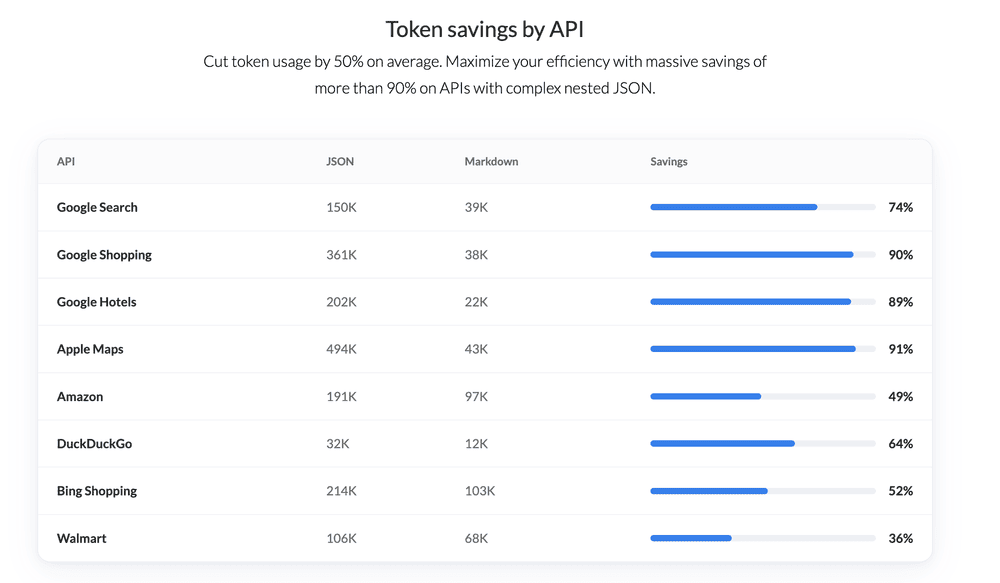
Reduce Search Result Tokens by 74% with Smarter Data Structuring
A single search result can quietly consume thousands of tokens, and that weight adds up fast when you're paying for every call. SerpApi's Markdown output tackles this directly, trimming usage by up to 74% by stripping away the noise and keeping only what matters. That's a meaningful reduction in context-window overhead and agent costs. It's the kind of practical efficiency that pairs well with the broader optimization thinking in our guide to distributed training.
Put your unused compute to work on the Twin Prime Conjecture.
Most AI users let unused tokens expire at the end of the month. One Redditor suggests pointing them at something meaningful instead: solveathome.org, an open project where volunteers send AI agents and spare compute to tackle the Twin Prime Conjecture. It's a simple, public, and verifiable way to turn waste into progress. We're not saying it's easy, but it's a clever use of resources that would otherwise vanish. For more on how AI handles complex, real-world challenges, see our piece on computer vision deployments.

Moonshot AI sets sights on $2 billion revenue as K3 daily token use stays strong
Moonshot AI is setting its sights on $2 billion in annual revenue, and the numbers suggest it's more than ambition. OpenRouter data shows K3 models generating as many as 300 billion tokens daily, even as usage has dipped slightly in recent months. That scale signals real traction, though the dip raises questions about staying power. Growth like this isn't accidental, but it's also not guaranteed.
A small language model that teaches itself column arithmetic.
This is the kind of result that makes you question what small models actually need. A 348M-parameter model, trained on 22.7B tokens, hits 99.4% across nine arithmetic sub-tasks, beating GPT-3's 175B few-shot numbers by a wide margin. The clever part isn't just the accuracy; it's that the model learned place values it was never taught, inventing "millions" and "ten-millions" from zero examples. That's not brute force. That's pattern recognition. We've covered how AI reshapes data ownership, and this feels like a natural extension

Protect your Claude account from unauthorized token theft
A Claude user recently watched his account burn through tokens while he wasn't even working. That's not a glitch; that's a breach. Anthropic has since warned subscribers that hackers are actively stealing credentials, a quiet but urgent reminder that AI access is now a target. This isn't about paranoia, it's about protecting your workflow. If you're managing sensitive data, this should push you to lock down your access now.
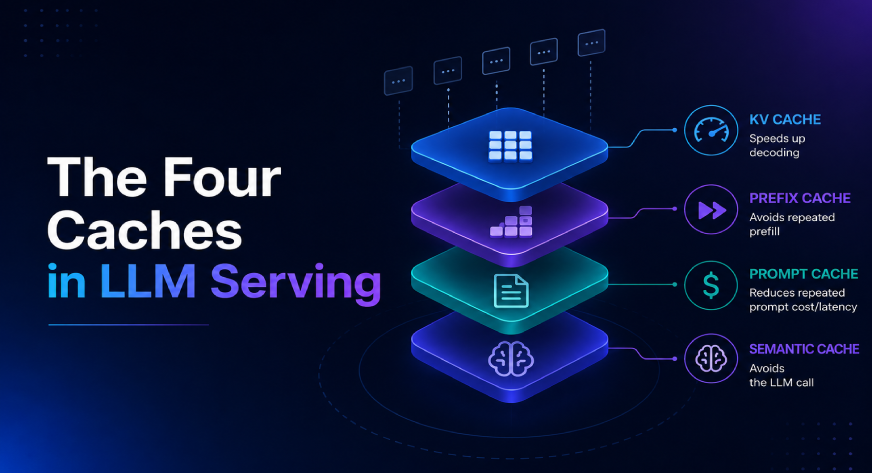
Smart Caching: Optimizing LLM Performance and Reducing Costs
Every request your LLM handles may carry millions of tokens, yet much of that data repeats across calls. Reprocessing it wastes time and drives up compute costs. Smart caching targets exactly this waste, and the new piece breaks down the four cache layers that make serving faster and cheaper. It's a practical read for anyone tired of paying twice for the same work. For a deeper look at distributed systems, our guide to distributed algorithms pairs well with this one.
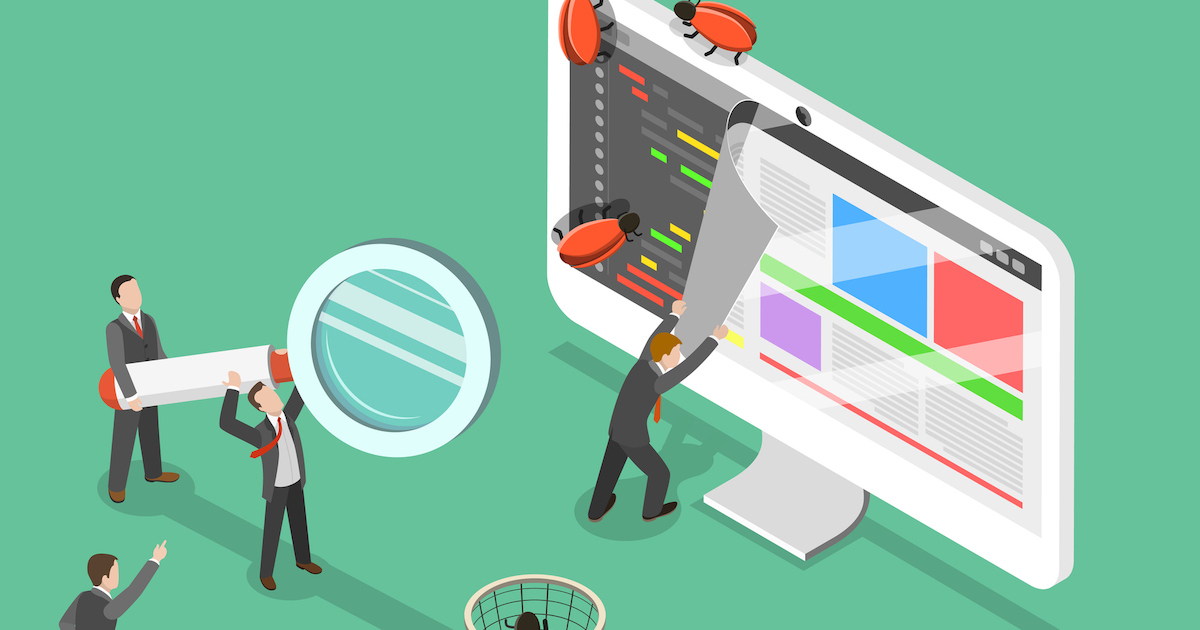
Shopify's Gisting Technique Compresses AI Prompts for Faster Inference
Shopify's engineering team has introduced gisting, a technique that compresses long LLM prompts into a smaller set of learned tokens. The result? Better throughput and lower inference costs without sacrificing performance. That's a practical step toward making AI more accessible, especially for teams wrestling with unwieldy system prompts. We see this as a meaningful move for developers who want efficiency without complexity.

Unlock hidden efficiency by mastering prompt caching for your AI workflows.
Most builders treat prompt caching as an afterthought. That's a missed opportunity. When you're pushing token-heavy workflows through Claude, caching isn't just a cost-saver, it's a way to make your API calls faster and your iterations more fluid. Ignoring it means leaving efficiency on the table. Explore how this simple shift can transform your builder's routine. For a deeper dive into how LLMs handle context, our piece on paragraph structure offers a useful parallel.
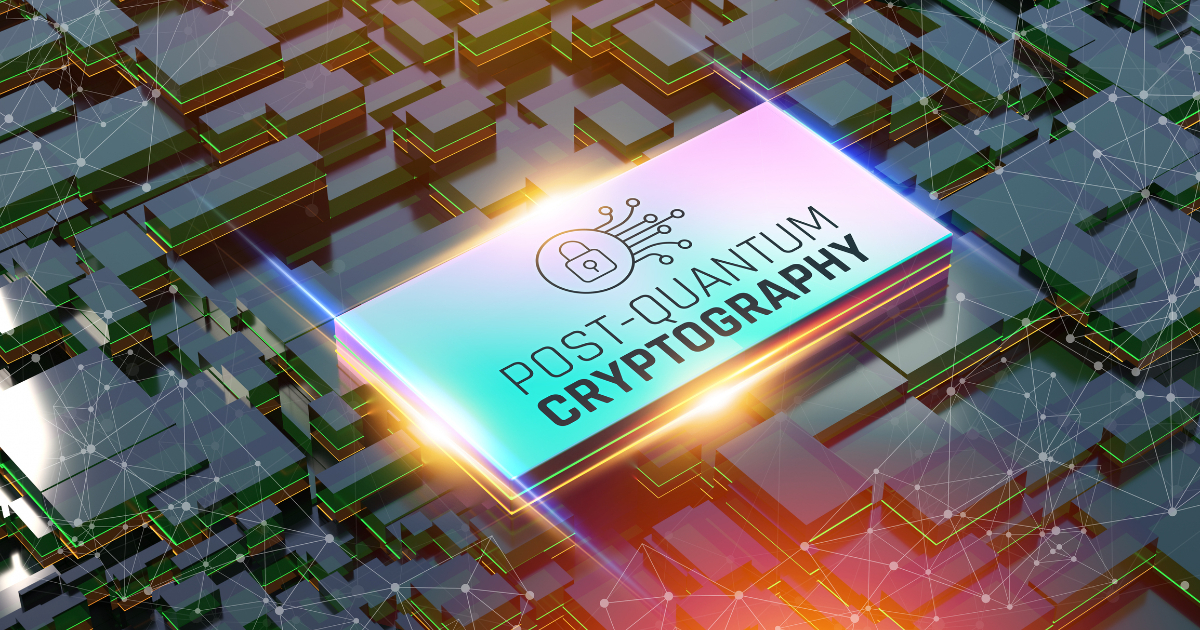
Future-Proof Your Spring Boot Services with Post-Quantum Crypto Patterns
The threat of Harvest Now, Decrypt Later is already here, and Pankaj Sharma's piece on post-quantum cryptography in Spring Boot cuts through the noise with four concrete patterns you can ship this sprint. Encrypting service payloads, locking database fields, securing long-lived documents, and moving tokens off RS256 are practical starting points. His warning is sharp: none of this is production-safe without KMS or Vault in place. It's a grounded, action-oriented guide for teams ready to future-proof their data. For broader infrastructure context, our Kubernetes 1.

Explore language from the past with a focused AI built on vintage text.
Three months and $807 bought Unbounded Labs a vintage LLM named Bart, trained from scratch on 20.1B tokens of pre-1931 English. That is a deliberate constraint, not a limitation. The team behind it wants to know if an AI can rediscover the conclusions of past scientists, as Demis Hassabis suggested, or if it is just predicting the next token. We find that question worth taking seriously, and their open-sourced benchmarks and datasets give us all a way to explore it.
Exploring transparent AI watermarking through a practical, educational lens
Watermarking isn't about visible markers or injected ads. It's a subtle statistical fingerprint woven into how a model picks its tokens, invisible to the reader but detectable by design. This developer took that concept and built a minimal, educational version of SynthID-Text, simplifying parts to keep the core idea clear. It's a smart, hands-on way to demystify a topic that's about to shape every AI response you see. If you're curious how provenance might work quietly behind the scenes, this is a solid starting point.

GLM-5.3 API opens for developers to build with advanced AI agents.
GLM-5.3 has landed on Z.ai's API at the same $1.40/$4.40 per-million-token rate as its predecessor, and that's a bold move. Developers get the new model's stronger coding and agent performance without paying a posted premium. It's not the cheapest option on the board, but at $5.80 per million combined tokens, it undercuts heavyweights like Claude Opus 5 and GPT-5.6 Sol. The catch? It's more verbose, so flat rates don't tell the whole cost story. For teams exploring frontier work, it's a practical entry point.
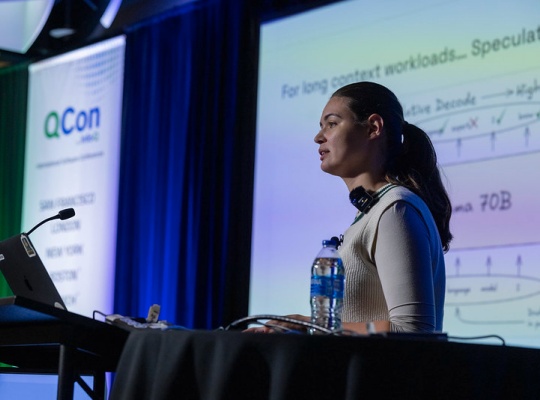
Designing Smarter Inference for High-Volume Workloads at Lower Cost
Meryem Arik's guide cuts straight to a question most teams avoid: how do you make AI inference genuinely cheap when the workload is massive but patience is on your side? Her answer isn't a single trick but a series of deliberate trade-offs across hardware, runtimes, and queue design. For engineering leaders tired of ballooning costs, her approach reframes non-real-time processing as a strategic advantage. It's practical, clear, and refreshingly grounded.

OpenAI launches a specialized model to empower approved cybersecurity defenders.
OpenAI's latest release, GPT-5.6-Cyber, marks a deliberate step forward for defenders who need more from their AI. Fine-tuned from GPT-5.6 Sol, this model completes 95% of advanced cybersecurity tasks, finding zero-days, chaining exploits, where general models often stall or refuse. Access stays tightly controlled through the new Daybreak Red tier, requiring real credentials and authorization. It's a focused tool for approved teams, not a broad upgrade. For enterprises, the question isn't capability; it's whether your workflows can qualify for the access.
Smarter Thinking, Fewer Tokens: Discover Gemini 3.6 Flash
While the tech world held its breath for Gemini 3.5 Pro, Google quietly delivered something arguably more practical. On July 21, 2026, Gemini 3.6 Flash arrived as a pure efficiency play. It delivers roughly the same reasoning power as its predecessor while consuming fewer tokens and tool calls. That is a meaningful upgrade for teams watching their API bills. We appreciate a release that focuses on doing more with less, especially when it empowers smoother workflows.

Explore GPT-2's vocabulary through a flyable hyperbolic tree of 32,070 tokens
Somewhere in the internet's endless sprawl, a reddit user got tired of flat maps. So they built a better one. This isn't another 2D projection of GPT-2's vocabulary. It's a hyperbolic tree, housing all 32,070 tokens inside a Poincaré ball you can actually fly through. The layout is constructed exactly, with no optimisation or training involved. Trees don't fit well in flat space, but they embed naturally here. Drag, pinch, and tap to explore.

Your Local LLM Costs Less Than You Think, and Size Isn't the Reason
The cheapest local model isn't the smallest, and the priciest isn't the biggest. That's the takeaway from a hands-on measurement of eight models running on a single RTX 3090, where actual GPU electricity costs were tracked in euros per million tokens. It's a grounded, useful reality check for anyone exploring local AI. If you're weighing similar tradeoffs in your own workflow, our piece on verifying your AI's understanding offers another practical angle worth your time.