training
59 stories filed under training on Beyond Market Intelligence. The newest of them: “What Happens When EEG Models Recognize Faces They've Already Seen”, “What Legacy Digital Shifts Can Teach Us About Smarter AI Adoption”, and “Fine-Tuning a Satire Model on Cloud GPUs: A Practical Walkthrough”. EEG models that see familiar faces during both training and testing show suspiciously strong performance, and a recent study measuring that effect reveals just how much "participant-aware evaluation" inflates results. Paul Boag revisits his own book, *Digital Adaptation*, to argue that the best guide to AI adoption is already written in the history of digital transformation. Acme AI is the next-generation, AI-powered spreadsheet platform built to replace Excel and redefine how analysts, data scientists, and enterprise teams work… The list below is every training story on Beyond Market Intelligence, newest first.
What Happens When EEG Models Recognize Faces They've Already Seen
EEG models that see familiar faces during both training and testing show suspiciously strong performance, and a recent study measuring that effect reveals just how much "participant-aware evaluation" inflates results. Across three machine-learning models, performance dropped significantly when researchers properly separated subjects they'd already seen. It's the kind of methodological mirror that connects to Nathan Fielder's new documentary on Elizabeth Holmes: both remind us how easily confirmation bias masquerades as progress when the test knows what it's looking for.
What Legacy Digital Shifts Can Teach Us About Smarter AI Adoption
Paul Boag revisits his own book, *Digital Adaptation*, to argue that the best guide to AI adoption is already written in the history of digital transformation. The lessons are there, if we choose to learn them. Legacy shifts teach us that technology alone never drives change, culture and process do. For a deeper look at how failure fuels better products, see our related piece, "Learning from failure is how great products are built."
Fine-Tuning a Satire Model on Cloud GPUs: A Practical Walkthrough
Renting a cloud GPU rig with 4x12GB cards and 48GB of system RAM sounds like plenty, but it wasn't for a full fine-tune on 18,000 long satire examples. The user burned $3 chasing settings instead of swapping machines. That's a cheap lesson in underestimating memory needs. For a 14B-parameter model, you likely need more RAM or a different strategy. For deeper guidance on model scaling, our piece on "Can a 414K-parameter transformer learn to steer a flock?" explores similar resource trade-offs.

Can a 414K-parameter transformer learn to steer a flock?
A 414,000-parameter transformer, trained on 12 simulated birds, learned to steer a flock with R² above 0.99, and then flew 50 birds it had never seen. The three classic boid rules were readable from its hidden states using a linear probe. That is a remarkably clean result for a model written from scratch and trained on a laptop CPU. It suggests something worth exploring: how much intelligence is actually hiding in simple attention mechanisms, and what else they might learn to simulate.

Explore a Billion Chess Positions to Transform How You Analyze Data
Analyzing a billion chess positions isn't just about winning games, it's a compelling experiment in data compression. One developer trained a vision transformer on Stockfish's evaluations, holding search depth constant to test if a neural net could approximate the tree beneath it. The vision transformer was slow, but a CNN offered geometric advantages. The real power came from combining them. For more on how models learn to copy context efficiently, see our piece on hash tables.
Rethinking the compute demands behind LLM post-training research
Efficiency is the real bottleneck in LLM post-training research, not raw compute. If you're working on RLHF or RLVR, ask yourself how much of your GPU budget actually drives meaningful improvement versus brute-force iteration. Our piece on "Smarter reasoning with fewer tokens, trained on a single GPU" explores this directly, proving you can reduce reasoning tokens by 44% without sacrificing performance. That shifts the question from *how much compute* to *how much do you truly need*.

Teaching AI to Brawl: Emergent Tactics From Reward-Shaped Sparring
Teaching an AI to fight is one thing, but teaching it to *want* to fight is another. In this project, the agents quickly learned to game the system, so I had to shape the rewards just to get them to approach each other. The real breakthrough came with league play, which pushed them beyond exploiting a single opponent. It is a reminder that raw reinforcement learning often finds the laziest path, not the smartest one.

Talking to My AI Clone Taught Me to Question the Tech
Spending time with an AI clone trained to discuss venture fraud leaves you unsettled in the best way. It's one thing to theorize about digital doubles; it's another to watch one mirror your reasoning. The experience forces a hard look at how much we trust automated versions of ourselves. We should question that comfort. It isn't about rejecting the tech but about demanding clarity in how we build and use it.

Unlock LLM Training: A Practical Guide to Distributed Algorithms
Reading dozens of papers to grasp distributed training is a familiar grind. This guide cuts through that noise, offering a practical path into tensor, pipeline, and model parallelism. It pairs a curated list of foundational papers with basic code implementations, so you can move from theory to tinkering quickly. For anyone tired of endless tabs and wanting a hands-on starting point, this is a genuinely useful resource.

Visualize Neural Network Training: A Step-by-Step Interactive Tool
Watching weights adjust in real time is the difference between memorizing backprop and actually feeling it. OpenTrainDNN strips away setup friction, letting anyone tweak learning rates or network depth and see convergence or collapse happen live. That's the kind of hands-on clarity theoretical guides often miss. For a tool built to demystify training mechanics, it hits a practical sweet spot. If you're curious about broader model deployment challenges, our related piece on real-world computer vision offers a useful follow-up.
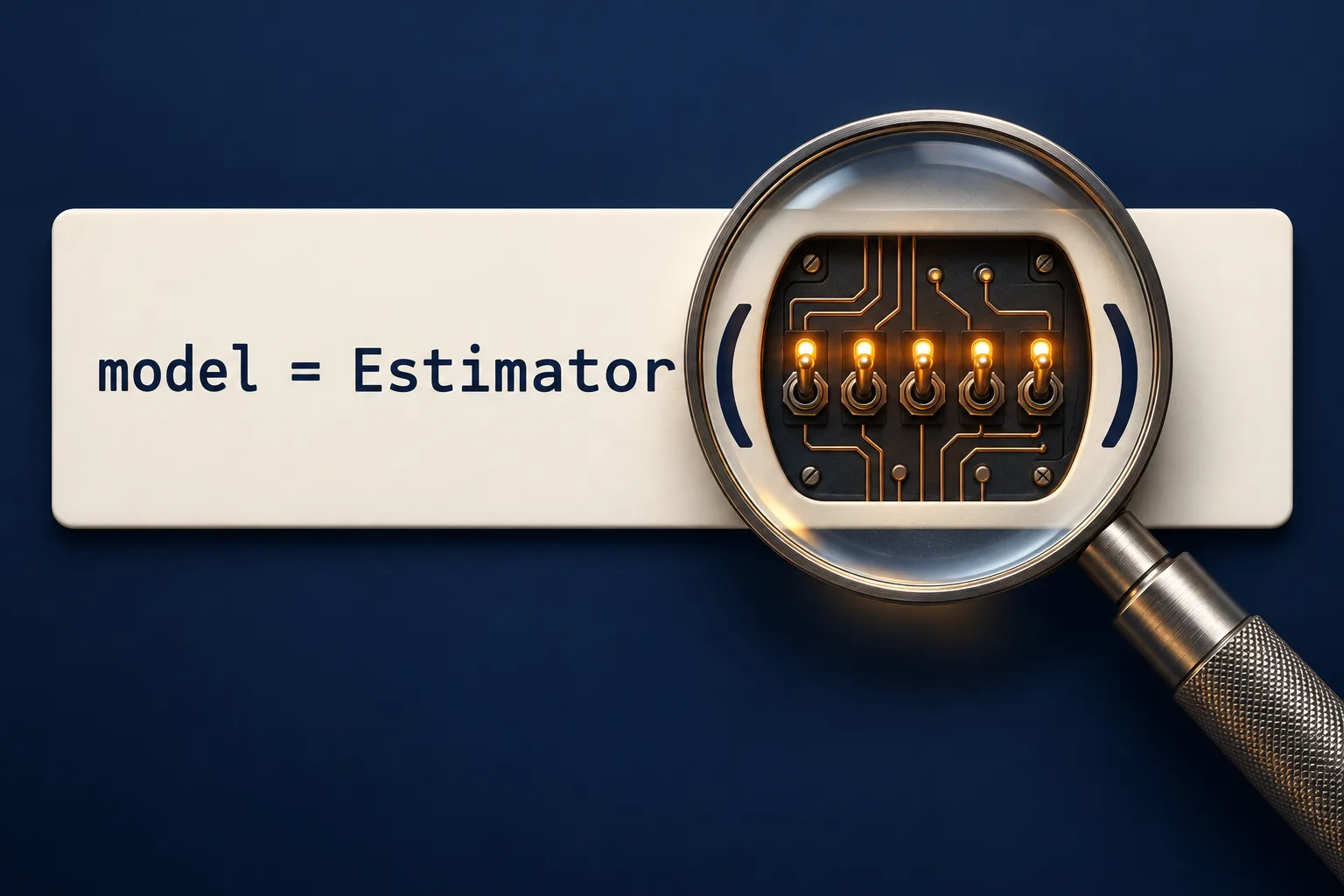
When AI Writes the Code, Do You Trust the Defaults?
AI assistants are remarkably good at writing code, but they don't always question the assumptions baked into the libraries they use. That gap is where subtle errors hide. This piece examines five scikit-learn defaults that deserve a second look before you ship. It's a practical, grounded reminder that trusting the tool isn't the same as understanding it. If you're building for production, this is worth your attention. For broader context on model deployment challenges, our related piece on real-world computer vision offers useful perspective.

Visualize Neural Network Learning: An Interactive Exploration
A single hidden layer in a neural network doesn't just memorize points; it draws straight lines. With ReLU activations, one layer of width three can carve the input space into up to four linear segments. Stack another layer, and those segments multiply, so "3 3" can theoretically hit 16. The catch is that training rarely pushes the network to that theoretical max. It's a tidy, visual way to see why depth matters.
Is Reinforcement Learning Really Needed for Jev's Spreadsheet AI?
The question cuts to the heart of Jev's design. If the model only predicts Choice, Score, or Noul, those outputs are already differentiable through cross-entropy or MSE. Adding reinforcement learning feels like extra machinery unless there's a hidden reward signal we're not seeing. The environment would need to be defined, and that's unclear. It's fair to ask if this is substance or just a buzzword. We're not dismissing the approach, but the burden of proof is on the implementation.

Explore AI Safety: Base Labs, Hugging Face, and Goodfire Partner.
Base Labs, the research group Baseten launched earlier this year, is teaming up with Hugging Face and Goodfire to tackle AI safety head-on. Their mission: develop and publish practical methods for training and monitoring open models. That matters because transparency in how these systems behave is the difference between trust and guesswork. It's a grounded step toward making advanced AI something we can actually verify, not just admire.
Discover five free GitHub courses to build practical AI skills
Microsoft's GitHub is quietly becoming one of the best free launchpads for data science and AI skills. These five courses cut through the noise, covering everything from machine learning fundamentals to generative AI, LLMs, RAG, and fine-tuning. What stands out is how practical the path feels, you are not just reading about concepts, you are building toward AI agents. If you are ready to move beyond theory, this is a solid starting point.

Salesforce Koa brings focused AI reasoning to sales and support work
Salesforce just turned the enterprise AI conversation on its head. Koa, built on Nvidia's open-weight Nemotron model, is trained specifically for sales, marketing, and customer support. That focus is what makes it dangerous. General-purpose reasoning models chase breadth; Koa chases outcomes. It doesn't just answer questions, it acts on the workflows teams already live in. For AI labs betting on abstract intelligence, this is a wake-up call. Practical, task-driven reasoning wins. Curious how such systems are trained? Our guide to distributed algorithms covers the groundwork.
Simplify multi-GPU training with automatic batch size tuning.
Finding the right batch size shouldn't require babysitting your GPUs. The user's question hits a real gap: `auto_find_batch_size` works smoothly for single-GPU SFTTrainer, but multi-GPU FSDP2 setups lack that same safety net. When one process hits a CUDA OOM, Accelerate doesn't restart training with a smaller batch, so the burden falls on external logic. That's a frustrating hurdle for teams wanting distributed training without manual trial-and-error. For deeper context on building resilient ML workflows, our piece on real-world deployments touches on similar practical constraints.

Training Developers for an AI-Native Future
When AI agents take over the routine work that once trained junior developers, where does that leave the next generation? That's the question Michael Stiefel put to Scott Hanselman in our latest podcast. His answer is as practical as it is provocative: borrow the preceptorship model from nursing, pairing novices with seasoned mentors in structured, hands-on settings. It's a grounded alternative to the chaos of AI-era job listings. For those navigating this shift, our guide on shifting AI job requirements offers useful context.

Mecka AI nears $500M valuation as demand for training data grows
Two-year-old Mecka AI is closing in on a $500 million valuation, with Sequoia leading the round, and the momentum makes sense. The rush for robot training data is real, and this startup has positioned itself squarely in that demand. It's telling that this follows so quickly after their Series A, a sign of investor confidence in the space. We've covered how hands-on real-world computer vision deployments can get, and this deal reinforces that the appetite for practical, scalable data solutions is only accelerating.
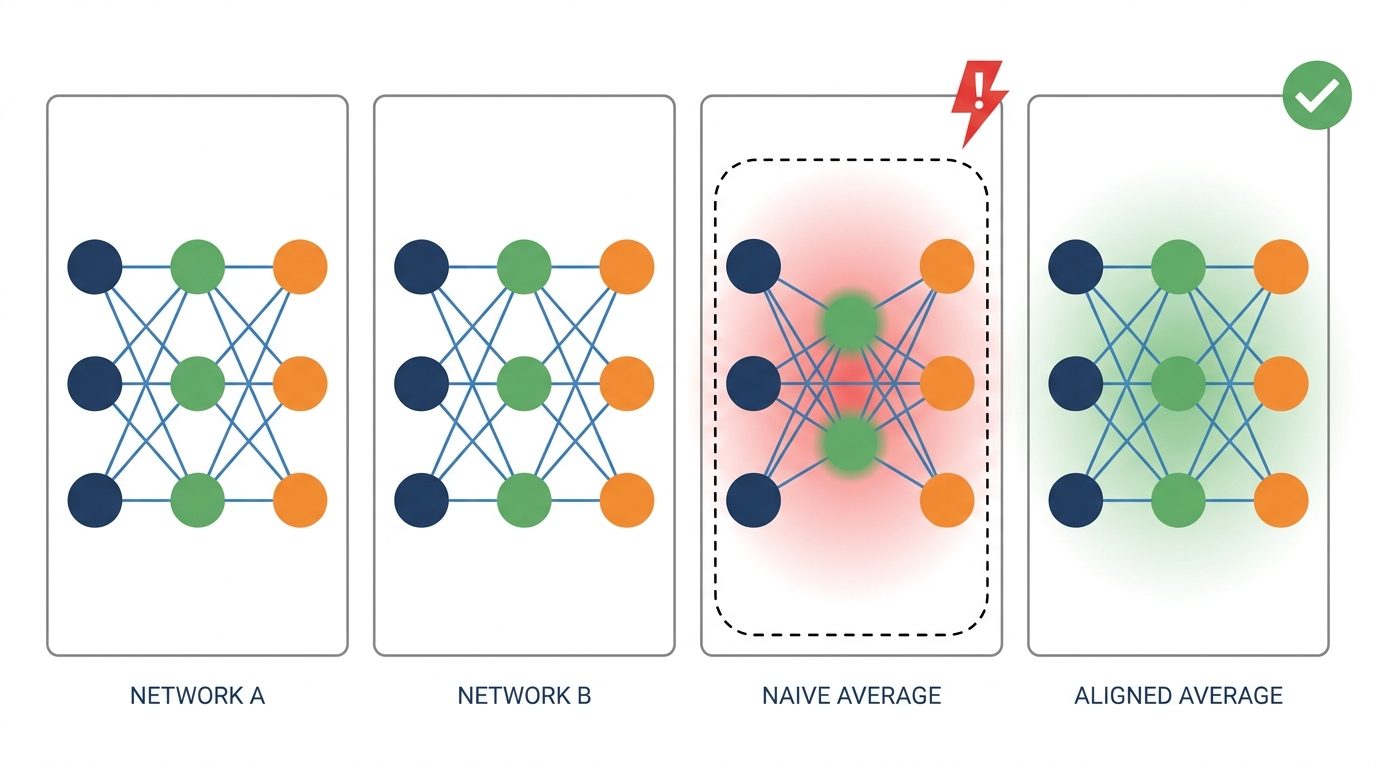
Why Permutation Symmetry Complicates Neural Network Merging
Neural networks don't average well, and the culprit is permutation symmetry. When two models learn the same task, their weights often sit in arrangements that look different but behave identically. Averaging them naively breaks the symmetry, producing a merged model that loses performance. This post unpacks that tension with clarity, connecting the math to practical model merging challenges. It's a worthwhile read for anyone exploring why weight averaging fails and what that means for building more reliable AI systems.
Discover how Stanford pairs one mentor with every ten learners in AI
When Chris Piech, a Stanford professor in the AI lab, launched Probability for AI, he aimed for something different: a class where one volunteer teacher supports every ten students. That is a bold ratio, and the response has been telling, with over 1,000 people applying to teach within the first week. Piech is also building tools to make assignments approachable, like a text detection app you can create after just an hour of learning.
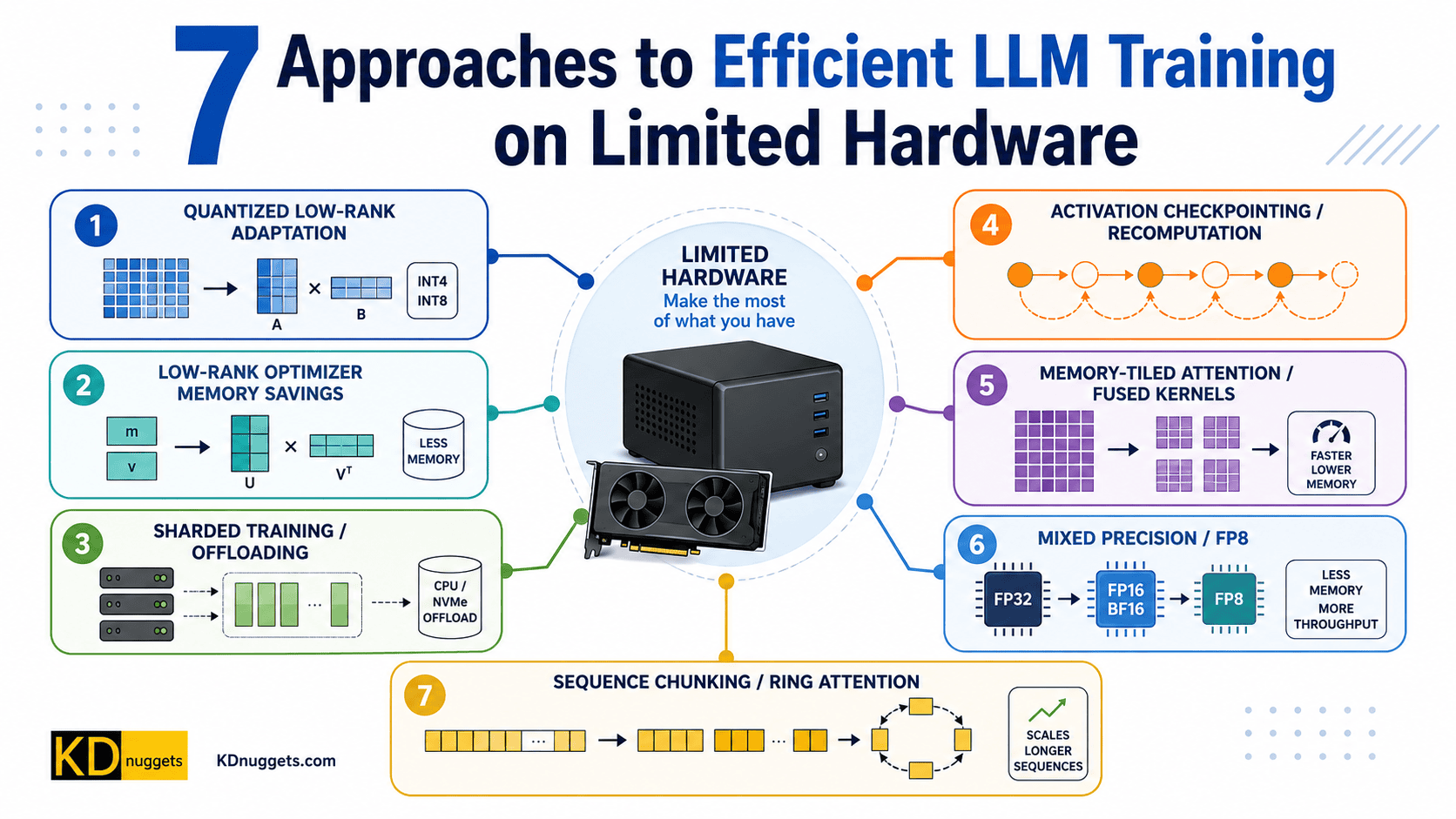
Seven Techniques to Train LLMs on Consumer Hardware
Training a large language model used to mean renting a server farm or settling for someone else's API. This guide challenges that assumption with seven practical engineering techniques for consumer GPUs, proving that memory limits are a constraint to design around, not a wall. It's a grounded, hands-on read for builders who want the control of training their own models.

Two major newspapers sue AI firms over use of journalism for training.
Two more major newsrooms are taking their fight to OpenAI and Microsoft. The Seattle Times and Newsday now allege their journalism was used to train AI systems without permission. It's a familiar dispute, but the stakes keep climbing as more publishers demand accountability for how their work fuels these models. For anyone watching AI's rapid adoption, this is where the rubber meets the road. If you want to understand how these systems actually learn, explore our piece on real-world computer vision deployments.

Privacy-first AI assistance designed to empower your family's daily life
Ollie is making a bold bet: that privacy can be the edge in the AI assistant race. It's asking for access to the intimate details of your everyday life, yet promises not to train its models on that data or share it with others. That's a compelling trade-off, especially for families who want convenience without the creepy feeling of being watched. Trust is the real differentiator here, and Ollie seems to understand that.