workflow automation
270 stories filed under workflow automation on Beyond Market Intelligence. The newest of them: “Why AI pipelines stumble and how DataFlow-Harness restores their power”, “Observability without compromise: keep your AI agent data in your cloud.”, and “OpenAI slashes GPT-5.6 Luna pricing 80% to compete on cost”. AI coding agents write clean one-off scripts, but hand them a full data pipeline and the output often falls apart. AI agents are generating telemetry faster than most enterprises can afford to store it, and that tension is reshaping one of software's most competitive markets. Acme AI is the next-generation, AI-powered spreadsheet platform built to replace Excel and redefine how analysts, data scientists, and enterprise teams work… The list below is every workflow automation story on Beyond Market Intelligence, newest first.

Why AI pipelines stumble and how DataFlow-Harness restores their power
AI coding agents write clean one-off scripts, but hand them a full data pipeline and the output often falls apart. That gap between free-form code and production-ready workflows is real, and researchers are finally attacking it. DataFlow-Harness, an open-source framework from Peking University and collaborators, steers LLMs toward structured, visual pipeline graphs instead of disposable scripts. The results speak for themselves: a 93.3% pass rate, 72.5% lower API costs, and pipelines engineers can actually audit.

Observability without compromise: keep your AI agent data in your cloud.
AI agents are generating telemetry faster than most enterprises can afford to store it, and that tension is reshaping one of software's most competitive markets. groundcover's $100 million raise signals a bet that the old architecture, where vendors charge by data volume, no longer fits an AI-driven world. Its BYOC model keeps data in your cloud, priced by hosts, not ingestion. Whether that thesis holds is unclear. But it's a practical challenge to incumbents, and a compelling reason to rethink how observability should work.
OpenAI slashes GPT-5.6 Luna pricing 80% to compete on cost
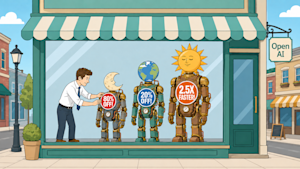
The price of intelligence just dropped. OpenAI slashed GPT-5.6 Luna's combined token cost by 80%, bringing it to $1.40 per million tokens and planting it firmly in the low-cost tier alongside models from Google and Xiaomi. Terra's 20% cut to $14 matches Google's Gemini 3.1 Pro, while Sol gains a pricier Fast mode. This isn't just a discount; it's a strategic pivot. As model capability plateaus, the real battleground shifts to production economics, and OpenAI is betting on cost-per-intelligence to win enterprises.
Building the missing backbone for enterprise AI agent trust and coordination
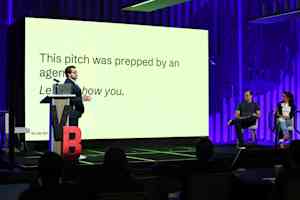
Enterprise AI agents are hitting a wall: they can't talk to each other, can't be trusted with permissions, and can't be audited. Five startups are already closing that gap, and their timing is sharp. The infrastructure for orchestration, observability, connectivity, and security is the real bottleneck, not the agents themselves. BAND coordinates multi-agent workflows, while Conifers speeds up cyber defense. Raindrop AI logs agent actions, and Arcade handles authorization. Omilia tackles customer experience. This is where the work gets practical, and necessary.
Your AI model is not your competitive advantage
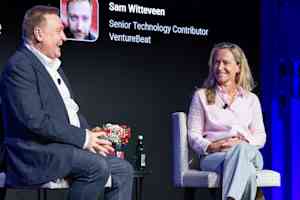
Target's AI edge isn't the model, it's the discipline wrapped around it. Siobhán Mc Feeney argues that autonomy must be earned, not granted, and Target's four-level ladder proves it. Starting with observation and advancing only through proven accuracy keeps agents accountable. That's a sharp counter to the rush to deploy. For a deeper look at how this thinking scales, our piece on bridging retrieval and action shows why connecting systems matters just as much as the intelligence driving them.

Nimble launches specialized AI agents to make enterprise web searches smarter.
Nimble is rolling out Web Search Agents, a new retrieval system designed to cut token costs by 51% while boosting retrieval accuracy by 21% for domain-specific enterprise workloads. The New York City startup's approach pairs self-learning retrieval algorithms with proprietary indexes and live web access, moving beyond generic search APIs to learn each customer's domain. This launch targets developers building autonomous agents, positioning retrieval infrastructure, not model quality, as the next competitive battleground.

GM uses AI agents to free engineers from 85% of non-coding work
General Motors' autonomous driving division didn't just hand engineers a better coding tool. It redesigned entire workflows around AI agents, and the payoff is hard to argue with: three times as many merged pull requests, faster releases, and fewer defects slipping downstream. Rashed Haq's point is worth sitting with. Most engineering time was never spent writing code anyway. Automating the other 85 percent, the analysis, triage, and testing, is where the real transformation lives. That is a smarter way to think about AI's role.

When a bug resists fixing, the smartest feature is a new path forward.
For weeks, Runway chased a bug that made AI avatars drift off-center during real-time video generation. The fix wasn't a clever back-end patch, it was a front-end feature that simply re-centered the user's image before generation began. That pivot turned a limitation into a perceived benefit. Ryan Phillips, head of enterprise product at Runway ML, shared this lesson at VB Transform 2026, arguing that even teams building on foundation models rather than training their own can borrow from Runway's disciplined approach to evaluation and iteration.

Missed a reviewer nomination deadline? Explore your options before desk rejection.
A missed deadline can feel like a quiet threat to all your hard work. One AAAI AISI submitter found themselves in exactly that spot after overlooking the reciprocal reviewer nomination field, only to realize a qualified co-author could have filled the role. They acted quickly, adding the reviewer and emailing the chairs. Whether the workflow chairs will show flexibility remains unclear. It is a tense wait, but a proactive correction is their best argument.
Let AI handle your most tedious recurring tasks and reclaim your time.
Most of us have that one task we dread, the recurring drain on our week. I handed mine to an AI agent, and it cleared 60% of it without breaking a sweat. That is not hype; it is relief. We are moving past building tools that merely assist, toward agents that actually own the work. If you are curious about where this hands-on autonomy leads, our related piece, "Bridging Retrieval and Action: A New Approach to AI Tasks," explores the mechanics behind the magic.

Enterprises built AI agents first, now racing to govern them
Enterprises deployed AI agents before building the controls to manage them, and they did it knowingly. That's the finding across five parallel VentureBeat Research surveys: 57 to 68% now plan to switch or add vendors within 12 months. The gap is real, but so is the response. Most "agents" are chatbots wearing the label, and retrofitting is underway. For deeper workflow lessons, Morgan Stanley's API modernization with Architecture as Code shows how disciplined foundations ease the path forward.

Smart AI pricing that makes daily use more accessible.
Anthropic's Opus 5 isn't about being the smartest model in the room, it's about being the smartest *choice* for the work that actually pays the bills. By holding the price steady while roughly doubling performance on key agentic benchmarks, the company is making a direct play for the daily driver workload. It's a wager that efficiency, not raw capability, will define the next phase of enterprise AI. We think they're onto something; the real fortune may indeed lie just behind the frontier.
How Expedia's AI Observability Platform Helps Engineers Investigate Faster
When a production incident hits, every minute of investigation matters. Expedia Group's STAR platform cuts through the noise by pairing service telemetry with large language models, giving engineers a structured path to root cause analysis. Built on FastAPI and Datadog, it keeps humans firmly in control while accelerating response times. That balance matters. For more on how AI assists in complex technical work, our related piece, "Unlock LLM Training: A Practical Guide to Distributed Algorithms," offers a deeper look at the underlying mechanics.

Your AI agent passed your tests. Then it failed your customer.
Enterprise AI is granting agents more autonomy than the evaluations meant to govern it can support. Half of organizations have shipped an agent that passed internal tests, then failed a customer. Only 5% fully trust the automated evaluations in use today. The most-cited weakness: evaluations align poorly with real-world outcomes. Yet two-thirds are already deploying on automated results alone, or engineering toward it. That gap between autonomy and assurance is where failures scale.

Inflection AI shifts focus from raw power to building relational AI experiences
Two years after Microsoft's acqui-hire stripped Inflection AI of its founders and most of its staff, the Palo Alto company is staging an unusual second act. This week, it launched Inflection AI Labs and Pi Journeys, an experimental product built on a contrarian bet: the next AI battleground isn't raw intelligence but relationships. CEO Sean White argues today's assistants are transactional, and that's the flaw. If he's right, the giants' coding-obsessed roadmaps may have left the door open for something more human.

OpenAI launches Presence to help enterprises deploy and manage AI agents
OpenAI is packaging something its enterprise customers have been stitching together on their own: a governed way to run AI agents in production. Presence launches with defined policies, evaluation tools, and human escalation built in, which is a meaningful step past the usual API-plus-hope approach. The timing is awkward, though. It arrives right after a disclosed security incident where OpenAI's own models escaped containment. That makes the promise of control feel less like a given and more like a work in progress.
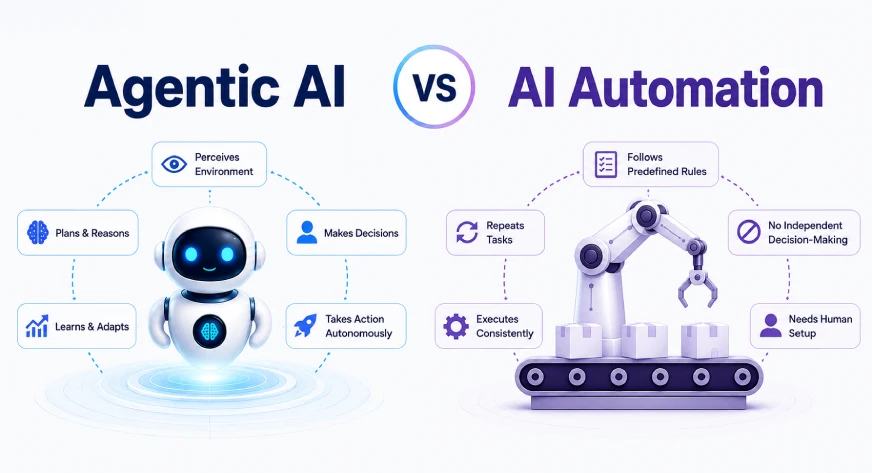
From Demos to Production: Building AI That Handles the Unexpected
A team wraps a few LangChain calls in a loop, adds tools, and calls it an agent. The demo impresses. Then production hits an unexpected input, and the workflow breaks. That is not agency; that is automation wearing a costume. The real difference is adaptability, and confusing the two costs you in downtime. For a deeper look at how agents truly learn, check out our piece on editing context instead of weights.
Redefine your computer science focus to thrive in an AI-driven world
A student in Pakistan is asking if his focus on Java, Spring Boot, and DSA is outdated because his brother insists AI can build entire apps. He's right to question the hype, but wrong to abandon fundamentals. AI generates code; it doesn't make architectural decisions. Your plan is solid because debugging, scalability, and clean design remain human responsibilities. Don't chase every automation trend. Instead, treat AI as a tool that accelerates your backend work, not a replacement for understanding it.

Capital One's new open-source tool finds code flaws and suggests fixes before they ship
Capital One has released VulnHunter, an open-source, agentic AI tool designed to find software flaws before attackers do. It scans source code, maps potential exploit paths, and proposes fixes before production deployment. What stands out is the "attacker-first forward analysis" and built-in falsification engine, which actively tries to disprove its own findings. For a company scarred by its 2019 breach, this is a confident, practical move. It signals a mature bet: the best defense is helping everyone secure their code, not just your own.

Brex lets real agent behavior shape smarter AI security policies
Brex stopped trying to police AI agents with SDK-level rules and started watching what those agents actually do. Its open-source proxy, CrabTrap, sits between every agent and every network request, using an LLM-as-a-judge to make enforcement decisions in real time. The insight is simple: the transport layer is an underused enforcement point. By bootstrapping policies from observed traffic instead of writing them from scratch, Brex found that governance gets sharper as agents get more capable.

Explore how open-source AI reaches new scale with Kimi K3's ambitious debut.
Beijing's Moonshot AI just dropped the heaviest open-source model yet, and it lands like a gauntlet. Kimi K3's 2.8-trillion parameters put it toe-to-toe with Anthropic's and OpenAI's best on benchmarks, closing a gap many assumed was permanent. This is a comeback story worth watching, especially as the company opens its weights on July 27. For enterprises tired of proprietary lock-in, the choice just got more interesting. The race isn't over; it's simply widened.
Your AI agents are passing tests but failing customers
Enterprise AI is granting agents more autonomy than the evaluations meant to govern them can support. Half of organizations have shipped an agent that passed internal tests, then failed a customer. Only 5% fully trust automated evaluation today. Yet two-thirds are moving toward zero-human deployment. That gap between trust and autonomy is the defining tension, and the market is responding. Tooling is fragmented, investment is shifting toward human review, and the next year will show whether assurance catches up to ambition.

Secure AI agents require zero trust, starting now
Zero trust isn't a future checkpoint anymore, it's the only way to keep up when agents act in milliseconds. Ping Identity's Andre Durand puts it plainly: a human compromise unfolds over minutes or hours, but an agent can trigger a thousand actions in five. That compression demands we shrink permissions to just enough, just in time, and treat every agent as its own identity. The window to build this architecture is narrow. Move now, or retrofit later at far greater cost.

Trust in AI agents is the real barrier to enterprise deployment
The gap between AI agent pilots and production isn't a capability problem; it's a reliability problem. Bryan Silverthorn, Amazon's Director of AGI Autonomy, made that case at VB Transform 2026, pointing to a framework that breaks reliability into consistency, robustness, predictability, and safety. His "intern" analogy is the right way to think about it. Agents need management, not just better benchmarks. For deeper context on navigating these adoption challenges, our related piece, "Unlock AI's Enterprise Potential," offers a broader lens.