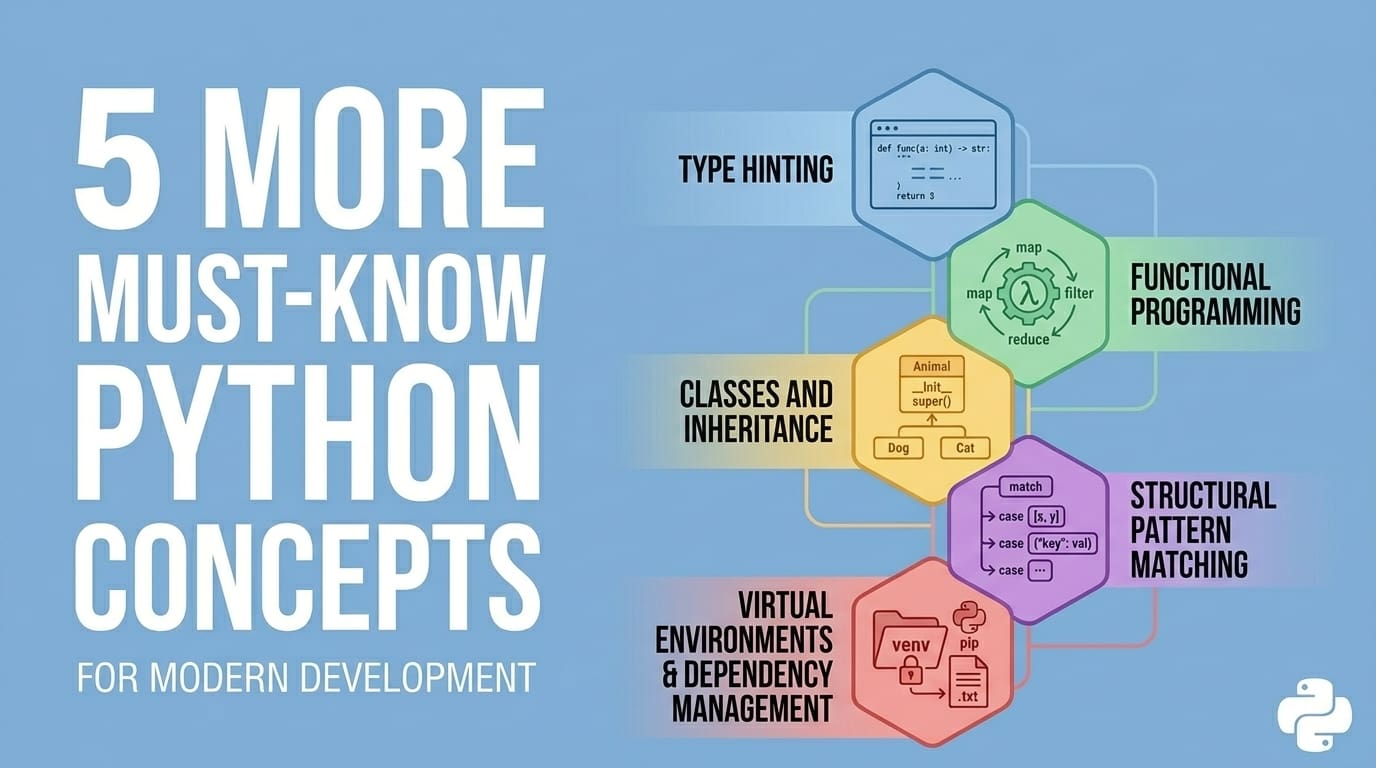
In the ever-evolving landscape of programming, the importance of mastering foundational concepts cannot be overstated. The recent article titled "5 More Must-Know Python Concepts" serves as a valuable reminder for developers to continuously refine their skills and deepen their understanding of this versatile language. As Python remains a cornerstone in various domains, from web development to data science, the ability to navigate its intricacies is essential for anyone looking to thrive in today's tech environment. The relevance of Python is mirrored in other technological advancements, such as the recent updates highlighted in our OpenJDK News Roundup: Vector API, Compact Object Headers and G1GC as Default in JDK 27, which underscores the dynamic nature of programming languages and frameworks.
Five key concepts can significantly enhance a Python developer's toolkit: decorators, generators, context managers, list comprehensions, and exception handling. Each of these elements plays a crucial role in writing more efficient, readable, and maintainable code. For instance, decorators allow developers to modify the behavior of functions or methods, which can lead to cleaner code and enhanced functionality without altering the original structure. Similarly, understanding generators can optimize memory usage, particularly in applications that handle large datasets, making them invaluable in data-intensive environments.
Moreover, the relevance of these concepts extends beyond mere syntax; they are indicative of a broader shift toward more elegant programming practices. The emphasis on readability and efficiency in Python reflects an industry-wide trend that prioritizes code quality and maintainability. This aligns with the insights shared in our article on Xreal, Google's smartglasses partner, thinks it has finally mastered this notoriously tricky industry, where the focus on innovative solutions and user experience resonates with the principles of clean code and effective programming practices. As developers embrace these concepts, they not only improve their own workflows but also contribute to a culture of excellence within the tech community.
Understanding these Python concepts is particularly significant in a world where new technologies and frameworks emerge at a rapid pace. As legacy tools and programming practices become obsolete, the need for developers to adapt and learn continuously becomes paramount. Developers are called to not only master the basics but also to stay informed about evolving best practices that can enhance their productivity and creativity. As we look to the future, the importance of collaborative learning and knowledge sharing cannot be understated, especially in an era where teams are increasingly distributed and diverse.
In conclusion, the mastery of Python's fundamental concepts is not just about enhancing individual skills; it is about preparing for a future where adaptability and innovation will define success in the tech landscape. As developers explore these essential tools, one must consider the broader implications for their projects and teams. How can mastering these concepts lead to a more collaborative and efficient development environment? As we continue to witness rapid advancements in technology, the answer to this question may well shape the trajectory of programming practices in the years to come.