5 Open Source Omni AI Models That Handle Text, Images, Audio, and Video
Our take
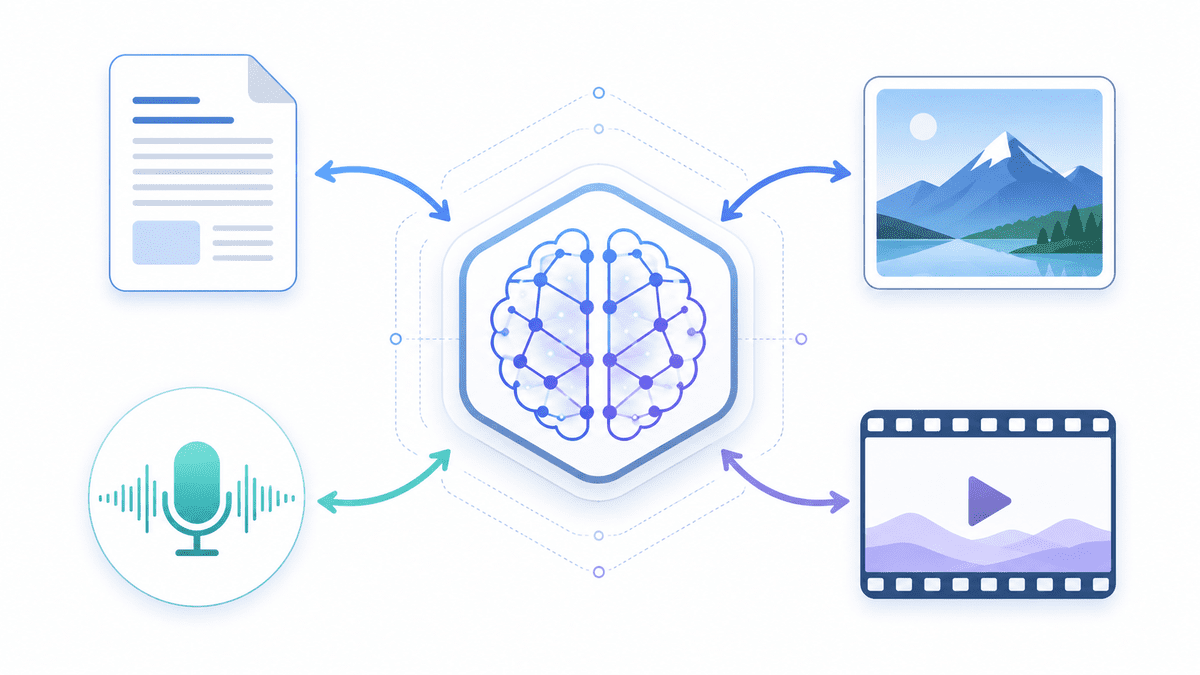
The recent emergence of open-source "omni AI" models capable of handling text, images, audio, and video represents a significant shift in the landscape of artificial intelligence, moving beyond specialized models towards more integrated and versatile systems. As highlighted in the original article, these any-to-any systems unlock possibilities across vision-language reasoning, speech interaction, document intelligence, and even real-time assistants – all with the added benefit of local deployment, a crucial factor for data privacy and operational efficiency. This contrasts sharply with the current reliance on often-opaque, cloud-dependent models, and signals a move towards greater user control and customization. It’s a development that aligns with our ongoing exploration of how AI can be woven into practical workflows, much like we demonstrated in [Using Gemini to Create Google Sheets], where we showed the potential of generative AI to streamline data management tasks. The ability to combine diverse data types within a single model opens doors to creating more holistic and nuanced solutions, capable of understanding and responding to complex real-world scenarios.
The power of these models lies not just in their multimodal capabilities, but also in their open-source nature. This fosters a collaborative environment where developers and researchers can build upon existing work, accelerating innovation and driving down costs. Consider the implications for businesses struggling to manage disparate data sources – the ability to integrate image recognition, natural language processing, and audio analysis within a single framework could dramatically improve operational efficiency and unlock new insights. We've previously explored similar themes of distributed architecture and open-source tools, noting Cloudflare’s innovative approach with [Cloudflare Ships Agent Skills for Zero Trust Deployment and Migration], demonstrating how open-source libraries can simplify complex infrastructure management. The practical considerations of local deployment, particularly in regulated industries or environments with limited bandwidth, are also increasingly important, and this trend towards omni AI addresses those concerns head-on. The recent Cellebrite situation, as detailed in [Cellebrite said it cut off Russia, but Russia used is tools anyway], underscores the importance of understanding the limitations and potential vulnerabilities inherent in relying on proprietary, centralized systems.
The shift towards omni AI also raises interesting questions about the future of data management and the role of spreadsheets. Traditionally, spreadsheets have served as a central hub for organizing and analyzing data from various sources. However, as AI models become increasingly capable of processing and interpreting diverse data types, the need for manual data aggregation and transformation within spreadsheets may diminish. Instead, we might see a future where AI models directly ingest and analyze data from multiple sources, automatically generating insights and updates within dynamic, AI-powered interfaces. This isn't about replacing spreadsheets entirely, but rather augmenting them with AI capabilities to unlock deeper insights and automate repetitive tasks. The ability to seamlessly integrate image, audio, and video data alongside traditional tabular data represents a fundamental evolution in how we interact with and derive value from information.
Ultimately, the rise of open-source omni AI models signifies a democratization of AI capabilities, empowering individuals and organizations to build custom solutions tailored to their specific needs. The ability to move beyond siloed AI applications and create truly integrated systems, capable of understanding and responding to the complexities of the real world, marks a pivotal moment in the evolution of artificial intelligence. A key question moving forward is how readily these models can be adapted and fine-tuned for specific industry applications, and whether the open-source community can sustain the momentum needed to drive continued innovation and accessibility within this rapidly evolving field.
Read on the original site
Open the publisher's page for the full experience