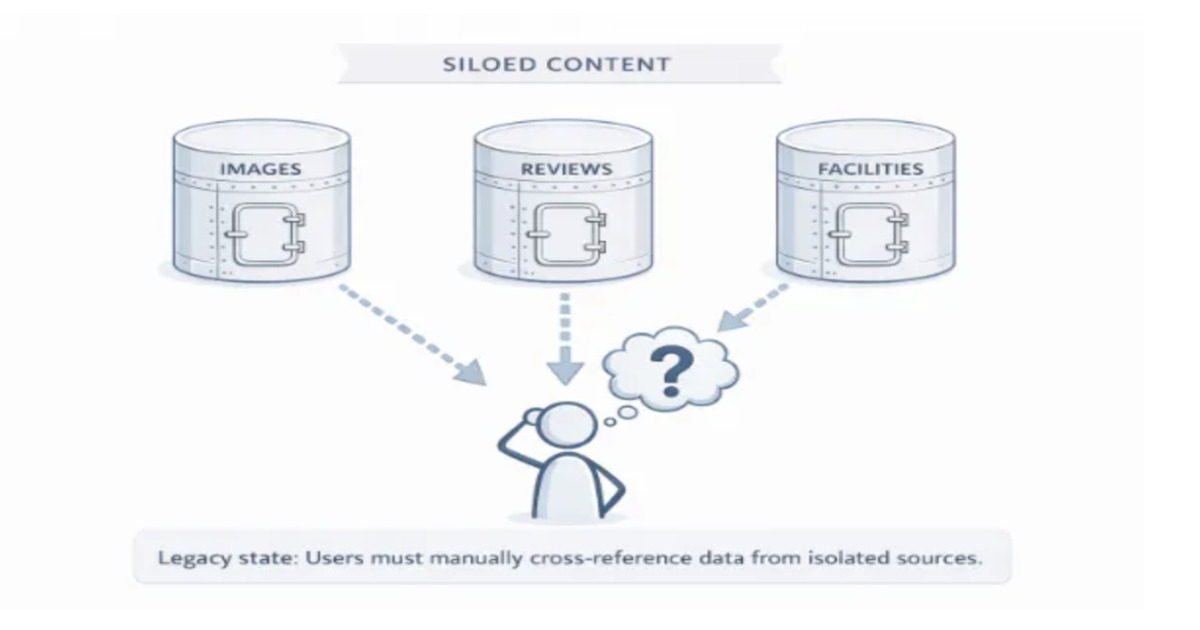
Agoda's launch of its Multimodal Content System is a noteworthy innovation in the travel technology sector. By unifying hotel images and guest reviews through a shared topic taxonomy, Agoda has taken a significant step towards enhancing user experience in travel discovery. This system facilitates multimodal retrieval across an expansive dataset of over 700 million images and multilingual reviews, offering a seamless way for users to access relevant content. It resonates with the ongoing discussions about the necessity of integrating various data formats to improve decision-making processes, much like the insights presented in Grounding LLMs with Fresh Web Data to Reduce Hallucinations and Introduction to Lean for Programmers.
At its core, the Multimodal Content System reflects a deeper understanding of user needs within the travel market. Today's travelers seek personalized and efficient ways to sift through vast amounts of information. By employing offline enrichment and low-latency serving, Agoda ensures that users can retrieve and interact with content quickly, which is crucial when making time-sensitive travel decisions. This approach not only enhances user satisfaction but also positions Agoda as a forward-thinking leader in the travel industry, recognizing that the intersection of technology and user experience is where true innovation lies.
Moreover, this development underscores a broader trend in the integration of artificial intelligence and data management systems across various industries. As organizations increasingly rely on large datasets to inform their strategies, the ability to synthesize and retrieve relevant information quickly becomes paramount. Agoda’s model demonstrates how a structured approach to data can lead to improved accessibility and usability, setting a benchmark for other companies to follow. This aligns with the challenges faced in data management, highlighted in articles such as Formulas break when power query table refreshes, where users encounter hurdles in maintaining efficiency with traditional tools.
Looking ahead, the implications of Agoda's Multimodal Content System could extend beyond travel. As businesses continue to navigate the complexities of data integration, we can anticipate a growing demand for solutions that not only streamline access to information but also enhance the overall user experience. The question remains: how will other sectors adapt to this paradigm shift in data management? As technology evolves, the challenge will be for organizations to keep pace with user expectations while leveraging the potential of AI and machine learning to create more intuitive systems.
In conclusion, Agoda's initiative is a significant leap toward transforming how users engage with travel content. It encapsulates a human-centered approach to technology, prioritizing the end-user experience while embracing innovation. As we observe the ripple effects of such advancements, it will be fascinating to see how they inspire further developments across various industries, driving us toward a future where data is not just abundant but also effortlessly accessible and actionable.