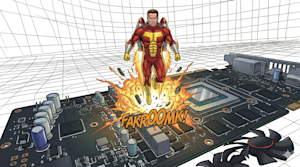
Google's TurboQuant release is the most practical AI infrastructure breakthrough we've seen in years, precisely because it solves a problem most users didn't know they had. The KV cache bottleneck has been silently throttling every long-context AI task you've tried, digesting a 100-page report, holding a coherent hour-long conversation, or searching across a dense knowledge base, by eating GPU memory faster than the model can think. TurboQuant's 6x compression and 8x speed gain mean those tasks now run on hardware you already own, without retraining a single model or rewriting your pipeline.
For anyone building or deploying AI systems, the immediate takeaway is cost and capability. If your inference pipeline currently requires four GPUs to serve 128K-token contexts, TurboQuant can cut that to one, slashing cloud bills by more than half. If you've been forced to truncate documents or limit conversation depth because VRAM filled up, those constraints vanish. The algorithm is training-free and works with existing fine-tuned models, Llama, Mistral, Gemma, so your team can integrate it this quarter, not next year. The benchmarks from community tests on MLX and llama.cpp confirm that 2.5-bit quantization delivers exact match accuracy at 64K tokens. This isn't theoretical; it's already running on Mac Minis.
The strategic implications for enterprise decision-makers are twofold. First, reassess your hardware procurement plans. If software can compress memory requirements by a factor of six, the massive HBM-heavy GPU clusters you're budgeting for may be overkill. Second, rethink your deployment model. Organizations with strict data privacy rules can now host high-capability models on-premise or on edge devices that were previously insufficient. The open release of the algorithms under a permissive research framework means Google has effectively given every engineering team a free performance upgrade, no vendor lock-in, no proprietary SDK.
What matters most is that TurboQuant reframes the conversation around AI progress. The industry has fixated on building larger models, but the real bottleneck has always been memory movement. By proving that mathematical elegance can outperform brute-force hardware scaling, Google has shown that the next leap in AI capability will come from smarter compression, not just bigger chips. For enterprises, the message is concrete: audit your inference costs today, test TurboQuant on your longest-context workload tomorrow, and adjust your infrastructure roadmap accordingly. The efficiency tax on AI just got repealed.