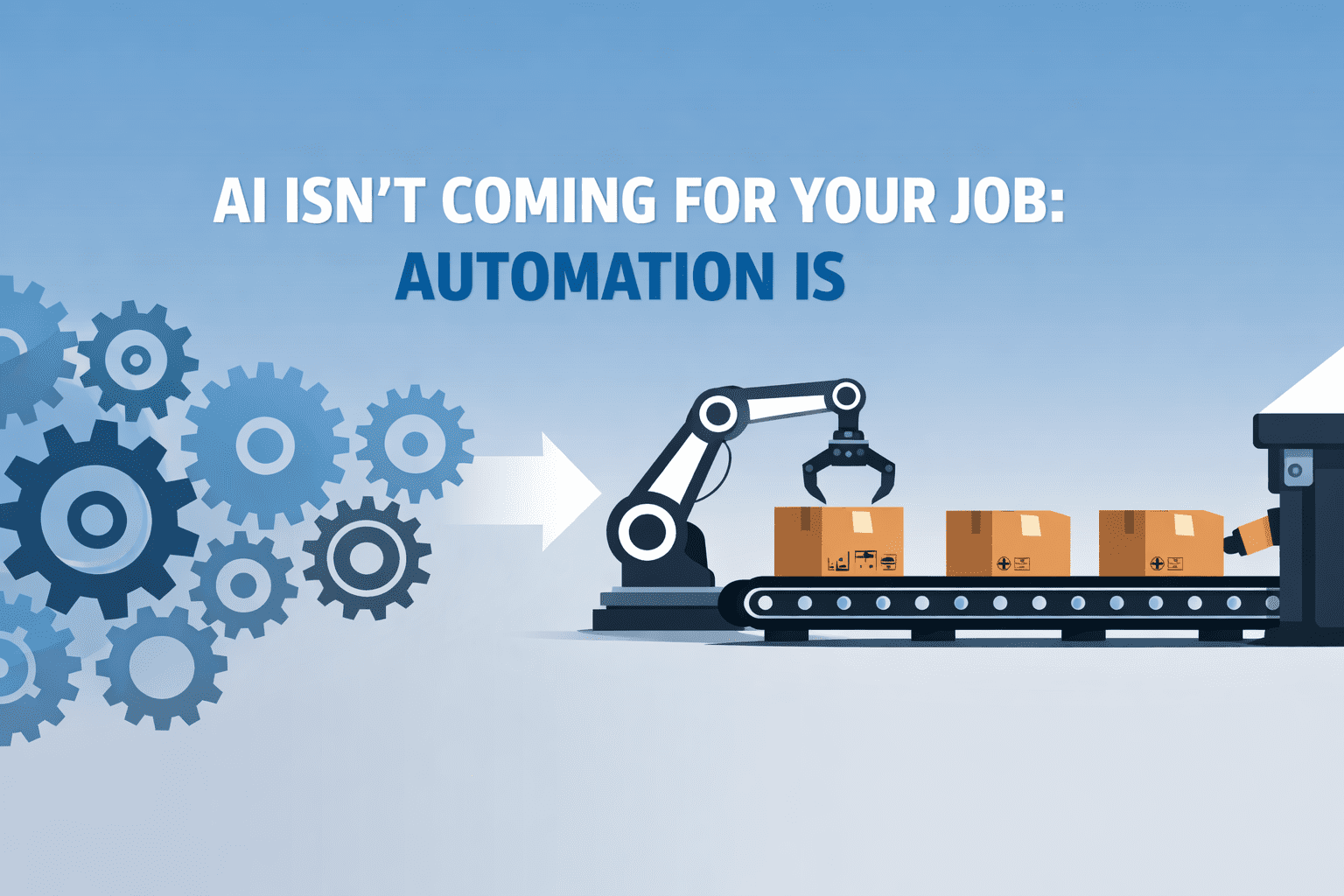
The real shift reshaping your work is automation, not AI. That is not a semantic quibble. It is the difference between a tool that helps you think and a system that simply does the task for you. The panic around artificial intelligence has blurred the line, but the distinction matters. AI, as it is commonly understood, implies a kind of judgment and adaptability. Automation, on the other hand, is about removing the repetitive steps that have always eaten your hours. The threat you feel at your desk, the one that makes you wonder if your role is shrinking, is not some sentient colleague. It is a process that has been quietly learning the routine parts of your job and executing them faster than you ever could.
What does this mean in practical terms? It means the conversation should shift from fear of replacement to scrutiny of tasks. The work that is vulnerable is not the work that requires insight, context, or a human read on a messy situation. It is the work that follows a rule. If you spend your day reconciling columns, generating standard reports, or moving data from one format to another, that is automation territory. The spreadsheet you use is not becoming sentient. It is becoming more efficient at the mechanical parts. The distinction is not comforting because the outcome feels similar. You still lose the busywork. But the framing changes what you should do next.
If you believe the shift is about automation, then the response is not to resist the technology or to wait for a job title to protect you. It is to identify the parts of your work that cannot be reduced to a sequence of steps. The person who thrives in this environment is the one who can look at the output of an automated process and ask whether the question being answered is even the right question. That is a human skill, and it does not show up in a script. The spreadsheet can generate the summary, but it cannot tell you why the summary matters to the decision you are making on Thursday. That is where your value now lives.
So the concrete point is this: stop treating automation as a vague threat and start treating it as a specific map of your own workflow. Look at your week. Highlight the tasks that are repeatable, rule-based, and boring. Those are the ones to hand over. Then take the time you just freed and spend it on the problems that do not have a correct answer. That is the only defensible position. The technology is not coming for your judgment. It is coming for your busywork. Let it have the busywork. That is not a loss. That is an opening.