Building an End-to-End Data Science Portfolio Project
Our take
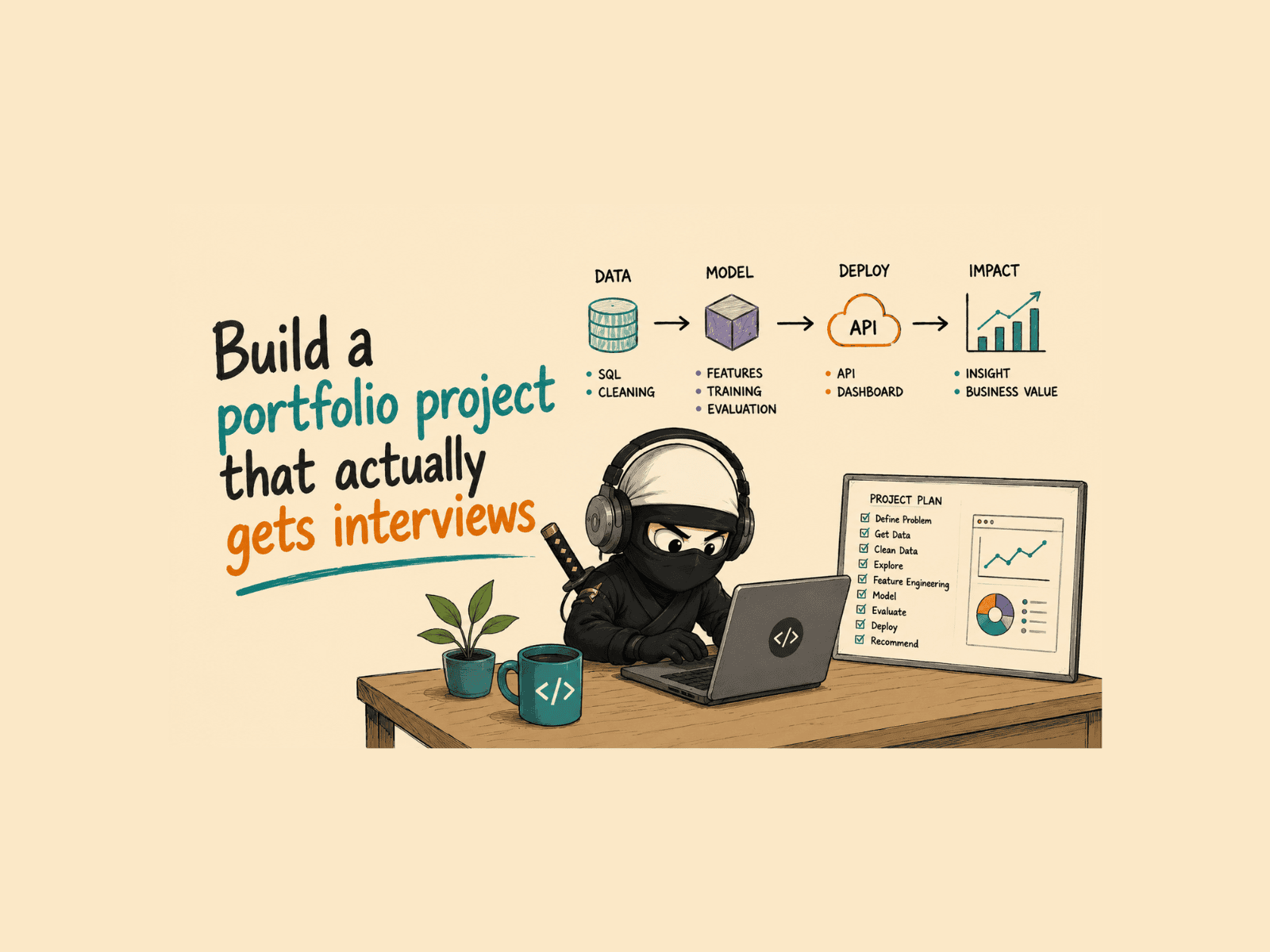
The data science landscape is littered with Jupyter notebooks. They’re the default showcase for skill, the digital equivalent of handing over a stack of calculations and hoping someone understands the story. But as the article "Building an End-to-End Data Science Portfolio Project" rightly points out, stopping at the notebook is leaving significant value – and potential impact – on the table. It’s a missed opportunity to demonstrate a far more complete understanding of the data science lifecycle, from initial problem framing to deployment and monitoring. The current obsession with notebook-centric portfolios often prioritizes flashy algorithms over practical application, failing to convey the critical ability to translate insights into tangible results. This mirrors a broader trend we’ve seen in the tech world; a focus on individual components rather than integrated systems, a point highlighted in "The Budget Split That Explains Itself," which explores the challenges of diversification and maintaining clarity in complex financial models – a principle equally applicable to data science projects. Similarly, the recent news of Uber’s surprise divestiture from robotics company Serve Uber surprised robotics company Serve by selling its entire stake underscores the importance of strategic alignment and long-term vision, something often lacking in data science projects that remain isolated within a notebook.
The shift towards end-to-end portfolios represents a maturing of the field. Early on, demonstrating technical prowess – coding ability, model selection – was enough. Now, employers and clients are looking for data scientists who can not only build models but also define problems, gather and clean data, deploy solutions, and measure their impact. This requires a broader skillset, encompassing data engineering, DevOps, and a strong understanding of business context. A complete portfolio showcases this breadth, demonstrating the ability to navigate the entire data science pipeline. This isn’t about adding unnecessary complexity; it’s about reflecting the reality of how data science is practiced in most organizations. The ability to build a pipeline that reliably delivers insights, rather than just producing a single, impressive model, is what truly differentiates a skilled data scientist. It’s about translating theoretical knowledge into practical, demonstrable value.
The challenge, of course, lies in the increased effort required to build these comprehensive projects. It’s easier to churn out a notebook demonstrating a clever algorithm than to build a robust, deployable application. But the rewards are significant. A well-constructed end-to-end project not only showcases a wider range of skills but also provides concrete evidence of the ability to deliver impact. It's a powerful differentiator in a crowded field and a testament to a deeper understanding of the data science process. We've observed that individuals who prioritize this holistic approach often find themselves better equipped to tackle real-world challenges and contribute meaningfully to their organizations. The emphasis should shift from simply achieving statistical significance, as cautioned in "Stop Calling the First Significant Day a Win" [/post/stop-calling-the-first-significant-day-a-win-cmsoz2eco0a53mi9zhgb9nha9], to demonstrating demonstrable, sustained value through a complete, functioning system.
Looking ahead, we anticipate a growing demand for data scientists who can demonstrate end-to-end capabilities. Portfolio projects will increasingly be judged not just on the elegance of the model but on the robustness of the entire system. The rise of AI-native tools that simplify deployment and monitoring will further lower the barrier to entry for building these comprehensive projects. The question becomes: will aspiring data scientists embrace this shift, recognizing the value of showcasing a complete skillset, or will the allure of the notebook continue to dominate? The evolution of the data science portfolio is a reflection of the profession itself, and the move towards end-to-end projects signals a welcome and necessary maturation.
Read on the original site
Open the publisher's page for the full experience