Data Scientists Are Becoming AI Managers, Not Model Builders
Our take
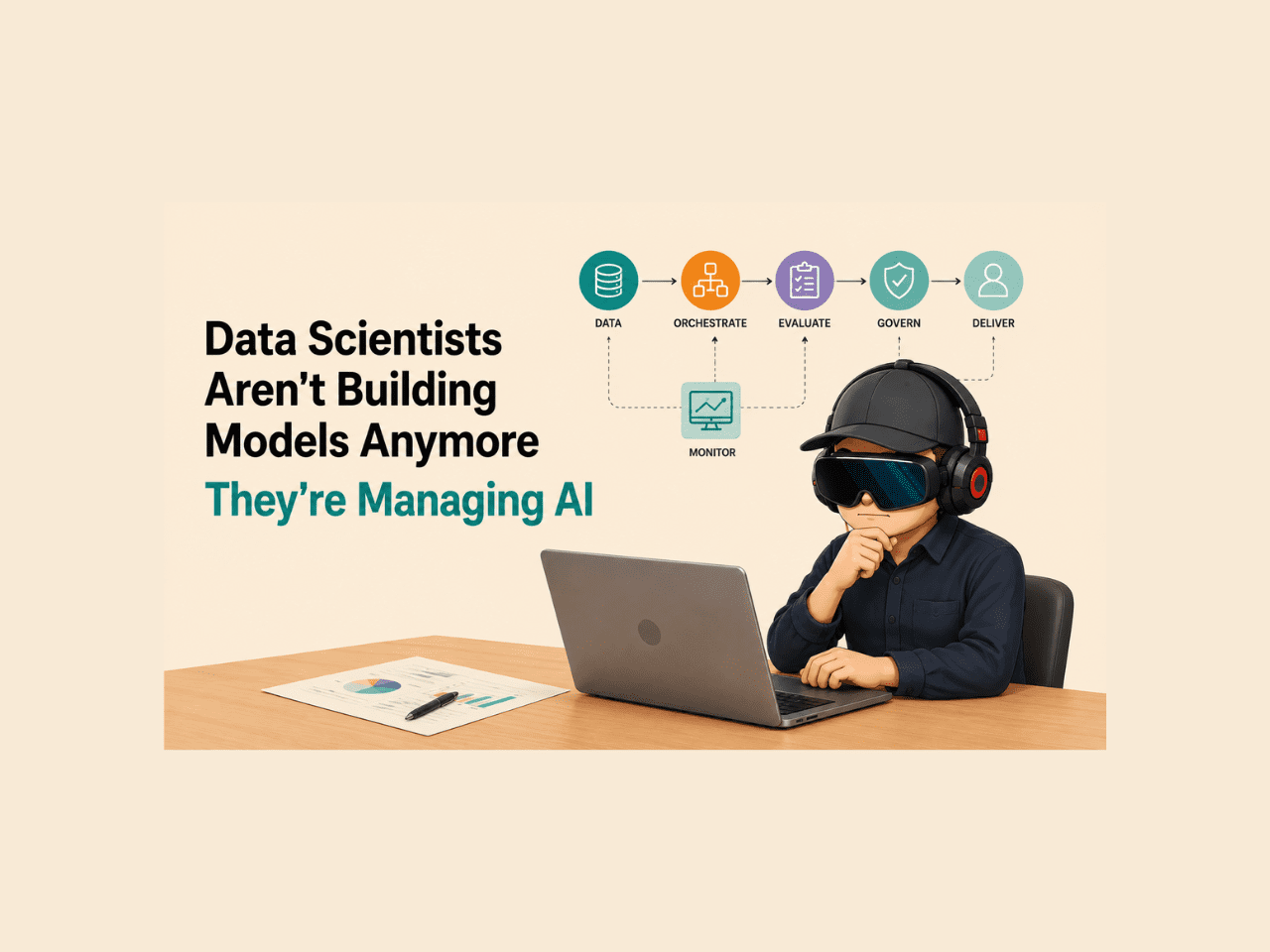
The shift highlighted in the recent article, "Data Scientists Are Becoming AI Managers, Not Model Builders," isn't merely a tweak in job titles; it represents a fundamental evolution in how we approach and leverage AI. For years, the focus has been on the individual data scientist, the architect of the model, the one who wrangles data and algorithms into predictive power. However, as AI models become increasingly complex, pervasive, and mission-critical, the skillset required to ensure their ongoing effectiveness moves beyond initial construction. We’re seeing a necessary evolution towards a more managerial role, one that prioritizes governance, monitoring, and continuous improvement – a far cry from the isolated model-building environment many data scientists currently inhabit. This transition is particularly relevant when considering the challenges outlined in "What does "Safe AI" look like? [D]," highlighting the crucial need for ongoing defense against vulnerabilities and the complexities of post-release fine-tuning, emphasizing the responsibility that comes with deploying AI at scale. It’s a critical reminder that building a model is only the first step.
The implications of this shift are profound for both individuals and organizations. Data scientists who embrace this evolution will find themselves in higher demand, tasked with ensuring the long-term viability of AI investments. This means developing expertise in areas like model drift detection, explainable AI (XAI), and robust monitoring frameworks – skills that are arguably more vital than ever. Companies, in turn, need to restructure their teams and workflows to accommodate this new reality. The traditional siloed approach, where models are "thrown over the wall" after development, is unsustainable. Instead, organizations require cross-functional teams with clear lines of responsibility for model performance, fairness, and security. Consider, for instance, the complexities of applying these principles to real-world scenarios like “Predictive analysis of Rotating Equipment,” where accurate RUL prediction is critical for preventing catastrophic failures, requiring continuous monitoring and adaptation of the underlying models. The static model is a relic of the past; the dynamic, managed model is the future.
This isn’t to say that model building will disappear entirely. Rather, it will become a more specialized function, often handled by smaller, highly skilled teams focused on innovation and experimentation. The bulk of the workforce will be dedicated to managing, maintaining, and adapting existing models to changing business needs and data landscapes. The move towards managed AI also necessitates a greater emphasis on automation and tooling. As models become more numerous and complex, manual intervention becomes increasingly impractical. We need platforms and tools that can automate model monitoring, retraining, and deployment, freeing up AI managers to focus on strategic decision-making and risk mitigation. Further illustrating this point, the challenges of maintaining stylistic consistency in “Improving machine-translated novels via style transfer — looking for advice on the faithfulness/fluency tradeoff [P]” showcase the ongoing need for nuanced adjustments and continuous refinement, processes ideally suited for a managerial oversight model.
Ultimately, the rise of the AI manager signals a maturation of the AI field. We've moved beyond the initial hype and are now grappling with the hard realities of deploying AI at scale. It’s a recognition that AI is not a one-and-done project but an ongoing process that requires constant vigilance and adaptation. The question now is: how effectively will organizations adapt their structures and cultures to embrace this new paradigm, and how quickly will the talent pool evolve to meet the demands of this increasingly critical role? The success of future AI initiatives will hinge not just on the brilliance of the initial model, but on the skill and dedication of those who manage it over time.
Read on the original site
Open the publisher's page for the full experience