Does MiniMax Agent Actually Make Work Easier?
Our take
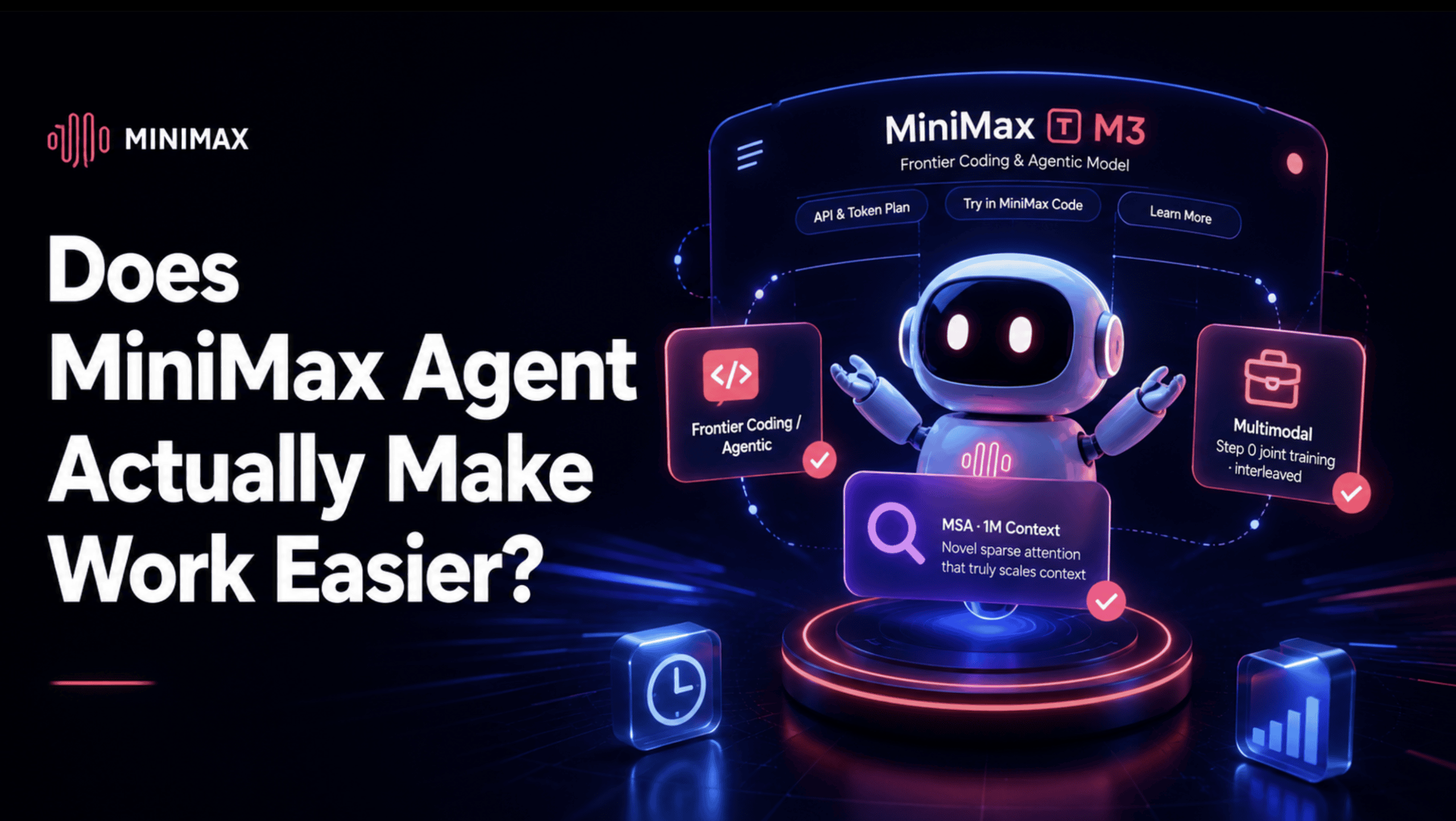
The emergence of AI agents capable of interacting directly with APIs represents a significant shift in how we approach data management and workflow automation. The recent piece examining MiniMax Agent’s architecture and real-world performance is particularly noteworthy, building upon the initial launch announcement and offering a deeper dive into its operational mechanics. This development arrives at a time when the broader AI agent landscape is rapidly evolving, as evidenced by Microsoft’s recent General Availability announcement of their Agent Framework Harness and Hosted Agents Microsoft Agent Framework Harness and Hosted Agents Reach General Availability. Understanding how tools like MiniMax function – and the challenges they overcome – is crucial for anyone seeking to leverage the power of AI to streamline their data-driven processes. The core promise of AI agents isn't just about automating tasks; it's about shifting the cognitive load from the user to the system, allowing for more strategic thinking and creative problem-solving.
The article’s focus on MiniMax’s architecture is especially valuable. While the launch post provided a high-level overview, this deeper exploration sheds light on the specific engineering choices that underpin its capabilities. It's easy to get caught up in the hype surrounding AI, but a grounded understanding of the underlying technology is essential for realistic expectations and effective implementation. Consider, for instance, the complexities highlighted in a recent technical timeline detailing the 2026 AI agent intrusion into Hugging Face A technical timeline of the July 2026 frontier-lab AI agent intrusion into Hugging Face – incidents like that underscore the importance of robust architecture and security considerations when deploying AI agents in production environments. MiniMax's approach, as detailed in the article, seems to prioritize a pragmatic balance between power and control, reflecting a growing awareness of the potential risks associated with autonomous AI systems. The fact that it’s running against a real API provides valuable validation of its practical utility, moving beyond theoretical demonstrations and into the realm of tangible impact.
The broader significance of this development extends beyond simply making spreadsheets "easier." It speaks to a larger trend toward composable AI – the ability to combine different AI components and tools to create customized solutions tailored to specific needs. This contrasts sharply with the earlier era of monolithic AI platforms, which often required users to adapt their workflows to the platform's limitations. MiniMax, and other emerging agent platforms, represent a shift toward a more flexible and adaptable paradigm. Furthermore, the discussion around WebAssembly on the JVM, as explored in a recent podcast Podcast: WebAssembly on the JVM: Feature Evolution, Performance, and the Transition to Endive, highlights the importance of standardized runtimes and interoperability in enabling the widespread adoption of AI agents across diverse environments. The ability to seamlessly integrate AI agents with existing infrastructure is a critical factor in driving their practical utility.
Ultimately, the question isn't whether AI agents will *eventually* make work easier – the potential is undeniable. The more pertinent question is *how* we design and deploy these agents to maximize their benefits while mitigating potential risks. MiniMax's approach, with its emphasis on transparency and control, offers a promising model for the future. As the agent landscape continues to mature, we’ll be watching closely to see how different architectures and platforms address the challenges of security, reliability, and ethical considerations, and whether the promise of truly intelligent and helpful AI agents can be fully realized.
Read on the original site
Open the publisher's page for the full experience