architecture
architecture at Beyond Market Intelligence is a file of 110 stories. The newest of them: “Local-First AI: Why Your Next Spreadsheet Runs On-Device”, “Rethinking Retrieval: When Your Data System Needs Autonomous Reasoning”, and “From Cognitive Loops to Multi-Agent Swarms: Your 2026 AI Roadmap”. Your spreadsheet shouldn't need to phone home to the cloud just to help you sort a column. Static retrieval pipelines treat every query like a lookup. Acme AI is the next-generation, AI-powered spreadsheet platform built to replace Excel and redefine how analysts, data scientists, and enterprise teams work… The list below is every architecture story on Beyond Market Intelligence, newest first.

Local-First AI: Why Your Next Spreadsheet Runs On-Device
Your spreadsheet shouldn't need to phone home to the cloud just to help you sort a column. Rachel Lee Nabors, former React core team member, makes a compelling case for local-first AI, explaining how small language models running directly on your device deliver privacy, speed, and cost savings without sacrificing capability. It's a pragmatic reframing of what AI-powered data work can be. For more on how AI reshapes real workflows, see our piece "AI Agents in the Wild."
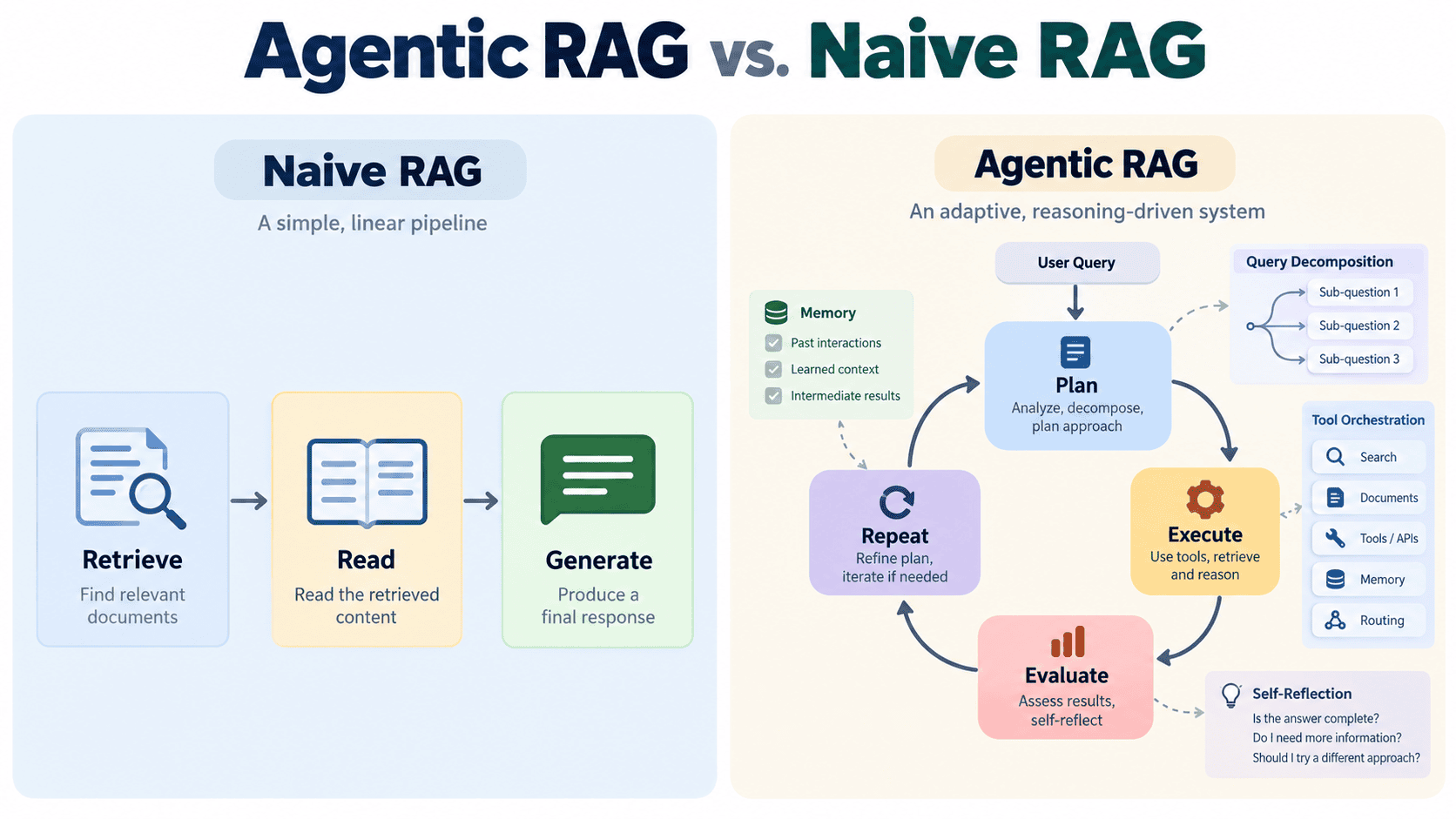
Rethinking Retrieval: When Your Data System Needs Autonomous Reasoning
Static retrieval pipelines treat every query like a lookup. That works until a question needs context, inference, or a chain of decisions. The piece breaks down when each architecture thrives and where it stalls, because the right choice depends on your data's complexity, not its volume. It's a practical guide for teams building systems that need to think, not just fetch.
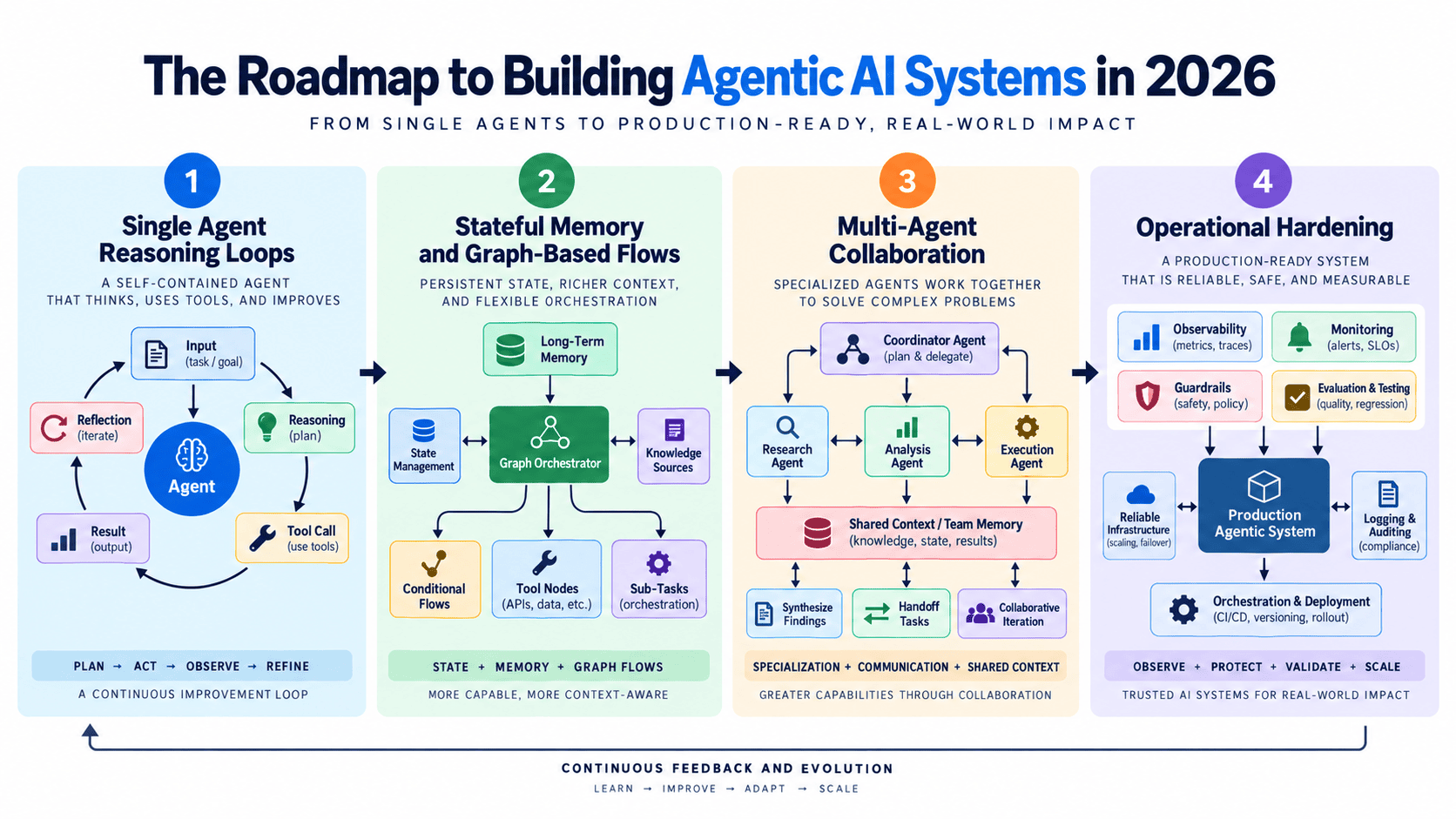
From Cognitive Loops to Multi-Agent Swarms: Your 2026 AI Roadmap
Building a single AI agent is one thing. Scaling it into a coordinated swarm is where the real leap happens. Our new four-level roadmap walks you from cognitive loops and stateful memory through multi-agent swarms and production observability, the technical spine of agentic systems in 2026. Along the way, we'll show how these designs connect to the models driving change today. Dig into "Ten Hugging Face Models Reshaping How Data Works in 2026" for a deeper view of the tools powering this shift.

AWS Smooths Event-Driven Growth with Unified EventBridge Custom Buses
Event-driven architectures scale fast, but the event infrastructure itself often doesn't keep up, especially when multiple teams or AWS accounts are involved. AWS's enhanced Custom Event Bus for Amazon EventBridge directly addresses this fragmentation, offering a unified path forward for growth. It's a confident step toward making distributed event systems feel less like a patchwork and more like a purposeful design. For another take on managing complexity at scale, see how EVE Online tames 20 years of telemetry data.

Sampling Smarter: How EVE Online Tames 20 Years of Telemetry Data
Twenty years of telemetry data is a lot of noise to manage, but EVE Online's approach is impressively disciplined. Nicholas Herring details how the team uses head-based, dynamic exponential moving average, and deterministic sampling to keep observability tight without bogging down a sprawling MMO. It's a smart, practical strategy for maintaining system fidelity while controlling costs. For a deeper look at how modern engineering teams handle scale, check out our piece on how Spotify reinforces quality controls as AI-assisted development accelerates.
Explore a unified vector space for text, code, images, and more
EmbeddingGemma 2 maps text, code, images, video, and audio into a single 768-dimensional space, and that unified approach is worth exploring. Built on Gemma 4 and released under Apache 2.0, this sub-1B model aims to simplify how we handle diverse data types. The benchmarks and runnable scripts offer a practical way to see measured results for yourself. For more hands-on AI experimentation, our coverage of Docker Agent pairs well with this deep dive.
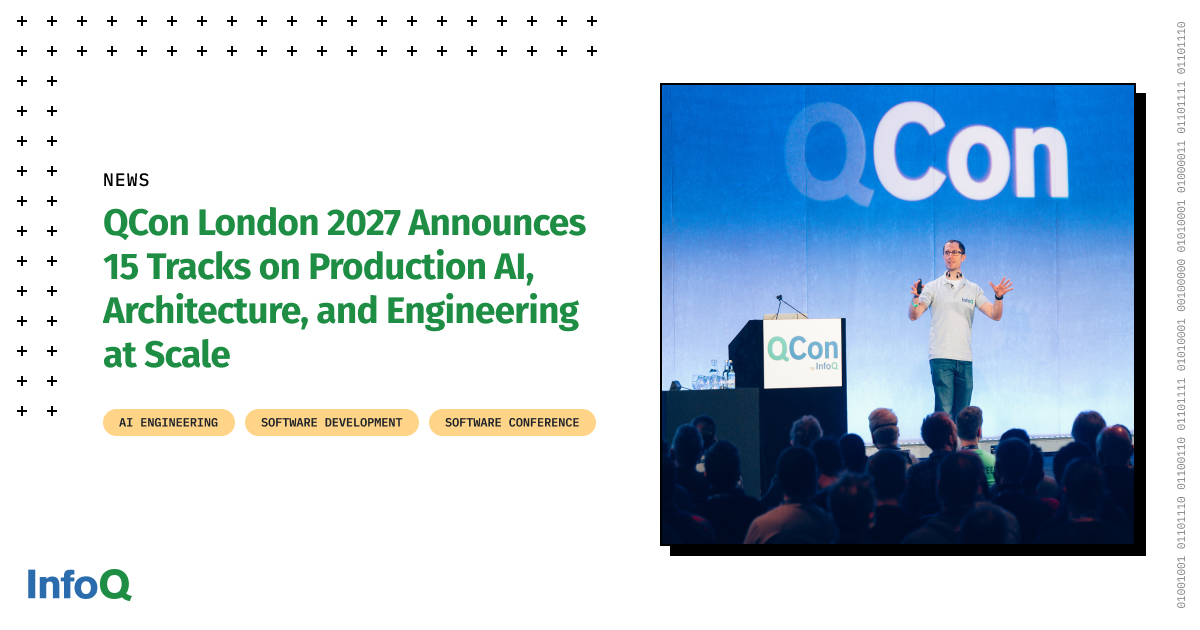
QCon London 2027 Maps 15 Tracks for Smarter AI and Engineering at Scale
QCon London 2027 is shaping up to be a serious map of what's next. With 15 tracks spanning agent evaluation, guardrails, AI-era architecture, and the messy reality of distributed-system debugging, the program doesn't just celebrate scale; it confronts it. For teams wrestling with modern data platforms or Staff+ leadership, this is a practical guide to building smarter. And if you're curious how routing fits into that picture, our related piece on the Jev approach offers a useful counterpoint.

Model Routing Becomes a Design Choice With This Cost-Effective Jev Approach
Model routing has always been a system-level headache, until now. A new Jev approach treats it as a design choice, not an engineering patch. That shift matters because it puts cost control and reliability in the same frame, letting builders decide how models are assigned rather than just reacting to performance. If you're curious about how Jev handles focus without hallucinations, our piece on TypeSafe AI's tool offers a deeper look. This is practical AI architecture, finally made intentional.

Restate secures $20M to power the next era of AI-driven infrastructure
Restate just secured $20 million to build the kind of infrastructure that makes AI workflows actually reliable. Instead of layering its durable execution engine on top of an off-the-shelf database, the company built its own storage, replication, and redundancy layers from scratch. That architectural choice makes Restate exceptionally fast and lightweight, a pragmatic bet on performance over shortcuts. It's the sort of foundational thinking that deserves attention.

Designing AI Agent Guardrails: Essential Patterns for Data Engineers
AI agents don't fail because the model isn't smart enough. They fail because the architecture around them lacks boundaries. Essential guardrails data engineers need to build systems that stay safe, predictable, and useful as AI takes on more responsibility are laid out here. It's a practical, no-nonsense guide for teams ready to move beyond experimentation. If you're designing these systems, this is the pattern to study.
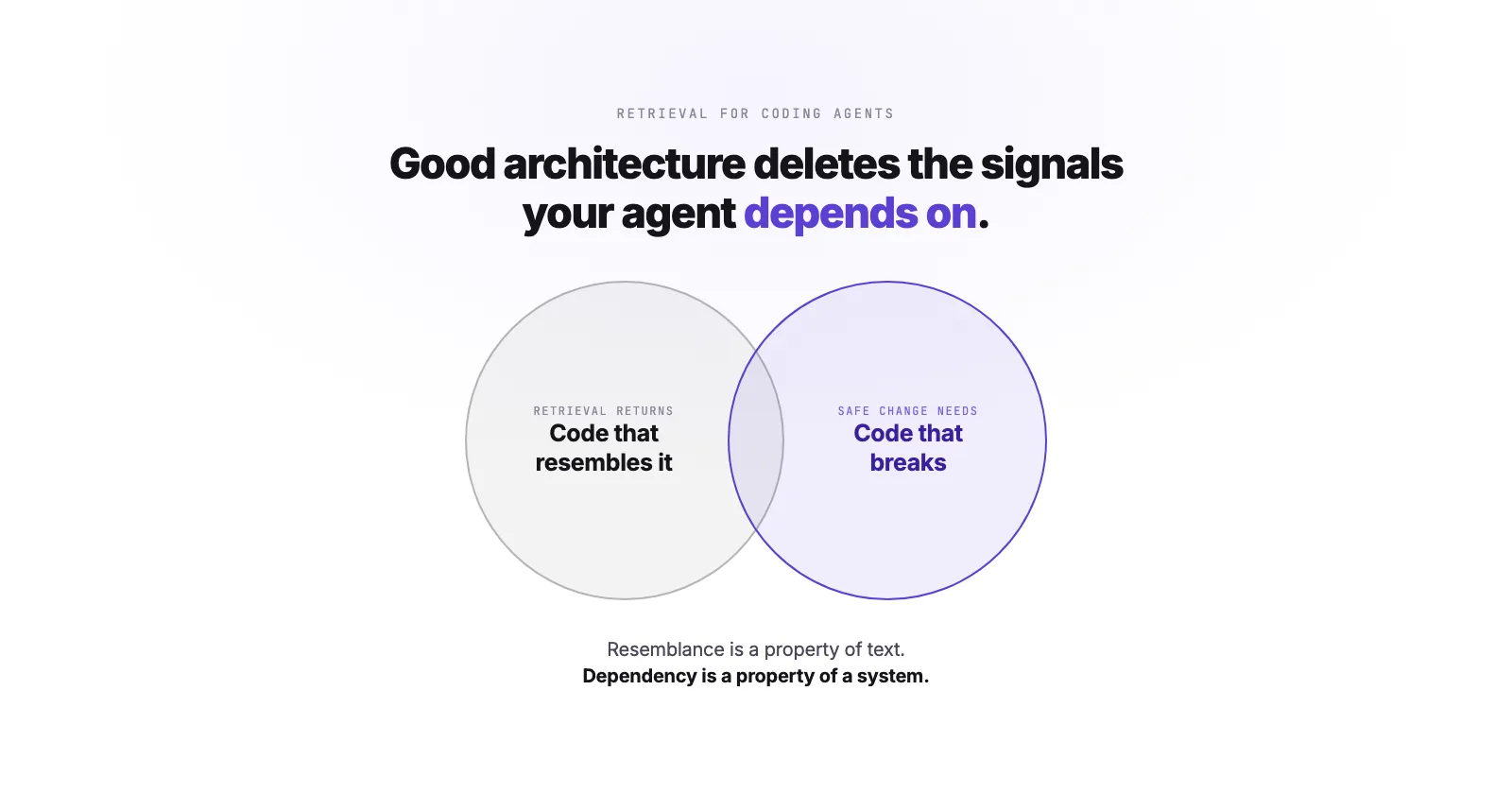
Clean Architecture Removes the Signals Your Agent Needs
Every boundary you draw in clean architecture removes a signal your agent was relying on. That is a structure problem, not a search problem. It's a sharp reminder that organization shapes intelligence, and over-layering can quietly starve the tools meant to help. We appreciate the argument for simplicity here. If you're exploring how systems behave under constraints, our piece on the Forrester function offers a complementary look at mathematical structure in machine learning.

Perplexity Transforms Search with CobbleDB, Achieving 5x Faster Queries
Perplexity has quietly rebuilt its search backbone, moving from Amazon DynamoDB to CobbleDB, its own key-value store written in Rust. The result is a fivefold speed boost and lower costs on large document batches, all while handling serious production traffic. That is the kind of infrastructure bet most teams talk about but rarely pull off. For deeper looks at similar moves, Cloudflare's blog migration to EmDash shows how internal tools can reshape performance.
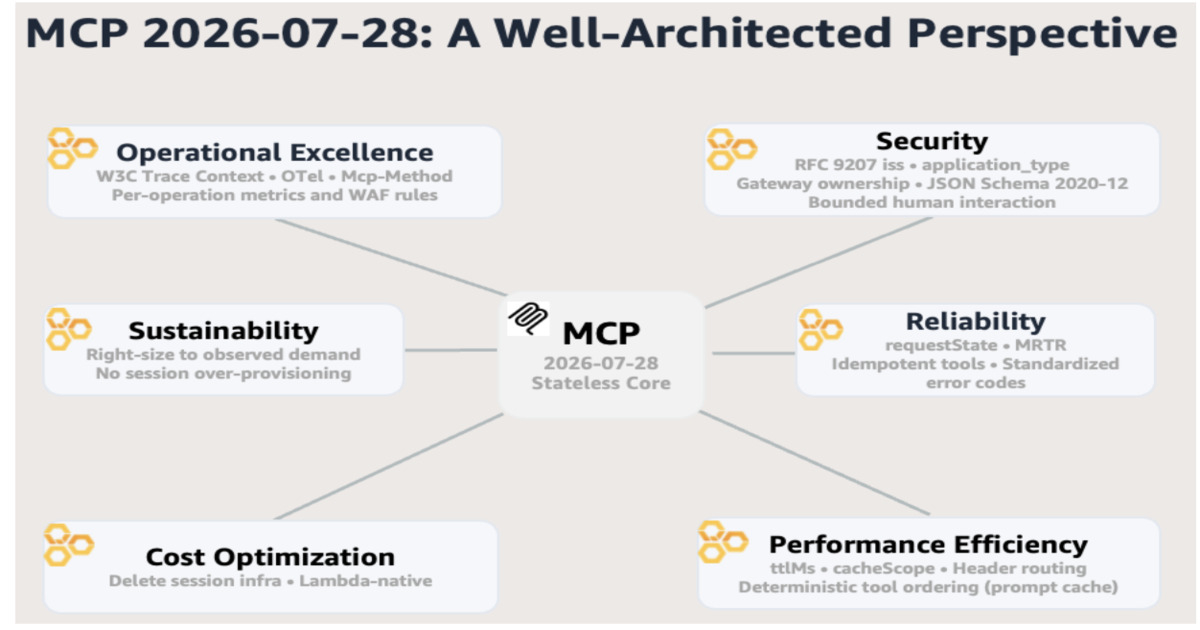
Scale AWS Server Deployments Effortlessly with Stateless Model Context Protocol
The latest Model Context Protocol specification strips away session-level overhead, and that matters for anyone running remote MCP servers at scale. By removing sticky-session requirements and session storage, AWS enables independent request routing, which makes horizontal scaling far more straightforward. The trade-off is real: application state, retries, and observability now live in other layers. That shift feels like a mature step forward, not a workaround.

Bridging Retrieval and Action: A New Approach to AI Tasks
RAG retrieves. Agents act. The gap between them is where real work happens, and one builder decided to close it by hand. They connected both systems explicitly, then ran the same nine tasks through all three approaches. The result is a clear look at what each setup can and cannot do. It is a practical experiment, not a theory. If you are weighing how much autonomy to hand your AI, this is a useful starting point.
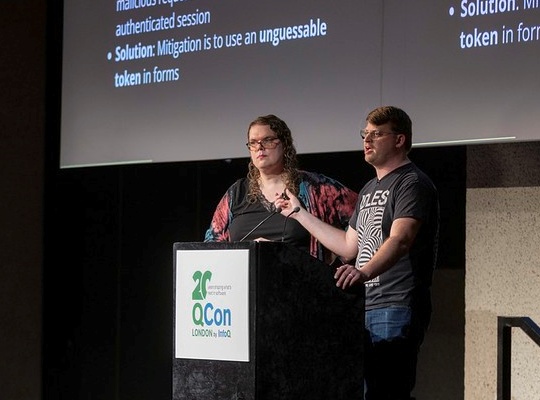
Build a Decentralized Web: Exploring Spritely’s Innovative Architecture
Spritely's architecture takes on decentralization's hardest problems with a clear-eyed focus on user agency. Christine Lemmer-Webber and David Thompson walk through capability-based access control via Goblins, actor-model communication through OCapN, and the trust-building role of petname systems. What stands out is how naturally Scheme, WebAssembly's Hoot, and local-first CRDTs fit together to support peer-to-peer apps without central servers. It's a thoughtful, practical design worth exploring. For broader context on decentralized tooling, our coverage of the Forrester function offers a useful parallel.

Architecting AI-Powered Mobile UIs: Speed, Delight, and Scalability
Latency can make or break a mobile AI experience, and Balakrishnan Ramdoss knows it. In his latest piece, he gets down to the practical work of architecting production-grade, AI-powered conversational apps. He breaks down how to tackle model response times head-on, using server-driven UI and Backend-for-Frontend patterns to render dynamic, multi-modal interfaces on the fly. It's a grounded look at optimizing prompts for UI selection and weaving in on-device AI for that privacy-first, low-latency edge.

Unlock Your Codebase: Explore AI-Powered Knowledge Graphs for Seamless Development
Multi-file reasoning has long been the silent killer of AI coding workflows. Graphify, launched in April 2026, tackles this head-on by turning codebases and unstructured data into queryable knowledge graphs. The recent parser upgrades and cross-file resolution improvements show real momentum, though community feedback rightly notes that daily integration still needs polish. We see promising architecture here, and we are watching closely. For more on how AI tools are reshaping developer expectations, check out our piece on navigating AI/ML job requirements.

Scale Sandboxes Instantly: A New Approach to Concurrent AI Workloads
Modal's staff engineers Colin Weld and Connor Adams didn't just tweak their sandbox setup; they rebuilt it from the ground up. The result is infrastructure that handles millions of concurrent sandboxes and tens of thousands of creations per second. That's the kind of scale that makes concurrent AI workloads feel almost routine. It's a smart, grounded look at what it takes to move past legacy limits. For more on practical AI adoption, our guide to unlocking ChatGPT for work is worth a look.

Scale Your SaaS Edge with Modular Cloudflare Workers
A single monolithic edge worker may feel manageable until your multi-tenant SaaS grows, and then every deployment becomes a shared risk. Chintan Tank tackles this head-on, presenting a modular Cloudflare Workers architecture that uses service bindings to isolate functions. His worked example on image optimization shows per-tenant format negotiation and device-aware sizing in action. It's a practical, forward-looking approach that also addresses multi-CDN differences and staged releases.
Streamline AI Projects: Balancing Research, Work, and Personal Pursuits
Balancing research, a new corporate role, and personal projects is a lot, and the anxiety that comes with it is completely understandable. You are not alone in feeling that the advice out there is jumbled. Instead of chasing every new model, start by mapping each tool to a specific stage in your workflow. For deep ideation, your current GPT subscription is a solid anchor. For coding and architecture, Claude's models often excel.

Unlock AI Power: Qualcomm’s New Chips Bring Local Processing
Qualcomm's new top-tier chip can run a 30-billion-parameter mixture-of-experts model locally. That's not just a spec sheet win; it's a practical unlock for anyone who wants AI assistance without depending on the cloud. Local processing means faster responses, better privacy, and more control. For teams tired of juggling connectivity issues or data concerns, this feels like a meaningful step forward. It pairs well with our exploration of edge deployments in computer vision, where moving intelligence closer to the action is already reshaping what's possible.
AI in Fintech & Healthcare: Understanding Data Flow and Security
A software engineer at a large fintech company raises a question that should give every data professional pause: if AI systems connect directly to sensitive production data, how do you keep that information from leaking into the cloud? And when it does leave, what happens to PII over time? This is the right question to ask. A single slip might seem harmless, but two years of accumulated data becomes a tempting target. The risk isn't hypothetical. It's architectural.

Build Scalable Products with Less: Engineering Lessons from Startups
Scaling a product doesn't have to mean scaling complexity. In his latest talk, David Gudeman draws on over a decade of startup experience to show how pairing GCP, Firebase, and Cloud Run can accelerate product-market fit without overwhelming your team. He gets practical fast: cut redundant frontend state, design event-driven backends, and keep DevOps lean while building for the long haul. It's a grounded playbook for teams who want to move smarter, not harder.

Unlock Advanced RAG: 6 Architectures for Semantic Search & LLMs
Basic graph retrieval only gets you so far. This guide walks through six production-oriented architectures that pair semantic search with knowledge graphs and LLM reasoning, giving practitioners a practical route beyond simple vector lookups. It's a grounded, no-nonsense read for teams ready to move past toy demos. For a deeper look at how LLMs handle structure internally, pair it with our piece on paragraph structure and token space. The ideas complement each other well.