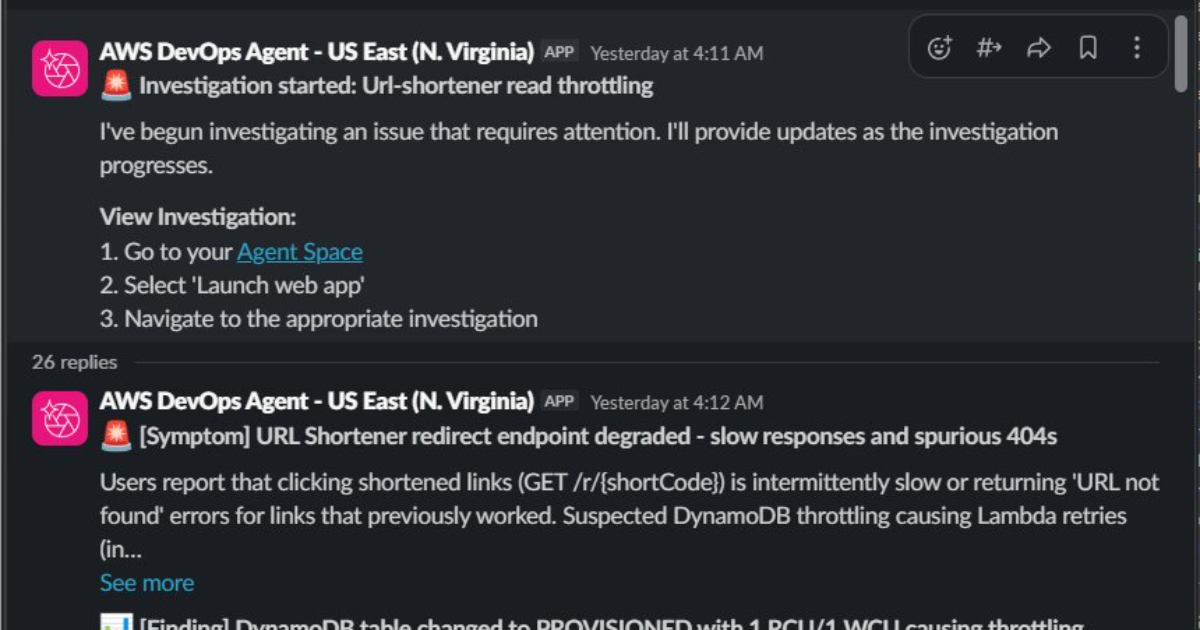
The general availability of AWS DevOps Agent is a meaningful step toward making incident response less reactive and more deliberate. For teams who have spent late nights digging through logs or manually correlating deployment timelines, the promise of an AI-driven assistant that can troubleshoot, analyze, and automate across AWS environments is not just convenient; it is a practical answer to a very real operational burden.
What stands out here is the focus on the operator's actual workflow. AWS is not asking teams to adopt a flashy new dashboard or rewrite their entire stack. Instead, the agent is designed to sit inside the environments they already manage, helping them trace a failed deployment to its root cause or surface the context needed to resolve an issue faster. That is the kind of incremental but transformative change that matters in production. It does not replace the judgment of a skilled engineer; it shortens the distance between noticing a problem and understanding it. For teams drowning in alerts or struggling with the sheer volume of telemetry, that compression of time is where the real value lives.
There is also a subtle but important signal in how AWS frames this tool. It is not positioned as a replacement for expertise, but as a layer that makes expertise more effective. The agent automates operational tasks, which means it can handle the repetitive, pattern-based work that often consumes the first hour of an incident. That leaves the human to focus on the parts that genuinely require context, judgment, and cross-system reasoning. This is a sensible division of labor, and it suggests a mature understanding of how AI should fit into complex infrastructure work. It is not about removing the human from the loop; it is about making the loop less chaotic.
For teams evaluating this, the practical takeaway is straightforward: start with a narrow, high-frequency use case. Let the agent help you analyze a recent deployment or walk through a known failure mode. Measure how much faster your team can reach a diagnosis. The tool will not eliminate incidents, and it should not be expected to. But if it can reduce the time spent on manual correlation and routine investigation, it earns its place in the workflow. That is the standard that matters, and it is one worth holding AWS to as this capability evolves.