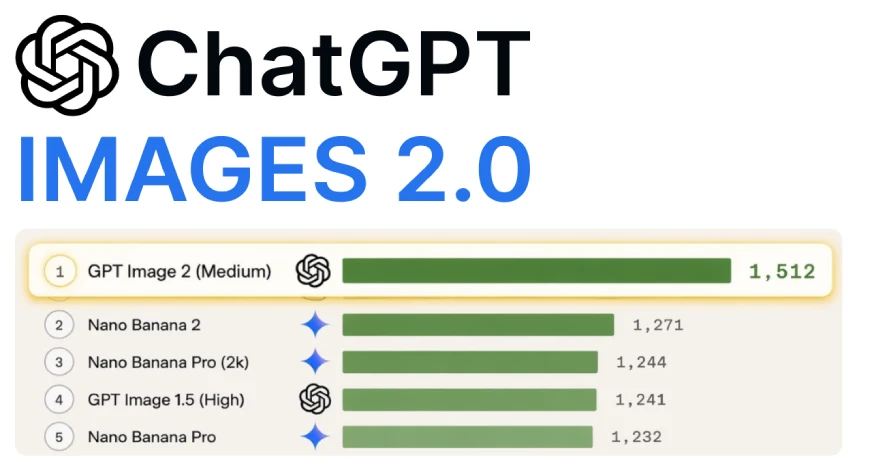
The competition in AI image generation has become a relentless cycle of one-upmanship, and the release of OpenAI's ChatGPT Images 2.0, powered by gpt-image-2, represents the next logical step in that progression. Google's Nano Banana set the bar in mid-2025, topping benchmarks and defining a new standard for quality. Now OpenAI has answered, and the real question is what this means for how you work, not just which model wins a leaderboard.
For anyone who has spent time wrestling with image generation tools, the pattern is familiar. A model arrives, it impresses, and then another one surpasses it within months. This churn can be exhausting, but it also signals genuine progress. What matters to us, and what should matter to you, is how these advances translate into practical outcomes. OpenAI's gpt-image-2 is not simply a faster or sharper engine. It is a demonstration that the pace of improvement has not slowed, and that the tools available to you today are significantly more capable than they were even a year ago. The gap between what you imagine and what you can produce is narrowing.
This is not about claiming supremacy or declaring a winner. That kind of framing misses the point. The value lies in how these models empower your process. If you are a designer, a marketer, or a researcher who relies on visual assets, the arrival of gpt-image-2 means you have access to a tool that can produce higher quality results with less iteration. The benchmarks are useful for comparison, but the real test is whether the output meets your needs without requiring excessive prompt engineering or post-processing. That is the standard worth tracking.
OpenAI has released this model, and within hours the conversation shifted from "what is possible" to "what is possible now." That shift is the signal to watch. Google's Nano Banana set a high watermark, and gpt-image-2 appears to have matched or exceeded it. You should explore what it can do in your own workflow, because the best way to evaluate a tool is to use it. The headline question is whether this is the best model. Our take is simpler: it is the model that raises expectations for everyone else, and that is what keeps this space moving forward.