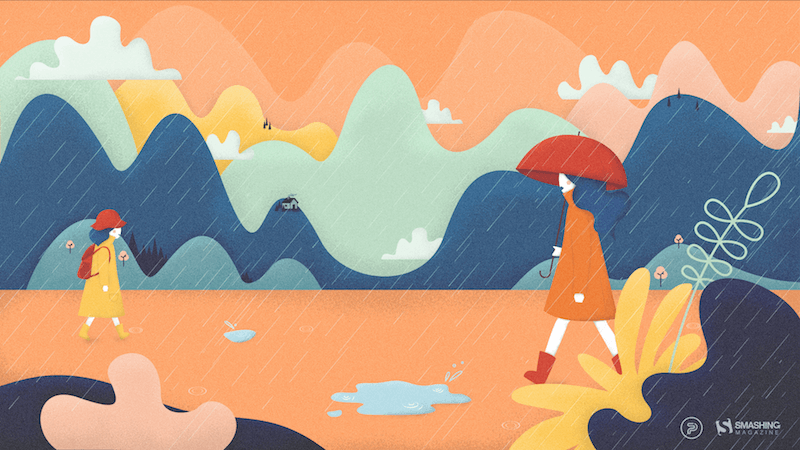
Every September, the familiar ritual returns: a fresh batch of desktop wallpapers, and with it, a quiet invitation to reset your digital space. For over fifteen years, this monthly series has given creatives a rare luxury: a canvas with no stakeholder, no client, no brief beyond their own imagination. That longevity is worth pausing on. In an industry that churns through trends with alarming speed, a simple, open-ended creative challenge has remained relevant because it taps into something more durable than novelty. It asks for exploration, not perfection.
The contrast with the broader tech landscape is striking. Around the same time this collection lands, we are seeing AI push into deeply personal spaces. YouTube Music Embraces Conversational AI now lets you describe a mood and have a playlist built around it. Meta's Muse AI Assistant Draws Inspiration from OpenClaw suggests a future where even creative tools carry an AI copilot. And in a more surreal development, an AI-powered fashion show drew mixed reactions at Vogue World, proving that automation in creative fields remains a polarizing spectator sport. These stories share a common thread: they place technology at the center of the creative act. The wallpaper series does the opposite. It places the human at the center, with technology as a blank page.
That is not a rejection of progress. It is a reminder of what progress is for. When you strip away the algorithms and the automation, the question becomes whether the tool serves the maker or replaces them. The wallpapers series offers a quiet answer. It has survived fifteen years not because it is flashy, but because it is honest. It gives people room to experiment, to make something that reflects their own style without the pressure of commercial viability. In a world where AI is increasingly framed as a collaborator or a competitor, there is something refreshingly analog about a desktop wallpaper that exists purely because someone wanted to make it.
If a reader asked us whether this tradition still matters, our answer would be direct: more than ever. The practical takeaway is not about the wallpapers themselves, but about the habit they model. Carve out space for unconstrained creative work, even if it is small, even if it is just a single image for your own screen. That habit keeps your skills sharp and your perspective your own. As AI tools get better at generating polished outputs on demand, the ability to generate your own ideas becomes the differentiator. The value is not in the output. It is in the act of making. Watch how the next wave of AI tools handles that. They may generate the image, but they cannot generate the joy of the decision that led to it. That still belongs to you.