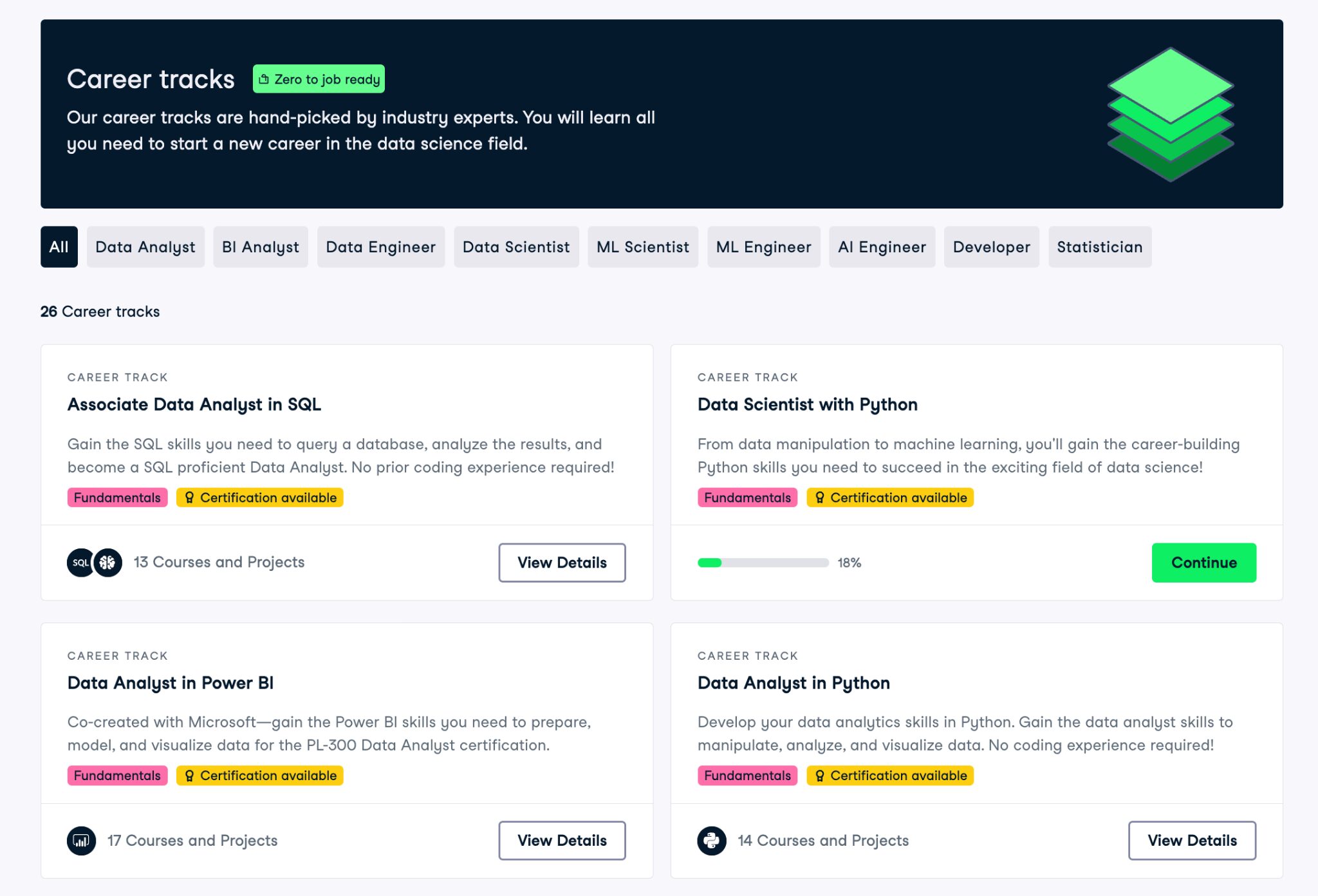
Choosing an online platform for learning data skills should feel like an opportunity, not a compromise. DataCamp has earned its reputation with solid ratings and a low barrier to entry, but that doesn't mean it's the only path worth considering. The real question isn't whether DataCamp is good, it's whether it fits how you actually learn.
DataCamp's strength is its accessibility. You can start a course in your browser without installing anything, and the price point is reasonable compared to a full bootcamp. For someone who wants a structured, guided introduction to data analysis or programming, that convenience matters. But convenience is not the same as effectiveness. A platform that works for one learner may feel restrictive to another, especially if you prefer building projects, going deeper into theory, or working at a more variable pace. The ratings and reviews tell you that DataCamp delivers on its promise, but they don't tell you whether that promise matches your personal workflow.
What this means in practical terms is that you should evaluate platforms based on how they map to your habits, not just their popularity. If you learn best by doing small, interactive exercises with immediate feedback, DataCamp's browser-based model is a strong option. If you need to pause frequently, revisit concepts, or work offline, you might find a different tool more accommodating. The best platform is the one you'll actually stick with, not the one with the highest aggregate score. That's a decision only you can make, but it helps to know what criteria matter most before you commit.
Ultimately, your choice should come down to what keeps you engaged and moving forward. DataCamp has proven it can get people started, but starting is only the first step. Look for a platform that respects your time, adapts to your pace, and lets you learn without friction. The right fit isn't the one with the most endorsements, it's the one that makes you want to open it tomorrow.