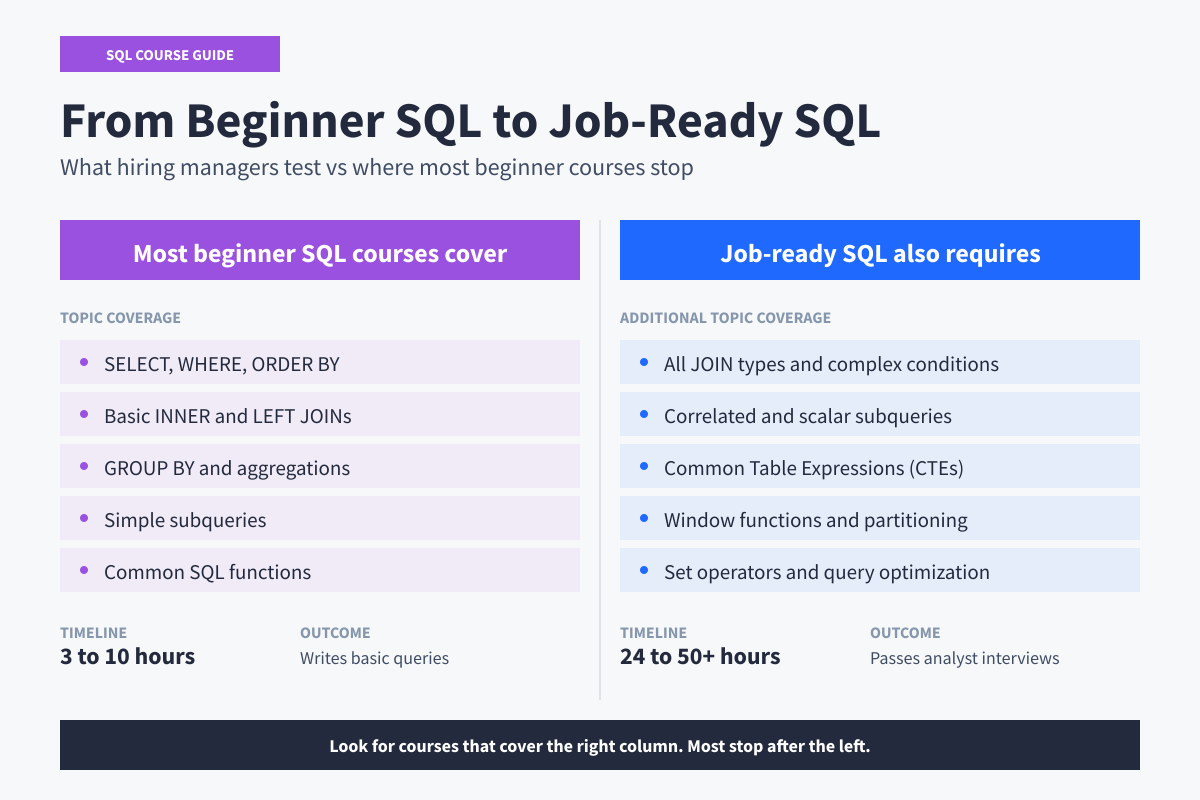
As we delve into the evolving landscape of SQL education, the recent article on the "Best SQL Courses in 2026" sheds light on a crucial issue: the inadequacy of many existing course recommendations. These lists often fall into one of two traps: they either provide superficial coverage that leaves learners stuck at basic concepts like GROUP BY or take a one-size-fits-all approach, ignoring the diverse needs of users at different stages of their careers. The SQL skills required by a complete beginner significantly differ from those needed by a working analyst or an engineer developing production systems. This misalignment can lead to frustration and a lack of engagement, which ultimately hampers the learning experience. For those interested in optimizing their spreadsheet skills, insights from articles like COUNTIF in named column without knowing the row number and That 5-minute task in Excel can further enhance their understanding of specific challenges faced during data manipulation.
An analysis of over 20 SQL courses underscores a significant gap in the educational resources available to prospective learners. Drawing on the experiences gained from teaching over 50,000 Dataquest learners, tailored courses can make a pronounced difference in learner outcomes. This focus on context-specific learning is paramount, especially in a field as intricate as SQL, where different roles require distinct skill sets. For instance, an analyst might need to master querying and reporting, while an engineer must prioritize performance and optimization when building production systems. Such differentiation is crucial, as it empowers learners to select courses that align with their immediate needs and long-term career aspirations.
This nuanced approach to SQL education is reflective of a broader trend in tech learning: the move towards personalized, outcome-oriented educational pathways. As organizations increasingly prioritize data-driven decision-making, the demand for proficient SQL users will continue to grow. A one-size-fits-all model not only risks alienating learners but also undermines the overall quality of education. Future SQL courses need to embrace this diversity in learning needs, ensuring that they cater to a wide range of users, from novices to seasoned professionals. Such an evolution would not only enhance learner engagement but also foster a more competent workforce capable of tackling complex data challenges.
Looking ahead, the question remains: how will educational institutions adapt to this demand for targeted SQL training? As the landscape of technology and data management evolves, there is an opportunity for educational platforms to innovate by offering modular courses that can be customized based on learners' specific roles and aspirations. This adaptability could very well define the future of SQL education, making it not just a matter of learning a skill but transforming one's approach to data management altogether. As we explore the potential for these personalized pathways, we must also consider how technology—particularly AI—can play a role in this transformation. Recent discussions around the shift from "Possible to Probable AI Models" in our publication highlight the significance of integrating advanced technologies into educational frameworks, further emphasizing the need for an agile, forward-looking approach to learning SQL and beyond.