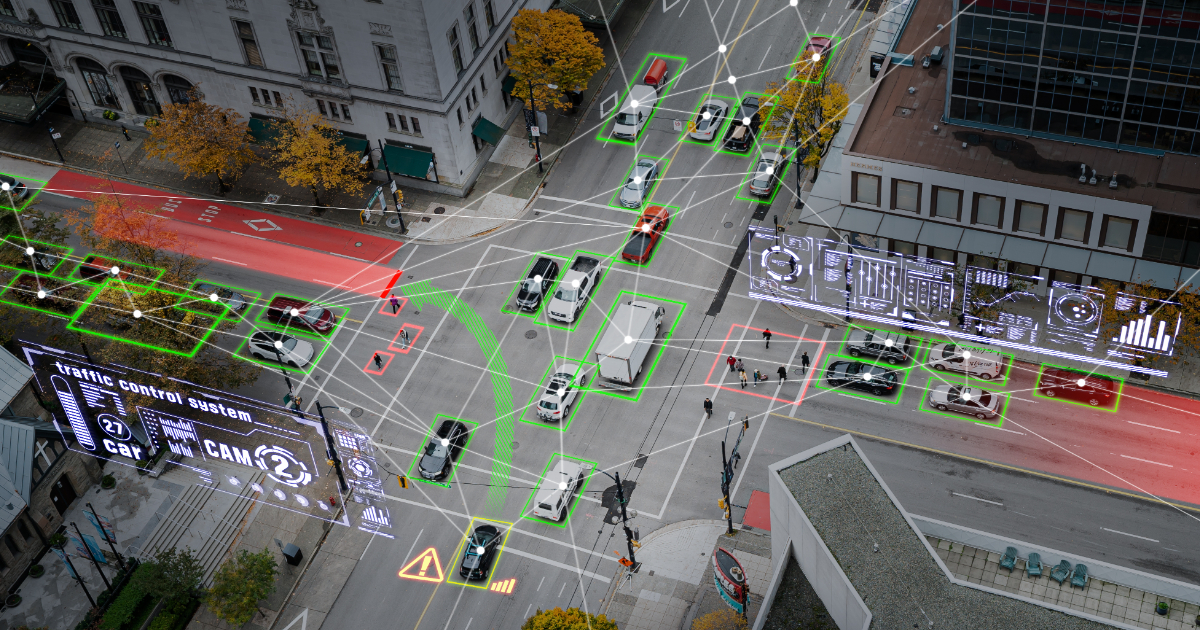
Avraam Tolmidis has written something rare: a technical deep dive into autonomous vehicle architecture that doesn't lose sight of the human outcome. His focus on context-aware sensor fusion and Model Predictive Control solvers is not just an academic exercise, it's a practical blueprint for turning raw sensor noise into safe, real-time decisions. We think that's exactly the kind of thinking the industry needs more of.
For readers who work with data pipelines or control systems, this offers a clear lens on where the bottlenecks actually live. Tolmidis doesn't pretend that autonomous driving is a solved problem. Instead, he walks through how optimization techniques can compress the gap between sensor input and control output. The takeaway is straightforward: if your system can't process sensor data fast enough to act on it, the safest command is the one that never arrives. His emphasis on context-aware fusion, adjusting how data from lidar, radar, and cameras is weighted depending on the driving environment, is a reminder that general-purpose solutions often fail when conditions change. A highway merge is not a school zone, and treating them the same way is a design flaw.
What we appreciate most is the focus on Model Predictive Control solvers. MPC is not new, but applying it under the real-time constraints of a moving vehicle is a different challenge than running it in simulation. Tolmidis makes the case that efficient solvers, tuned for the specific physics of the vehicle and the environment, can produce commands that are both safe and smooth. That matters because passengers don't just need to arrive, they need to feel that the ride is under control. Jerky steering or abrupt braking erodes trust faster than any spec sheet can restore it.
This doesn't promise a revolution. It describes an evolution: better algorithms, smarter sensor integration, and a relentless focus on latency. For teams building autonomous systems, the practical lesson is to invest in optimization that reduces the time between perception and action. For the rest of us, it's a quiet reassurance that the people designing these vehicles are thinking carefully about what "safe" really means, not as a marketing claim, but as a mathematical constraint. That is the kind of detail that deserves attention, not because it is flashy, but because it is true.