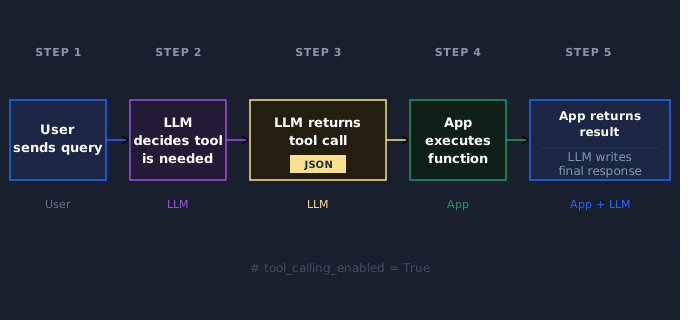
The advent of function calling in large language models (LLMs) represents a pivotal shift in how we can leverage AI for practical, real-world applications. Traditionally, while LLMs excel in generating human-like text and reasoning through complex prompts, they lack the ability to interact with external data sources or systems. They generate text without context from real-time data, which limits their utility in scenarios that require immediate information retrieval or specific actions. The introduction of function calling, which allows LLMs to connect with Python functions, bridges this gap and opens up a realm of possibilities for enhancing productivity and decision-making. For those interested in the evolving landscape of AI, this development resonates with themes discussed in our articles like [A legion of AI agents working in parallel. [R]](/post/a-legion-of-ai-agents-working-in-parallel-r-cmpr8el4w0usds0gl92wc6iq8) and [How Much of a Shortcut Are Connections in Top AI Lab Hiring for PhD grads? [D]](/post/how-much-of-a-shortcut-are-connections-in-top-ai-lab-hiring-cmpr8dyro0uqjs0glznhkvd6d).
Function calling enables LLMs to autonomously decide when to invoke specific functions, pass the necessary arguments, and interpret the results to produce more contextually relevant responses. This capability transforms LLMs from mere text generators into versatile tools capable of performing tasks such as database queries, weather checks, or customer record lookups. For instance, imagine a business application where an AI can not only draft an email but also provide real-time data from a customer database to inform the message. This functionality not only streamlines workflows but also enhances the accuracy and relevance of AI-generated content. As we continuously seek innovative solutions to improve productivity, the implications of function calling are profound, especially in sectors where timely data is crucial.
Moreover, the evolution of function calling illustrates a broader trend towards integrating AI with existing workflows and tools. It reflects an understanding that users are not just looking for advanced technologies but also for solutions that enhance their everyday tasks. By prioritizing a seamless connection between LLMs and real-world data, we create a more user-centered approach to AI deployment. This resonates strongly with our mission to empower users to explore transformative solutions without the complexities that often accompany advanced technology. It invites users to envision a future where AI enhances their capabilities rather than complicates them.
Looking ahead, the question becomes: how will this technology evolve and what additional tools will emerge as a result of this integration? As businesses and individuals begin to adopt LLMs capable of function calling, we can expect to see a surge in applications designed to harness this capability across various fields. From customer service to project management, the potential for AI to support and enhance human decision-making is immense. As we navigate this exciting landscape, it’s essential to remain vigilant about how these advancements will shape our work and lives. The future of AI is not just about what it can do, but how it can work alongside us to create more effective and meaningful outcomes.