GPT-5.6 Is Here: Sol, Terra, and Luna
Our take
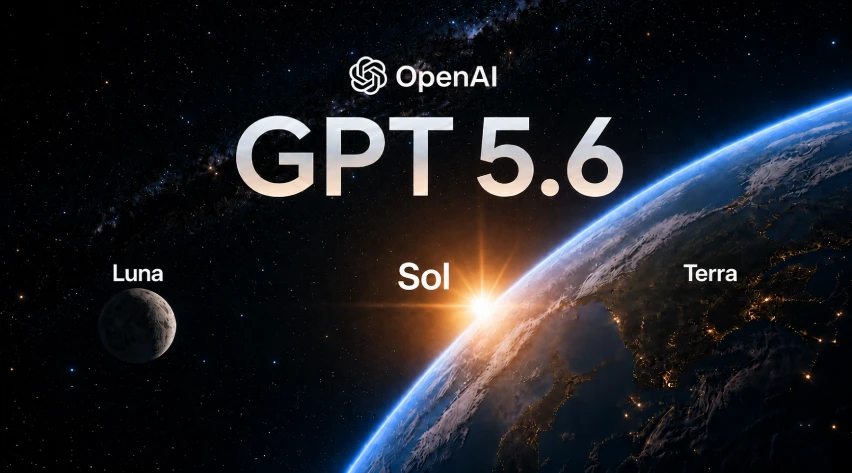
The sudden public release of GPT-5.6’s Sol, Terra, and Luna models marks a significant shift in the accessibility of advanced AI, a move that challenges existing norms and potentially reshapes how organizations approach data workflows. For twelve days, these models reportedly operated in a closed environment, accessible to a select few – a period of exclusivity that now seems to have concluded with a broad, subscription-free rollout. This echoes a trend toward democratization within the AI space, moving away from the walled gardens of proprietary models. It's a development that positions this release in direct contrast to the strategies of competitors like OpenAI, who recently launched their own family of models [OpenAI launches its new family of models with GPT-5.6], and highlights the increasing pressure to provide accessible and powerful AI tools to a wider audience. Furthermore, the reported underestimation of failure rates when utilizing multiple AI models [Enterprises using multiple AI models are underestimating failure rates by 2.25x] raises a crucial consideration: while increased accessibility is positive, the complexities of integrating and managing diverse models require careful architectural planning and robust testing.
The offering of three distinct models – Sol, Terra, and Luna – along with tiered pricing structures suggests a deliberate attempt to cater to varying user needs and budgets. This isn't simply about providing a single, monolithic AI solution; it's about offering a spectrum of capabilities, allowing users to select the model that best aligns with their specific tasks. The fact that Lyzr, an AI agent startup, leveraged its own AI agent to successfully manage its $100 million funding round [An AI agent startup just let its agent run its $100M fundraise] is particularly noteworthy. It demonstrates the potential for AI to not only enhance productivity but also to actively participate in core business functions like fundraising, signifying a deeper level of integration and reliance on AI-driven decision-making. This broad accessibility, coupled with diverse model options, could accelerate the adoption of AI across various industries, particularly for smaller businesses that previously faced significant barriers to entry.
The precedent set by this release is arguably more impactful than the immediate capabilities of the models themselves. By removing the subscription barrier, the developers are effectively inviting a massive wave of experimentation and feedback. This open access model can rapidly accelerate innovation, as a larger community of users can identify edge cases, refine prompts, and contribute to the ongoing development of the models. However, it also introduces new challenges related to security, misuse, and the potential for unintended consequences. While the initial hype around AI often focuses on transformative possibilities, the pragmatic reality involves navigating these complexities while ensuring responsible deployment. The simplicity of access shouldn’t overshadow the critical need for ethical considerations and robust safety protocols.
Looking ahead, the key question will be how this open approach impacts the competitive landscape and the evolution of AI development itself. Will other providers follow suit, further democratizing access to advanced AI models? Or will the pressure to monetize these powerful tools ultimately lead to a resurgence of subscription-based models? The success of GPT-5.6's public release will likely hinge on its performance, ease of integration, and the developer's ability to foster a thriving community around these models, while simultaneously addressing the inherent risks associated with widespread accessibility. It’s a pivotal moment, and the coming months will reveal whether this strategy proves to be a sustainable and scalable model for the future of AI.
For twelve days, the best AI models on the planet existed and almost nobody could touch them. That ends now! GPT-5.6 Sol, Terra, and Luna go public today! The models are accessible by all users (no subscription required) This is the full breakdown of what’s on offer: three models, four prices, one precedent, and a […]
The post GPT-5.6 Is Here: Sol, Terra, and Luna appeared first on Analytics Vidhya.
Read on the original site
Open the publisher's page for the full experience