Graph Neural Networks: GCN, MPNN, and GAT, Explained Simply
Our take
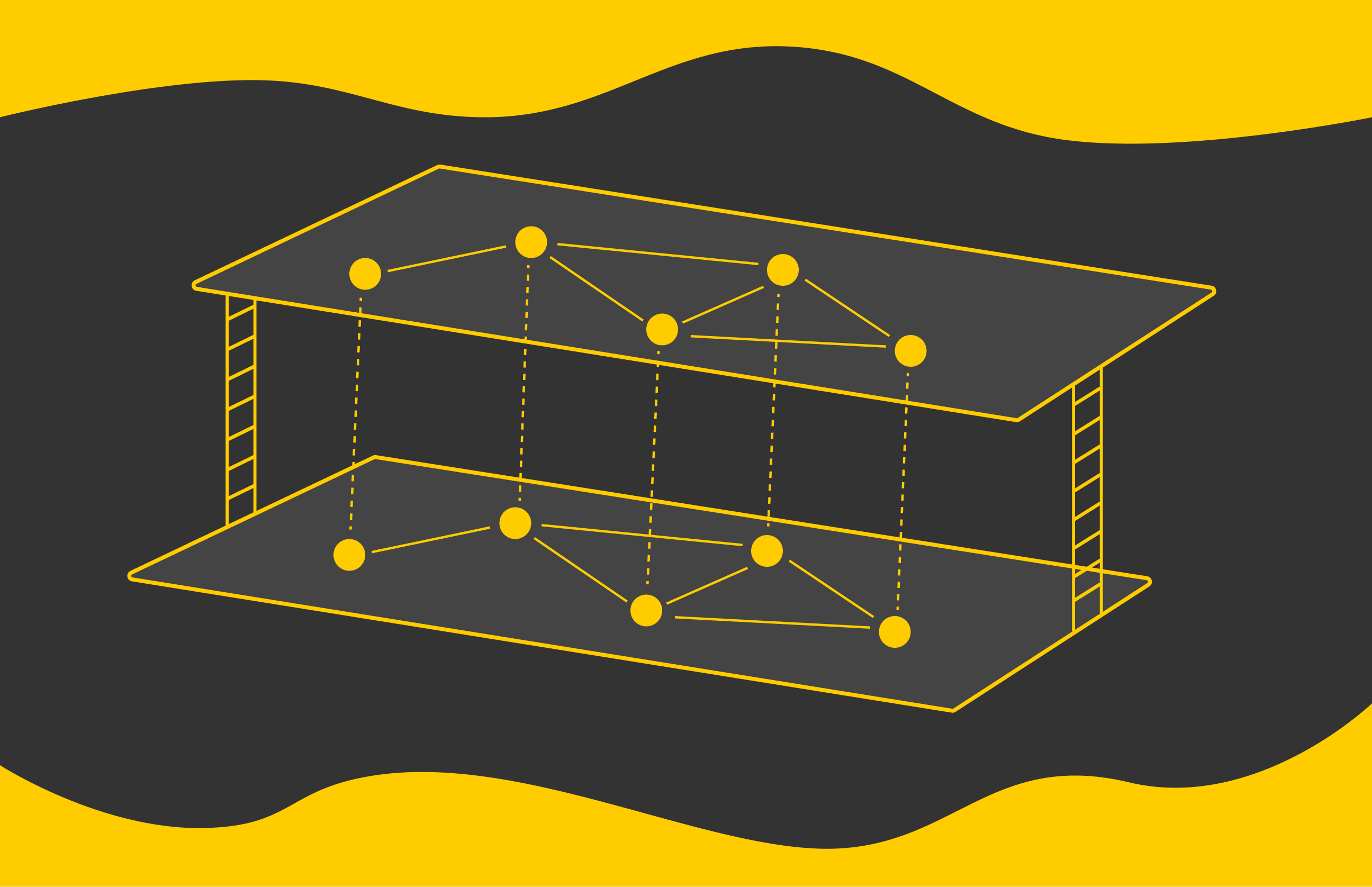
The recent Towards Data Science piece, "Graph Neural Networks: GCN, MPNN, and GAT, Explained Simply," provides a valuable visual guide to a rapidly evolving area of AI. While the underlying mathematics can be daunting, this article successfully demystifies the core concepts of Graph Convolutional Networks (GCNs), Message Passing Neural Networks (MPNNs), and Graph Attention Networks (GATs). It’s a critical development because it lowers the barrier to entry for data professionals seeking to leverage the power of graph-based machine learning, a space increasingly relevant as the complexity of data relationships grows. As we’ve highlighted in our own exploration of Enterprise Document Intelligence [A RAG That Says “Not in This Document” Has to Show Four Kinds of Evidence], the ability to understand and reason about relationships within data is paramount to building truly intelligent systems. Similarly, the challenges of avoiding Entity Key Drift in a Data Lake [Avoiding Entity Key Drift in a Data Lake: Step 2, When Fuzzy Matching Stops Working] underscore the need for robust data models that can account for evolving connections and dependencies.
The beauty of graph neural networks lies in their ability to move beyond the limitations of traditional tabular data analysis. Instead of treating data points as isolated entities, GNNs explicitly model the connections *between* those points, unlocking insights that would otherwise remain hidden. The article’s visual explanations are particularly effective in illustrating the message-passing process, where nodes exchange information with their neighbors to iteratively refine their representations. This contrasts sharply with the approaches of many legacy spreadsheet tools, which often struggle to handle complex, interconnected datasets. The emergence of accessible explanations like this one is a positive sign, suggesting that the power of GNNs will soon be within reach of a wider audience, allowing them to tackle problems in areas like social network analysis, drug discovery, and fraud detection with greater precision. Furthermore, the inherent difficulty of AI detection [Pangram’s Max Spero on why AI detection is harder than ‘Real or Fake’] highlights the need for increasingly sophisticated methods to understand data provenance and relationships, an area where graph neural networks can potentially play a significant role.
The distinction between GCNs, MPNNs, and GATs, as clearly outlined in the article, is important. GCNs provide a foundational understanding of graph convolution, while MPNNs offer a more general framework that encompasses various message-passing schemes. GATs introduce the concept of attention, allowing nodes to selectively focus on the most relevant neighbors, leading to improved performance in many cases. This nuanced exploration is essential for practitioners looking to choose the right tool for a specific task. The simplicity of the visual guide shouldn't be mistaken for a lack of depth; it’s a testament to the author’s ability to distill complex ideas into digestible formats. This clarity is crucial for fostering wider adoption and accelerating innovation within the field.
Looking ahead, the convergence of graph neural networks with other AI techniques, such as large language models, presents exciting possibilities. Imagine being able to not only understand the structure of a knowledge graph but also reason about the information contained within it, leveraging the power of natural language processing. This integration could unlock new levels of data understanding and enable the creation of truly intelligent systems that can adapt and learn from evolving relationships. The question now becomes: how can we design user interfaces and workflows that make these powerful tools accessible and intuitive for data professionals across a range of skill levels, ensuring that the transformative potential of graph-based AI is realized?
A visual guide to how graph neural networks work under the hood
The post Graph Neural Networks: GCN, MPNN, and GAT, Explained Simply appeared first on Towards Data Science.
Read on the original site
Open the publisher's page for the full experience