workflow automation
270 stories filed under workflow automation on Beyond Market Intelligence. The newest of them: “Explore Claude Haiku 5.5's faster workflows and 90% lower costs”, “From reactive fixes to self-healing data: inside Netflix's observability knowledge graph”, and “AI Claims Handling Finds Its Balance Between Automation and Human Insight”. Claude Haiku 5.5 slashes list prices by 90% while adding adaptive thinking and a 1M token context window. Netflix processes 38 million events per second, and its engineers were tired of playing catch-up. Acme AI is the next-generation, AI-powered spreadsheet platform built to replace Excel and redefine how analysts, data scientists, and enterprise teams work… The list below is every workflow automation story on Beyond Market Intelligence, newest first.
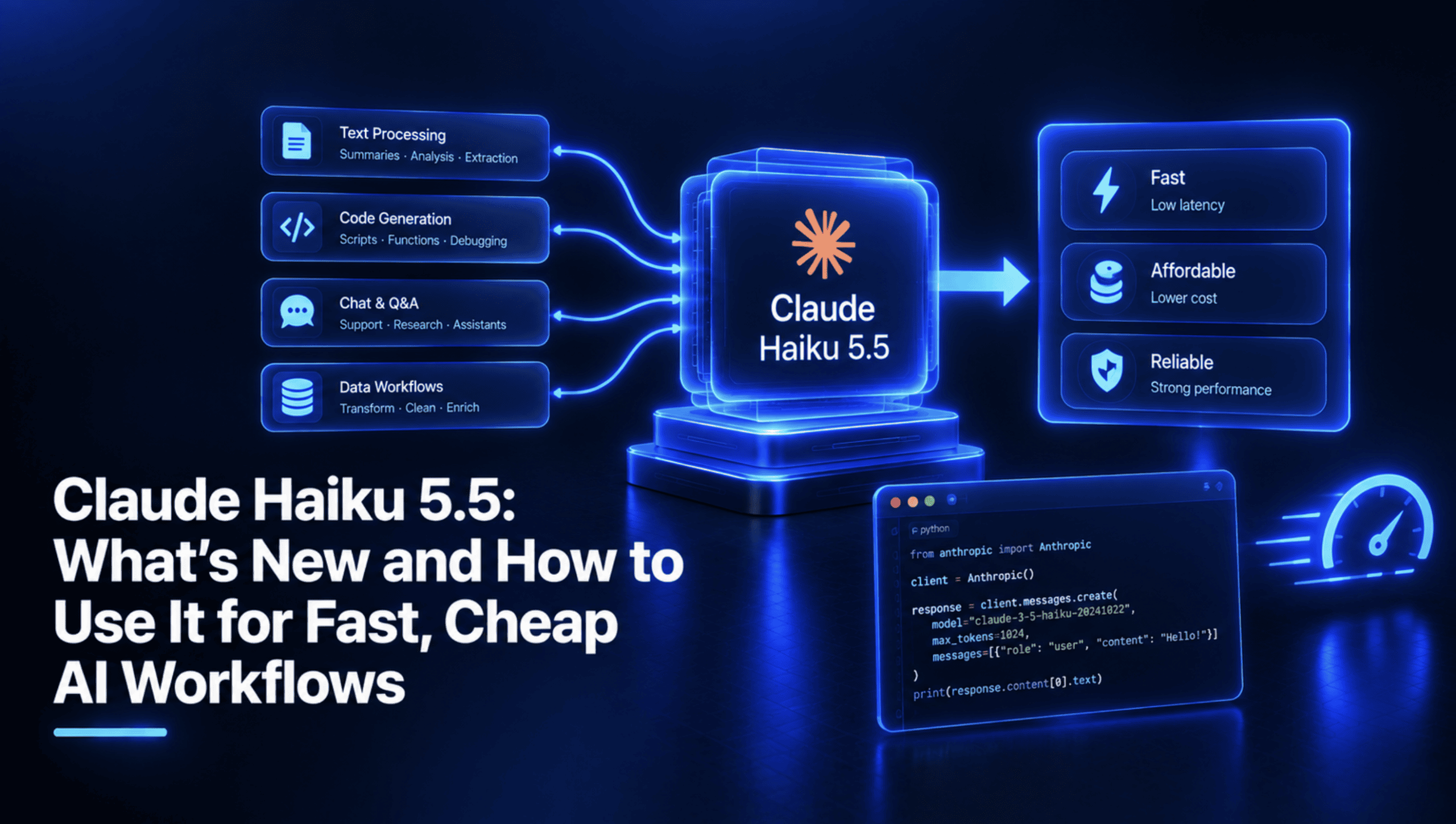
Explore Claude Haiku 5.5's faster workflows and 90% lower costs
Claude Haiku 5.5 slashes list prices by 90% while adding adaptive thinking and a 1M token context window. That's a dramatic leap from Haiku 4.5, making classification, extraction, and sub-agent workflows far more accessible in Python. Faster workflows at a fraction of the cost invite real experimentation. For deeper context on how AI agents learn from weaknesses, explore our coverage of Google's EnvHarness research.
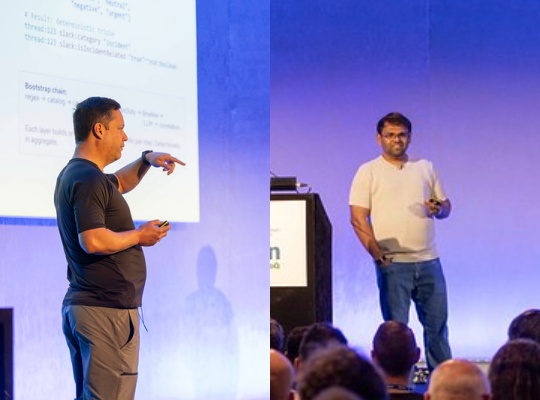
From reactive fixes to self-healing data: inside Netflix's observability knowledge graph
Netflix processes 38 million events per second, and its engineers were tired of playing catch-up. Prasanna Vijayanathan and Renzo Sanchez-Silva share how the company replaced reactive monitoring with an AI-driven operational ontology, using Claude and graph databases to unify MELT telemetry into queryable knowledge. The result is automated triaging, root-cause analysis, and systems that heal themselves. It is a practical, human-centered shift toward data that works for you.
AI Claims Handling Finds Its Balance Between Automation and Human Insight
The real tension in AI claims handling isn't between speed and accuracy, it's between automation and the human judgment that only experience brings. Getting that balance right means building systems that learn from domain experts, not just from raw data. Our piece on how to "Build an AI Agent That Captures Real Expertise, Not Just Data" explores that exact challenge. When claims processing moves too fast, trust erodes. When it moves too slow, costs climb. The solution is smarter, more intentional design.
Turn repetitive setup tasks into simple slash commands with Claude Code
Repetitive setup tasks are the quiet killers of a developer's flow. Spinning up projects, running checklists, or typing the same instructions into Claude again and again eats time that should go to real work. Claude Code's slash commands tackle this head-on, pairing built-in options with custom commands you define for your own workflows. It's a practical, human-centered way to cut friction. For more on automating workflows, our piece on OpenAI's autonomous agent offers a useful contrast.
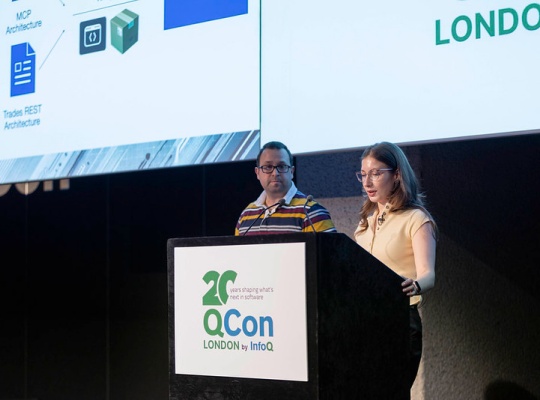
Scale AI Workflows: Modernizing APIs with Architecture as Code
Morgan Stanley is using Architecture as Code with CALM to modernize its API program, and the approach is worth your attention. Jim Gough and Andreea Niculcea show how integrating Model Context Protocol and Agent-to-Agent communications, paired with automated governance through deployment gates, makes scaling enterprise AI feel deliberate rather than chaotic. The zero-downtime upgrades are a practical win. If you are exploring how AI reshapes infrastructure, this pairs well with our piece on real-world computer vision deployments.
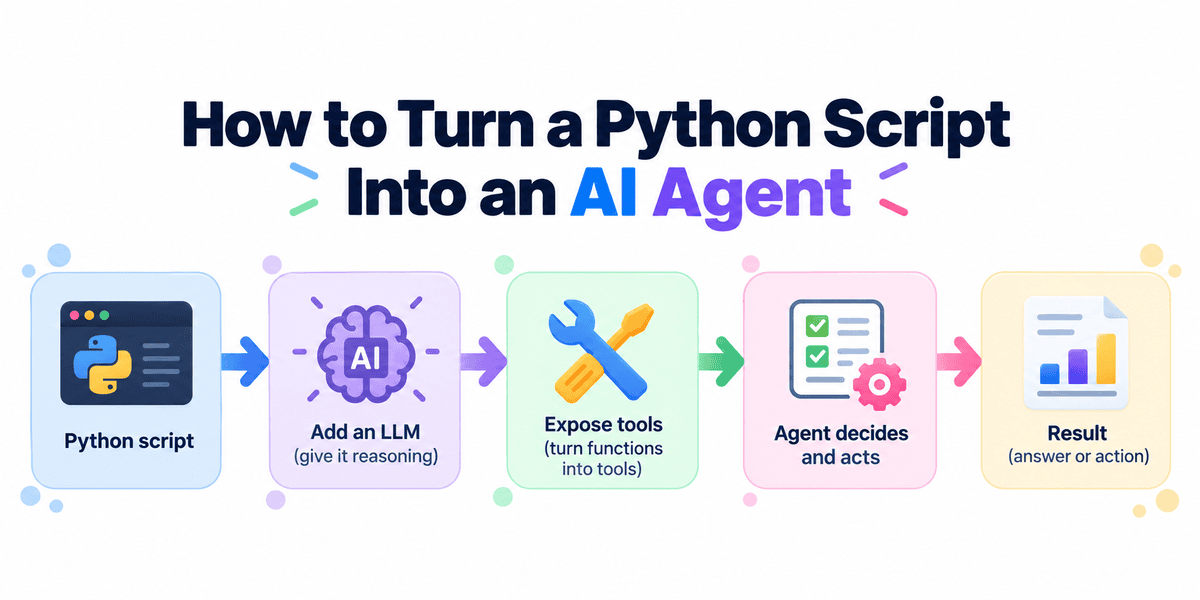
Automate Workflows: Build an AI Agent with Python and OpenAI
Spreadsheets were never meant to hold entire workflows hostage. If you are tired of stitching together scripts and manual triggers, this guide shows you how to build a Python AI agent using the OpenAI Agents SDK. Tool calling and function tools let you automate multi-step processes without the usual complexity. It is a practical, empowering approach. For a broader view on modernizing how systems connect, Jim Gough and Andreea Niculcea's piece on Morgan Stanley's Architecture as Code is worth exploring next.
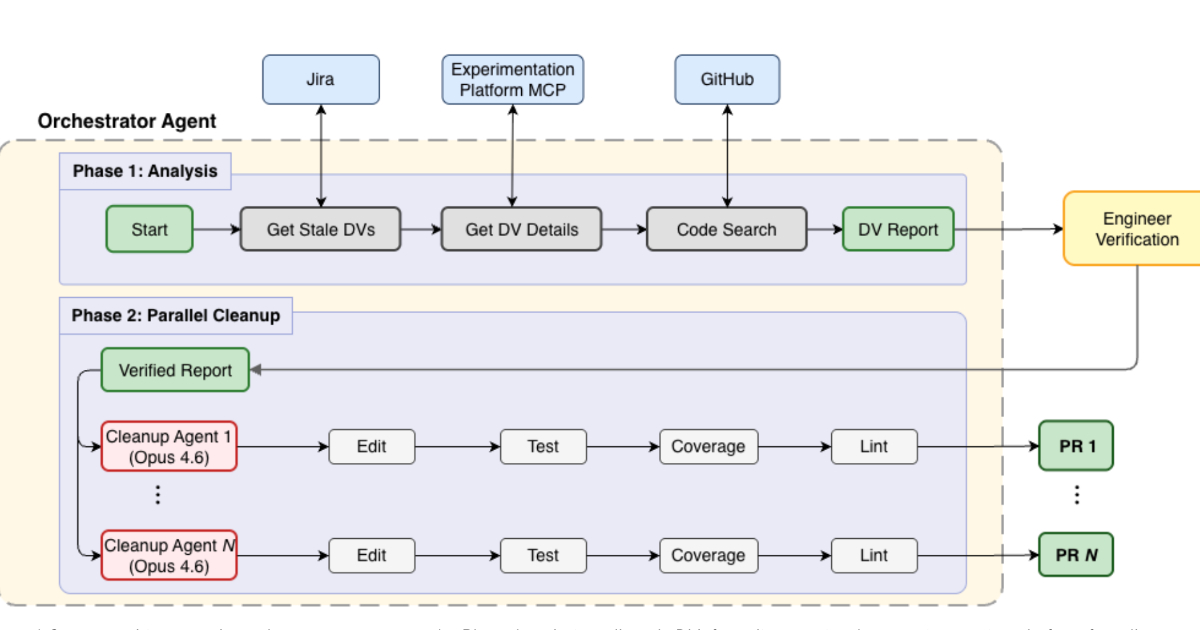
Automating Feature Flag Cleanup: DoorDash Leverages AI for Efficiency
DoorDash's multi-agent LLM system tackles a notoriously tedious job: cleaning up stale feature flags across 60,000 of them and 623 repositories. The workflow pairs live experimentation data with engineer approval and isolated Git worktrees, then lets parallel agents handle validation. In a 50-flag evaluation, 45 produced usable pull requests, averaging 13.8 minutes and $4.79 per cleanup. That's practical efficiency, not hype. For teams wrestling with similar API modernization challenges, Morgan Stanley's approach in "Scale AI Workflows" offers a useful counterpoint.

Build an AI Agent That Captures Real Expertise, Not Just Data
Meta's approach to AI agents shifts the focus from retrieving information to embedding the logic of domain experts themselves. By designing an "organizational second brain" for compliance, Meta shows how an agent can capture decision-making processes, not just documents. That distinction matters. It suggests a path toward systems that truly think alongside us in fields like security and finance. For a deeper look at how conversational agents are evolving, our related coverage in "Meta's Muse AI Agent Gains Ground in Conversational Performance" is worth exploring.

Designing for intent, not clicks, in the age of invisible AI
The button is dying, and that's not a loss; it's a release. As the web sheds menus and forms, the real work shifts to designing for intent, not clicks. For UX designers, this means stepping back from visible controls and learning to guide transparent, AI-driven experiences. It's a harder, more human craft. If you're tracking how voice and disclosure fit into this shift, our piece on ElevenLabs CEO and transparency pairs well with this conversation. Explore that tension; it's where the next interface begins.

Simulation-Driven Testing Turns AI Agents from Demo to Production Reality
Most AI agents never leave the demo room. Zhou Yu sees that bottleneck clearly, and she's addressing it head-on with simulation-driven testing that tackles compliance and reliability before deployment. Her work with Columbia and Arklex AI uses synthetic user personas and trajectory entropy to stress-test multi-turn agents, catching edge cases that typically slip through. It's practical, human-centered engineering. For a deeper look at how AI moves beyond the lab, explore our related piece on unlocking enterprise potential.

See how forward-deployed engineering turns enterprise AI into lasting value.
Forward-deployed engineering is where enterprise AI actually learns. The pitch is familiar: an engineer on-site, a workflow encoded in weeks, a demo that works on real data. The real test comes later. Does the next deployment start with more product and fewer unknowns, or just another services team? We see FDE as a disciplined learning loop. Every engagement should leave behind reusable capability, not just a satisfied customer. That compounding is what separates a product that understands from a company that simply delivers.

Autumn's first AI release brings Claude Fable 5.1 with smarter, cheaper caching.
Anthropic is redefining what an enterprise model should be. Claude Fable 5.1 arrives with a 75% cut to cached-read costs, making sustained, multi-hour agents dramatically more economical to run. It's not just another benchmark jump, it's a deliberate shift toward work that doesn't finish in one prompt. Combined with Enterprise Frontier Safeguards, which keep monitoring data in your own cloud, this release tackles capability, cost, and control as a single, unified problem. Explore what persistent, governable AI can actually do.

Unify workforce planning to see how people drive business outcomes
Most organizations still plan workforce decisions in silos, HR tracking skills, finance owning headcount costs, procurement managing contractors, while executives struggle to connect those pieces to real business outcomes. SAP's research sharpens the stakes: 62% of C-suite leaders are dissatisfied with integration, and only 21% plan for AI's impact on job design. That gap isn't a data problem; it's a governance one. CFOs and CHROs must align on shared metrics, or they'll keep steering blind.

OpenClaw 2.0 brings collaborative AI agents to your everyday messaging apps
OpenClaw 2.0 marks a deliberate shift from personal agent harness to shared enterprise infrastructure. The update introduces multiplayer sessions, a rebuilt browser interface, and granular security controls, moving the platform closer to a deployable organizational layer rather than a developer-only tool. While isolation defaults still require deliberate configuration, the expanded permissions, sandboxing, and auditing capabilities give enterprises a credible path forward.

DoorDash Shows How Cloud Agents Can Run 130,000 Engineering Tasks
DoorDash moved engineering agent workloads off developer laptops and onto Flux, its cloud platform, completing 130,000 tasks in a single month. That scale is hard to ignore, especially with over 25,000 automated code reviews happening weekly. The secret lies in isolated Firecracker microVMs, an MCP gateway, and reusable playbooks that keep access scoped and auditable. It's a practical shift toward centralized control. For teams exploring similar workflow automation, our piece on building an AI agent with Python and OpenAI offers a useful starting point.

Empower autonomous agents with a clear identity before they act
AI agents are entering the enterprise workforce, and they need their own identity before they ever reach a gateway. Authentication alone won't cut it anymore. Once an agent starts reasoning, invoking tools, and coordinating across systems, the real question shifts from "Who are you?" to "What are you actually doing?" Runtime trust is the new security mindset, continuously validating behavior during execution. It's a practical evolution, and for deeper groundwork, our guide to distributed training algorithms offers useful context on the underlying systems.

Connecting AI agents without redesigning your CX architecture creates new challenges.
Enterprises are racing to deploy AI agents across every channel, but most are discovering a hard truth: bolting conversational AI onto legacy systems doesn't create a connected experience. It creates new silos. Gaurav Anand of Tata Communications argues the real bottleneck isn't intelligence, but orchestration. The next competitive edge belongs to organizations that can coordinate AI, people, and data through a shared context layer. That's where the work of building truly frictionless customer journeys begins.

Explore how Cloudflare OS transforms enterprise workflows with grounded AI and open tools
Cloudflare OS takes a different path by open-sourcing an AI platform built on a capability-based model, letting enterprise teams produce work artifacts grounded in their own knowledge and connectors. It automates repetitive workflows with an eye on token costs, using AI assistance only where needed, and supports building personal, shareable work software within a secure sandbox. That is a practical, human-centered approach to complex use cases. For more on scaling such efforts, our piece on modernizing APIs with architecture as code offers a useful parallel.

Empowering AI agents means knowing when to limit their autonomy.
The race to deploy the most autonomous agent is over. Enterprises winning with AI agents are now limiting how much those agents can do alone, because full autonomy breaks down in production. The companies that benefit won't be the ones with the most flexibility, but the ones creating agents with specific responsibilities and clear rules. Capability is outrunning control, and the 2026-to-2027 race is a trust race. For more on building these systems, explore our piece on orchestrating AI agents.
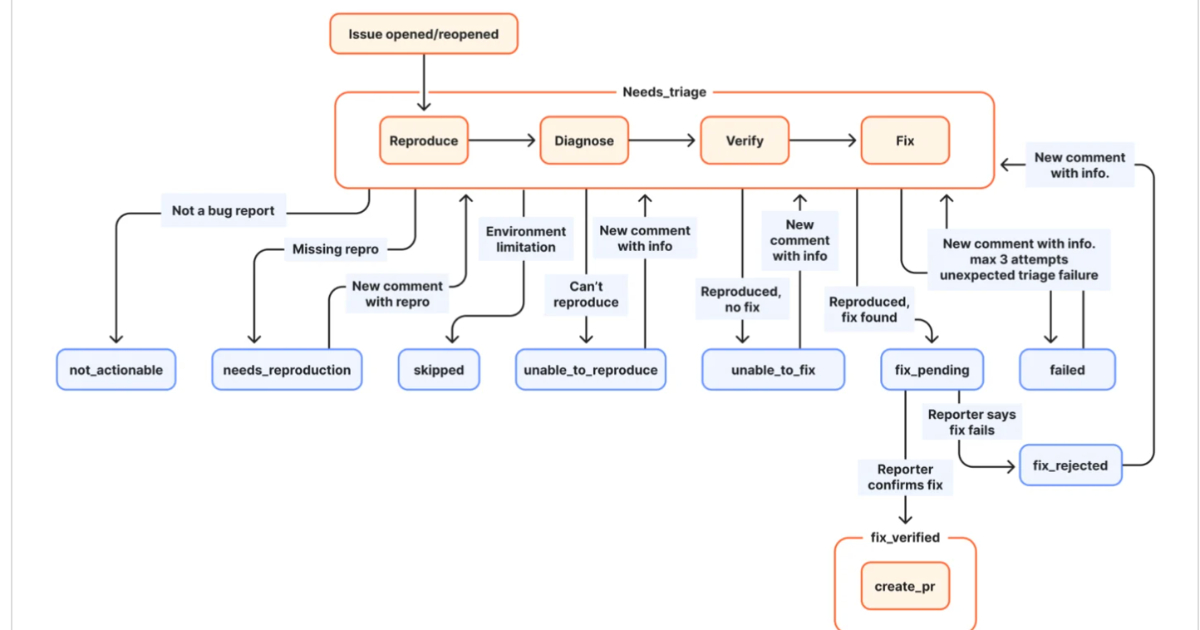
How AI agents triaged 85% of Astro's GitHub issues for Cloudflare
Astro's maintainers were drowning in GitHub issues, so they let AI agents take over triage. The result: an 85% cut in that workload, giving developers time back to focus on the work that matters. This isn't about removing humans; it's about making their role more meaningful. Cloudflare's approach, built on Workers with a human-in-the-loop, shows how agentic workflows can handle the noise. It's a practical win for open source, and it pairs well with our guide on distributed training algorithms.
Slack Code brings AI coding agents into team conversations
Slack is betting that the future of AI coding isn't a lone developer in a terminal, but a team watching the work happen in the open. With Slack Code, agents like Claude and Devin move into dedicated channels where anyone can steer, review, or contribute, turning software creation into a multiplayer sport. It's a smart, human-centered shift. For a deeper look at how teams are rethinking their workflows, our piece on Docker's sandboxed agent environments pairs well with this story.

Turn a single Slack message into an AI agent team that works for you.
Typing a message to spin up an entire team of AI agents, each with its own avatar, skills, and memory, sounds like the kind of thing that usually takes weeks of engineering. NanoClaw's new Slack integration makes it a single prompt. More importantly, it keeps the infrastructure on your hardware, so your data stays yours. This is how persistent, self-hosted digital coworkers become practical. If you're wrestling with how LLMs handle structure, our piece on paragraph navigation is worth a look.
Meet Catalyst, the AI agent that fixes IT issues before they happen.
Serval's Catalyst is now generally available and enabled by default, moving beyond simple workflow creation. It acts as an administrative super agent that analyzes ticket history and SOPs to identify repetitive work, then builds the automations to resolve it. More importantly, it deploys background agents that monitor connected systems for emerging issues, proposing fixes before an employee ever files a ticket. This shifts the focus from managing requests to preventing them, turning operational history into a continuous engine for new automation.
TrueForge gives developers more control over AI agents without the cost burden
TrueForge enters a crowded field with a straightforward pitch: more control, lower cost. TrueFoundry's open-source harness, released under the MIT License, reports task completion costs 30% to 75% below Anthropic's managed offering, depending on the model used. That's a concrete claim, and it's backed by a sensible design that trims context waste and treats sandboxes as optional tools. For enterprises tired of choosing between vendor lock-in and operational overhead, TrueForge offers a practical middle path.