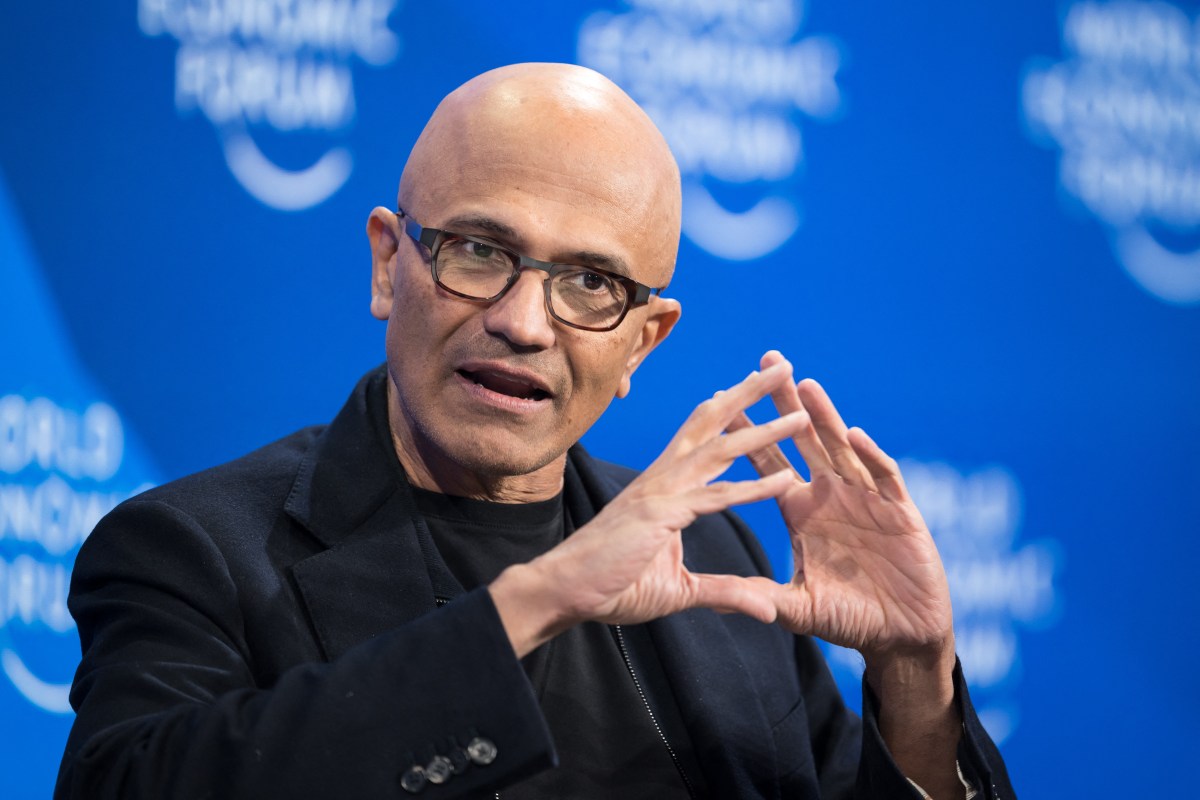
Leadership transitions at companies like Nvidia are rarely smooth, and the departure of Jensen Huang has left a void that the industry is watching closely. We think the most telling signal in this story is not the departure itself, but the immediate vote of confidence from Microsoft CEO Satya Nadella in interim CEO Colette Kress. That matters because Nadella's endorsement isn't just a courtesy; it's a practical statement that the partnership between two of AI's most critical players is built on institutional trust, not just one founder's vision.
This stands in stark contrast to the narrative playing out elsewhere. In Musk defends Huang's loyalty, compares his departure to losing Jordan, Elon Musk frames Huang's exit as an irreplaceable loss, suggesting the company's future is now uncertain. Nadella's public support for Kress directly challenges that view. For our readers, many of whom rely on Nvidia's hardware and Microsoft's cloud infrastructure to run their own AI workflows, this isn't academic. It's a real-time test of whether a company can outlast its founder. If Nadella, whose Azure business depends on Nvidia's GPUs, is betting on Kress, then users should feel confident that the roadmap isn't stalling. The practical takeaway is clear: watch how quickly Nvidia's product cycle responds under Kress. A smooth launch of their next-generation architecture will prove the system works; any delay will validate Musk's fears.
The broader context of AI's infrastructure challenges makes this transition even more consequential. As we've noted in AI Security Demands a New Approach to Unpatchable Infrastructure, the hardware layer of AI is becoming increasingly difficult to secure after deployment. Nvidia's leadership stability is directly tied to how quickly and confidently the company can address those vulnerabilities. A steady hand at the top, especially one backed by a major customer like Microsoft, gives the ecosystem time to develop smarter security models rather than scrambling after each crisis. Meanwhile, the question of Huang's legacy, explored in Nvidia's legacy endures as AI confronts a leadership void, remains open. But legacy is backward-looking; what matters now is whether Kress can translate that legacy into forward momentum.
The specific detail to watch is how Microsoft deepens its integration with Nvidia under new leadership. If Nadella moves beyond public statements and into joint product announcements or expanded supply agreements, it will confirm that his confidence is more than diplomatic. If the relationship cools, the industry should ask whether the leadership void is real. For now, the smart money is on continuity.