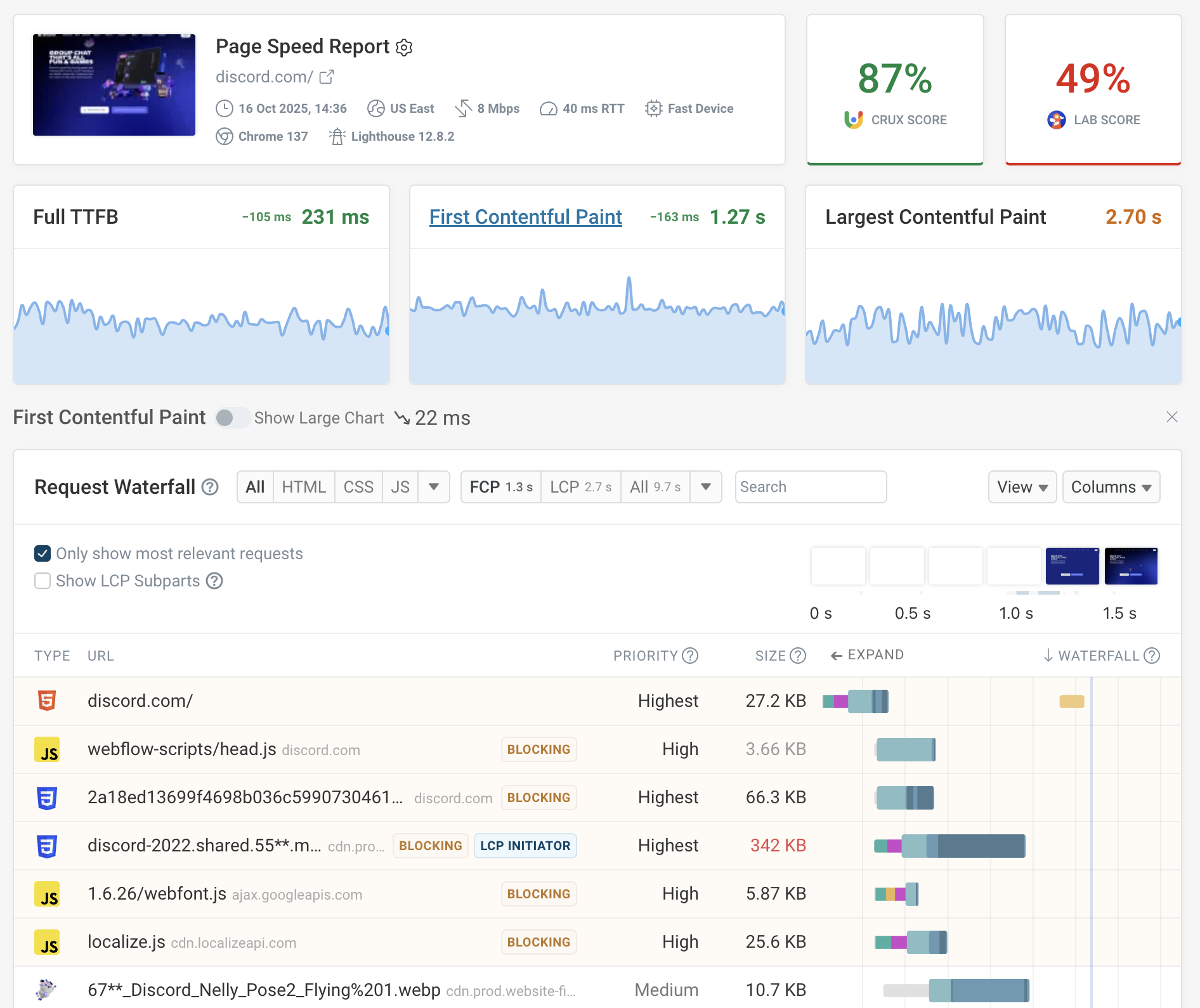
Website performance advice is everywhere, but most of it misses the point. Chasing quick fixes like compressing a single image or deferring one script might give you a temporary win, but it won't keep your site fast over time. Matt Zeunert's article makes the case that real performance optimization requires a strategy, not a checklist.
The practical takeaway is that you need to distinguish between measuring and monitoring. A single page-speed test tells you how a page performed at that moment. It's useful for diagnosing a specific issue, but it won't alert you when a new deployment slows things down, or when a third-party script starts misbehaving. Continuous monitoring, on the other hand, catches regressions before they affect your users. Zeunert explains that different types of data serve different purposes: synthetic tests give you controlled, repeatable conditions, while real-user monitoring shows what visitors actually experience. If you rely on only one, you're flying blind.
This matters because Google uses Core Web Vitals as a ranking factor, and those metrics cover multiple dimensions of the user experience. You cannot optimize Largest Contentful Paint in isolation and expect your Cumulative Layout Shift to fix itself. A smarter approach means prioritizing the pages that matter most to your business, not every URL on your site. Zeunert's framework helps you identify which pages need attention first, then use the right data to guide your decisions. It's about working smarter, not harder.
Stop treating performance as a one-time project. Start treating it as an ongoing practice. Zeunert's strategy gives you the tools to decide where to invest your time, how to measure success, and when to act. The goal is not to hit a perfect score on a single test. It's to maintain a consistently fast experience for the people who visit your site. That requires a system, not a shortcut.