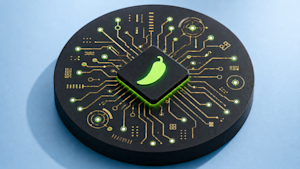
The unveiling of OpenAI’s Jalapeño chip, co-developed with Broadcom, marks a significant shift in the AI landscape, moving beyond reliance on general-purpose GPUs towards specialized hardware optimized for large language model inference. This isn’t just about incremental performance gains; it’s about fundamentally reshaping the cost structure of deploying and scaling AI. As Intuit will show off how it rebuilt its AI infrastructure to support fast and complex tasks at VB Transform 2026, the need for specialized and efficient hardware is becoming increasingly evident, particularly as AI moves beyond simple conversational interfaces to handle more demanding workloads. The reported 50% reduction in inference costs is a game-changer, especially considering OpenAI’s previously disclosed financial realities, as highlighted by their substantial R&D expenditures and reliance on Microsoft’s compute infrastructure. Similarly, Amazon will present its framework for engineering trustworthy AI agents at VB Transform 2026, underscoring the growing importance of both performance *and* reliability as AI systems take on more critical responsibilities.
The move is a direct response to OpenAI's own substantial operational expenses, driven primarily by compute costs – a problem echoed by many organizations scaling AI. The audited financial documents revealing a near $21 billion operating loss in 2025 serve as a stark reminder of the financial pressures inherent in cutting-edge AI development. Jalapeño represents a strategic attempt to address this head-on, moving OpenAI closer to a vertically integrated model similar to those employed by tech giants like Google, Amazon, and Microsoft. By designing its own chips, OpenAI gains greater control over its infrastructure, potentially unlocking significant cost savings and improving performance beyond what’s achievable with off-the-shelf components. This isn’t to say that OpenAI is abandoning its existing partnerships with Nvidia, AMD, Cerebras, and AWS; rather, it's diversifying its compute landscape and mitigating reliance on a single vendor while simultaneously building a competitive advantage.
The broader implications of Jalapeño extend beyond OpenAI’s own bottom line. It signals the beginning of a true silicon arms race within the AI ecosystem, with major players vying to control every layer of the stack. The emergence of custom chips from Alibaba, Huawei, and even ByteDance underscores the growing recognition that specialized hardware is essential for achieving both performance and cost efficiency at scale. This trend will likely accelerate the development of new chip architectures and manufacturing processes, further driving innovation in the semiconductor industry. The race isn’t just about computational power; it's about optimizing for specific AI workloads, reducing energy consumption, and ultimately democratizing access to advanced AI capabilities. The focus on performance per watt, as highlighted by OpenAI’s president Greg Brockman, signifies a move towards more sustainable and environmentally responsible AI deployments.
Looking ahead, the key question is whether OpenAI can successfully scale Jalapeño production and integrate it seamlessly into its existing infrastructure. The nine-month development timeline, facilitated by OpenAI’s own models, is impressive, but the transition to gigawatt-scale data centers will present significant engineering and logistical challenges. Moreover, the long-term performance of Jalapeño relative to Nvidia’s and AMD’s GPUs remains to be seen. While initial reports suggest outstanding performance, sustained real-world results will be crucial for validating OpenAI’s strategic bet on custom hardware. The true test will be whether Jalapeño can not only reduce costs but also enable entirely new AI applications and capabilities that were previously unattainable.