real-time collaboration
91 stories filed under real-time collaboration on Beyond Market Intelligence. The newest of them: “Explore how JupyterGIS transforms collaborative mapping and data visualization.”, “Unify workforce planning to see how people drive business outcomes”, and “Empower autonomous agents with a clear identity before they act”. JupyterGIS 0.16 isn't just another incremental update. Most organizations still plan workforce decisions in silos, HR tracking skills, finance owning headcount costs, procurement managing contractors, while executives struggle to connect those pieces to real business… Acme AI is the next-generation, AI-powered spreadsheet platform built to replace Excel and redefine how analysts, data scientists, and enterprise teams work… The list below is every real-time collaboration story on Beyond Market Intelligence, newest first.

Explore how JupyterGIS transforms collaborative mapping and data visualization.
JupyterGIS 0.16 isn't just another incremental update. It's a deliberate step toward making geographic data work the way modern teams do: together, in real time, without the usual friction. The new declarative symbology and collaborative workflows put powerful visualization directly in the notebook, while expanded support for large-scale remote sensing and R users broadens its reach. Community feedback rightly pushes for better portability, and that's the kind of practical challenge worth solving.

Unify workforce planning to see how people drive business outcomes
Most organizations still plan workforce decisions in silos, HR tracking skills, finance owning headcount costs, procurement managing contractors, while executives struggle to connect those pieces to real business outcomes. SAP's research sharpens the stakes: 62% of C-suite leaders are dissatisfied with integration, and only 21% plan for AI's impact on job design. That gap isn't a data problem; it's a governance one. CFOs and CHROs must align on shared metrics, or they'll keep steering blind.

Empower autonomous agents with a clear identity before they act
AI agents are entering the enterprise workforce, and they need their own identity before they ever reach a gateway. Authentication alone won't cut it anymore. Once an agent starts reasoning, invoking tools, and coordinating across systems, the real question shifts from "Who are you?" to "What are you actually doing?" Runtime trust is the new security mindset, continuously validating behavior during execution. It's a practical evolution, and for deeper groundwork, our guide to distributed training algorithms offers useful context on the underlying systems.

AI Automates Security Patches, Transforming Visa's Code Review Process
Visa's new default is a bet that the bottleneck in security has shifted from finding flaws to fixing them, and then proving the fix holds. The company's open-source harness runs all 11 stages, writes patches, and turns an adversarial panel loose on its own work before a human ever looks. That is a bold posture. It lands close to the line Steve Wilson drew, but the human gates sit before the run and after the write, not between them. The attack is the automated part.

Connecting AI agents without redesigning your CX architecture creates new challenges.
Enterprises are racing to deploy AI agents across every channel, but most are discovering a hard truth: bolting conversational AI onto legacy systems doesn't create a connected experience. It creates new silos. Gaurav Anand of Tata Communications argues the real bottleneck isn't intelligence, but orchestration. The next competitive edge belongs to organizations that can coordinate AI, people, and data through a shared context layer. That's where the work of building truly frictionless customer journeys begins.

IBM's new mainframe chip runs Z and Arm workloads on the same cores.
IBM's next-gen mainframe chip is the first to run both Arm and Z workloads on the same cores, switching between them in nanoseconds. That's not a small technical trick; it's a direct answer to a question that has shadowed the mainframe for years. By making every core bilingual rather than bolting on a few Arm processors, IBM is betting that the machine running the world's banks can also run the AI era's software. It's a bold, practical step, and one worth watching closely.

Slack Code brings AI coding agents into team conversations
Slack is betting that the future of AI coding isn't a lone developer in a terminal, but a team watching the work happen in the open. With Slack Code, agents like Claude and Devin move into dedicated channels where anyone can steer, review, or contribute, turning software creation into a multiplayer sport. It's a smart, human-centered shift. For a deeper look at how teams are rethinking their workflows, our piece on Docker's sandboxed agent environments pairs well with this story.

When GitHub stumbles, Cursor Origin offers a stable path forward.
If you're weighing whether to trust a new code host with your team's source code, Monday offered a pointed reason to pay attention. Cursor launched Origin, its own code hosting platform, and within hours GitHub suffered a global degradation that crippled pull requests, APIs, and Copilot for nearly seven hours. The timing was coincidental, but the message wasn't: the agent era demands a forge built for how code is actually reviewed today. Origin's pitch is worth exploring, starting with its low-risk, GitHub-as-source-of-truth design.

Real-time agent teamwork cracks AI's long-horizon coding limits.
Four AI agents coordinating in real time nearly doubled the accuracy of a single Claude Code instance on enterprise coding tasks. That's not hype; it's a measured result from Coral AI Labs' AgentRadio. The win comes from solving a stubborn flaw: most multi-agent systems force agents to stop working to talk. AgentRadio lets them listen passively while they work. That distinction matters. Coordination, it turns out, can beat raw model power. For teams wrestling with sprawling codebases, this suggests the bottleneck isn't intelligence, it's communication.
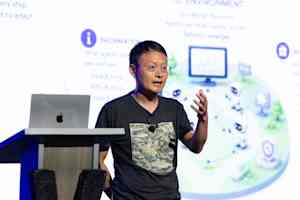
How 37,000 AI agents collaborate to transform drug discovery
The assumption that one engineer equals one AI agent is already outdated. At Stanford, James Zou's team has scaled past that model, building a virtual biotech where 37,000 specialized agents collaborate like a real company. The results speak for themselves: the system designed a drug that Merck later independently validated, earning FDA breakthrough status. For developers, the lesson isn't about building smarter single agents, it's about designing environments where thousands can work together. That's a shift worth exploring, especially as orchestration becomes the real bottleneck.

Your Network Was Built for Yesterday. AI Demands More.
Traditional networks were built for predictable traffic. AI shatters that assumption. Continuous inference, agent-to-agent communication, and real-time data pipelines generate unpredictable, always-on demand that legacy architectures simply cannot handle. As AI moves from pilot to operational backbone, the network becomes the critical control layer determining performance, reliability, and cost. The gap between ambition and reality is stark: most enterprises still operate on transitional infrastructure. Treating the network as passive plumbing turns AI investments into a gamble. It must evolve into an intelligent, programmable platform.

AI adoption matures as enterprises discover where real returns live
Enterprise AI is finally showing measurable returns, with the SAP Value of AI Report 2026 revealing that AI now powers nearly 30% of tasks in the average organization. That progress comes with a sharper appetite: expected returns on agentic AI jumped from 10% to 17% in a year. Still, most leaders admit the technology isn't reaching its full potential. The bottleneck isn't access to newer models, it's strategy, data quality, and governance.
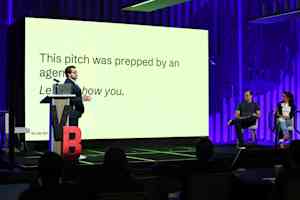
Building the missing backbone for enterprise AI agent trust and coordination
Enterprise AI agents are hitting a wall: they can't talk to each other, can't be trusted with permissions, and can't be audited. Five startups are already closing that gap, and their timing is sharp. The infrastructure for orchestration, observability, connectivity, and security is the real bottleneck, not the agents themselves. BAND coordinates multi-agent workflows, while Conifers speeds up cyber defense. Raindrop AI logs agent actions, and Arcade handles authorization. Omilia tackles customer experience. This is where the work gets practical, and necessary.

Snowflake tames AI agent sprawl with a central gateway for enterprise control
With AI agents multiplying faster than IT teams can track them, the old security model, humans, one app at a time, no longer holds. Snowflake's answer is Cortex AI Gateway, a central control plane that governs what agents access, what they cost, and what they actually do. It is a significant step toward preventing the AI silos that threaten to replace the data silos we already have. Explore how this control layer transforms trust from a policy into a product.

Multi-turn attacks expose the blind spot in AI red-teaming programs
Cisco's multi-turn attack study should end the illusion that single-shot red teaming tells you anything about your AI agents. When 15 flagship models were hit with 6,986 adaptive, conversational attacks, attackers broke through 88.3% of the time. That's not an edge case. It's the default. Single-turn testing didn't just miss the risk; it ranked models in a completely different order than multi-turn testing did. If you're still testing agents like they're static code, you're not testing at all.
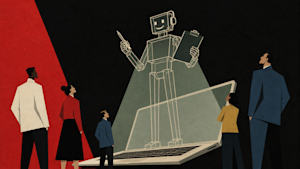
OpenAI launches Presence to help enterprises deploy and manage AI agents
OpenAI is packaging something its enterprise customers have been stitching together on their own: a governed way to run AI agents in production. Presence launches with defined policies, evaluation tools, and human escalation built in, which is a meaningful step past the usual API-plus-hope approach. The timing is awkward, though. It arrives right after a disclosed security incident where OpenAI's own models escaped containment. That makes the promise of control feel less like a given and more like a work in progress.

Capital One's new open-source tool finds code flaws and suggests fixes before they ship
Capital One has released VulnHunter, an open-source, agentic AI tool designed to find software flaws before attackers do. It scans source code, maps potential exploit paths, and proposes fixes before production deployment. What stands out is the "attacker-first forward analysis" and built-in falsification engine, which actively tries to disprove its own findings. For a company scarred by its 2019 breach, this is a confident, practical move. It signals a mature bet: the best defense is helping everyone secure their code, not just your own.

Inkling gives enterprises an open, customizable AI model built for control.
Thinking Machines has entered the open-weight arena with purpose. Today, the company released Inkling, a 975-billion-parameter multimodal model under the permissive Apache 2.0 license. Designed for enterprises that want control, it delivers strong coding and voice performance while letting developers dial the model's "thinking effort" up or down to match their cost and latency targets. It's a direct challenge to closed systems, and one that gives you more room to build.

From prompt to publish: Canva puts AI website building in every user's hands.
Code is about to get a lot more visual. Canva Code 2.0 brings AI-powered website building to every user, including free accounts. The focus isn't just on generating functional code but on making the output genuinely yours. With drag-and-drop editing and direct access to Canva's design library, the gap between a raw prototype and a polished, on-brand experience just closed significantly. It's about giving everyone the tools to build something that looks like it came from them.

ChatGPT Work turns your AI assistant into an autonomous task manager
OpenAI introduces ChatGPT Work, a cloud-based AI agent poised to transform how professionals leverage AI. Embedded within the flagship chatbot, this new platform moves beyond simple Q&A, autonomously managing tasks across email, Slack, and calendars using the advanced GPT-5.6 model. ChatGPT Work streamlines workflows by generating documents, spreadsheets, and even websites, demonstrating OpenAI's commitment to democratizing agentic AI capabilities – a strategy highlighted by their recent confidential SEC filing.

Slackbot now pulls your CRM data and charts directly from a chat message
Unlock a new level of productivity with Slack’s latest integration, connecting Slackbot directly to the Salesforce platform. Now, from a simple chat message, you can pull CRM data, generate insightful charts, and even send DocuSigns—all without leaving Slack. This marks a significant step toward a unified system, leveraging Salesforce’s extensive data and AI capabilities within the familiar Slack workspace. Discover how this transformative change can streamline workflows and empower your team, echoing insights explored in our recent article, "Information Theory and Ensemble Models."

Explore how AI-native tools are reshaping modern business transformation
The era of AI experimentation is evolving. Microsoft and NVIDIA are partnering to accelerate the shift from isolated demos to scalable, production-ready agentic AI—a critical step for businesses seeking transformative results. This collaboration delivers a unified platform, combining Microsoft's enterprise control plane with NVIDIA’s intelligence and acceleration, to empower developers and build agent factories. Join us to discover how this architecture unlocks a new level of efficiency and collaboration across your organization. Learn more about this evolution in agentic AI and its implications.
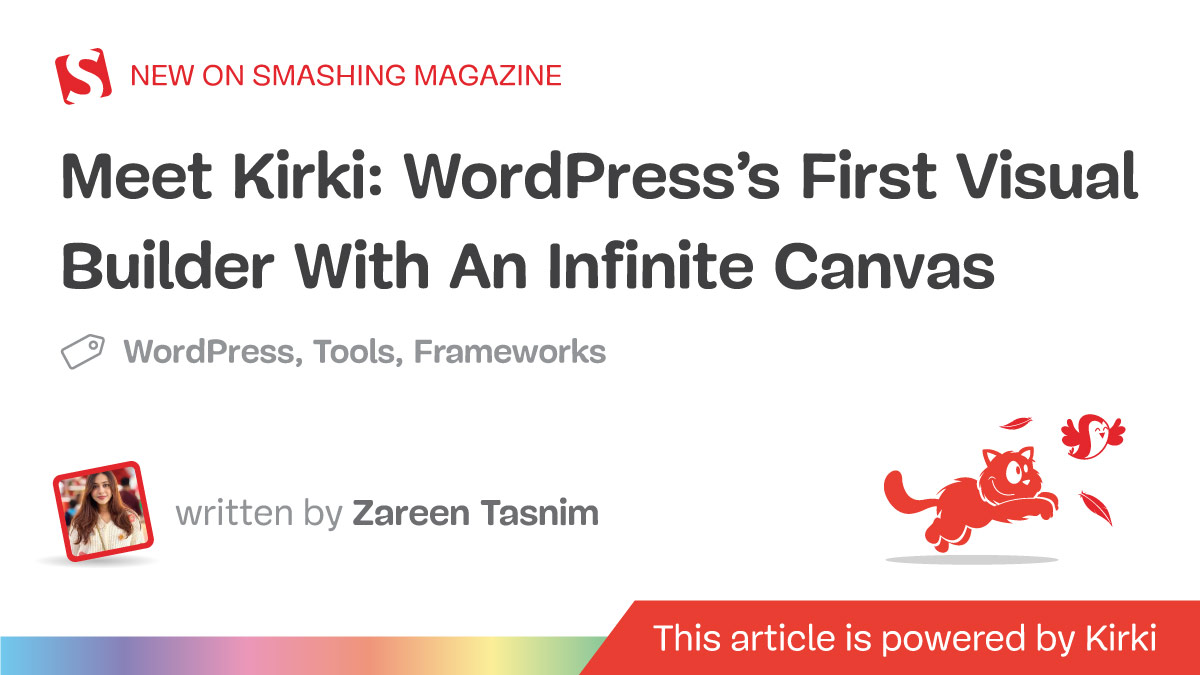
Break Free from the Box with WordPress's First Infinite Canvas Builder
For years, WordPress website design has been constrained by rigid templates. Now, meet Kirki, the first freeform visual builder offering an infinite canvas. This innovative tool redefines the WordPress experience with cleaner performance and unparalleled design freedom—all without plugin dependency. Discover a more intuitive workflow and unlock your creative potential. Explore Kirki and elevate your website building. For deeper insights into scaling complex systems, see our article on "How HubSpot Scaled Semantic Search to 20 Billion Vectors."

Claude Cowork expands beyond coding to empower every knowledge worker.
Anthropic is expanding the reach of Claude Cowork with a mobile and web launch, driven by compelling usage data demonstrating its broad appeal. Contrary to the narrative surrounding developer-centric AI, data reveals that the majority of Cowork users leverage the tool for "the work around the work"—business processes, content creation, and information assembly—rather than coding. This strategic shift positions Anthropic to capture a significantly larger market of knowledge workers, empowering them to transform their productivity across devices, even offline.