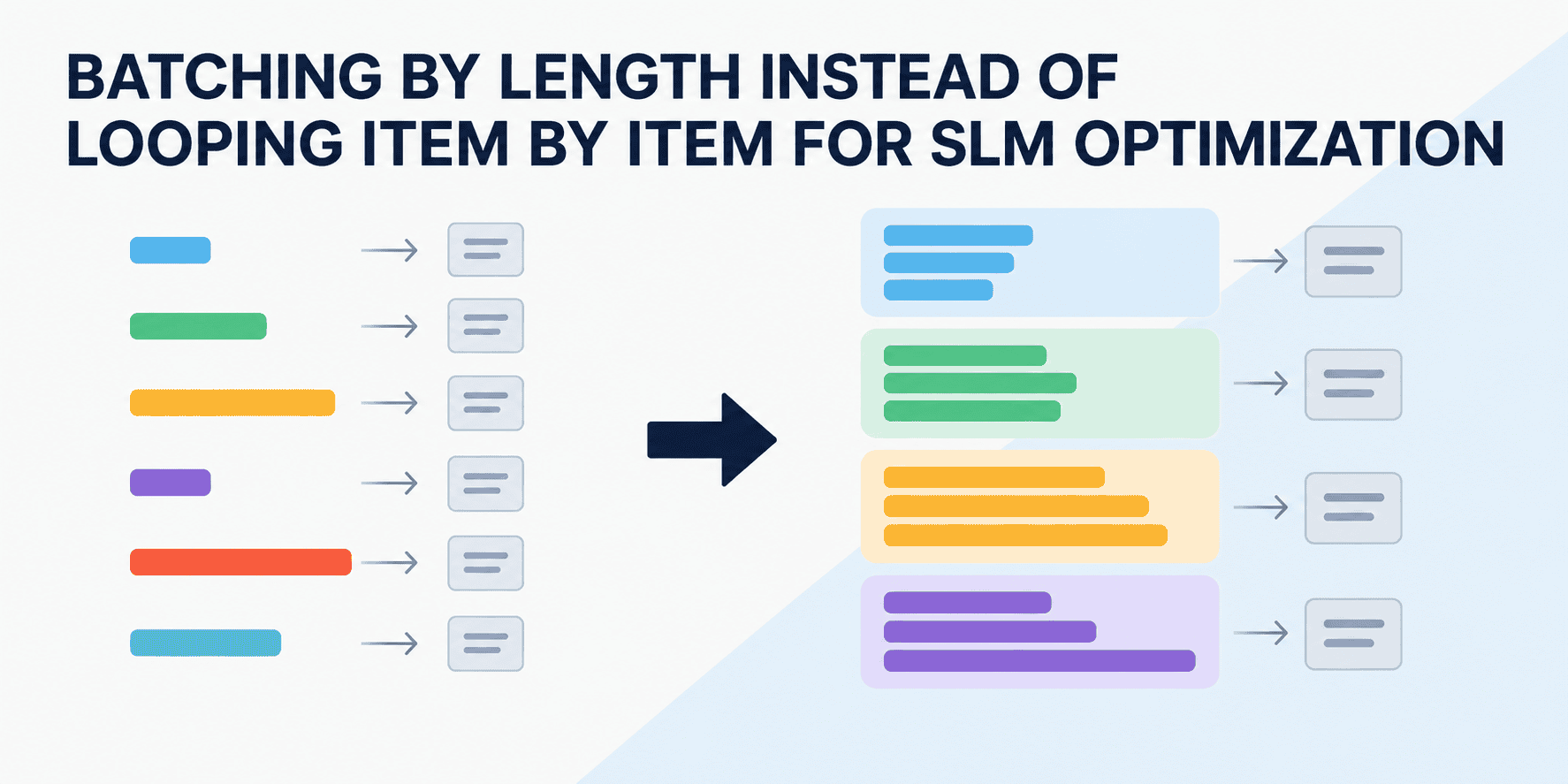
The relentless pursuit of efficiency is a constant in the world of data management, and the latest installment in our SLM optimization series – focusing on batching by length – exemplifies this perfectly. Moving away from processing individual items sequentially and instead grouping data by length offers a tangible performance boost, a principle that resonates across numerous AI-native spreadsheet workflows. This shift isn't merely about tweaking a setting; it’s a fundamental rethinking of how data is handled, and it's particularly relevant as users seek to maximize the value they derive from coding agent subscriptions Unlock the Full Potential of Your Coding Agent Subscriptions. Understanding these nuances is vital, especially for those navigating the challenges of academic research and publication, where efficient data processing can be the difference between a timely submission and prolonged delays Finding a Publishing Venue to Complete Your AI Research Degree. The incremental gains from such optimizations may seem small in isolation, but when compounded across large datasets and repeated operations, they contribute significantly to overall system performance.
The beauty of this approach lies in its simplicity and adaptability. Batching by length inherently leverages the underlying structure of the data, reducing overhead associated with repeated processing cycles. This contrasts sharply with the traditional, more granular item-by-item processing, which often introduces unnecessary latency and resource consumption. Consider the implications for tasks like data cleaning, transformation, or model training; the ability to process data in larger, more efficient batches can drastically reduce processing time and improve throughput. It's a move that mirrors the broader trend in data infrastructure towards optimized memory usage, as demonstrated by Cloudflare's recent innovations in DNS caching Cloudflare's Data Innovation Frees 100 TB, Boosts DNS Performance, showcasing how even fundamental components can benefit from intelligent data management strategies. This isn't about complex algorithms or groundbreaking new technologies; it's about applying sound engineering principles to optimize existing workflows.
The broader significance of this optimization technique extends beyond just SLM performance. It represents a growing awareness within the data community that efficient data handling is paramount for unlocking the full potential of AI-powered tools. As models become increasingly sophisticated and datasets continue to grow in size and complexity, the ability to process data quickly and efficiently will be a key differentiator between success and stagnation. This approach aligns with a future-focused mindset, prioritizing scalable and sustainable data management practices over short-term gains achieved through less efficient methods. The shift from individual item processing to batching by length is a practical demonstration of how thoughtful data organization can translate directly into improved performance and productivity. It’s a reminder that even seemingly minor adjustments can yield substantial benefits in the long run.
Looking ahead, it’s intriguing to consider how this principle of batching by length can be extended to other areas of data management and AI workflows. Could similar optimization strategies be applied to model inference, distributed training, or even data visualization? The potential for further refinement and innovation is considerable. The question becomes: as the volume and complexity of data continue to escalate, how can we proactively design systems and processes that prioritize efficiency and scalability, ensuring that we can harness the power of AI without being constrained by the limitations of our data infrastructure?