optimization
Beyond Market Intelligence keeps optimization in one place: 106 stories so far. The section currently leads with “Python 3.15 JIT Benchmarks Show Real Progress for Targeted Workloads”, “Four Workloads, Three Layouts: A Practical Guide to Lakehouse Data Decisions”, and “When machine learning papers grow longer, clarity gets lost in the word count”. The same three Python workloads keep showing up in the JIT benchmarks, and for Python 3.15, they finally show real progress. Physical data layout is one of the most consequential decisions in lakehouse engineering, and Kushal Kumar Vishwakarma's comparison of Liquid Clustering, ZOrdering, and partitioning across four workload types reveals… Acme AI is the next-generation, AI-powered spreadsheet platform built to replace Excel and redefine how analysts, data scientists, and enterprise teams work… The list below is every optimization story on Beyond Market Intelligence, newest first.
Python 3.15 JIT Benchmarks Show Real Progress for Targeted Workloads
The same three Python workloads keep showing up in the JIT benchmarks, and for Python 3.15, they finally show real progress. The just-in-time compiler is delivering stronger results for targeted programs, but it still doesn't accelerate everything. That honesty matters. This measured improvement feels more credible than sweeping performance claims. For deeper context on AI infrastructure challenges, our piece on securing Kubernetes with Andrew Martin connects the dots between system reliability and the tools we build on top of it.

Four Workloads, Three Layouts: A Practical Guide to Lakehouse Data Decisions
Physical data layout is one of the most consequential decisions in lakehouse engineering, and Kushal Kumar Vishwakarma's comparison of Liquid Clustering, ZOrdering, and partitioning across four workload types reveals two undocumented failure modes likely affecting production systems today. This is the kind of practical guidance that transforms how teams approach Delta Lake. For deeper context on how AI is reshaping data workflows, see our coverage of Context Language Models from Meta, MIT, and UW.
When machine learning papers grow longer, clarity gets lost in the word count
Machine learning research papers have ballooned into 20- to 40-page monoliths where clarity drowns in verbosity. One recent LLM paper stretches to 70 pages of dense text, yet mathematical explanations are vanishing, replaced by block diagrams that leave critical details to guesswork. Meanwhile, some authors mix casual phrases like "it feels like" into scientific writing, making already bloated papers even harder to parse. For a deeper look at how complexity hides instability, explore our article on *The Hidden Instability Beneath LLM Temperature Zero*.
Train a neural network with 57x fewer parameters using this new PyTorch library
MaRN takes a different path to parameter efficiency: instead of training every weight directly, it optimizes a compact latent representation that maps to the full network. The numbers are striking, a 57.7× reduction on an MNIST CNN, but the honesty about trade-offs is what makes this worth attention. Slower training and task-dependent performance are real constraints, not footnotes. For exploratory benchmarks, that transparency matters more than the headline reductions. The library's global and layer-wise mappings give researchers room to test where this approach genuinely fits.
Beyond the Search Box: Defining Real Research in AutoResearch
When an agent optimizes a score inside a research space that humans already defined, are we evaluating discovery or refinement? The distinction matters. Searching thousands of solution variants is useful, but it is not the same as asking whether the problem itself should change. Real research judgment questions the framing, tests transferability, and recognizes local optima. That is why the FLEET approach to reward-aware search is worth reading, it tackles the optimization side, yet the deeper question remains open.

When you shift marketing spend, does your MMM finally tell the truth?
A shift in marketing spend timing can expose an MMM's blind spots, because the model only learns from data that never held the right answers. Testing when you spend, not just how much, reveals whether the model can finally tell the truth. It is a practical challenge to a tool many trust too easily. For deeper coverage on AI-driven analysis, see "Beyond the Search Box: Defining Real Research in AutoResearch."

Explore how machines learn through multi-armed bandit simulations in Python
Reinforcement learning often feels abstract until you watch an agent learn in real time. Multi-armed bandit simulations in Python make that process tangible, showing how machines balance exploration and exploitation through trial and error. The approach is accessible enough for beginners yet powerful enough to reveal core AI principles. If you are ready to move beyond static datasets, this hands-on exploration will transform how you think about autonomous decision-making.

Trim 2,500 API Calls From One Apartment Search and Keep the Matches
2,500 API calls trimmed from a single apartment search, and the matches didn't suffer. The author traced every listing check with Weights & Biases Weave, then cut unnecessary model work one change at a time, scoring each version against the same answers. This is the kind of practical efficiency that makes AI agents actually useful. For deeper context on why simpler techniques often win, see our related piece on PCA outperforming autoencoders in a real benchmark.
One line of code, seconds of time saved. That's the power of AI
One line of code, seconds of time saved. That's the promise of AI, and it's refreshingly direct. You type once, get the result, and move on, no follow-up lines, no corrections, no wasted motion. This isn't about flashy automation; it's about giving you back small pockets of time that add up. For a deeper look at how AI speeds up decisions, see our coverage of Jev, which delivers typed probabilities instead of text.
Unlocking AI's next frontier at DeepMind starts with a bachelor's degree
A bachelor's degree is the stated minimum for a DeepMind optimization research engineer role, yet this raises a deeper question about what such work really entails. This isn't just credential-gazing; it's a practical puzzle. The role likely demands blending mathematical rigor with system-level thinking, far beyond a standard spreadsheet workflow. For context on how data relationships can shift unexpectedly, our article on detecting hidden drift offers relevant insights.
Exploring Real-World Computer Vision: Deployments, Edge Models, and Current Challenges
A developer who built the food recognition model for MyFitnessPal is now asking a grounded question: what are people actually deploying in industry today? Edge models, self-hosted systems, or API calls? He wants to know what still hurts, the problems that cost time, blocked delivery, or demanded awkward workarounds. This isn't guesswork; it's a direct invitation to shape real tooling. For deeper context on how models like these evolve, our article "Explore the Forrester Function" examines the mathematical thinking behind machine learning optimization.
Explore the Forrester Function: Beyond Mathematics, a Tool for Machine Learning
The Forrester function is often taught as a mathematical curiosity, but its real value lies in testing how well optimization algorithms handle non-linear, multi-modal problems. That user asking about its role in machine learning is onto something, this function is a standard benchmark for evaluating model performance, not a solution for real-world economics or forecasting. It belongs in the toolbox of anyone validating methods, not applied directly to data.
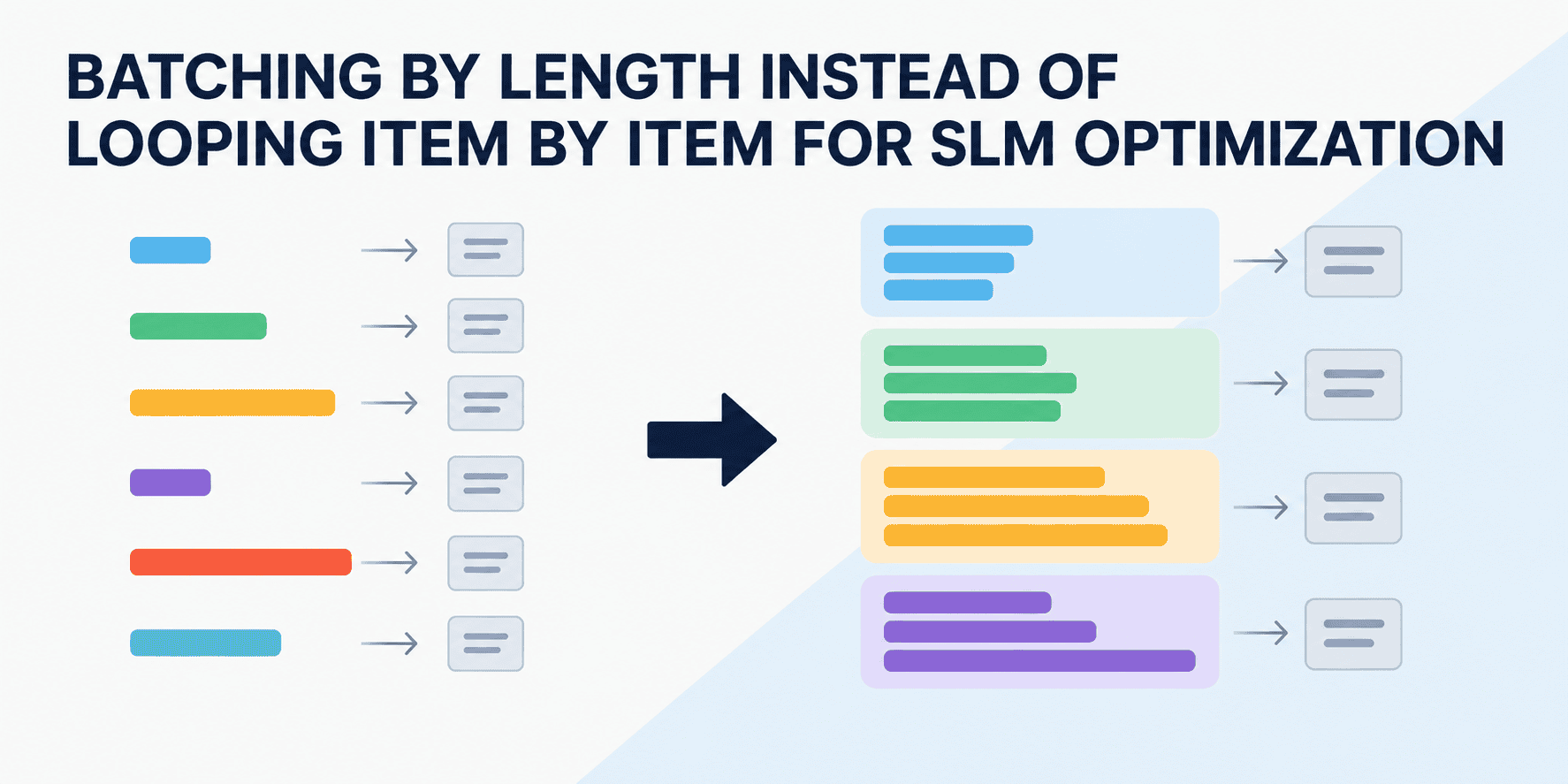
Optimize SLM: Batch Data Length, Not Individual Items
Batching by length instead of looping item by item is one of those shifts that feels obvious once you see it. It trims the overhead, smooths the workflow, and lets the model focus on what matters: processing data, not managing iterations. This final entry in our SLM series lands the point neatly. If you're still wrestling with per-item loops, this approach is worth exploring. And for a broader look at optimization challenges, our piece on real-world computer vision deployments pairs well with the ideas here.
Finding a Publishing Venue to Complete Your AI Research Degree
Getting a fifth-year research paper accepted feels less like a milestone and more like a lock picking session in the dark. You have solid review scores, yet the top-tier doors stay shut, which is frustrating when all you need is a legitimate venue to cross the finish line. For efficient generative AI work, look beyond the NeurIPS crowd. Solid, respectable Elsevier journals or Springer's Applied Intelligence often value solid methodology over prestige. They accept quality work without the ego.

Unlock the Full Potential of Your Coding Agent Subscriptions
Most coding agents promise efficiency, yet many teams barely scratch their surface. This guide cuts through the noise, showing you how to turn a simple subscription into a serious productivity lever. I appreciate the focus on practical, repeatable tactics rather than abstract theory. If you are ready to move beyond basic autocomplete, this is a worthwhile read. For another perspective on pushing tools further, our piece on expanding your tech fluency offers a broader lens worth exploring.
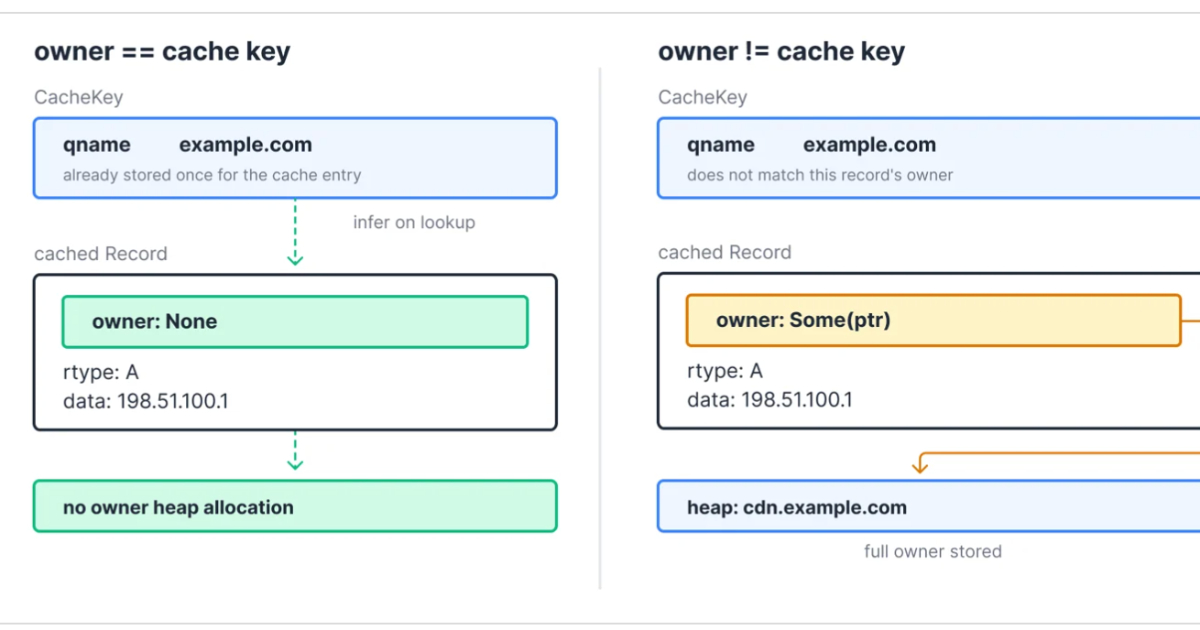
Cloudflare's Data Innovation Frees 100 TB, Boosts DNS Performance
Cloudflare's Big Pineapple DNS cache just got a serious upgrade. By redesigning the in-memory representation of its entries, the team cut the per-entry footprint by 56%. That freed roughly 100 TB of working-set memory across the fleet, which is a massive win for efficiency. The Rust-based changes didn't stop there. Cache insertion throughput climbed 43%, and lookup latency dropped 19%. This means faster, more responsive DNS without needing extra hardware. It's a smart, practical step forward.

Unlock Deeper TPU Insights: Cycle-Level Profiling Now Available in XProf
For developers wrestling with TPU workloads, opaque blocks in trace captures have long been a frustration. Google's addition of a Kernel Profiling suite to XProf changes that. This open-source profiler now exposes cycle-level details for custom Pallas kernels, turning what was once a black box into a map of precise execution paths. It's a practical step toward finer-tuned performance work. Claudio Masolo's report is worth your attention, especially if you're already exploring how AI tools reshape developer workflows.
Accelerate Numerical Solutions: Introducing LinearSolveBench
Large sparse linear systems are where real numerical work gets slow, and most models stumble trying to write efficient C solvers. LinearSolveBench, a new benchmark from hgarud, directly measures how well a model or harness can produce fast, accurate, and general solvers for these systems. It pushes for algorithmic progress where it matters most: practical performance. If you are exploring how AI handles demanding computational tasks, this is a focused, honest stress test worth your attention.
Exploring Autograd: A High Schooler's C++ Machine Learning Project
Building a tensor library and autograd engine from scratch in C++ is no small feat, especially for a high schooler. That kind of hands-on exploration is how you truly internalize the mechanics behind machine learning, moving beyond black-box frameworks. This project shows genuine curiosity and a solid grasp of fundamentals. We appreciate the willingness to share it for feedback. For those interested in seeing how such foundational work connects to real-world applications, our piece on real-world computer vision deployments offers a useful perspective.

When AI Writes the Code, Do You Trust the Defaults?
AI assistants are remarkably good at writing code, but they don't always question the assumptions baked into the libraries they use. That gap is where subtle errors hide. This piece examines five scikit-learn defaults that deserve a second look before you ship. It's a practical, grounded reminder that trusting the tool isn't the same as understanding it. If you're building for production, this is worth your attention. For broader context on model deployment challenges, our related piece on real-world computer vision offers useful perspective.

Kubernetes 1.37 arrives with a sharper focus on AI workloads
Kubernetes 1.37, named "Garhwal," lands with a clear focus on stability, security, and AI/ML workloads. The Stable Metrics API is a welcome step, giving teams reliable data for smarter scaling decisions. Meanwhile, the Rootless Kubelet reaching beta signals a serious commitment to safer, more contained operations. This release feels less about flash and more about hardening the foundation. For those wrestling with evolving AI/ML job demands, our related article on navigating that skill shift is worth a look.
Is Reinforcement Learning Really Needed for Jev's Spreadsheet AI?
The question cuts to the heart of Jev's design. If the model only predicts Choice, Score, or Noul, those outputs are already differentiable through cross-entropy or MSE. Adding reinforcement learning feels like extra machinery unless there's a hidden reward signal we're not seeing. The environment would need to be defined, and that's unclear. It's fair to ask if this is substance or just a buzzword. We're not dismissing the approach, but the burden of proof is on the implementation.
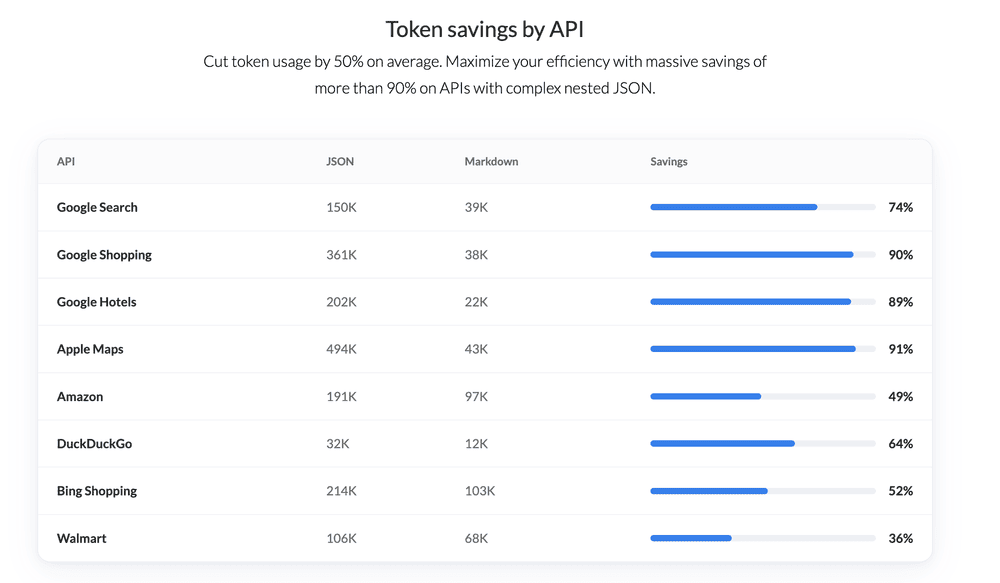
Reduce Search Result Tokens by 74% with Smarter Data Structuring
A single search result can quietly consume thousands of tokens, and that weight adds up fast when you're paying for every call. SerpApi's Markdown output tackles this directly, trimming usage by up to 74% by stripping away the noise and keeping only what matters. That's a meaningful reduction in context-window overhead and agent costs. It's the kind of practical efficiency that pairs well with the broader optimization thinking in our guide to distributed training.
Put your unused compute to work on the Twin Prime Conjecture.
Most AI users let unused tokens expire at the end of the month. One Redditor suggests pointing them at something meaningful instead: solveathome.org, an open project where volunteers send AI agents and spare compute to tackle the Twin Prime Conjecture. It's a simple, public, and verifiable way to turn waste into progress. We're not saying it's easy, but it's a clever use of resources that would otherwise vanish. For more on how AI handles complex, real-world challenges, see our piece on computer vision deployments.