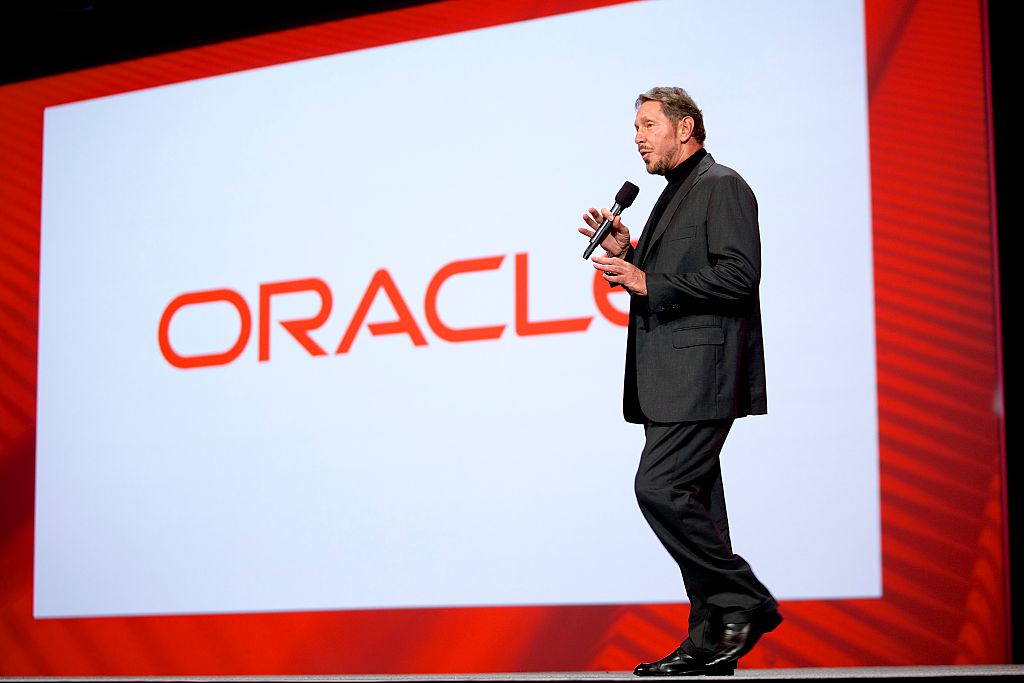
Larry Ellison's decision to cancel the sale of 50 million Oracle shares, worth roughly $7.5 billion, is not a headline that should be read as a simple change of heart. It is a signal. When the second-richest person on Earth pulls back from a planned liquidation, the market tends to interpret it as either a lack of personal need or a quiet vote of confidence in the company's trajectory. But for those of us watching the broader shift toward AI-native infrastructure, the more interesting question is what this move says about capital allocation at a moment when every major tech player is scrambling to fund massive compute buildouts. Oracle has been positioning itself as a serious contender in the AI cloud race, and Ellison's reversal suggests he wants to keep his stake intact while the company plays that hand. That is not a trivial detail; it is a strategic posture.
Consider what is happening around us. Anthropic Explores Akamai's Cloud for AI-Native Workloads shows a major AI player committing over $11 billion to a CPU-centric cloud bet, while Nscale Secures $3.36B to Advance AI-Native Spreadsheet Infrastructure demonstrates that the appetite for specialized data infrastructure is far from cooling off. These are not isolated moves. They are part of a pattern where capital is flowing into the plumbing of AI, not just the models. In that context, Ellison's decision to hold onto Oracle stock reads less like a personal preference and more like a calculated alignment with the company's own infrastructure bets. Oracle has been quietly building out its AI-ready data centers, and if you believe that story, why would you sell into a narrative that has not yet reached its peak? The practical takeaway for our readers is straightforward: when insiders who have the most visibility into their own roadmaps choose to hold, it is worth paying attention to the underlying business, not just the stock ticker.
That said, we should not romanticize the move. Ellison is not selling because he needs the cash, and he is not holding because he is sentimental. He is holding because the math on AI infrastructure spending still favors aggressive expansion, and Oracle wants to be a landlord of that expansion. But here is the tension: the same logic that makes holding attractive also raises the stakes. Every dollar Oracle spends on compute is a bet that demand will outpace supply, and that is not guaranteed. For our readers, especially those evaluating where to put their own resources, the lesson is not to copy Ellison but to understand the underlying conviction. If you are building AI-native workflows or relying on spreadsheet infrastructure that depends on cloud capacity, the financial decisions of people like Ellison are a proxy for how confident the incumbents really are about the next few years. Anthropic Founders Aim for Majority Voting Control Ahead of IPO reminds us that control and confidence are often tied together in this sector, and Ellison's move fits that same mold.
What we would tell a reader who asks us about this is simple: do not read this as a market signal in the traditional sense. It is not a buy signal for Oracle stock, and it is not a warning about the company's health. It is a window into how the people who run these companies think about the next chapter. They are not diversifying; they are doubling down. The specific thing to watch is not Ellison's next filing, but whether Oracle's cloud revenue growth accelerates in the coming quarters. If it does, this moment will look like a quiet prelude. If it does not, the cancellation will be remembered as a missed opportunity to lock in gains before a correction. Our bet is on the former, but the data will tell. For now, the most concrete takeaway is this: when the founder of a company cancels a multi-billion-dollar sale, he is telling you that he believes the best days are still ahead. Whether you share that belief should depend on your own read of the AI infrastructure buildout, not on the headline.